
Reviewed · SANTA TERESA & SELARóN STEPS TOURS
Rio de Janeiro: Lapa and Santa Teresa with Tram Ride
Rio rewards curious walkers. This four-hour outing links the Santa Teresa tram with Lapa’s grand old sights, giving you a useful look at the city’s art, hills, parks, and historic center in one compact trip. I especially like the ride across the Arcos da Lapa and the colorful descent down Selarón Steps. The main caution is price: at $200 per person, it is costly for a half-day tour that includes only the tram ticket, not food or drinks.
I also like the way the route moves from Centro into Santa Teresa, then back through Lapa and Cinelândia instead of keeping you in one neighborhood. The guide can speak Portuguese, English, or Spanish, and hotel pickup and drop-off cover the South Zone and Barra da Tijuca. Still, guide quality matters here. One English-language booking described the explanations as confusing, while another praised the guide as professional and well prepared.
In This Review
- Key points at a glance
- Why this four-hour route works
- Boarding the bondinho in Centro
- Santa Teresa’s cobbled streets and hillside character
- Ruins Park and the view toward Sugarloaf
- Descending Selarón Steps into Lapa
- Passeio Público and the formal heart of Centro
- Confeitaria Colombo’s Art Nouveau finish
- Guide quality can shape the whole day
- Is $200 a fair price?
- Who should choose this experience?
- Should you book the Lapa and Santa Teresa tram tour?
- FAQ
- How long does the tour last?
- What areas offer hotel pickup and drop-off?
- Which languages are available?
- Is the Santa Teresa tram ticket included?
- Where does the tram ride begin?
- Does the tour cross the Arcos da Lapa?
- Is food included?
- Is Confeitaria Colombo open on Sundays?
- Can I cancel for a full refund?
Key points at a glance

- The tram crosses the Arcos da Lapa: You get Rio’s signature old tram ride and a striking view of the historic aqueduct.
- Santa Teresa feels unlike beachside Rio: Narrow cobblestone streets, art, and hillside views give the district its own character.
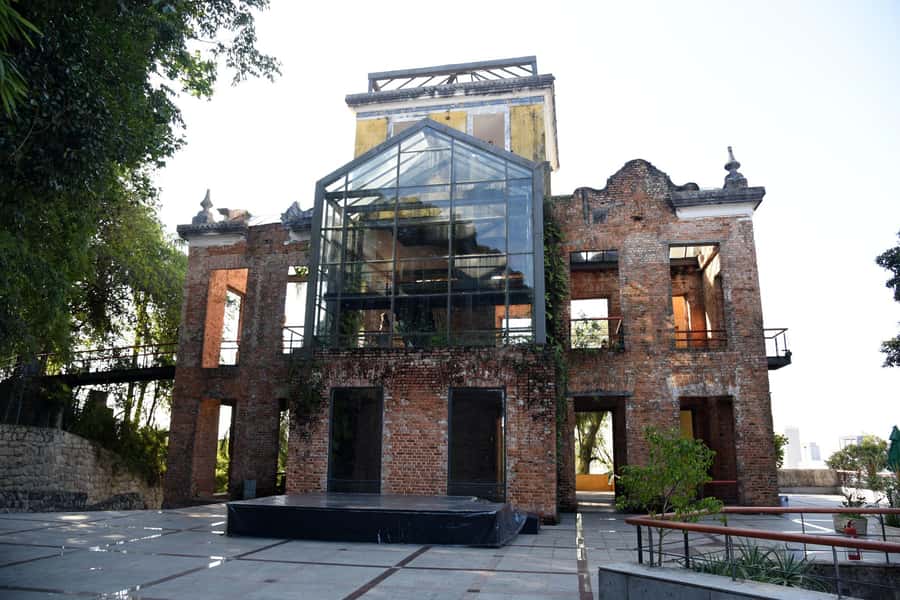
- Ruins Park adds a quiet pause: The park combines an art gallery with the remains of a mansion and views toward Sugarloaf Mountain.
- Selarón Steps are best seen from the top down: The mosaic staircase makes a memorable walking link between Santa Teresa and Lapa.
- Cinelândia packs in grand architecture: Theatro Municipal and Biblioteca Nacional help explain Rio’s formal civic center.
- Confeitaria Colombo is the polished finale: Its stained glass, mirrors, and old café setting are worth seeing, but it is closed on Sundays.
Why this four-hour route works

Rio de Janeiro can feel spread out, especially when you are staying in Copacabana, Ipanema, Leblon, Leme, or Barra da Tijuca. This tour solves one practical problem by combining transportation and sightseeing. Pickup and drop-off are included from those areas, then the route shifts to walking and a tram ride once you reach Centro.
I see the appeal for a first visit. In half a day, you get Santa Teresa, Lapa, Centro, a historic tram, a public park, a mosaic staircase, a grand theater, a national library, and one of Rio’s famous cafés. You will not study each place at length, but you will get a strong first orientation to the city beyond the beaches.
The route also has a natural shape. You begin in Downtown, climb toward Santa Teresa by tram, walk through the district, descend toward Lapa, and finish in the central districts. That saves you from retracing your steps and gives the day a clear sense of movement.
The weak point is value. A four-hour activity at $200 per person sits in the expensive range for a walking-focused experience. The price makes more sense if you value hotel transport, a multilingual guide, and the convenience of connecting several areas that might otherwise require separate rides and planning. If you are happy using local transport and exploring at your own pace, the cost is harder to justify.
Other wanders through Santa Teresa and the tiled steps:
- Rio’s Full Day: Selarón Steps, Christ & Sugarloaf – Tickets & Lunch Included
★ 5.0 · 2,724 reviews - Rio: Christ the Redeemer, Sugarloaf, Selaron & BBQ Lunch
★ 4.5 · 2,428 reviews - Rio’s Best_Corcovado, Sugar Loaf, Selaron, Cathedral and more
★ 5.0 · 864 reviews
Boarding the bondinho in Centro
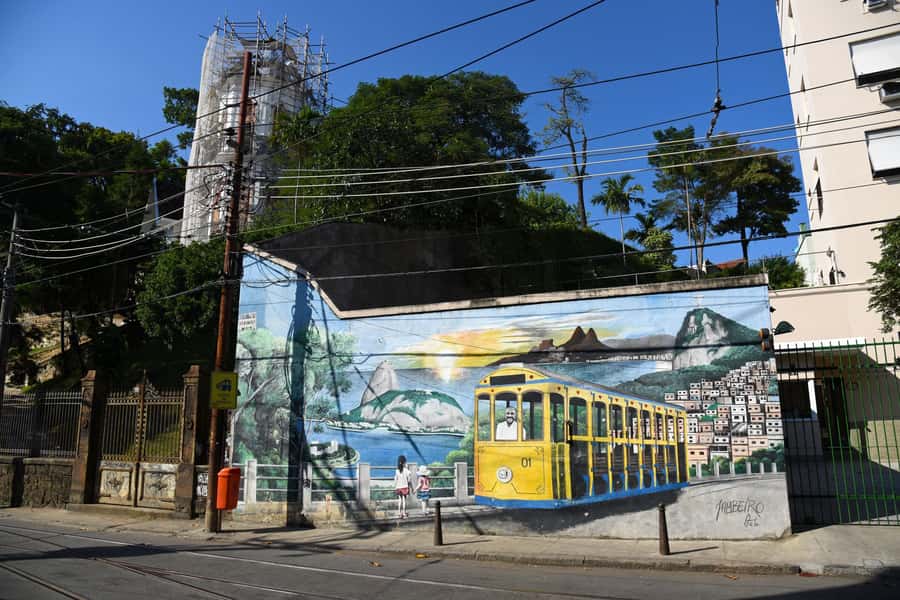
The day begins in Centro, where you board the Santa Teresa tram, known locally as the bondinho. The tram is not just a ride between two points. It is the main character of the opening section, carrying you from the formal center of Rio into the hilltop district of Santa Teresa.
The route passes over the Arcos da Lapa, a historic aqueduct that now supports the tram line. This is one of the most memorable parts of the experience because the ride makes the connection between old infrastructure and modern city life easy to understand. You are not only looking at the aqueduct from street level. You are crossing it as part of the journey.
The tram ticket is included, which removes one small task from your day. Still, the information provided does not specify the group size, seating arrangement, or exact departure time. You should check the available starting times when booking and expect the day to follow the guide’s pace rather than your own.
For me, this is the part most likely to justify choosing a guided outing over a standard city walk. The tram gives the tour a distinct Rio identity. It also adds movement and variety before the longer walking sections begin.
Santa Teresa’s cobbled streets and hillside character
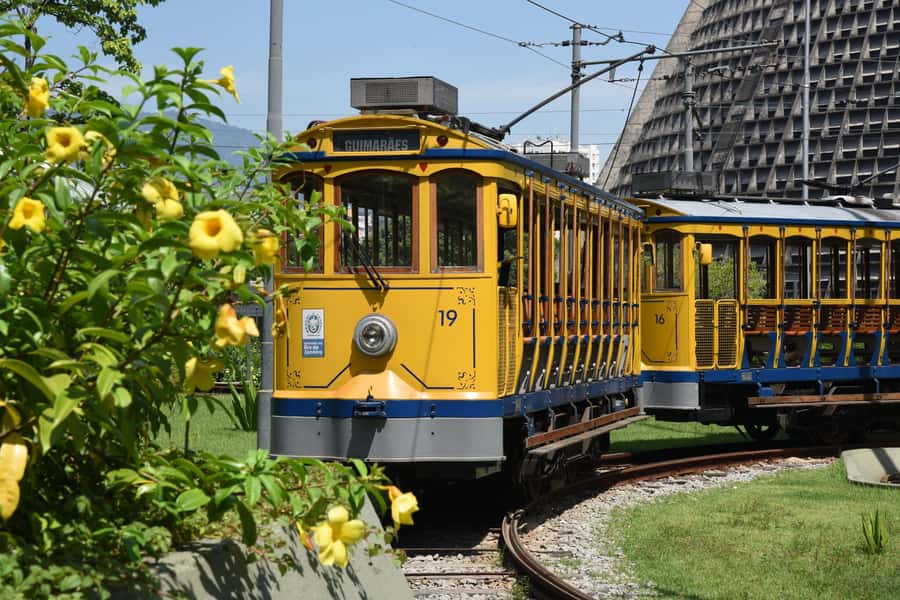
Santa Teresa is often compared with Montmartre in Paris because of its hillside setting, narrow streets, and artistic feel. The comparison is useful, but you should not expect a copy of Paris. Santa Teresa has its own Brazilian rhythm, shaped by the old tram, winding lanes, painted façades, and views over the city.
The walk here is about atmosphere rather than a long list of formal monuments. Your guide can point out the district’s artistic side while you move through its cobblestone streets. That makes this section a good fit if you prefer seeing how a neighborhood feels instead of spending the whole tour inside museums.
The uneven paving deserves practical attention. The supplied details do not describe accessibility conditions, so you should ask the provider if stairs, slopes, or cobblestones are a concern for you. Comfortable walking shoes will make the day easier, especially because the route later includes a staircase and several historic central areas.
Santa Teresa also gives the outing some breathing room. After the tram and before the busier streets of Lapa, you get a district where the main attraction is the setting itself. I would not choose this tour if you want a deep, slow visit to Santa Teresa alone. I would choose it if you want a well-connected introduction to the neighborhood as part of a broader Rio route.
Ruins Park and the view toward Sugarloaf

Ruins Park offers a change of pace. This public space includes an art gallery set among the remains of a historic mansion, giving you architecture, art, and city views in one stop. The broken walls are not polished museum pieces. Their appeal comes from the way the remains frame the surrounding city.
The views include Sugarloaf Mountain, one of Rio’s most recognizable sights. This is a useful place to pause because it connects the hilltop district with the larger geography of the city. You can see how Santa Teresa sits above the central neighborhoods and why the tram route feels like a climb into another part of Rio.
The stop is especially valuable for photographers and for anyone who wants a quieter view without leaving the main route. The tour description does not give a precise amount of time at the park, so I would treat it as a guided viewpoint and cultural stop, not a full gallery visit.
If you need long periods for photographs or want to read every exhibit label, the fixed four-hour schedule may feel brisk. The benefit is that you keep moving and still reach several other major sights before the tour ends.
Other samba nights worth staying up for:
- Rio de Janeiro: Beginner Samba Lesson in Ipanema
★ 4.9 · 1,071 reviews - Rio: Pub Crawl in Lapa with Cachaça Tasting and Live Samba
★ 4.7 · 881 reviews - Rio: Carnival Backstage Tour at Samba City with Cocktail
★ 4.6 · 520 reviews - Hop-ON Hop-OFF Sightseeing Bus in Rio de Janeiro – Rio Samba Bus
★ 3.5 · 457 reviews
Descending Selarón Steps into Lapa

The Selarón Steps are the visual high point of the walking route. This colorful mosaic staircase links Santa Teresa and Lapa, and the tour takes you down the steps rather than simply stopping for a quick photograph from the street.
That direction matters. Descending lets you take in the tiles as the staircase opens toward Lapa. The steps are made for looking closely, so give yourself a moment to notice the shifting colors and patterns. The experience is more memorable than a standard roadside photo stop because the staircase becomes part of your route through the city.
The steps also mark a clear change in mood. Santa Teresa feels hilltop and residential, while Lapa is known for nightlife and a more energetic street scene. You move from quiet lanes into one of Rio’s best-known entertainment areas, even though this is a daytime tour and does not include an evening program.
I would ask about the walking pace if you have trouble with stairs. The information confirms that the route descends the steps, but it does not provide accessibility details or an alternative. Food and drinks are not included, so this is a good point to carry water if you need it, though the tour description does not specify refreshment stops.
Passeio Público and the formal heart of Centro
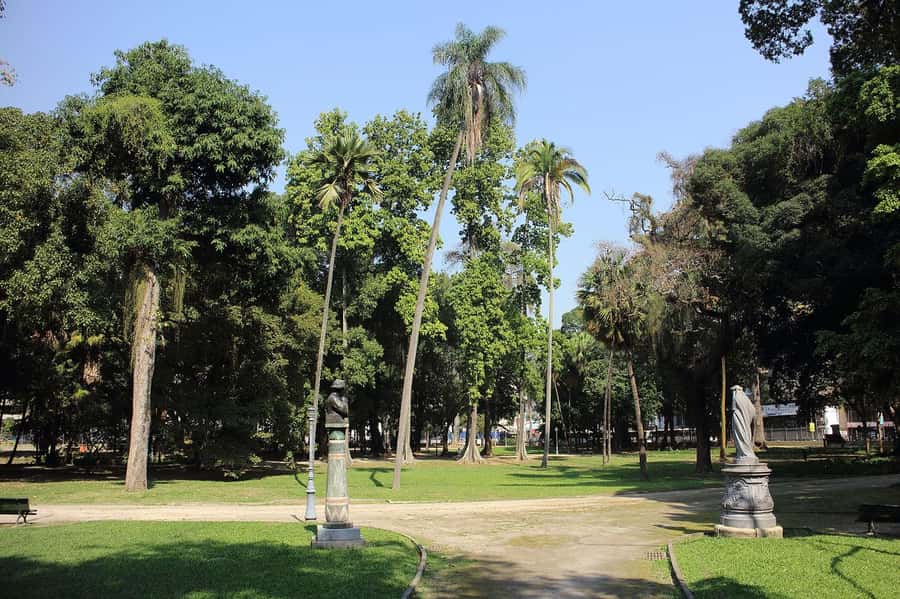
After Lapa, the route continues through Passeio Público, described as South America’s oldest public park. Its importance is easy to miss if you rush from one famous sight to another, so having a guide helps place the park within Rio’s central story.
Passeio Público gives the itinerary a green pause before the grand civic buildings of Cinelândia. I like this contrast. The tour is not simply a chain of colorful photographs. It moves between a hill district, a staircase, an old park, and a formal public square.
Cinelândia brings you back into Rio’s monumental center. Here, you see the Theatro Municipal and Biblioteca Nacional, two buildings that give the area its grand scale. These landmarks help show another side of Rio, one connected to theater, books, public institutions, and early twentieth-century ambition.
You should think of this section as an exterior architectural walk. The supplied details do not mention interior visits or entrance tickets for these buildings. That keeps the route efficient, but it also means you will not receive a full theater or library tour as part of the four hours.
Confeitaria Colombo’s Art Nouveau finish

The tour ends at Confeitaria Colombo, a famous historic café in Centro. Its interior is the reason to visit: Art Nouveau decoration, stained glass, and mirrors from France, Portugal, and Belgium create a setting far more ornate than an ordinary coffee stop.
You can order traditional Brazilian treats such as coxinha de frango, a small chicken pastry, or brigadeiro, a chocolate sweet. Food and drinks cost extra, so plan to pay separately if you want to sit down for a snack. The café is closed on Sundays, an important detail when choosing your date.
This ending works well because it turns the final stop into both sightseeing and a possible rest. After several walks and the steps, a café with tables and elaborate decoration offers a comfortable way to finish. I would not count on it as part of the tour’s included value, though. The ticket covers the guide, transportation from the stated hotel areas, and the tram ride, not refreshments.
If your schedule falls on a Sunday, the café portion will not be available. The route may still include the surrounding central sights, but the provided information does not explain the exact replacement plan. Ask the operator before booking a Sunday departure if Confeitaria Colombo is a priority.
Guide quality can shape the whole day
This tour depends heavily on the guide. Santa Teresa, the aqueduct, the steps, the park, and the civic buildings are all more meaningful when someone explains how they fit together. A strong guide can turn a pleasant walk into a clear story about Rio’s neighborhoods and changing character.
The language choices are Portuguese, English, and Spanish. That is useful for many international visitors, but English fluency may vary. One rating specifically described poor English and confusing explanations, while another described the guide as very professional and well prepared. I would take that as a reminder to confirm your preferred language clearly when reserving.
The overall score is 4.2 from five ratings, which suggests a generally positive but not flawless experience. The strongest praise centers on friendly and professional guiding. The clearest criticism concerns communication and the high price. Those are not minor points on a four-hour guided walk, so they should shape your decision.
Is $200 a fair price?
At $200 per person, you are paying for convenience more than admission-heavy sightseeing. The package includes pickup and drop-off from hotels in Copacabana, Leme, Ipanema, Leblon, and Barra da Tijuca, a Portuguese, English, or Spanish-speaking guide, and the Santa Teresa tram ticket.
You are not paying for meals, drinks, or a long list of entry tickets. The itinerary focuses on outdoor sights and guided walking, with Confeitaria Colombo available as an optional purchase at the end. That makes the price feel high if you compare it with a self-guided neighborhood walk.
The better comparison is the amount of planning avoided. Rio’s central districts can be confusing to connect, and this route brings together places that are separated by hills, stairs, and busy streets. If you have only a short stay, hotel transportation and a fixed four-hour plan may be worth the premium.
I would book it at this price only if you value structure, a multilingual guide, and the tram ride enough to pay for them together. If you are traveling on a tight budget, I would look for a less expensive walking tour or visit the areas independently.
Who should choose this experience?
I think this outing suits first-time visitors who want a broad introduction to Rio beyond the famous beaches. You get a useful mix of neighborhoods, city views, public spaces, architecture, and local food culture without committing a full day.
It also suits people who want hotel transport from the South Zone or Barra da Tijuca. That feature matters because the tour begins in Centro, not at your hotel, and the pickup removes one transfer from your morning.
The route is less suitable if you want a slow Santa Teresa art walk, a full museum visit, or an evening in Lapa. It is also a poor fit if stairs and cobblestones are difficult, since the schedule includes walking through Santa Teresa and descending Selarón Steps.
Free cancellation up to 24 hours before the activity and reserve-now, pay-later booking add flexibility. Those terms are useful if your Rio schedule is still changing, but they do not solve the central question of value.
Should you book the Lapa and Santa Teresa tram tour?
Book it if you want one organized half-day that joins Rio’s historic tram, Santa Teresa, Selarón Steps, Lapa, Passeio Público, Cinelândia, and Confeitaria Colombo. The route is varied, the tram crossing over the Arcos da Lapa is memorable, and the views toward Sugarloaf add real visual appeal.
Skip it if $200 feels too steep for a walking tour or if you prefer exploring independently. Before paying, confirm the guide language, check the departure time, avoid Sunday if Confeitaria Colombo is essential, and ask about walking conditions if stairs or uneven streets are a concern.
FAQ
How long does the tour last?
The tour lasts four hours.
What areas offer hotel pickup and drop-off?
Pickup and drop-off are included for hotels in Copacabana, Leme, Ipanema, Leblon, and Barra da Tijuca.
Which languages are available?
The live guide can provide the tour in Portuguese, English, or Spanish.
Is the Santa Teresa tram ticket included?
Yes. The ticket for the Santa Teresa tram is included.
Where does the tram ride begin?
The excursion begins in Downtown Rio, also called Centro, where you board the tram to Santa Teresa.
Does the tour cross the Arcos da Lapa?
Yes. The tram route travels across the historic Lapa Aqueduct, known as the Arcos da Lapa.
Is food included?
No. Food and beverages are not included. You can purchase items such as coxinha de frango or brigadeiro at Confeitaria Colombo.
Is Confeitaria Colombo open on Sundays?
No. Confeitaria Colombo is closed on Sundays.
Can I cancel for a full refund?
Yes. You can cancel up to 24 hours in advance for a full refund.
Newest reviews from around Rio De Janeiro
- PRIVATE TOUR – Christ the Redeemer and Sugar Loaf★ 4.5 · 9 reviews
- Christ Statue and Sugarloaf Private Tour with a Photographer★ 5.0 · 9 reviews
- Cidade do Samba Behind-the-Scenes Carnival Tour in Rio de Janeiro★ 4.0 · 5 reviews
- Christ the Redeemer and City Tour★ 5.0 · 20 reviews
- Christ the Redeemer Trail x Lage Park★ 5.0 · 7 reviews
- Christ the Redeemer, Selaron Steps and Santa Teresa Half-day Tour★ 4.5 · 15 reviews
- Christ the Redeemer Adventure★ 5.0 · 12 reviews
- Private Tour of Christ the Redeemer in Rio de Janeiro★ 5.0 · 2 reviews
Santa Teresa & Selarón Steps Tours, compared.

Rio’s Full Day: Selarón Steps, Christ & Sugarloaf – Tickets & Lunch Included
Read our review →
Christ the Redeemer, Sugarloaf, Selaron & BBQ Lunch
Read our review →
Rio’s Best_Corcovado, Sugar Loaf, Selaron, Cathedral and more
Read our review →
Full Day in Rio: Christ by Train, Sugarloaf, Selarón & Barbecue
Read our review →
Half-Day Tour: Christ the Redeemer, Selarón & Sunset at Sugarloaf
Read our review →

Santa Teresa, Lapa, and Cinelândia with Tram Ride and Selarón Steps
Read our review →Browse the lists this tour appears in