Reviewed · TOURS
Nugali Chocolates Tour – Factory
Chocolate gets more interesting when you see where it begins. Nugali Chocolates in Pomerode takes you from cocoa trees and vanilla plants to roasting, refining, tempering, molding, and tasting in a compact factory visit.
I like the real production setting and the small greenhouse, where you can see cocoa and vanilla growing instead of treating chocolate as a finished shop product. I also like the generous focus on tasting, including different chocolate flavors and even raw cocoa paste. The main drawback is simple: the tour can be much shorter than you expect, especially on days when the factory is not actively producing chocolate.
For $9.81 per person, this is an easy add-on to a day in South Brazil. It works especially well for families, chocolate fans, and anyone curious about how bean-to-bar chocolate is made. Just keep your expectations in check: this is a focused visit, not a long factory expedition.
In This Review
- Key points to know before you go
- Why Nugali makes chocolate worth stopping for
- Entering the half-timbered greenhouse
- Following cocoa from roasting to refining
- Tempering, molding, and packaging
- The tasting is more than a quick sample
- Sustainability without a lecture
- How long should you allow?
- Price and value at $9.81
- Who will enjoy this visit most?
- Booking, timing, and practical details
- Is Nugali Chocolates Factory worth booking?
- FAQ
- Where is the Nugali Chocolates Factory?
- How much does the tour cost?
- How long does the factory tour take?
- What are the regular opening hours?
- What are the end-of-year opening hours?
- What can I see during the visit?
- Is chocolate tasting included?
- Can I see chocolate being made on a Sunday?
- Does the tour include admission?
- Can I cancel or change my booking?
Key points to know before you go

- A real bean-to-bar chocolate visit: Follow the process from cocoa roasting through refining, conching, tempering, molding, and packaging.
- Cocoa and vanilla grow on site: The half-timbered greenhouse gives the tour a useful connection to the plants behind the finished chocolate.
- Tasting is part of the experience: You can sample several award-winning chocolates and try raw cocoa paste.
- The visit may take only 20 minutes: The stated duration ranges from about 20 minutes to one hour, so do not plan your whole afternoon around it.
- Sustainability is part of the story: Solar power, a zero-waste approach, stingless bees, and useful cocoa by-products are all part of what you can notice here.
- Sunday timing matters: The tour can still run when the factory is not making chocolate, but you may not see active production.
Why Nugali makes chocolate worth stopping for
Pomerode is known for its strong German cultural influence, and Nugali adds a distinctly Brazilian food experience to a visit here. Rather than presenting chocolate only as a retail product, the factory shows how local ingredients and industrial steps come together.
Nugali is described as the first bean-to-bar factory in Brazil. That phrase matters because bean-to-bar production follows the cocoa from the bean stage through the finished bar, instead of beginning with ready-made industrial chocolate. You get a clearer sense of the work involved and why different stages affect flavor and texture.
The tour also has a practical educational angle. You are not simply led past machines and told that chocolate is complicated. You can smell ingredients, see cocoa plants, and follow the chain of production in order. That makes the visit easier to understand, especially for children who may know chocolate only as something that comes in a colorful wrapper.
The experience has a very strong public reception, with a 4.9 rating from 1,540 reviews and a 97 percent recommendation rate. Those numbers suggest that the combination of factory access, tasting, and polished presentation works well for most people.
Still around Brazil, still worth a look:
- Rio de Janeiro: 6-Stop Highlights of Rio with Lunch
★ 4.4 · 5,157 reviews - Christ the Redeemer Entry Ticket by Corcovado Train
★ 4.4 · 4,476 reviews - Rio’s City Tour – Tickets for Christ, Sugar Loaf & Lunch included
★ 5.0 · 4,389 reviews
Entering the half-timbered greenhouse
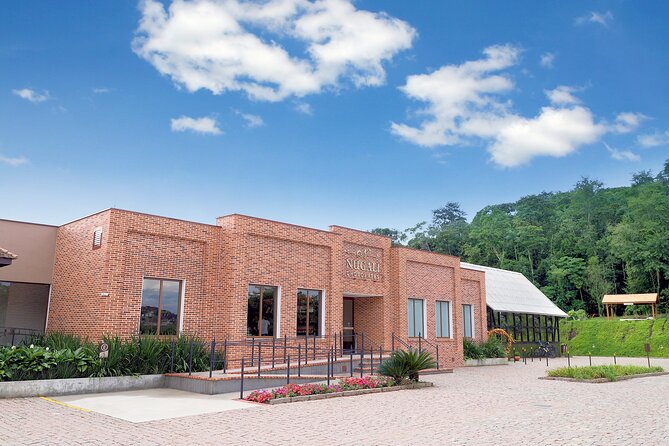
The greenhouse is one of the most unusual parts of the visit. Built using the half-timbered technique, it contains cocoa trees and vanilla trees, giving you a look at plants that are normally far removed from a chocolate counter.
This section helps put the rest of the tour in context. Cocoa does not arrive at the factory as a neat brown bar. Seeing the tree first makes the roasting, grinding, and refining stages feel less abstract.
Vanilla is another useful touch. It reminds you that chocolate flavor often depends on ingredients beyond cocoa and sugar. The greenhouse is not a replacement for a working plantation visit, but it gives you a compact introduction before you see the factory equipment.
You may also see stingless bees as part of the visit structure. That detail fits with Nugali’s environmental message and adds another small point of interest to the greenhouse area.
Following cocoa from roasting to refining
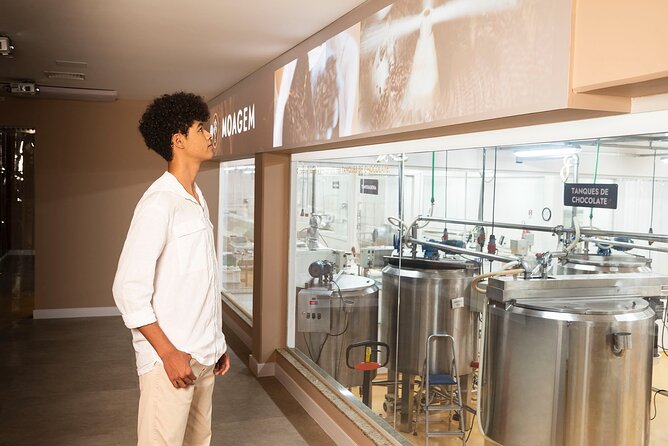
The production sequence is the heart of the tour. Nugali presents the stages in a clear order, beginning with cocoa roasting and continuing through conching and refining.
Roasting is where the cocoa develops much of its familiar aroma. This is also one of the best places to pay attention to smell. The tour encourages you to experience the aromas of the ingredients, so you can connect what you smell in the factory with the final taste in the shop.
Refining reduces the rough texture of the chocolate mixture. Conching then helps develop a smoother texture and more finished flavor. You do not need technical knowledge to enjoy this part, but it is useful to know that the smooth chocolate bar you eat is the result of several separate steps.
The factory setting makes this more convincing than a standard museum display. You are following the work in a real production space, even though the activity level can vary by day and operating schedule.
Tempering, molding, and packaging
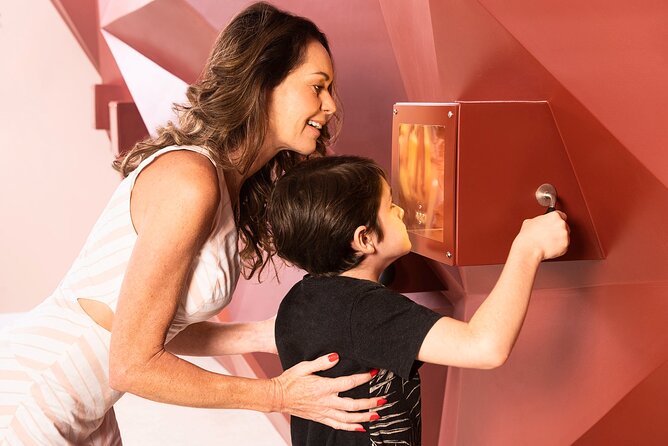
After refining and conching, the process moves to tempering. This step helps give chocolate its clean snap, smooth finish, and stable shape. It is one of those technical parts that many people have eaten without ever considering.
Next comes molding, when the chocolate takes its final form. Packaging completes the process and connects the factory floor to the products available in the shop.
The factory visit is strongest when you can see the full sequence as an active operation. On a Sunday, however, production may not be running. The tour can still be completed, but you might see the equipment and process stages without watching chocolate being made at that moment.
That is an important planning point. If active manufacturing is your main reason for going, check the operating schedule before you book. If your main goals are tasting, seeing the plants, and learning the basic process, a quieter day can still provide a worthwhile visit.
Same patch of Brazil, a completely different sort of day:
- Rafting – Brotas – Rio Jacaré Pepira
★ 5.0 · 3,814 reviews - Full Day: Christ Redeemer, Sugarloaf, City Tour & Barbecue Lunch
★ 4.5 · 3,142 reviews - Rio de Janeiro: Rocinha Favela Walking Tour with Local Guide
★ 4.8 · 3,052 reviews - Rio de Janeiro: Sugarloaf Cable Car Official Ticket
★ 4.6 · 2,873 reviews
The tasting is more than a quick sample
The tasting gives the visit its most immediate reward. You can freely sample flavors of Nugali’s award-winning chocolate, and the selection may include different types rather than a single standard piece.
You can also taste raw cocoa paste. This is a useful comparison because it shows how different cocoa can taste before it becomes the familiar sweet chocolate most people know. It may be a surprise if you expect every sample to taste like a candy bar.
The tasting also helps explain why production choices matter. Roasting, refining, conching, and tempering are not just factory vocabulary. They change what you experience in your mouth.
One practical tip: leave room in your schedule and appetite for the shop at the end. Chocolate purchases are an obvious part of the visit, but you can also buy small bags of cocoa shell remains for use in a garden. That unusual by-product makes a better souvenir than another standard bar if you want something connected to the factory’s production process.
Sustainability without a lecture
Nugali includes its sustainability work as part of the visit. The factory uses solar power on a large scale and follows a zero-waste policy, according to the information presented during the experience.
These details give the tour more substance. You are not only learning how a product is made, but also seeing how the company handles energy and waste. The cocoa remains sold for garden use offer a simple example of turning a production by-product into something useful.
The small garden, cocoa plants, and stingless bees also support the environmental message. None of this turns the tour into a long environmental program, and that is probably a good thing. The sustainability points work best because they are tied to things you can see around you.
If you enjoy food tours with an ethical or environmental angle, this will add value. If you only want a quick chocolate tasting, these details are easy to appreciate without taking up the whole visit.
How long should you allow?
The stated duration ranges from 20 minutes to one hour. That is a wide range, and you should plan around the shorter end unless you know a longer session is scheduled.
The visit includes several sections: the introductory presentation, greenhouse, factory stages, tasting, and shop. A short visit may feel brisk, particularly if you expected a long guided walk through a working plant.
One short tour can begin with a brief film, continue through the chocolate plant area, and end with a tasting. That format gives you the essential story, but it does not leave much time for lingering.
If you are already visiting Pomerode, the flexible length is useful. You can fit Nugali between other stops without committing half a day. If you are making a special trip only for the factory, the short duration may feel less satisfying.
The facility is open daily from 9:00 a.m. to 6:00 p.m., with the last session listed at 5:50 p.m. The ticket redemption information lists hours from 9:30 a.m. to 5:00 p.m. Because those times differ, check the current session and redemption hours before setting out.
Price and value at $9.81
At $9.81 per person, Nugali is reasonably priced for a factory visit that includes a tasting and access to several production areas. The value is strongest if you enjoy learning how food is made rather than treating the stop as a simple shop visit.
You are paying for more than samples. The experience covers cocoa and vanilla plants, factory machinery, production methods, sustainability, and packaging. The tasting gives you an edible conclusion, which helps justify the admission cost.
The value drops slightly if your visit happens when the factory is not producing chocolate. You can still see the layout and learn the process, but active machinery and fresh production would make the experience feel more complete.
I would consider it good value for a family outing because the visit is easy to understand and includes several sensory elements. For a solo chocolate shopper who only wants to buy bars, the admission may be less necessary.
Who will enjoy this visit most?
This is a good choice for families. The plants, machinery, film, aromas, tasting, and shop create enough variety to hold attention better than a talk focused only on chocolate history.
It also suits food-focused visitors who like seeing production close up. The tour explains the difference between cocoa paste and finished chocolate, and the factory stages give you a better idea of why high-quality chocolate takes time.
People interested in sustainability will find extra value in the solar power, zero-waste approach, cocoa by-products, and stingless bees. Those features are not the entire tour, but they make it more thoughtful.
You may want to skip it if you want a long, highly detailed factory tour with constant live production. The visit is compact, and factory activity is not guaranteed every day.
Booking, timing, and practical details
The meeting and ticket redemption point is Rua Testo Alto, 4848, in Testo Alto, Pomerode, Santa Catarina, postal code 89107-000.
Confirmation is sent within 48 hours of booking, subject to availability. The experience is non-refundable and cannot be changed after booking, so choose your date carefully before paying.
Most people can participate. The supplied information does not list special physical requirements, age restrictions, or transport arrangements, so you should plan your own way to the factory.
Book about 12 days ahead if you want to follow the usual booking pattern, particularly during a busy holiday period. The end-of-year schedule is different: December 24 and December 31 are open only until 11:30 a.m., while December 25 and January 1 are closed.
For the best chance of seeing active production, confirm which days the factory is operating. The tour can continue on Sundays, but the chocolate-making area may not be running.
Is Nugali Chocolates Factory worth booking?
Yes, if you are in or near Pomerode and want a short, affordable food experience with real production, plant displays, and tasting. I especially like the chance to see cocoa and vanilla before following the beans through roasting, refining, conching, tempering, molding, and packaging.
Book it with realistic expectations. This is often a 20-minute visit rather than a full hour, and Sunday may offer a quieter factory view. If that limitation works for your schedule, the $9.81 price is fair, the chocolate is the main reward, and the sustainability details make the stop more interesting than a standard confectionery shop.
FAQ
Where is the Nugali Chocolates Factory?
The factory is at Rua Testo Alto, 4848, in Testo Alto, Pomerode, Santa Catarina, Brazil.
How much does the tour cost?
The listed price is $9.81 per person.
How long does the factory tour take?
The visit takes approximately 20 minutes to one hour.
What are the regular opening hours?
The factory is listed as open every day from 9:00 a.m. to 6:00 p.m., with the last session at 5:50 p.m.
What are the end-of-year opening hours?
On December 24 and December 31, the factory is open until 11:30 a.m. It is closed on December 25 and January 1.
What can I see during the visit?
You can see a half-timbered greenhouse with cocoa and vanilla trees, as well as the stages of roasting, conching, refining, tempering, molding, and packaging chocolate.
Is chocolate tasting included?
Yes. The admission includes free tasting of Nugali chocolate flavors, including the opportunity to try raw cocoa paste.
Can I see chocolate being made on a Sunday?
The tour can take place on Sunday, but the factory may not be producing chocolate that day. You can still see the factory and complete the visit.
Does the tour include admission?
Yes, the admission ticket is included in the experience.
Can I cancel or change my booking?
No. The experience is non-refundable and cannot be changed for any reason. Confirmation is sent within 48 hours, subject to availability.
Newest reviews from around Brazil
- PRIVATE TOUR – Christ the Redeemer and Sugar Loaf★ 4.5 · 9 reviews
- Christ Statue and Sugarloaf Private Tour with a Photographer★ 5.0 · 9 reviews
- Cidade do Samba Behind-the-Scenes Carnival Tour in Rio de Janeiro★ 4.0 · 5 reviews
- Christ the Redeemer Trail x Lage Park★ 5.0 · 7 reviews
- Christ the Redeemer and City Tour★ 5.0 · 20 reviews
- Christ the Redeemer, Selaron Steps and Santa Teresa Half-day Tour★ 4.5 · 15 reviews
- Christ the Redeemer Adventure★ 5.0 · 12 reviews
- Private Tour of Christ the Redeemer in Rio de Janeiro★ 5.0 · 2 reviews
Tours, compared.

Rio’s City Tour – Tickets for Christ, Sugar Loaf & Lunch included
Read our review →
Full Day: Christ Redeemer, Sugarloaf, City Tour & Barbecue Lunch
Read our review →

São Paulo’s Full Day City Tour: Main City Sights in 7 Hours – (Shared Group)
Read our review →