
Reviewed · SALVADOR & BAHIA TOURS
Mysteries of Candomblé: Private Afro-Brazilian Religion Tour
Candomblé is best understood in context. This four-hour private tour links Salvador’s museums, churches, shrines, and sacred spaces to the Afro-Brazilian religion that has shaped Bahia for centuries. I like the thoughtful route, especially the Afro-Brazilian Museum and the visit to a working terreiro. I also like having private transport, since Salvador’s traffic and spread-out sights can make independent sightseeing slow.
The main consideration is its focus. You will learn about Candomblé, African heritage, and related places of worship, but this is not a full tour of slavery, colonial politics, or Salvador’s wider social history. At $120 per person, it offers good value for a private four-hour outing, though the price makes the most sense if you want personal conversation and a focused religious and cultural theme.
In This Review
- Key things to know before you book
- Why Candomblé makes sense as a Salvador theme
- Starting with African heritage at the Afro-Brazilian Museum
- Meeting a living religious tradition at the terreiro
- Seeing the orixás at Dique do Tororó
- Photography and memory at the Pierre Verger Space
- Iemanjá beside the Atlantic in Rio Vermelho
- Casa do Benin and Salvador’s Atlantic connections
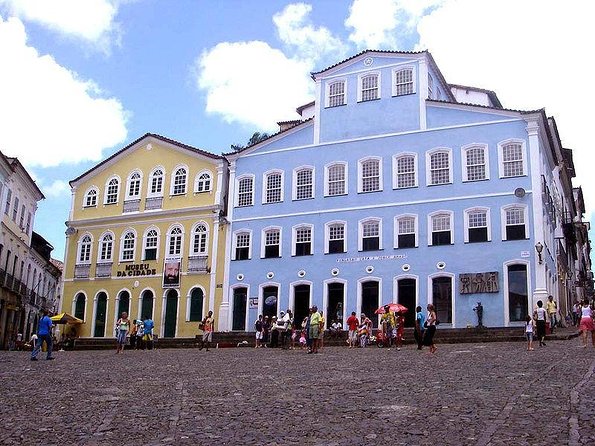
- The Black Rosary Church in Pelourinho
- How the route works in four hours
- Is $120 per person a fair price?
- Who should choose this private tour?
- Should you book it?
- FAQ
- How long does the Candomblé tour last?
- How much does the tour cost?
- Is hotel transportation included?
- Which Candomblé temple will I visit?
- Will I take part in a Candomblé ceremony?
- Can I consult the sacred oracle?
- What should I wear?
- Can I cancel for a full refund?
Key things to know before you book
- A rare visit to a Candomblé terreiro: Depending on availability and the religious calendar, you visit Kwe Vodun Zo or Ilê Axé Oxumarê.
- Private transport saves time: Hotel or port pickup, an air-conditioned vehicle, and drop-off are included.
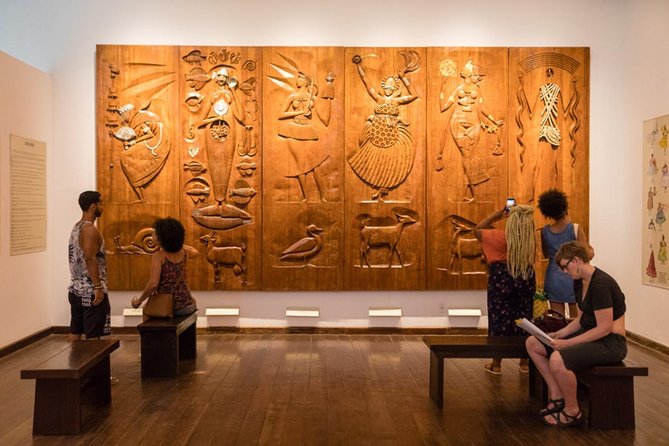
- Carybé’s wooden panels add context: The Afro-Brazilian Museum gives you a useful starting point before the sacred sites.
- The tour connects many parts of Salvador: Pelourinho, Dique do Tororó, Federação, Liberdade, and Rio Vermelho all appear in the route.
- Dress properly or risk refusal: Knees and shoulders must be covered at places of worship and selected museums.
- The strongest praise goes to the guides: Wagner is singled out for clear explanations and personal insight, while driver Fábio received warm praise for handling Salvador traffic.
Why Candomblé makes sense as a Salvador theme
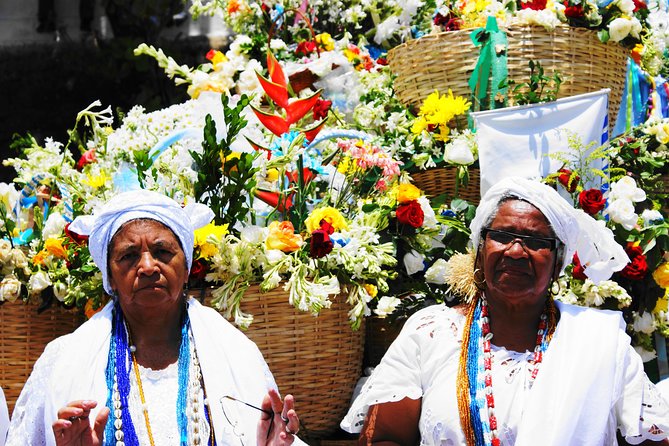
Candomblé is not a museum subject kept behind glass. It is a living Afro-Brazilian religion with sacred spaces, deities known as orixás, ceremonies, music, offerings, plants, and long religious lineages. A good introduction needs more than a quick explanation of names and symbols.
This tour works because it builds a chain of connections. You begin with objects and images in museums, then see orixás represented in public art, visit a terreiro, and finish with churches and shrines shaped by Afro-Brazilian faith. You get a better sense of how African traditions survived, adapted, and became part of Salvador’s public identity.
The private format helps here. You can ask direct questions without waiting for a large group, and the guide can adjust the conversation to your interests. Wagner receives the strongest praise for explaining the religion in clear English and bringing in personal experience. That matters when the subject includes unfamiliar terms and beliefs.
Still, I would not book this expecting a dramatic ceremony. The temple visit is described as a respectful daytime visit to authorized outdoor and common areas. It is educational, not participation in a ritual. The sacred oracle may be available as part of the experience, but access depends on the community and its religious calendar.
A few more Salvador da Bahia days to weigh up
- Round trip transfer, Salvador, Bahia, Brazil
★ 5.0 · 228 reviews - Salvador City Tour – Discover Brazil’s First Capital En, It, Es
★ 5.0 · 217 reviews - Cooking class in Salvador, an authentic dinning experience
★ 5.0 · 132 reviews
Starting with African heritage at the Afro-Brazilian Museum
The Afro-Brazilian Museum in Pelourinho is the right place to begin. Its exhibits cover African art, Candomblé, orixá representations, textiles, sculptures, sacred objects, and other pieces tied to the African influence on Brazilian culture.
You have about 40 minutes here. That is enough for an introduction, but not enough to read every label or study every gallery at length. I would pay close attention to the objects connected with Candomblé, since they prepare you for the symbols you will see later.
The museum also displays the famous wooden panels carved by Carybé. These give the visit a strong visual focus and help show how Afro-Brazilian religious figures have been represented through art. The museum is not simply a stop to check off. It gives you basic vocabulary before the more personal and sacred parts of the outing.
If your main interest is the history of slavery in Brazil, this museum helps, but it will not answer every question. One dissatisfied response made this limit clear: the tour’s central subject is Candomblé, not a full study of slavery, colonial rule, and the modern treatment of that past. If those subjects matter most to you, choose a tour designed around them instead.
Meeting a living religious tradition at the terreiro
The terreiro visit is the heart of the experience. You may visit Kwe Vodun Zo, a historic Jeje Vodun house in Liberdade, or Ilê Axé Oxumarê in Federação, one of Bahia’s oldest and most respected Candomblé temples. The choice depends on availability and each community’s religious calendar.
You have roughly 50 minutes at the temple. Expect an explanation of the house’s history and spiritual lineage, along with discussion of sacred plants, architecture, common areas, and traditions. The setting gives you a chance to understand a terreiro as a community and a place of identity, rather than treating it as a theatrical attraction.
Approach this stop with respect. You are entering a religious setting, so modest clothing is required. No shorts or sleeveless tops are allowed, and both men and women must cover their knees and shoulders. These rules apply at places of worship and selected museums, and failing to follow them may mean refused entry.
The description includes an opportunity to consult the sacred oracle, but the more detailed explanation stresses that the visit is not a ritual or ceremony. I would treat an oracle consultation as something that may be available, not something to demand or assume. The best experience comes from listening carefully and allowing the religious community to set the limits.
Seeing the orixás at Dique do Tororó
Dique do Tororó provides a change of pace. After the museum and terreiro, you stop beside a lake surrounded by vegetation and see the large floating sculptures of orixás created by Tati Moreno.
The stop lasts about 20 minutes. That makes it a quick photo and orientation stop, not a long lakeside walk. Still, the sculptures are more than decoration. They bring Afro-Brazilian religious figures into a public setting and show how Candomblé imagery appears in Salvador’s civic spaces.
I like this stop because it connects belief with the city itself. You are not studying an isolated religious object. You are looking at public art beside water, with Salvador’s daily life continuing around it. The view also gives the tour a pause between indoor museums and the next cultural sites.
Same patch of Brazil, a completely different sort of day:
- Tour to the Frades Islands and Itaparica, from Salvador – Ba
★ 4.0 · 130 reviews - Transfer Salvador Airport / Hotel Litoral Norte
★ 5.0 · 111 reviews - Private City Tour in Salvador
★ 5.0 · 110 reviews - Tour Praia do Forte and Guarajuba, Leaving Salvador-Bahia.
★ 4.5 · 97 reviews
Photography and memory at the Pierre Verger Space
The Pierre Verger Space of Bahian Photography focuses on Pierre Verger, the French photographer and researcher who documented Afro-Brazilian culture, as well as photographers from Bahia. The displays include images of daily life, Candomblé rituals, popular celebrations, and Salvador’s links with Africa.
You have about 20 minutes here. That is a short visit, so I would focus on the images that connect directly to the tour’s religious theme. Photography can explain details that a guide cannot always convey, particularly gestures, clothing, ceremonies, and the role of public celebrations.
Admission is not included at this stop, so carry a little extra money for the entry fee. The price is a small practical detail, but it is worth noting because most of the named admissions are included or free.
Iemanjá beside the Atlantic in Rio Vermelho
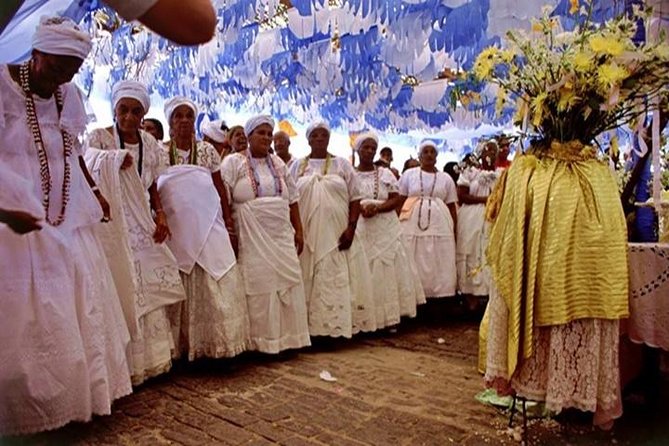
Casa de Iemanjá, in Rio Vermelho, is a small oceanfront shrine dedicated to Iemanjá, the Afro-Brazilian deity of the sea. You can see offerings, images, and symbolic objects left by devotees throughout the year, along with the shrine’s blue-and-white exterior.
The visit takes about 20 minutes. It is a quiet stop for photographs and a short explanation of Iemanjá’s place in Candomblé and Salvador’s local culture. The Atlantic view adds a strong sense of place, but do not expect a large museum or a long indoor visit.
Your guide will also explain the importance of the Festa de Iemanjá on February 2, one of Salvador’s best-known celebrations. Even if you visit at another time of year, the shrine helps you understand why the sea has such a strong religious presence in the city.
Casa do Benin and Salvador’s Atlantic connections
Casa do Benin looks west across the Atlantic to the connection between Salvador and Benin. Its displays include masks, sculptures, textiles, photographs, everyday objects, and works associated with Pierre Verger.
This 20-minute stop adds an important international layer. Salvador’s African heritage is not a vague idea. It is tied to specific West African places, artistic traditions, and long exchanges across the Atlantic. The museum helps you see Bahia as part of a wider Afro-Atlantic story.
The visit is brief, so you will not get a full course in Beninese history. Instead, treat it as a compact cultural link between the museum displays, the terreiro, and the other Afro-Brazilian sites on the route.
The Black Rosary Church in Pelourinho
The Church of Our Lady of the Rosary of the Black People is one of the most moving stops for understanding Afro-Brazilian religious life. Located in Pelourinho, it was built over almost 100 years by enslaved and free Black artisans.
You have about 20 minutes to see the blue façade, interior religious art, and details connected with the Black brotherhood that founded the church. Its importance comes from the combination of faith, craftsmanship, and community organization.
This church also shows that Afro-Brazilian religious history cannot be separated neatly from Catholicism. Enslaved and free Black people created institutions and devotional spaces within a Catholic framework, while African traditions continued to shape identity and spiritual practice. The church gives the tour a useful historical counterpoint to the terreiro.
Admission is included. As with the other religious sites, dress modestly and follow the guide’s instructions.
How the route works in four hours
The listed stops add up to about three hours and 10 minutes of scheduled visiting time. The tour itself lasts approximately four hours, so the remaining time covers driving, hotel or port pickup, traffic, and movement between sites.
That schedule is full. You will see many places, but most visits are short. The Afro-Brazilian Museum and terreiro receive the longest visits, which is sensible. The other stops work as focused introductions rather than extended tours.
Private transport makes a real difference. Salvador’s sights are spread across several districts, and traffic can be slow. An air-conditioned private vehicle lets you move between locations without arranging separate taxis or losing time with a large group. Driver Fábio received particular praise for managing congested roads, a useful advantage on a compact itinerary.
The route can change. If a site is closed for a holiday or another reason, substitutions may be made. São Joaquim Market has served as a memorable alternative on one outing, while rain has also affected the number of places possible. I would see this flexibility as practical, but confirm the final route if a specific stop matters most to you.
Is $120 per person a fair price?
At $120 per person, this is not a bargain sightseeing bus. It is a private cultural tour with hotel or port transport, an air-conditioned vehicle, a guide, and several admissions included.
The value depends on how you travel. If you are alone or with one other person, the cost is significant. If you have a small group sharing the private vehicle and guide, the price becomes easier to justify. You are paying for a focused subject, direct questions, and access to a terreiro that would be difficult to arrange casually.
The tour also saves planning time. You do not need to match opening hours, find the temple, negotiate transport, or work out the best order of distant stops. For a first visit to Salvador, that convenience has real value.
The price does not include food or drinks. The tour lasts only about four hours, so plan your meal separately. One other practical note: it is commonly booked about 15 days ahead, so I would not leave it until the last day of a short Salvador stay.
Who should choose this private tour?
I would recommend it to you if you want:
- A clear introduction to Candomblé and Afro-Brazilian religious life
- A private guide who can answer personal questions
- A mix of museums, public art, shrines, churches, and a terreiro
- Hotel or port transport instead of navigating Salvador alone
- A respectful cultural visit rather than a staged performance
- Strong visual material, particularly photography, sculpture, and sacred art
I would choose another tour if your main goal is slavery memorials, colonial architecture, food, nightlife, or a full treatment of Salvador’s social history. Those subjects may appear around the edges, but they are not the main purpose here.
English ability also matters if you need detailed explanations. Wagner is praised for a strong command of English and for making the religion understandable. The guide’s personal connection to the subject can make the conversation more engaging, though your experience depends on the guide assigned that day.
Should you book it?
Book this tour if Candomblé is a serious interest and you want more than a quick church visit or a museum label. The combination of the Afro-Brazilian Museum, a real terreiro, orixá sculptures, Casa de Iemanjá, Casa do Benin, and the Black Rosary Church gives you a well-shaped introduction to Salvador’s African heritage.
Before booking, make sure you accept the limits: four hours goes quickly, some stops are brief, the route can change, and the temple visit is educational rather than a guaranteed ceremony or ritual. Wear clothing that covers your knees and shoulders, and allow for the extra admission fee at the Pierre Verger Space.
For the right visitor, this is one of the more meaningful ways to approach Salvador. You leave with places, images, and religious context tied together, rather than a collection of disconnected sights.
FAQ
How long does the Candomblé tour last?
The tour lasts approximately four hours.
How much does the tour cost?
The listed price is $120 per person.
Is hotel transportation included?
Yes. Hotel or port pickup and drop-off are included, along with transport in an air-conditioned private vehicle.
Which Candomblé temple will I visit?
You may visit Kwe Vodun Zo or Ilê Axé Oxumarê. The choice depends on availability and the religious calendar of each community.
Will I take part in a Candomblé ceremony?
No. The temple visit is described as a respectful daytime educational visit to authorized outdoor and common areas, not participation in rituals or ceremonies.
Can I consult the sacred oracle?
The experience offers an opportunity to consult the sacred oracle, but availability depends on the religious community and its calendar.
What should I wear?
You must cover your knees and shoulders. Shorts and sleeveless tops are not allowed at places of worship and selected museums, for both men and women.
Can I cancel for a full refund?
Yes, if you cancel at least 24 hours before the experience start time. Cancellations made less than 24 hours in advance are not refunded, and late changes are not accepted.
Newest reviews from around Salvador da Bahia
- Transfer North-Ba Coast and Salvador Airport★ 5.0 · 25 reviews
- Curated Nightlife Experience in the Heart of the City★ 3.5 · 5 reviews
- One-Way Private Transfer to Boipeba Island★ 5.0 · 21 reviews
- Transfer Costa do Sauipe – Private★ 5.0 · 2 reviews
- Ilhas Maravilhas Frades and Itaparica Full Day Tour, Salvador, Bahia, Brazil★ 3.5 · 13 reviews
- Salvador de Bahia: Private Round-Trip Airport–Hotel Transfer★ 4.5 · 25 reviews
- Transfer Salvador to Barra Grande Round Trip★ 5.0 · 3 reviews
- Hotel Vila Galé Mares – Transfers In / Out★ 5.0 · 29 reviews
Salvador & Bahia Tours, compared.

Salvador City Tour – Discover Brazil’s First Capital En, It, Es
Read our review →
Cooking class in Salvador, an authentic dinning experience
Read our review →
Tour to the Frades Islands and Itaparica, from Salvador – Ba
Read our review →
Itinerary 1:CAVES – Booking from 2 people – Chapada Diamantina by Zentur
Read our review →
Transfer Salvador Airport / Hotel Litoral Norte
Read our review →

Browse the lists this tour appears in