
Reviewed · 6-DAY EXPERIENCES
JALAPÃO 6 DAYS – Nature and Culture
Brazil’s wild side starts here. This Jalapão expedition mixes golden dunes, clear lagoons, warm floating springs, waterfalls, canyon walks, rafting, and time with quilombola communities. I especially like the way the route gives equal weight to nature and local culture, and I like that meals and overnight stays support families in the region.
The biggest consideration is the road time. You will spend long hours in a shared 4×4 on rough dirt roads, and the pre-dawn hike to Serra do Espírito Santo is demanding. The tour is also marketed as six days, but the full program takes about eight days, including two nights in Palmas and airport transfers.
The company has earned a 5 rating from 525 reviews, with every rating recommending the experience. Praise centers on smooth organization, caring guides, clean pousadas, homemade food, and meaningful contact with local communities. Guides named in past trips include Hugo, Lucas, Ouro, Léo, Italo, Luiz, and Ourinho, though your guide will depend on the departure.
In This Review
- Five things to know before you book
- Why Jalapão works best as a slow expedition
- Day 1 in Palmas: arrive without rushing
- Day 2: Taquaruçu adds zip lines and waterfalls
- Day 3: Pedra Furada and the colors of Lagoa do Japonês
- Day 4: canyon walls, a river beach, and golden dunes
- Day 5: floating springs and the golden grass community
- Day 6: a 4 a.m. sunrise and Jalapão’s best water
- Day 7: optional rafting and the final waterfalls
- What the price includes, and where extra costs appear
- Comfort, language, group size, and physical effort
- Who should book this expedition
- Should you book JALAPÃO 6 DAYS?
- FAQ
- How long does the full experience last?
- Where does the tour start?
- Where does the tour finish?
- What type of vehicle is used?
- Is a guide included?
- Are meals included?
- Are attraction entrance fees included?
- Is rafting included?
- How difficult is the Serra do Espírito Santo hike?
- Can most people join the tour?
Five things to know before you book
- The tour runs about eight days: Six days hold the main Jalapão program, with arrival and departure time in Palmas.
- You travel in a shared air-conditioned 4×4: The group can reach 12 people, so expect company and limited space for luggage.
- The cultural visits are a real part of the route: You stay in or visit quilombola communities, eat family-prepared meals, and see golden grass crafts.
- The water stops are varied: Fervedouros offer floating pools, while waterfalls, rivers, and Lagoa do Japonês bring different kinds of swimming.
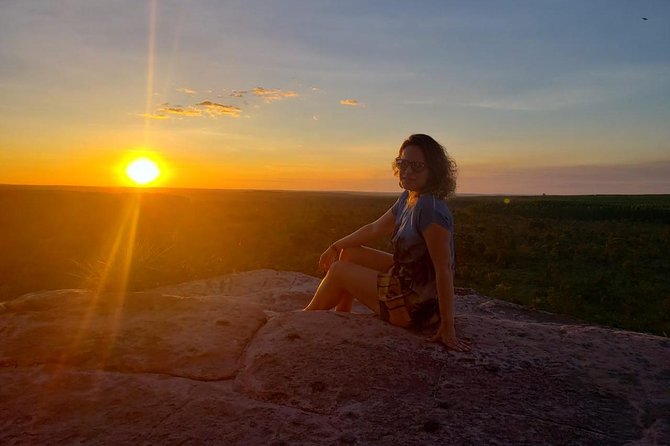
- Day six begins at 4 a.m.: The Serra do Espírito Santo sunrise is one of the trip’s major rewards, but the hike is rated medium to difficult.
- Several costs are already covered: Accommodation, meals listed in the program, attractions, water, transfers, insurance, and the vehicle are included, but flights, rafting, zip lining, and a bilingual guide cost extra where applicable.
Why Jalapão works best as a slow expedition

Jalapão is not a single attraction with a neat entrance gate and a paved road. It is a wide region of the Brazilian Cerrado, with long distances between springs, waterfalls, dunes, communities, and trailheads. That explains the 4×4 vehicle, the early starts, and the frequent changes of accommodation.
I like the route because it does not treat the region as a quick photo stop. You see famous places such as the dunes and Fervedouro Bela Vista, but you also eat at community associations, learn about babassu coconut, see golden grass work in Mumbuca, and spend nights in quilombola communities.
The pace is active. Most days contain three to five stops, and drives on dirt roads can take several hours. You should enjoy changing scenery, basic regional lodging, and a bit of dust. If you need long, quiet afternoons at a resort, this is the wrong trip.
Still around Brazil, still worth a look:
- Rio de Janeiro: 6-Stop Highlights of Rio with Lunch
★ 4.4 · 5,157 reviews - Christ the Redeemer Entry Ticket by Corcovado Train
★ 4.4 · 4,476 reviews - Rio’s City Tour – Tickets for Christ, Sugar Loaf & Lunch included
★ 5.0 · 4,389 reviews
Day 1 in Palmas: arrive without rushing
Palmas is the air gateway for Jalapão. The company picks you up at the airport and transfers you to Select Hotel, where the first night begins. Since the main expedition starts the next morning, you can use this day to see the capital of Tocantins or simply rest after your flight.
This overnight stop is practical rather than thrilling. It gives you a buffer before the rougher part of the trip and reduces the risk of joining the 4×4 route tired or delayed. The package includes two accommodations in Palmas, one at the beginning and one at the end.
The listed start time is 8 a.m. You should have breakfast before setting out and keep essentials easy to reach in the vehicle.
Day 2: Taquaruçu adds zip lines and waterfalls
The first active day heads from Palmas to Taquaruçu, a useful introduction to the region before the remote Jalapão roads begin. At around 8 a.m., you reach Tirolesa Vôo do Pontal, described as the longest zip line in northern Brazil. The activity takes about two hours and admission is included.
The zip line gives you a fast, high view of the area, but it is optional in spirit even if it is built into the schedule. If you dislike heights, ask about the practical arrangements before booking. The supplied details do not state age, weight, or medical restrictions.
Next comes Escorrega Macaco and Roncadeira Waterfall. Roncadeira drops about 60 meters, and the two-hour visit gives you time to see the falls and recover from the morning activity. After lunch, Cachoeira do Evilson provides another water stop, with about three hours allocated to the visit.
The day ends with a babassu coconut experience hosted by a traditional family. This is the first clear sign that the trip is more than a collection of scenic stops. You get a closer look at a local ingredient and the work connected to it, rather than simply passing through for a photograph.
Day 3: Pedra Furada and the colors of Lagoa do Japonês
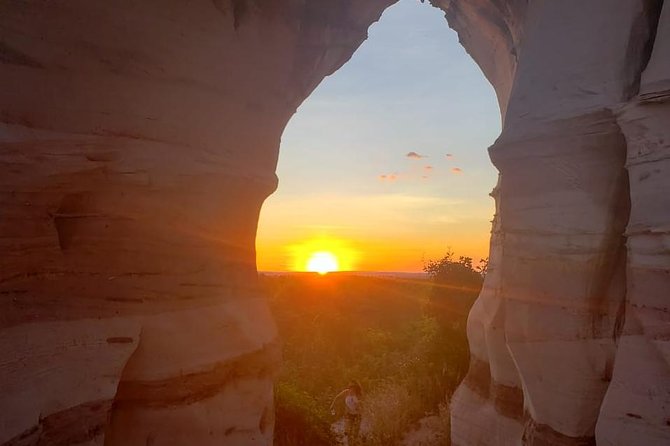
After breakfast, you leave Taquaruçu at 8 a.m. and reach Ponte Alta, known here as the Portal do Jalapão, around 10:30. Morro da Pedra Furada is the first major viewpoint. Wind and weather have shaped openings in the rock, creating one of the region’s most recognizable formations.
The two-hour stop is about geology, open views, and photographs. Bring sun protection and water, even though the operator supplies drinking water for hydration.
After lunch, Lagoa do Japonês changes the mood. The water is described as clear, with emerald and blue tourmaline tones. You have around two hours at the lagoon before returning to Ponte Alta for the night and dinner around 8 p.m.
This is a long day with a straightforward rhythm: one rock formation, one water stop, and a return to town. Ponte Alta is an important staging point before the longer dirt-road crossing into the central part of Jalapão.
Same patch of Brazil, a completely different sort of day:
- Rafting – Brotas – Rio Jacaré Pepira
★ 5.0 · 3,814 reviews - Full Day: Christ Redeemer, Sugarloaf, City Tour & Barbecue Lunch
★ 4.5 · 3,142 reviews - Rio de Janeiro: Rocinha Favela Walking Tour with Local Guide
★ 4.8 · 3,052 reviews - Rio de Janeiro: Sugarloaf Cable Car Official Ticket
★ 4.6 · 2,873 reviews
Day 4: canyon walls, a river beach, and golden dunes
Day four begins at 8 a.m. and includes a total of about 190 kilometers of dirt road as you cross from Ponte Alta toward the heart of Jalapão. That distance matters. The 4×4 is not a luxury add-on here. It is the reason the route can connect these remote places.
Cânion Sussuapara is the first stop. Water runs down the narrow rock walls, creating the impression of constant rain. The two-hour visit is short enough to fit the route but long enough to appreciate the shaded canyon atmosphere.
Around noon, you reach the Rio Novo Quilombola Community. A paçoca de carne seca experience introduces a regional dish made with dried meat. After a rest, you visit a small beach by the Rio Novo, where the water is described as suitable for drinking.
The final stop is the Jalapão dunes. The sand glows golden, and the sight becomes especially memorable if the timing allows for sunset. You then continue to a pousada in Mateiros, with dinner around 8 p.m.
This is one of the most photogenic days, but also one of the roughest. The dirt-road mileage can feel tiring after several hours in a vehicle. The payoff is the contrast between enclosed canyon, river water, and open sand.
Day 5: floating springs and the golden grass community
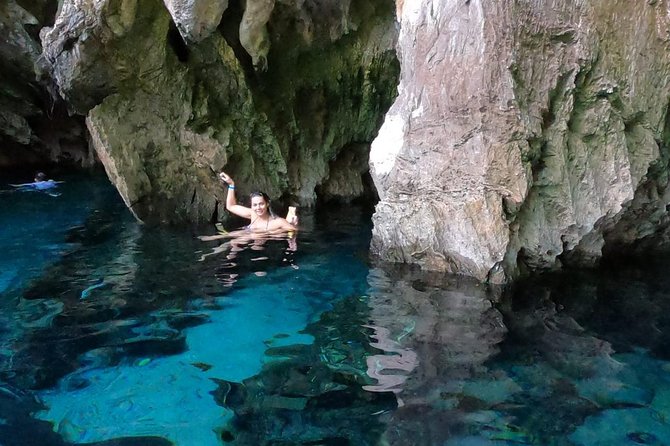
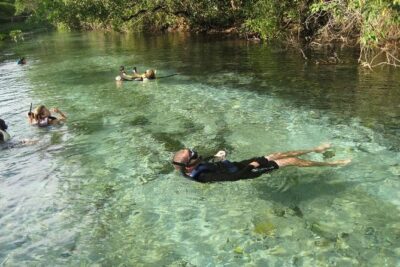
Day five is devoted to fervedouros, the spring-fed pools for which Jalapão is famous. The unusual sensation comes from water pressure pushing upward, allowing you to float rather than sink. The route uses a gradual order, moving from weaker to stronger water pressure.
Fervedouro Encontro das Águas begins the sequence, followed by Fervedouro Buritizinho, described as especially good for photographs. Each visit lasts about one to two hours, so you have time to experience the water rather than make a rushed stop.
Mumbuca provides the cultural center of the day. The community has a legacy of more than 300 years and is closely connected with golden grass, one of the signature crafts of the region. You have lunch there and can see capim sewing, a Viola de Buriti experience, traditional knowledge associated with the Doutora do Cerrado, and the community craft shop.
The golden grass is not just a souvenir theme. It connects local plant material, family skill, design, and income. Buying directly from the community shop gives the cultural visit a practical side, though the program does not specify prices or payment methods.
The final water stops are Fervedouro do Buriti and Fervedouro do Ceiça. Buriti belongs to a local family, while Ceiça is described as the oldest fervedouro open to the public. This is a full day of repeated swimming stops, so bring a dry change of clothes and keep your expectations realistic: the appeal is the strange floating feeling and clear water, not a long swim in one large pool.
Day 6: a 4 a.m. sunrise and Jalapão’s best water
The early start is not a joke. You wake at 4 a.m. and drive to Serra do Espírito Santo to catch the dawn. The climb is about 750 meters and is rated medium to difficult. In clear weather, the stars and sunrise are major highlights, but you need enough fitness for a steep and dark pre-dawn walk.
You return to the pousada for breakfast around 8 a.m. This timing makes the day feel almost like two trips in one: a serious viewpoint hike before breakfast, then a series of easier water stops.
Cachoeira do Formiga is known for clear water and a relaxing swim. The two-hour visit is a welcome change after the climb. Fervedouro das Macaúbas follows, offering another floating-spring experience with its own feel.
Lunch takes place at the Quilombola do Prata community association. Families take turns preparing the meal, and you also have coffee with brown sugar. This arrangement puts food and local income directly into the community rather than treating the village as a staged backdrop.
The day ends at Fervedouro Bela Vista, described as the largest and best known in Jalapão. Afterward, you return to the pousada for dinner around 8 p.m. It is another long day, but the mix of dawn, waterfall, spring, and community meal gives it strong variety.
Day 7: optional rafting and the final waterfalls
The rafting section is rated easy. Preparation begins at 8:30 a.m., with mandatory equipment and instructions, followed by departure at 9 a.m. The boat travels about 12 kilometers and reaches Praia das Araras around 11:30 a.m.
The logistics are specific: you leave São Félix, drive 10 kilometers to the rafting entrance, leave the cars, and continue by boat. The start is about 18 kilometers from the town center. Rafting admission is not included, and the program says you may do it the night before without changing the rest of the itinerary.
For those not rafting, the day includes Fervedouro do Alecrim, the oldest fervedouro in São Félix, followed by Cachoeira das Araras. These stops provide a gentler farewell to Jalapão’s water.
At around 3 p.m., the route passes Morro da Catedral for photographs before returning to Palmas by late afternoon. Dinner is free that night, so budget for it separately.
What the price includes, and where extra costs appear
At $1,276.48 per person, the price is not a cheap weekend outing. It covers a long, complicated route with a shared air-conditioned 4×4, local environmental driver, five accommodations in Jalapão, two in Palmas, airport transfers, attraction fees, accident insurance, drinking water, six lunches, and seven breakfasts.
Four overnight stays in quilombola communities are also included. That is a meaningful part of the cost because the trip is supporting local accommodation and meals rather than relying only on larger tourist properties.
You still need to pay for airline tickets, personal expenses, and a Portuguese-English bilingual guide if required. Zip lining and rafting are listed separately in the program, so confirm the current price for both before booking.
The value is strongest if you want a ready-made expedition with transport, lodging, meals, and entry fees arranged. It is weaker if you prefer independent travel, a private vehicle, or control over every meal and hotel.
Comfort, language, group size, and physical effort
The vehicle is shared and the maximum group size is 12. That is small enough for a social trip but large enough that you will not have complete control over departure times or stop lengths. The air conditioning matters on long drives, though it does not remove the rough-road fatigue.
Accommodation is in hotels, pousadas, and community residences. The provided feedback describes the lodgings as clean and well maintained, but remote Jalapão should not be approached with city-hotel expectations.
The standard guide is a local environmental driver. If you do not speak Portuguese, arrange the bilingual Portuguese-English guide in advance, since it is not included.
You should be comfortable with early mornings, swimming, uneven paths, long vehicle rides, and one medium-to-difficult hike. Most of the program is open to the general public, but the operator specifically identifies the Serra do Espírito Santo climb as challenging.
The strongest praise goes to organization and staff care. Guides such as Hugo, Lucas, Ouro, Léo, and Italo are described as patient, flexible, attentive, and helpful with photographs and timing. That matters in Jalapão, where good coordination can mean a smoother meal, a better arrival time, or less waiting at a popular spring.
Who should book this expedition
I would recommend it to you if you want nature with a human connection. The route gives you waterfalls and dunes, but also golden grass artisans, family meals, babassu coconut traditions, coffee with brown sugar, and time in quilombola communities.
It suits active people who enjoy a full schedule and do not mind rough roads. It also works well for anyone who wants the hard planning handled by a local operator.
I would hesitate if you need private transport, English service throughout, relaxed mornings, or guaranteed control over your room and meals. The non-refundable booking terms also require care: cancellation or changes receive no refund, unless the operator cancels because the minimum group size is not met, in which case a new option or full refund is offered.
Should you book JALAPÃO 6 DAYS?
Book it if you want the full Jalapão picture, not just a dune photograph. The best reasons are the careful route design, strong local connection, broad range of scenery, and the amount included in the price.
Before paying, confirm three points: the exact number of active touring days, the cost of the bilingual guide, and the separate fees for zip lining and rafting. If you accept long dirt-road days and a 4 a.m. mountain start, this is a powerful way to see Tocantins. If you want a soft holiday, choose something slower.
FAQ
How long does the full experience last?
The program takes approximately eight days, including arrival and departure time in Palmas. The main Jalapão touring portion is presented as six days.
Where does the tour start?
The experience begins in Palmas, Tocantins. Airport pickup and transfer to Select Hotel are included.
Where does the tour finish?
The route returns to Palmas on day seven, and airport transfer is provided at an agreed time on day eight.
What type of vehicle is used?
You travel in a shared 4×4 vehicle with air conditioning. The maximum group size is 12 people.
Is a guide included?
A local environmental driver and guide are included. A Portuguese-English bilingual guide must be contracted separately.
Are meals included?
Seven breakfasts and six lunches are included. Dinner is served at several pousadas, but the final dinner in Palmas is free and personal expenses are not included.
Are attraction entrance fees included?
Entrance fees to the listed natural and cultural attractions are included. Serra do Espírito Santo, rafting, and some activity charges are specifically listed as not included.
Is rafting included?
No. The rafting activity at Natos Jalapão Rafting has a separate admission cost and is rated easy.
How difficult is the Serra do Espírito Santo hike?
The ascent is about 750 meters and is rated medium to difficult. The group leaves around 4 a.m. to reach the summit for sunrise.
Can most people join the tour?
The activity information says most people can participate. You should still consider the long 4×4 rides, water activities, early mornings, and the challenging sunrise hike before booking.
Newest reviews from around Brazil
- PRIVATE TOUR – Christ the Redeemer and Sugar Loaf★ 4.5 · 9 reviews
- Christ Statue and Sugarloaf Private Tour with a Photographer★ 5.0 · 9 reviews
- Cidade do Samba Behind-the-Scenes Carnival Tour in Rio de Janeiro★ 4.0 · 5 reviews
- Christ the Redeemer Trail x Lage Park★ 5.0 · 7 reviews
- Christ the Redeemer and City Tour★ 5.0 · 20 reviews
- Christ the Redeemer Adventure★ 5.0 · 12 reviews
- Private Tour of Christ the Redeemer in Rio de Janeiro★ 5.0 · 2 reviews
- Christ the Redeemer, Selaron Steps and Santa Teresa Half-day Tour★ 4.5 · 15 reviews
6-Day Experiences, compared.

6 Days Pantanal and Jaguar Safari departing from Cuiaba
Read our review →
Browse the lists this tour appears in