
Reviewed · JUNGLE & RAINFOREST TOURS
6-Day Guided Kayak Expedition in the Amazon
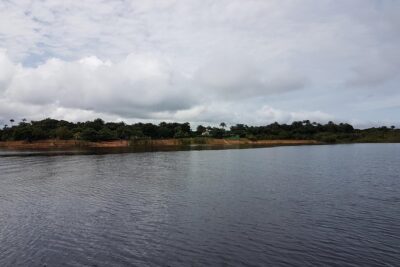
The river sets the pace here. This six-day Amazon kayak expedition carries you about 160 kilometers down the Urubu River, with rainforest paddling, waterfall hikes, hammock camps, fishing options, and time with local people. I like the small group limit of six, which should make the days feel more personal, and I like that the guides handle camp setup while you enjoy a caipirinha and the forest sounds.
The main consideration is physical effort. You may paddle as much as 44 kilometers in one day, and low water can mean shallow, rocky sections, simple whitewater, portages, or stepping into the river to guide your kayak. This is a genuine outdoor expedition, not a soft sightseeing cruise.
In This Review
- At a glance: what makes this Amazon trip different
- What your $688.26 covers in practical terms
- Day 1: From Manaus to the Urubu River
- Day 2: Pedra da Lua Branca and a river shelter
- Day 3: Quiet water and Iracema Falls
- Day 4: Sunrise, local traditions, and the longest paddle
- Day 5: Praia do Amigos and seasonal wildlife
- Day 6: The final 34 kilometers back to Manaus
- Food, comfort, and the people behind the trip
- Who should book this expedition?
- Should you book the Urubu River kayak journey?
- FAQ
- Where does the Amazon kayak expedition begin?
- How far do you kayak during the six days?
- Where do you sleep during the expedition?
- Is the trip suitable for beginners?
- When are fishing and caiman sightings most likely?
- How many people can join the tour?
At a glance: what makes this Amazon trip different
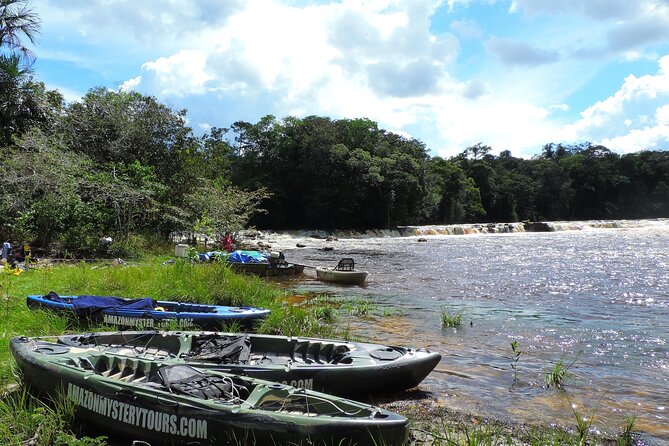
- 160 kilometers by kayak: You spend most of six days moving through the Urubu River rather than simply viewing the forest from a motorboat.
- Small groups of up to six: A compact group allows closer contact with your guide and less fuss at campsites.
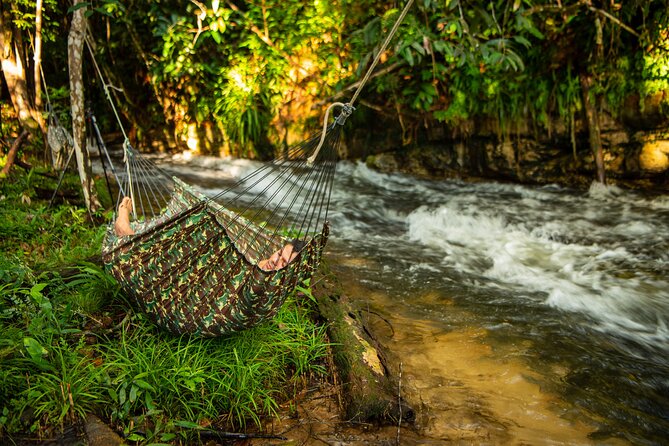
- Hammock camping: Your hammock comes with a mosquito net and a large tarpaulin for rain protection.
- Waterfalls and rainforest hikes: Pedra da Lua Branca, Iracema Falls, and a bat cave add walks to the paddling schedule.
- Local life and traditional skills: Day four includes a visit with local people, plus options for fishing and nighttime wildlife watching.
- Season affects wildlife: September through February is the low-water period, when fishing and caiman spotting may be easier.
What your $688.26 covers in practical terms
At $688.26 per person, this trip offers a lot of time in the field for the money. You receive hotel pickup in Manaus, transport to the river, a guide, kayak instruction, meals, overnight camps, and the return drive. You are not paying for six days of polished resort comfort. You are paying for access, guiding, food, transport, equipment, and the work of moving a small expedition through the forest.
The value is strongest if you want a real river journey. You kayak for several hours most days, sleep in hammocks, eat in camp, and watch the forest change with the river. A shorter Amazon outing may be easier, but it will not give you the same sense of distance from roads and city life.
The price does not remove every extra cost or uncertainty. The schedule lists fishing, caiman spotting, and night outings as options, not guaranteed activities. Wildlife depends on water levels, weather, patience, and luck. Still, the core experience does not depend on seeing an anaconda or otter. You will have the river, rainforest, waterfalls, village contact, and long hours outdoors.
The maximum group size is six. That matters on a trip where kayaks must be moved through narrow or shallow areas and camps must be arranged each evening. It also gives you a better chance to ask questions, adjust your pace, and hear stories about the region. Confirmation is sent within 48 hours, subject to availability, so I would not leave this booking until the last moment.
More Jungle Tours in Manaus & Amazon
- From Manaus: One-Day Amazon Jungle Experience
★ 4.8 · 408 reviews - Manaus: Full-Day Tour on the Amazon River
★ 4.2 · 362 reviews - A Whole Day in the Jungle
★ 5.0 · 155 reviews
Day 1: From Manaus to the Urubu River
Pickup begins at 8:00 a.m. in your Manaus hotel lobby. The recommended pickup areas are downtown and near Manaus airport. From there, you spend about two hours driving toward Presidente Figueiredo and the shores of the Urubu River.
That drive is part of the introduction. You see the scenery outside Manaus and get a feel for local roads and infrastructure before reaching the water. It is not just a transfer. It helps mark the change from city travel to a forest-based trip.
Your guide gives a basic kayak lesson before you set out. You learn how to enter and leave the kayak, paddle, steer, and store your gear. This is important because the route can include shallow or rocky sections. Even if you have paddled before, pay attention to the local instructions and keep your belongings packed securely.
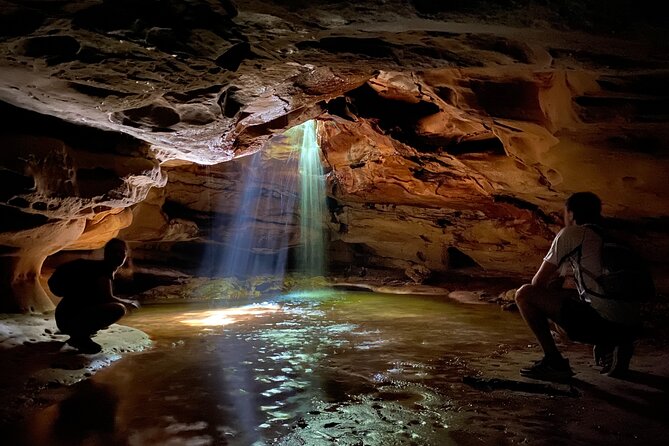
The first paddle lasts about two hours through rainforest where blue and yellow macaws live. Your first walk leads to a bat cave used during breeding season. The cave gives the day a clear sense of discovery without requiring a long hike at the very start.
Lunch follows, then you continue toward the first camp. The guides set up the hammocks while you relax with a caipirinha. At night, you sleep beneath a mosquito net and a rain tarp. Dinner is served before bed.
Do not picture a private room with walls and a fan. A hammock camp leaves you open to heat, forest noise, humidity, and rain. That is also the appeal. The forest is not a backdrop here. It is your nighttime setting.
Day 2: Pedra da Lua Branca and a river shelter
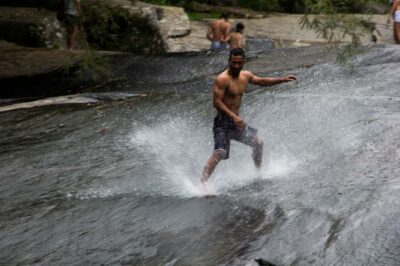
Breakfast gives you a chance to try local flavors while birds call around the camp. The morning paddle lasts about an hour and a half before a roughly 30-minute hike to Pedra da Lua Branca, described as the most beautiful waterfall on this section of the river.
A waterfall stop is more than a photo break. After paddling in hot, humid conditions, the chance to cool off and stretch your legs can make the rest of the day much easier. Wear footwear that can cope with both a kayak and a wet forest path. The supplied details do not specify the exact gear provided, so pack for movement between water and trail.
After the waterfall, you kayak to a shelter close to the river and spend the night there. The route covers about 16 kilometers by kayak. Compared with the longer days ahead, this is a relatively gentle beginning, giving you time to settle into the rhythm of paddling, eating, resting, and repacking.
Day 3: Quiet water and Iracema Falls
Day three covers about 26 kilometers. The description emphasizes isolation and peace, so this is one of the days when the value lies in the empty spaces between scheduled stops.
Keep your eyes moving. Monkeys, sloths, caimans, macaws, and other birds may appear along the river. Anacondas and otters are possible, too, but they are less predictable. The best approach is to treat wildlife as a bonus rather than a promise.
The camp is near Iracema Falls, where a waterfall crosses the Urubu River. The stop gives you another chance to break up a long day on the water. It also shows why this trip is more than a straight paddle from one road access point to another. The route links river travel with small hikes, swimming or cooling stops, and overnight sites near natural features.
Your attention span may be tested on the longer paddles. Bring patience, protect yourself from the sun as much as possible, and follow the guide’s pace. The trip is designed for people with moderate physical fitness, not for complete beginners to outdoor activity who dislike repeated effort.
Same patch of Brazil, a completely different sort of day:
- Indian Village and Meeting of the Waters Tour
★ 4.5 · 241 reviews - From Manaus: Presidente Figueiredo Waterfalls Daytrip
★ 4.3 · 149 reviews - 3 Days Amazon Jungle Adventure Tour
★ 4.0 · 145 reviews - Amazing Waterfalls of the Amazon – Presidente Figueiredo
★ 4.5 · 141 reviews
Day 4: Sunrise, local traditions, and the longest paddle
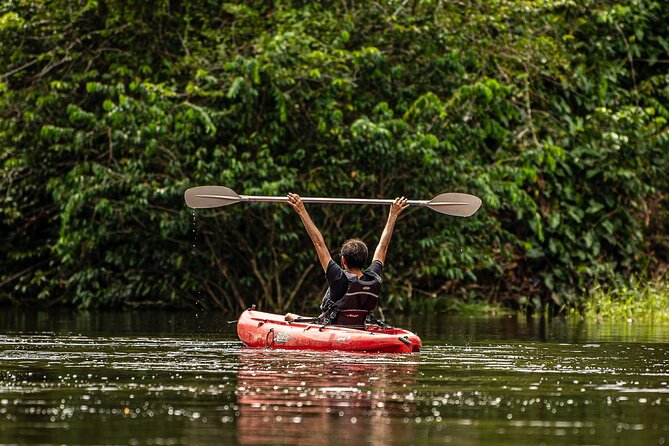
The fourth day is the most demanding on paper, with about 44 kilometers by kayak. It is also the day with the strongest cultural element, since you visit local people and learn about traditional knowledge.
Sunrise and sunset in this part of the Amazon are around 6:00 a.m. and 6:00 p.m. The early and late light can be striking as yellow, orange, and red colors meet the greens and browns of the forest and the dark river water. Bird and animal sounds fill the hours when the forest wakes and settles.
That timing shapes the whole trip. You will not be following a late-rising holiday schedule. Early mornings help you make progress before the day becomes hotter, while evenings offer good conditions for watching and listening.
Fishing and night outings are listed as options on this day. They depend on conditions and guide arrangements, so ask your guide what is realistic when you arrive. The visit with local people is especially valuable because it connects the forest to the people who use and understand it every day. It also gives you a pause from the repetitive motion of paddling.
The 44-kilometer distance deserves attention. If you are fit but inexperienced with long days in a kayak, this may be the day that tests you most. The small group and guide support help, but they do not remove the distance.
Day 5: Praia do Amigos and seasonal wildlife
The route continues for about 28 kilometers on day five. You make stops to refresh before reaching Praia do Amigos, a small isolated strip of sand that serves as the night’s camp.
This is the trip’s natural rest day, though it still includes a substantial paddle. The beach offers room to relax and bathe in the river. After several nights in hammocks and several days on the water, that simple combination of sand, shade, and a swim may feel like a luxury.
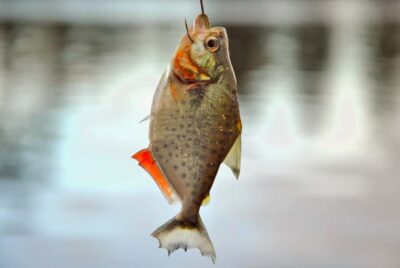
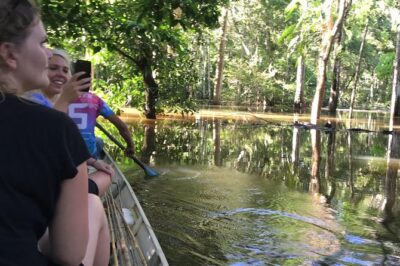
Fishing and night wildlife watching are again possible. The timing of your trip matters here. September through February is the low-water season, when fish and caimans are often easier to find. During high water, the river spreads into flooded forest, giving aquatic animals more places to move and making sightings harder.
This is useful information for setting expectations. Low water may improve the chance of seeing certain animals, but it can also make paddling more technical. One account of a Urubu River trip described simple whitewater, portages around rapids, and moments when the paddler had to enter the water to move a kayak through rocky areas. Conditions are not fixed, so ask about current water levels before you commit.
Day 6: The final 34 kilometers back to Manaus
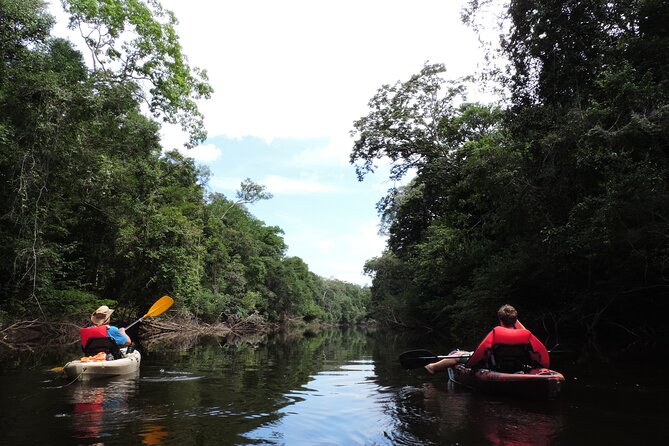
The last day begins early with breakfast and a 34-kilometer paddle. You finish at Ramal do Procópio, an asphalted road in Rio Preto da Eva.
Lunch comes before the road transfer. Then you drive back toward Manaus, with the city about two hours away. A final stop for cold beer or soft drinks gives you a fitting way to mark the 160-kilometer journey before arrival.
That final road section matters because it makes the trip logistically simple. You do not need to arrange a separate return from a remote river point. The tour brings you back toward Manaus after the final paddle and meal.
The schedule lists the final day as about 12 hours. Plan no important flight connection or fixed evening appointment around it. River speed, packing, weather, lunch, and the road transfer can all affect the timing.
Food, comfort, and the people behind the trip
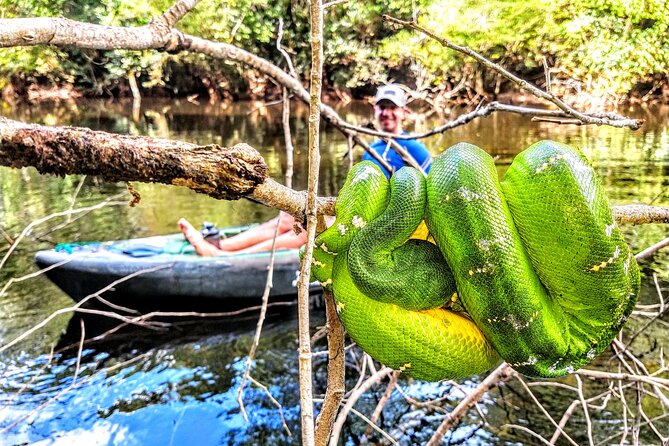
The food sounds more substantial than many people expect from a hammock expedition. Breakfast can include eggs, tapioca pastry, meat, cheese, and coffee. Lunch and dinner may include rice, beans, manioc topping, chicken, beef, fish, sausage, or barbecued ribs.
Cold water is available, with occasional fruit juice and beer. On an active trip in hot, humid conditions, regular water matters more than fancy presentation. Meals also give you a proper break from the kayak and help you recover for the next section.
Guiding appears to be a major strength. Erikes is associated with the trip, along with Gil and Joo on related expeditions. Erikes is described as deeply committed to the region, wildlife, plants, and local culture, while Joo helps with logistics and meals. Suelen handles booking communication and is described as patient and helpful with questions.
You should still confirm your exact guide team when booking. Different departures may use different staff. The practical lesson is to ask who will lead your group, what kayak and safety equipment are included, and how food and drinking water are handled.
One reassuring detail from a previous Urubu River outing is that the guide stayed close during a difficult kayak moment and was ready to help when the paddler nearly tipped. That does not make the river risk-free, but it shows why trained supervision matters on shallow, rocky water.
Mosquitoes may not be as constant as you fear, though you should still use repellent and sleep under the net. The forest has other insects, too, and the trip is exposed to rain, heat, and wet gear.
Who should book this expedition?
I would choose this for someone who wants a small-group Amazon journey with real physical work. You should be comfortable sitting in a kayak for long stretches, getting wet, walking on forest paths, sleeping in a hammock, and accepting that wildlife sightings cannot be scheduled.
It suits people who value quiet more than convenience. You may see only an occasional local boat on some sections. That sense of distance is central to the trip, but it can feel slow if you want constant activities or a polished lodge.
It is also a good fit for anyone who wants more than wildlife photographs. The waterfalls, local visit, traditional knowledge, camp meals, and changing light make the trip about the entire river setting.
I would hesitate to recommend it to anyone with limited mobility, very low fitness, or a strong need for private bathrooms and predictable schedules. The stated requirement is moderate physical fitness, and the daily distances are serious. Service animals are allowed, but the remote camping and kayak format mean you should discuss practical arrangements before booking.
Pickup is offered from a hotel of your choice in downtown Manaus or near the airport. The experience is offered in English, comes with a mobile ticket, and allows service animals. Cancellation is generous only if you cancel at least six full days before the start. A cancellation two to six full days ahead may receive 50 percent back, while cancellation less than two full days before departure is not refundable.
Should you book the Urubu River kayak journey?
Book it if you want to earn your Amazon memories by paddle stroke. The strongest reasons are the six-person limit, the long river route, hammock camping, good camp food, waterfalls, and the chance to meet local people rather than simply pass through a forest viewing area.
Think twice if you want an easy introduction to the Amazon. The 44-kilometer day, changing water levels, possible portages, and basic sleeping arrangements demand flexibility.
For the right person, $688.26 is a strong value for six days of transport, guiding, meals, camps, and a 160-kilometer journey from Manaus and back. Ask about seasonal water conditions and your exact guide team before paying. If the answers suit your fitness and comfort level, this is the kind of trip that gives you a genuine feel for the Amazon River world.
FAQ
Where does the Amazon kayak expedition begin?
Pickup begins at 8:00 a.m. from your hotel lobby in Manaus. Recommended pickup areas are downtown Manaus and locations near Manaus airport.
How far do you kayak during the six days?
The total route is about 160 kilometers. Daily distances listed for the river sections range from 16 to 44 kilometers.
Where do you sleep during the expedition?
You sleep in hammocks covered by mosquito nets, with a large tarpaulin above for protection from rain. Camps are set up by the guides, including shelters close to the river on some nights.
Is the trip suitable for beginners?
The tour provides an introduction to entering, exiting, paddling, steering, and storing gear. However, you need a moderate level of physical fitness because of the long paddling days and possible shallow or rocky sections.
When are fishing and caiman sightings most likely?
The low-water season from September through February provides better chances to see fish and caimans. During high water, aquatic animals spread into the flooded forest and can be harder to find.
How many people can join the tour?
The maximum group size is six people. The experience is offered in English, and confirmation is provided within 48 hours of booking, subject to availability.
More Canoes & Kayaks in Manaus
- Guided Expedition with Canoeing and Waterfalls in Iguaçu
★ 5.0 · 393 reviews - Mangrove, Beaches and Islands by Kayak tour
★ 5.0 · 253 reviews - Kayaking to the mangroves
★ 5.0 · 85 reviews - Kayak Water Trail in Red River Park by Adrenailha
★ 5.0 · 40 reviews
Newest reviews from around Manaus
- Walking Tours in Manaus★ 3.5 · 16 reviews
- 4-day Amazon River Boat Tour From Manaus★ 5.0 · 10 reviews
- Amazon Safari Tour in Manaus (Shared)★ 5.0 · 3 reviews
- Tree Climbing in the Amazon★ 4.5 · 6 reviews
- Tucandeira Ants Indigenous Ritual★ 4.5 · 4 reviews
- Transfers from the airport to any place in Manaus City★ 4.0 · 27 reviews
- 24-hour Hotel Transfer to Manaus Airport★ 5.0 · 24 reviews
- Private Tour Waterfalls Iracema & Asframa President Figueiredo★ 5.0 · 3 reviews
Jungle & Rainforest Tours, compared.
Rio de Janeiro Tijuca Rainforest Hike with Waterfalls and Caves
Read our review →
Jungle Waterfalls and Cachaça Distillery Jeep Tour
Read our review →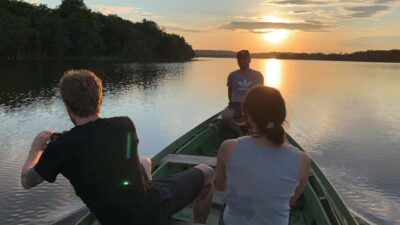

Browse the lists this tour appears in