
Reviewed · SãO PAULO TOURS
Indigenous Guarani Jaragua Experience
São Paulo has a forested side. This private four-hour outing takes you from the city’s highest viewpoint to a Guarani community protecting Atlantic forest within South America’s biggest metropolis. I like the strong contrast between Jaraguá Peak and Tekoa Itakupe. I also like the small-group format, which gives you time for real conversation rather than a quick photo stop. The main consideration is cost: the BRL 150 community fee per person is extra, cash only, and the visit requires moderate physical fitness.
This is not a standard city sightseeing tour. You ride in private transportation, visit places that are less simple to reach on your own, and spend meaningful time with Guarani community members through a multilingual guide. The price is $300 per group of up to three, so it makes the most sense for a small group that values privacy and cultural depth.
In This Review
- At a glance: what makes this outing different
- Why this São Paulo tour deserves your time
- Jaraguá Peak: São Paulo from 1,135 meters
- Tekoa Itakupe: meeting Guarani community leaders
- A private group changes the tone
- What the $300 group price really buys
- How to prepare for a respectful visit
- Who will enjoy this experience most
- Practical details before you book
- Should you book the Indigenous Guarani Jaraguá Experience?
- FAQ
- Where does the Indigenous Guarani Jaraguá Experience take place?
- How long does the tour last?
- How much does the private tour cost?
- Is transportation included?
- Is the tour available in English?
- Is the Guarani community entrance fee included?
- Is lunch included?
- What can I see at Jaraguá State Park?
- Is the experience physically demanding?
- What happens if the weather is poor?
At a glance: what makes this outing different
- Two very different São Paulo experiences: See a broad city panorama from Jaraguá Peak, then visit a Guarani community surrounded by Atlantic forest.
- A private group of up to three: The format allows the guide to adjust the conversation and pacing to your interests.
- A UNESCO World Heritage setting: Jaraguá State Park was recognized by UNESCO in 1994, after receiving protection from Condephaat in 1983.
- A direct cultural exchange: At the Opy, the traditional Guarani prayer temple, you can speak with young community leaders through translation.
- A hands-on cultural moment: You get the chance to create your own Xondaro Fighting Dance move.
- Simple but important extra costs: The community fee is BRL 150 per person in cash, and lunch at a selected restaurant costs about BRL 200 per person.
Why this São Paulo tour deserves your time
São Paulo can feel endless. Its scale is part of the thrill, but it can also make the city hard to understand beyond its streets, towers, and traffic. This experience gives you two useful viewpoints: one literal, from a high peak, and one cultural, through a community that protects forest inside the urban area.
I like the way the tour avoids treating nature and culture as separate subjects. Jaraguá State Park gives you a sense of the city’s size and the remaining forest. Tekoa Itakupe shows how Guarani people protect and live alongside that forest. Together, the stops offer a more thoughtful picture of São Paulo than a quick run through the usual central sights.
The private format matters here. With a maximum of three people, you can ask questions without feeling you are holding up a busload of people. The experience is also offered in English, and the multilingual guide can translate your questions during the community visit.
Guide Renato receives especially warm praise for his passion, respect, flexibility, and broad understanding of both Guarani life and São Paulo. He also provides extra suggestions and city advice beyond the scheduled visit. That is useful if this is one of your first days in the city and you want more than a guide who simply points out the next stop.
There are limits. Four hours is enough for an introduction, not a full study of Guarani culture or the park. The extra community fee adds to the advertised cost, and the cash-only rule requires planning. You should also be comfortable with some walking and uneven outdoor conditions.
A few more Sao Paulo days to weigh up
- Skydive Tandem – São Paulo – Brazil
★ 5.0 · 1,840 reviews - São Paulo’s Full Day City Tour: Main City Sights in 7 Hours – (Shared Group)
★ 5.0 · 1,691 reviews - 5-hour Private Tour Of São Paulo With Its Main Sights – Optional Airport Pickup
★ 5.0 · 643 reviews
Jaraguá Peak: São Paulo from 1,135 meters
The first stop is Parque Estadual do Jaraguá, home to Jaraguá Peak. At 1,135 meters in altitude, the peak offers a wide view across São Paulo, with visibility reaching as far as 55 kilometers in suitable conditions.
That panorama gives you a practical lesson in the city’s scale. From the top, São Paulo is not just a collection of neighborhoods. It becomes an enormous spread of urban development, framed in part by the forest that remains. On a clear day, this can be the most memorable visual moment of the tour.
The park is more than a viewpoint. It includes a historical house, a lake, and three trails. Your scheduled time here is about one hour, so you should think of this as a focused introduction rather than a long hike through the entire park. The exact amount of walking may depend on conditions and the day’s pace.
The park’s official recognition adds context. Condephaat declared it protected in 1983, and UNESCO recognized it as a World Heritage Site in 1994. That status does not turn the visit into a museum-style presentation. Instead, it helps explain why this patch of nature matters in a city known for its immense built-up area.
The weather is an important factor. Clouds or rain can reduce the view, and the experience requires good weather. If poor conditions force cancellation, you can receive a full refund or move the booking to another date. Keep that policy in mind when building a tight São Paulo schedule.
Tekoa Itakupe: meeting Guarani community leaders
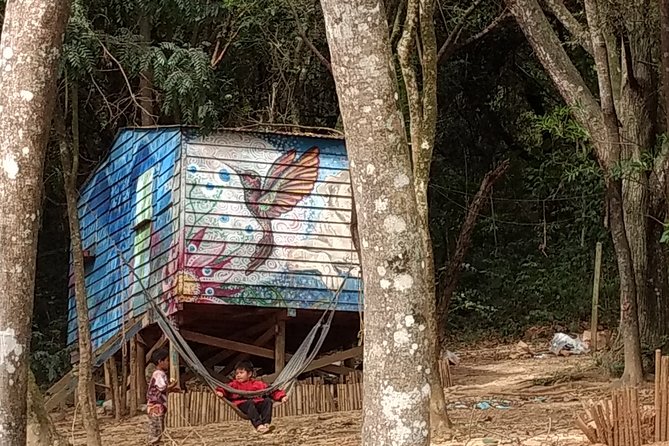
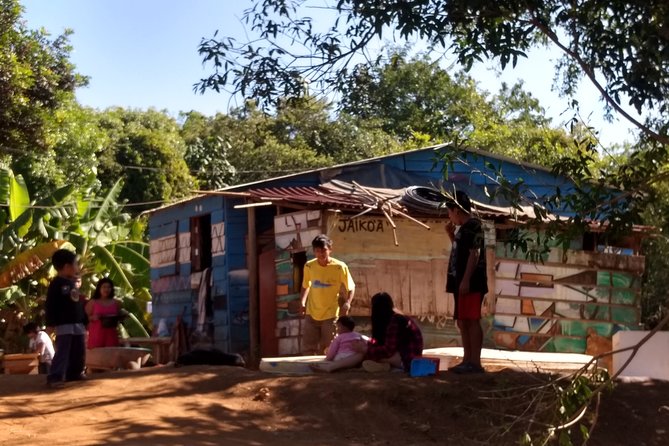
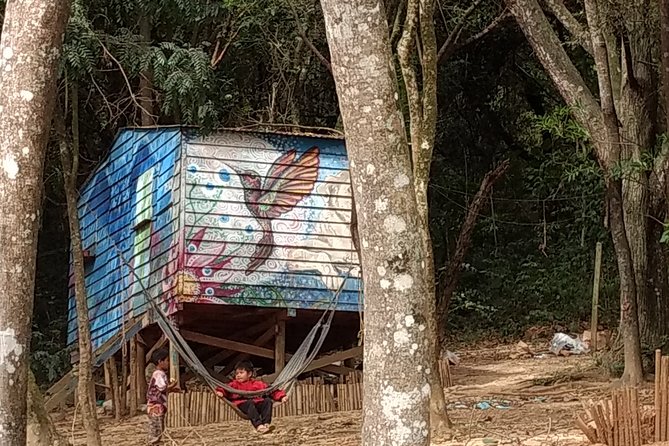
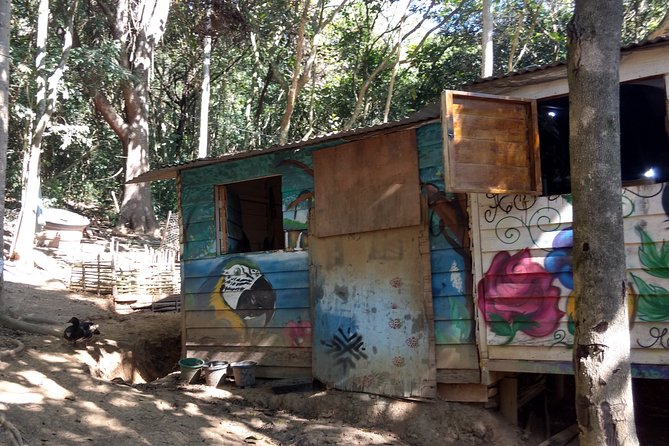
The second stop, Reserva Indígena Tekoa Itakupe, is the heart of the experience. Here, you visit a Guarani community that protects forest within the city. The setting gives you a chance to learn about Indigenous culture in a living community, not through a display arranged only for tourists.
The visit lasts about two hours, which is twice as long as the park stop. That balance is sensible. The peak gives you a quick visual introduction, while the community visit allows time for conversation, explanation, and movement through the forest.
A central part of the visit takes place at the Opy, the traditional Guarani prayer temple. You can speak with young leaders of the community and ask questions through the multilingual guide. Translation is especially valuable because it helps you move beyond a short greeting or prepared speech. You can ask about what matters to you, while the guide helps keep the exchange clear and respectful.
The tour also includes an introduction to the Xondaro Fighting Dance. You get to create your own movement, giving the visit a participatory element. This should not be treated as a performance staged simply for amusement. The best approach is to follow the guide’s lead, pay attention, and understand that the activity connects to Guarani culture and community life.
You also explore part of the dense Atlantic forest protected by the Guarani. That forest is not just a pretty background. It is tied to the community’s role as guardian of the area, and it gives you a clearer sense of why the Indigenous presence matters within São Paulo.
The community entrance fee is BRL 150 per person, separate from the $300 group price. It must be paid in cash. That is a significant extra expense, particularly for one or two people traveling alone, so include it in your budget before booking.
A private group changes the tone
A small private tour is helpful for this particular subject. Cultural visits need room for questions, pauses, and careful listening. A large group can make that difficult. With only your party participating, you can focus on the conversation and ask for clarification when a point is not clear.
The private format also gives the guide some flexibility. The experience can be adjusted to your interests, according to the information provided about Renato’s approach. If you want more context about São Paulo, the community, or the park, you have a better chance of receiving it than on a fixed group excursion.
Private transportation is another practical advantage. Jaraguá Park and the Guarani reservation are not the sort of stops you want to connect by trial and error in a half-day window. Pickup is offered from an address you provide, which removes one layer of planning.
Still, private transport does not mean the day is effortless. You will need to walk, and the tour calls for moderate physical fitness. The experience is not described as fully accessible for every mobility level. Service animals are allowed, but you should consider the outdoor trails and community setting when deciding if the route suits you.
Same patch of Brazil, a completely different sort of day:
- São Paulo: Main City Sights in 7 Hours – Shared Group Tour
★ 4.9 · 587 reviews - 6-Hour Classic Half-Day Private Tour of São Paulo – Optional Airport Pickup
★ 5.0 · 441 reviews - São Paulo: City Highlights Guided Tour
★ 4.5 · 307 reviews - Amazing São Paulo overview in 4 or 5 hours with a private guide
★ 5.0 · 290 reviews
What the $300 group price really buys
At $300 per group of up to three, the base price works out to $100 per person for three people, before the community fee and food. For two people, it is $150 each, and for one person, the cost is the full group rate.
That price includes transportation and guiding services. You are paying for a private vehicle, a half-day of a guide’s time, help reaching less accessible locations, and translation during the Guarani visit. For a small group that values personal attention, the price is easier to justify.
The added community fee changes the calculation. At BRL 150 per person, three people pay BRL 450 in total. Lunch is not included either. A meal at one of the selected restaurants costs about BRL 200 per person, so a full outing can become considerably more expensive than the headline price suggests.
I would judge the value by the type of day you want. If you want the cheapest possible way to see a viewpoint, this is not it. If you want a private cultural experience with transportation, English service, and a chance to meet community leaders, the cost is more reasonable.
The tour is booked, on average, 19 days ahead. That suggests you should not leave it until the last moment if it is important to your plans, especially since it requires good weather and may need coordination with the community.
How to prepare for a respectful visit
The most important preparation is mental, not technical. You are entering an Indigenous community, so approach the visit with curiosity and respect. Listen carefully, ask clear questions, and allow the community’s representatives to define what they want to share.
Wear clothing and footwear suited to outdoor walking. The tour includes forest trails and calls for moderate fitness, but no exact trail length or difficulty is provided. Because of that, you should not assume it will feel like a simple paved sightseeing stop.
Bring cash for the BRL 150 community fee. The fee is local and cash only, so do not count on paying by card or adding it later to the tour balance. You should also budget for lunch if you plan to eat at one of the selected restaurants.
English service is available, and a multilingual guide translates questions at the community. That makes the tour accessible to English speakers, but translation still works best when you speak plainly and give the guide time to interpret.
Good weather is necessary. São Paulo’s views are weather dependent, and the forest portion is also more comfortable in dry conditions. If the tour is canceled because of poor weather, you receive the choice of another date or a full refund.
Who will enjoy this experience most
I would recommend this for a small group of up to three people who want a cultural outing with real conversation. It is especially suitable if you have already seen some of central São Paulo and want a different side of the city.
It also suits visitors interested in Indigenous communities, conservation, local leadership, and the relationship between urban growth and remaining forest. The visit is not just a scenic stop, and you should not book it if you want a fast, passive sightseeing ride.
The tour may work well for first-time visitors too. Renato’s extra advice about São Paulo can help you understand the city beyond the scheduled route. That added local guidance is a useful bonus, particularly if you ask questions and take notes.
It is less suitable for anyone with very limited mobility, anyone unwilling to pay the additional community fee, or anyone working with a rigid schedule that cannot tolerate weather changes. The outdoor setting and cultural focus require flexibility.
Practical details before you book
Pickup is offered, and you provide the address for collection. The activity is private, with only your group participating, and confirmation is received at the time of booking.
The total duration is approximately four hours. The park portion is planned for about one hour, followed by about two hours at Tekoa Itakupe. The remaining time allows for transportation and the change between the two settings.
Admission to Jaraguá State Park is included. The Guarani community fee is not included and costs BRL 150 per person in cash. Lunch is also separate, with a suggested cost of about BRL 200 per person.
Free cancellation is available until 24 hours before the start time for a full refund. Changes or cancellations made less than 24 hours before the start time are not accepted for a refund. Cutoff times use São Paulo local time.
Should you book the Indigenous Guarani Jaraguá Experience?
Book it if you want a private, thoughtful half-day that combines a major São Paulo view with a direct introduction to Guarani culture. The strongest reasons are the small group, Renato’s praised guidance, the chance to speak with young community leaders, and the unusual setting of protected forest inside a huge city.
Before committing, add the BRL 150 per-person community fee and possible BRL 200 lunch to your budget. Make sure your group can handle moderate outdoor activity and keep room in your schedule for weather changes.
For three people sharing the base price, this is a particularly appealing option. For a solo visitor, the cost is harder to justify, but the personal attention may still make it worthwhile if cultural exchange matters more to you than a low-cost city tour.
FAQ
Where does the Indigenous Guarani Jaraguá Experience take place?
The experience takes place in São Paulo, Brazil. It includes Parque Estadual do Jaraguá and the Reserva Indígena Tekoa Itakupe.
How long does the tour last?
The tour lasts approximately four hours.
How much does the private tour cost?
The price is $300 per group of up to three people.
Is transportation included?
Yes. Transportation and guiding services are included, and pickup is offered from an address you provide.
Is the tour available in English?
Yes. The experience is offered in English, and a multilingual guide translates questions during the Guarani community visit.
Is the Guarani community entrance fee included?
No. The local fee is BRL 150 per person and must be paid in cash.
Is lunch included?
No. Lunch is separate. A meal at one of the selected restaurants costs approximately BRL 200 per person.
What can I see at Jaraguá State Park?
The park includes Jaraguá Peak, a historical house, a lake, and three trails. The peak is 1,135 meters high and can offer views reaching up to 55 kilometers.
Is the experience physically demanding?
A moderate level of physical fitness is required. The experience includes outdoor walking and forest trails.
What happens if the weather is poor?
The experience requires good weather. If it is canceled because of poor weather, you can receive a full refund or choose a different date.
Newest reviews from around Sao Paulo
- Visit to the Cerejeira Annual Party in Carmo Park★ 3.5 · 2 reviews
- REIKI – Crystal Therapy – by Venus’ Secret Spa – San Francisco★ 5.0 · 41 reviews
- Taxi from Guarulhos airport to São Paulo capital★ 5.0 · 15 reviews
- São Roque Wineries Route from São Paulo★ 4.5 · 13 reviews
- Guided Ceremony in Brazil★ 5.0 · 2 reviews
- 3h Tasting Session in São Paulo with 34 Local Foods & Drinks★ 5.0 · 7 reviews
- Taxi from Viracopos to São Paulo – CHM Transportes★ 5.0 · 2 reviews
- Transfer from São Paulo to Port of Santos★ 4.0 · 8 reviews
São Paulo Tours, compared.
São Paulo’s Full Day City Tour: Main City Sights in 7 Hours – (Shared Group)
Read our review →
5-hour Private Tour Of São Paulo With Its Main Sights – Optional Airport Pickup
Read our review →
Main City Sights in 7 Hours – Shared Group Tour
Read our review →
6-Hour Classic Half-Day Private Tour of São Paulo – Optional Airport Pickup
Read our review →
Amazing São Paulo overview in 4 or 5 hours with a private guide
Read our review →
Browse the lists this tour appears in