Reviewed · TOURS
Half-timbered route tour
Step into Pomerode’s German past. This private, 3-hour-45-minute tour follows the Enxaimel Route, where around 60 half-timbered houses form one of the largest concentrations of this building style outside Europe. I like the visit to the 1868 Siewert House, where the family still lives and explains the building’s story. I also like having an air-conditioned vehicle for the route, since the sights are spread across the city and surrounding area.
The main point to consider is that this is not a museum-heavy tour with long interior visits at every stop. Much of the route is panoramic, with about 10 additional houses, churches, cemeteries, clubs, and historic sites viewed from the vehicle or during short stops. If you want context, the guide matters greatly. Past tours led by Valdir Bonickoski and Ronald were praised for their detailed explanations.
In This Review
- Key points to know before booking
- Why Pomerode’s Enxaimel Route matters
- Starting at Pórtico de Pomerode
- The Siewert House, the tour’s most meaningful stop
- Around 10 houses viewed from the route
- Churches, cemeteries, and German societies
- The cuca stop and local food
- A private tour for people who like questions
- What the $27.70 price includes
- Who should book this experience
- Practical details before you go
- Should you book the Half-Timbered Route?
- FAQ
- Where does the Half-Timbered Route tour begin?
- Where does the tour end?
- How long does the tour last?
- How much does the tour cost?
- Is the tour offered in English?
- Is transportation included?
- Is the Siewert House admission included?
- Is lunch included?
- Is this a private activity?
- Can I cancel for a full refund?
Key points to know before booking
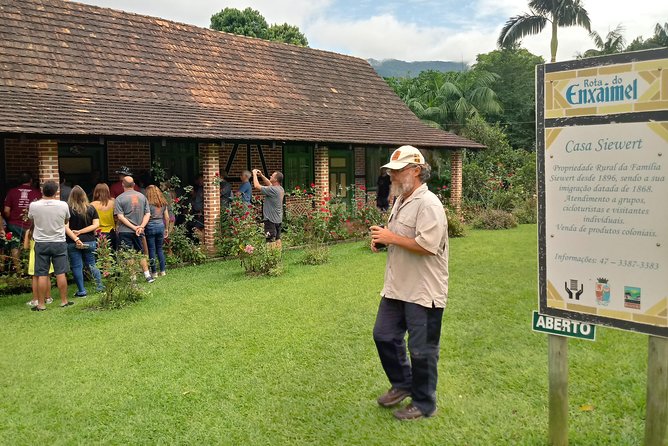
- The Siewert House is the central stop: This protected 1868 home is still occupied by the family, giving the visit a personal connection that a standard museum cannot easily match.
- Around 60 half-timbered houses line the route: You will see roughly 10 of them during the tour, including the oldest house in the area from a panoramic viewpoint.
- The tour explains more than architecture: You learn about German immigration from 1860, local customs, cooperation, wartime history, and life in Pomerode today.
- A cuca stop may be a highlight: The route can include a food stop, and cuca with cream and cinnamon received especially warm praise. The food is not included in the price.
- Your group has a private vehicle: Only your party participates, and the air-conditioned transport makes the nearly four-hour route easier in warm weather.
- The price is reasonable for a private outing: At $27.70 per person, the cost covers transport and the Siewert House admission, but not lunch or other food purchases.
Why Pomerode’s Enxaimel Route matters
Pomerode is not simply displaying a few old façades for photographs. Its Enxaimel Route contains about 60 houses built in the half-timbered style known locally as enxaimel. The technique uses a visible wooden frame filled with other materials, creating the patterned walls that make these homes so distinctive.
The houses connect directly to the German immigrants who arrived in the area around 1860. Their buildings were practical homes, not decorative theme-park copies. As you move along the route, the architecture helps explain how families built, worked, worshipped, and organized community life after leaving Europe.
I find this setting more rewarding than a single reconstructed village. You see historic houses alongside ordinary modern life, which gives the route a sense of continuity. Some buildings have received protection from IPHAN, Brazil’s national heritage organization, while others are viewed from outside as part of the broader rural and residential setting.
The route also deals with change. You hear about the period around the Second World War and how German identity developed through later decades. That context matters because the houses are only one part of Pomerode’s story. The tour links the buildings to immigration, family life, local societies, and the present city.
Still around Brazil, still worth a look:
- Rio de Janeiro: 6-Stop Highlights of Rio with Lunch
★ 4.4 · 5,157 reviews - Christ the Redeemer Entry Ticket by Corcovado Train
★ 4.4 · 4,476 reviews - Rio’s City Tour – Tickets for Christ, Sugar Loaf & Lunch included
★ 5.0 · 4,389 reviews
Starting at Pórtico de Pomerode
The tour begins at Pórtico de Pomerode on Avenida Jorge Lacerda, 821, in the Centro district. This is a useful place to meet because it gives you a clear entry point into the city before the route heads toward the historic houses.
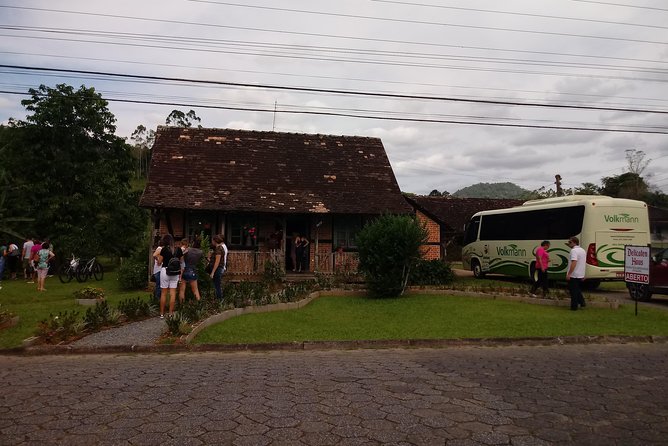
From there, expect the guide to set the scene before the vehicle begins its circuit. Since this is a private activity, the pace and conversation can feel more personal than on a large shared bus. You can ask for clarification when a building style or historical period is not immediately clear.
The route lasts approximately 3 hours and 45 minutes. That is long enough for more than a quick drive past façades, but short enough to fit into a larger day in Pomerode. I would keep the rest of your schedule flexible, especially if you want time for food, craft shopping, or photographs along the way.
The air-conditioned vehicle is a practical benefit. The route covers several locations, and you will spend a fair amount of time moving between them. It also means you can enjoy the views without turning the outing into a tiring long walk.
The Siewert House, the tour’s most meaningful stop
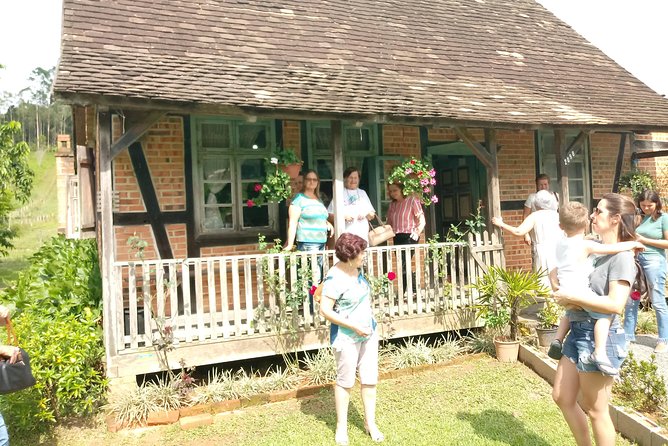
The Siewert House is the strongest reason to choose this experience. Built in 1868, it is registered by IPHAN and was restored according to established heritage criteria. That gives the building more than visual appeal. It shows how preservation can protect both construction methods and family memory.
The most unusual part is that the Siewert family still lives there. During the visit, a family member receives you and explains the house’s construction, as well as the lives of its residents since immigration. You are not just looking at beams, walls, and rooflines. You are hearing how a home remained part of a family over generations.
That personal element changes the mood of the stop. A formal exhibition might explain dates and materials, but a resident can connect the building to daily life in a more direct way. You get a sense of why the house was built as it was and how it continued to serve the people who lived inside it.
The visit also gives you a chance to understand the enxaimel technique rather than simply photograph it. Several comments about the route praised the chance to learn about construction without nails. That is a useful detail to watch for during the explanation, although you should rely on the guide’s account for the exact methods used in each building.
Around 10 houses viewed from the route
After the Siewert House, the tour passes around 10 other half-timbered houses, including the oldest house on the route. These stops are mainly panoramic, so expectations matter. You are seeing a collection of buildings in their setting, not entering every one.
I like this arrangement because it lets you compare different examples without spending the entire afternoon inside one property. Look for changes in the wooden framing, the condition of the buildings, and how the homes relate to roads, gardens, and neighboring properties. The contrast between carefully restored houses and older structures can make the preservation story easier to understand.
The drawback is simple: anyone hoping for a long interior tour at each house may find the panoramic portions brief. The experience depends on the guide pointing out what matters as you pass. Without that explanation, you could mistake the route for a pleasant drive through a district of attractive homes.
That is why I would pay close attention to the guide’s commentary. Ronald, who has led the route in a Jeep vehicle known as Bruttus, was praised for explaining the itinerary in detail. Valdir Bonickoski was also singled out for professional service and a strong command of the route. Guide availability can vary, but these comments show how much interpretation adds to the experience.
Same patch of Brazil, a completely different sort of day:
- Rafting – Brotas – Rio Jacaré Pepira
★ 5.0 · 3,814 reviews - Full Day: Christ Redeemer, Sugarloaf, City Tour & Barbecue Lunch
★ 4.5 · 3,142 reviews - Rio de Janeiro: Rocinha Favela Walking Tour with Local Guide
★ 4.8 · 3,052 reviews - Rio de Janeiro: Sugarloaf Cable Car Official Ticket
★ 4.6 · 2,873 reviews
Churches, cemeteries, and German societies
The Enxaimel Route is broader than house spotting. It includes churches, cemeteries, and hunting and shooting clubs connected to the community formed by German immigrants.
These sites help explain how people built a society around shared traditions. A house tells you about one family. A church or cemetery can show how a whole community expressed faith, remembered relatives, and maintained links to its past. The clubs add another layer, showing the kinds of organizations that supported social life.
You should expect some of these places to be viewed during the drive rather than explored through long visits. Even so, they give the route a useful rhythm. The buildings are not isolated architectural objects. They belong to a network of families, societies, and institutions.
The discussion of the Second World War is also important. German heritage in Brazil is not a simple story of unchanged customs. The tour follows the community from immigration through wartime tensions and into the present day. That makes the experience more honest than a presentation focused only on pretty houses and food.
The cuca stop and local food
Food is not included, but a stop for cuca can be one of the nicest parts of the outing. Cuca is a German-style cake common in southern Brazil, and one especially praised version combined cream and cinnamon.
My practical advice is to save room for this stop rather than arranging coffee immediately beforehand. The cuca is a food purchase, so bring some Brazilian reais or confirm accepted payment methods locally. The supplied details do not specify the bakery, price, or exact food arrangements, so treat it as a possible route highlight rather than a guaranteed full meal.
This is also where the tour becomes more than an architectural circuit. Eating a local specialty helps connect immigration history to the way that heritage remains part of everyday life. Still, do not confuse the cuca stop with lunch. Lunch is specifically not included, and the 3-hour-45-minute duration may call for a separate meal before or after the activity.
The route may also include opportunities connected with crafts and shopping. Since exact stops can vary, I would avoid planning a major purchase around the tour. Think of these moments as useful additions while you follow the main route.
A private tour for people who like questions
Only your group participates, which is a major advantage if you enjoy asking questions or want the guide to explain details at your pace. You can ask about the timber frame, restoration, immigration, wartime changes, or the difference between a protected house and one seen only from the road.
A private format also suits families and small groups with different interests. Someone fascinated by architecture can ask for more detail, while another person can focus on food, family stories, or photography. The air-conditioned vehicle gives the group a comfortable base between stops.
The limitation is that the value depends partly on the quality and style of the guide assigned that day. The strong comments about Ronald and Valdir suggest that guide interpretation can turn the route into a real history lesson. Without careful explanation, the panoramic houses would have less meaning.
If you book, I would make it clear that you want historical context, not only transport between scenic stops. Ask questions early. This route rewards curiosity.
What the $27.70 price includes
At $27.70 per person, the tour offers solid value if you want a private vehicle, a guide-led route, and access to the Siewert House. A private activity normally gives you more flexibility than a large group excursion, and the nearly four-hour duration allows the price to cover a substantial outing rather than a short orientation ride.
The admission to the Siewert House is included. Air-conditioned transport is also included, which matters because the route covers multiple sites and is not designed as one continuous walk.
You will need to budget separately for lunch, cuca, coffee, crafts, and any other purchases. The tour price is best understood as covering the historical route and its main house visit, not a complete day of meals and shopping.
For a solo visitor, the per-person price may feel less attractive than it would for a couple or small group because the activity is private. For two or more people, the combination of transport, admission, and guided interpretation becomes easier to justify.
Who should book this experience
I would recommend the tour to you if you enjoy architecture, family stories, immigration history, and smaller cultural sites. It is especially useful if you have limited time in Pomerode and want a guide to connect several locations into one clear story.
It also suits visitors who prefer riding between stops rather than walking long distances. The vehicle keeps the outing comfortable and makes it possible to cover the wider route in one session.
Families may appreciate the mix of old houses, food, and short visits. The private format means you do not have to match the pace of a large group. Couples and small groups interested in photography will also find plenty of distinctive façades, though the information provided does not promise dedicated photography time.
I would think twice if your priority is a full meal, extensive shopping, or interior access to every house. Much of the route is panoramic, and lunch is not included. The tour is strongest as a guided cultural circuit with one substantial house visit.
Practical details before you go
You receive confirmation when booking, and a mobile ticket is accepted. The activity is offered in English, which makes it a useful option if you do not speak Portuguese.
The tour starts and ends at Pórtico de Pomerode, at Avenida Jorge Lacerda, 821, Centro, Pomerode, Santa Catarina, postal code 89107-000. Since the meeting point is also the return point, you do not need to arrange a separate end location.
Most people can participate, according to the supplied tour information. No further accessibility details are provided, so you should ask the operator directly if your group has specific mobility or equipment needs.
Free cancellation is available if you cancel at least 24 hours before the start time. Changes or cancellations made less than 24 hours in advance are not accepted for a refund. The activity requires a minimum number of participants, and if that minimum is not reached, you will be offered another date, another experience, or a full refund.
Should you book the Half-Timbered Route?
Book it if you want Pomerode’s German-Brazilian identity explained through real homes, community sites, and family memory. The Siewert House is the key attraction, while the private vehicle and English-language service make the wider route simple to manage.
The best version of this experience is guide-led. Ask for the stories behind the buildings, save room for cuca with cream and cinnamon, and allow time for the route to unfold instead of treating it as a quick photo stop.
Skip it if you want a long museum visit, lunch included, or a tour focused only on walking through interiors. For everyone else, $27.70 buys a thoughtful half-day introduction to Pomerode’s architecture and the people who kept it alive.
FAQ
Where does the Half-Timbered Route tour begin?
The tour begins at Pórtico de Pomerode, Avenida Jorge Lacerda, 821, Centro, Pomerode, Santa Catarina, Brazil.
Where does the tour end?
The activity ends back at the same meeting point, Pórtico de Pomerode.
How long does the tour last?
The approximate duration is 3 hours and 45 minutes.
How much does the tour cost?
The listed price is $27.70 per person.
Is the tour offered in English?
Yes. The experience is offered in English.
Is transportation included?
Yes. An air-conditioned vehicle is included.
Is the Siewert House admission included?
Yes. The visitation fee for Siewert House is included.
Is lunch included?
No. Lunch is not included in the tour price.
Is this a private activity?
Yes. Only your group participates in the activity.
Can I cancel for a full refund?
Yes, if you cancel at least 24 hours before the experience start time. Cancellations made less than 24 hours in advance are not refunded.
Newest reviews from around Brazil
- Hang gliding flight in Rio de Janeiro★ 5.0 · 6 reviews
- Walking Tour of São Luís do Maranhão★ 4.4 · 14 reviews
- Rio de Janeiro: Zip Lining and Canopy Tree Tour★ 3.3 · 6 reviews
- Vidigal Favela Tour★ 4.4 · 26 reviews
- Paraty Historical City Walking Tour★ 4.1 · 8 reviews
- Rio de Janeiro: Attend a Vasco da Gama game with local guide★ 4.8 · 9 reviews
- Buzios: City Tour by Trolley with 12 Beaches and Pickup★ 4.5 · 4 reviews
- Unforgettable Boat Party★ 5.0 · 3 reviews
Tours, compared.

Rio’s City Tour – Tickets for Christ, Sugar Loaf & Lunch included
Read our review →
Full Day: Christ Redeemer, Sugarloaf, City Tour & Barbecue Lunch
Read our review →


São Paulo’s Full Day City Tour: Main City Sights in 7 Hours – (Shared Group)
Read our review →