
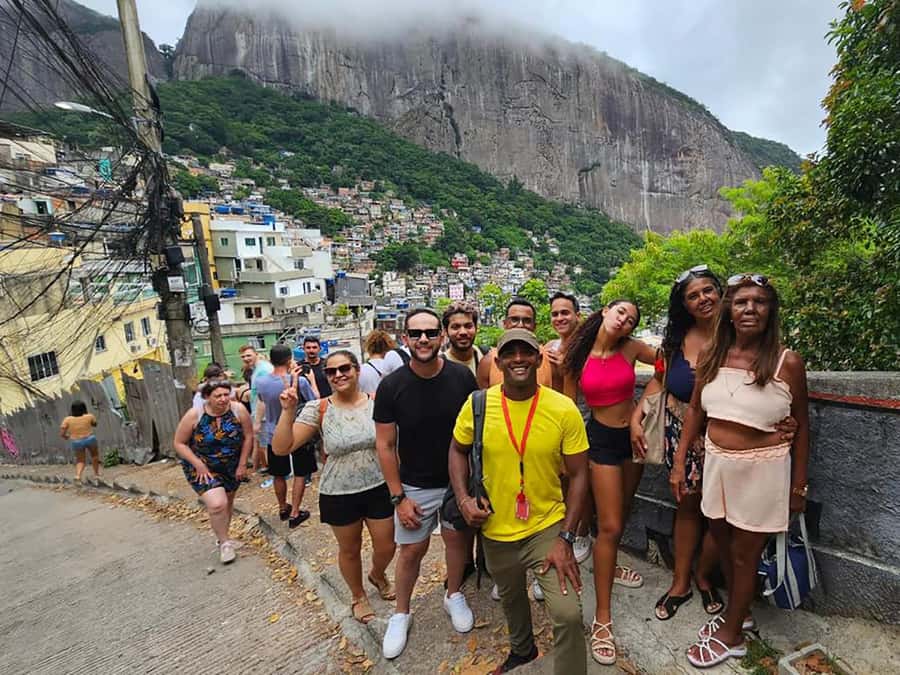
Reviewed · FAVELA TOURS
Guided Tour through Rocinha, One of the Largest Favelas
Rio looks different from Rocinha’s upper slopes. This three-hour visit takes you above the city for views of Christ the Redeemer, Sugarloaf Mountain, and Ipanema Lagoon, then leads you downhill through narrow lanes lined with murals and graffiti. I like the mix of big Rio panoramas and close-up community scenes, and I also like that transport and a bilingual guide are included.
The main drawback is that this is a shared, organized tour rather than a private walk. One recent visitor felt it was more tourist-focused than expected, while another found it deeply meaningful and felt safe with guide Martin. You should arrive ready to observe respectfully, follow local instructions, and ask before taking photographs.
In This Review
- What makes this Rocinha visit worth considering
- Why Rocinha changes your view of Rio
- The upper slopes deliver the grand Rio view
- A terrace stop gives you time to pause
- Walking downhill through Rocinha’s narrow lanes
- Murals and graffiti add color to the route
- The guide shapes the experience
- Is $46 a fair price?
- Pickup zones and the three-hour schedule
- Who should book this experience?
- How to visit Rocinha respectfully
- Should you book the Rocinha tour?
- FAQ
- How long does the Rocinha tour last?
- Where can I be picked up?
- Where can I be dropped off?
- Is the motorcycle ride included in the price?
- What languages does the guide speak?
- What should I bring?
What makes this Rocinha visit worth considering
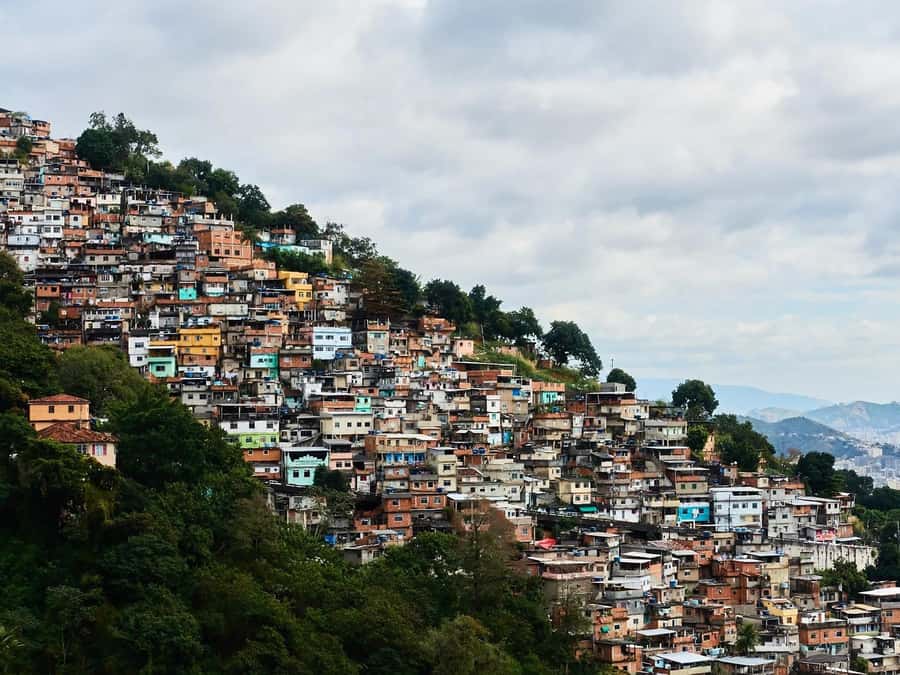
- Start high above Rio: The tour begins near the top of Rocinha, where you can see Christ the Redeemer, Sugarloaf Mountain, and Ipanema Lagoon from one broad viewpoint.
- Walk downhill through the community: The route moves through tight alleys toward the lower edge, which is easier on your legs than climbing the whole way.
- Meet local life on its own terms: You may speak with residents and see homes and daily scenes close to the route, but photography should happen only when permitted.
- Street art is part of the experience: Murals and graffiti give the walk much of its visual character and show how art shapes public spaces in Rocinha.
- Hotel pickup covers central Rio: Pickup and drop-off are offered in Copacabana, Ipanema, Leblon, Botafogo, Flamengo, and Lapa.
- The motorbike ride costs extra: The climb to the upper section is done by motorcycle and costs 15 Brazilian reais, so carry some local cash.
Why Rocinha changes your view of Rio

Rocinha is one of Rio de Janeiro’s largest favelas, built into the steep hills above the city’s wealthy southern neighborhoods. From below, it can be easy to treat the hillside as part of Rio’s scenery. Inside the community, the experience becomes more personal and more complex.
That shift is the real reason to consider this tour. You are not simply stopping at a viewpoint and taking a few photographs. You are entering a lived-in neighborhood, walking past residences, businesses, painted walls, and narrow passages where people go about ordinary routines.
A guided visit matters here because context and manners are important. You are entering someone else’s home area, not an open-air museum. The best approach is to listen, stay with the guide, and treat every person you meet as a neighbor rather than a subject.
The experience does not promise a polished version of Rio. You might find the route crowded, steep, noisy, or visually overwhelming. That is part of the point, but it also means you should not expect a slow, private photography walk.
Other favela walks led by people who live there:
- Rio de Janeiro: Rocinha Favela Walking Tour with Local Guide
★ 4.8 · 3,052 reviews - Rio De Janeiro: Half-Day Rocinha Favela Walking Tour
★ 4.7 · 2,272 reviews - 3 Hour Rocinha Favela Walking Tour with a Local Guide
★ 5.0 · 833 reviews
The upper slopes deliver the grand Rio view
The visit begins near Rocinha’s summit, reached by motorcycle. The extra ride costs 15 reais and is not included in the tour price. This detail matters because the listed price of $46 per person does not cover every expense connected with the route.
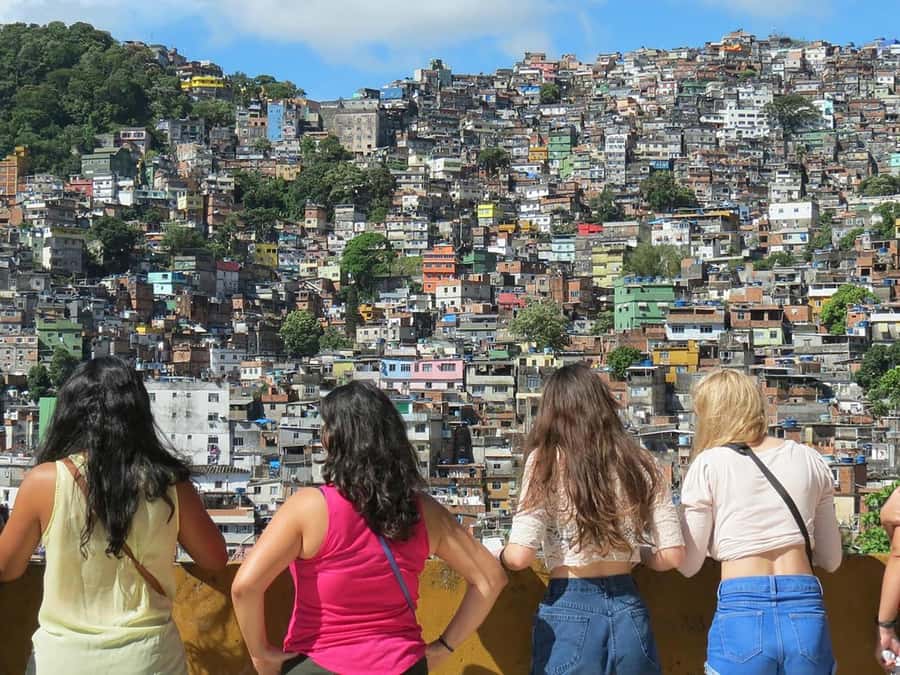
At the top, the tour gives you time to take in Rio from above. Christ the Redeemer, Sugarloaf Mountain, and Ipanema Lagoon are among the landmarks visible from the hillside. The view helps you understand Rocinha’s position: a dense community pressed against the same dramatic hills and coastline that make Rio famous.
I like this opening because it gives you your bearings before the walking begins. You first see the postcard Rio, then look down into the lanes and homes that are usually missed from the beach or a cable car.
The quality of the view will depend on weather. On a clear day, the city should be easier to read from the high ground. In rain or low cloud, the outlook may be less impressive, but the tour still operates. The provider runs the visit rain or shine, and bad weather does not bring a refund.
Bring shoes with a good grip and a light rain layer. The supplied details do not promise a particular surface or walking pace, so it is sensible to prepare for uneven, sloping streets rather than a smooth city sidewalk.
A terrace stop gives you time to pause
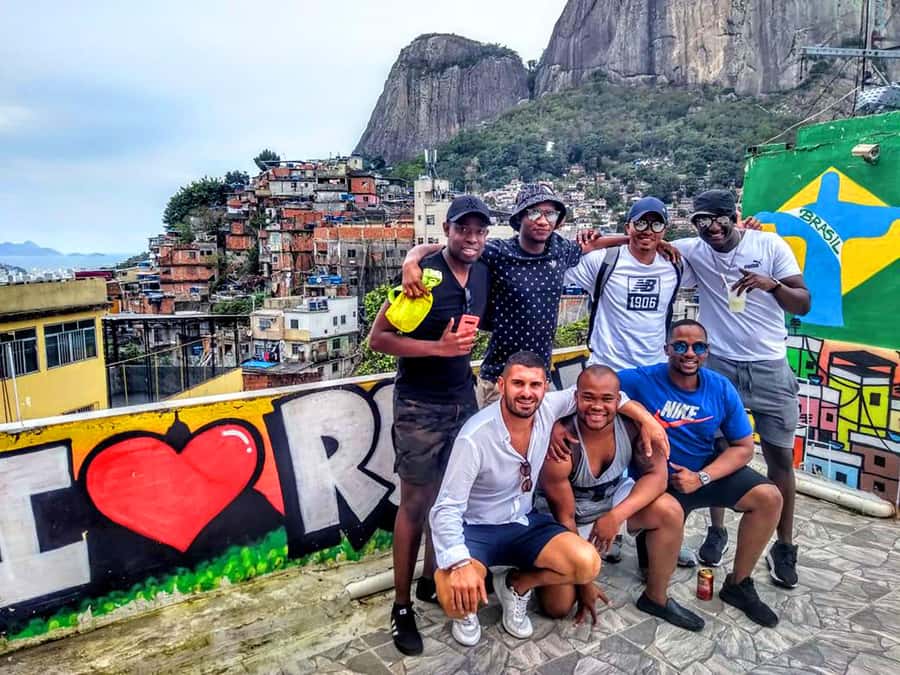
After the opening view, the group goes to one of Rocinha’s well-known terraces. This is the place for photographs of the favela and the wider city, and it breaks up the route before you move into the narrower lanes.
A terrace can be useful for more than pictures. It gives you a chance to understand how tightly the homes and streets fit together on the hillside. From above, the scale of Rocinha becomes easier to grasp than it is from ground level.
Still, keep your camera habits in check. The practical rule given by the tour is simple: take photographs only when allowed. That includes people, private homes, and scenes that may look visually striking but are still part of somebody’s daily life.
If photography is your main reason for booking, you should know that this is not a dedicated photo tour. You will have opportunities for memorable images, but the guide’s priorities are the route, group movement, and respectful contact with the community.
Walking downhill through Rocinha’s narrow lanes
The walking section leads downhill through the community, from the upper edge toward the lower part of Rocinha. One visitor described the route as a walk through tight streets and said the experience remained worthwhile even in rainy weather.
Going downhill is a practical advantage. Rocinha is built on steep ground, and a route that descends should be less tiring than one that requires a long climb. It does not mean the walk is effortless, though. You should still expect slopes, confined passages, and the need to keep pace with a shared group.
This is where the tour moves beyond scenic views. You may see residences close to the path, encounter local people, and take part in conversation through the guide. The exact exchanges will depend on the day, the group, and who is available to talk.
That uncertainty is worth accepting. Community visits cannot produce the same fixed sequence every time. A quiet interaction may be more meaningful than a staged stop, but it can also feel less certain than a standard sightseeing tour.
The shared format has two sides. It keeps the cost at a moderate $46 and allows transport from several hotel districts. On the other hand, you have less control over the pace, the amount of time at each stop, and the kind of conversation you have.
A few more Rio De Janeiro days to weigh up
- Rio de Janeiro: 6-Stop Highlights of Rio with Lunch
★ 4.4 · 5,157 reviews - Christ the Redeemer Entry Ticket by Corcovado Train
★ 4.4 · 4,476 reviews - Rio’s City Tour – Tickets for Christ, Sugar Loaf & Lunch included
★ 5.0 · 4,389 reviews - Full Day: Christ Redeemer, Sugarloaf, City Tour & Barbecue Lunch
★ 4.5 · 3,142 reviews
Murals and graffiti add color to the route
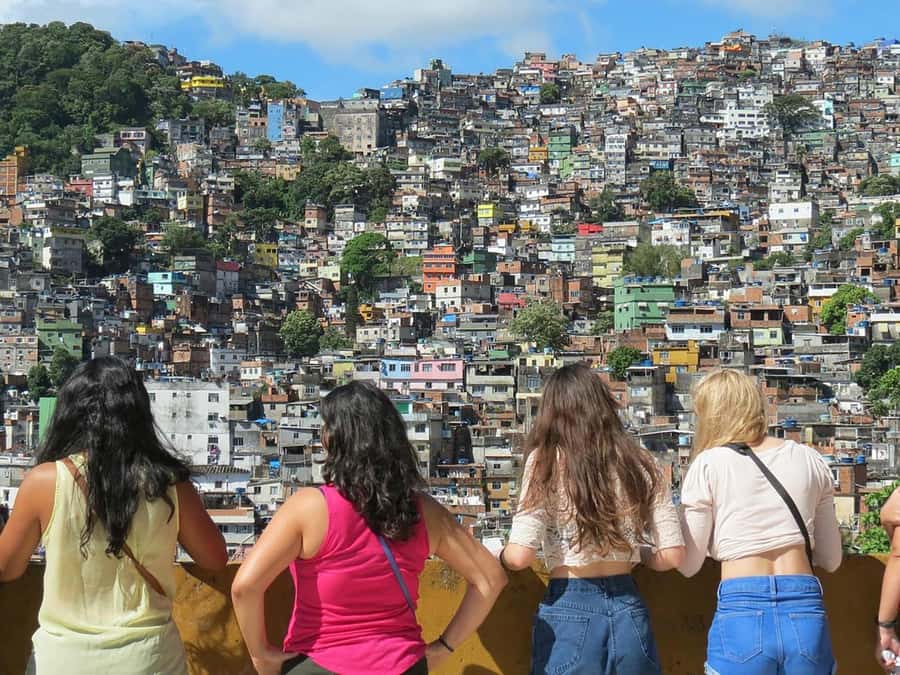
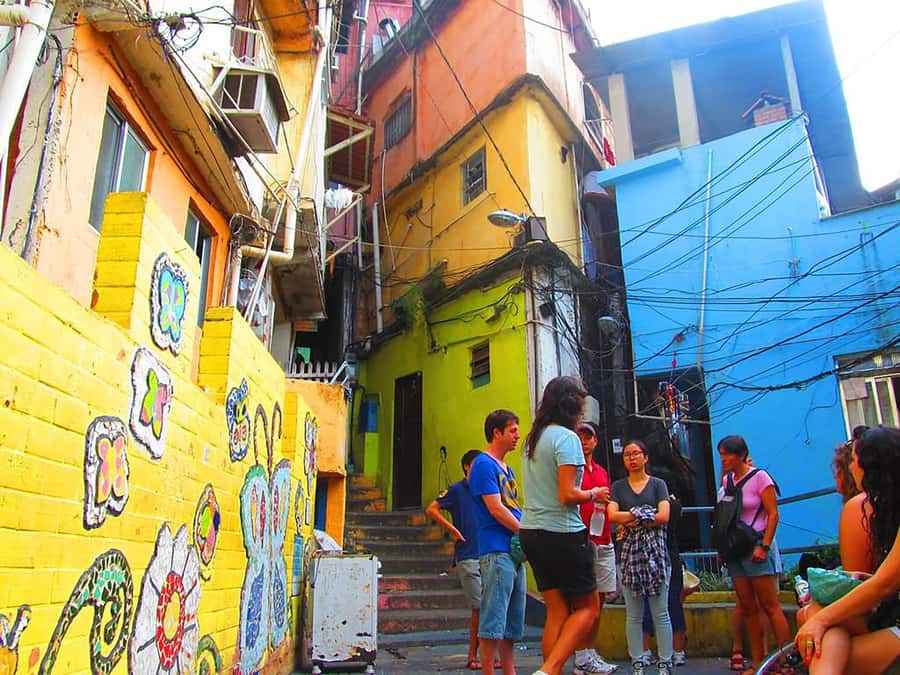
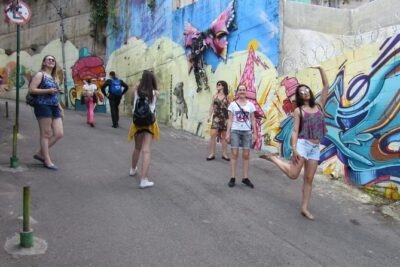
Painted walls are a major part of the walk. Murals and graffiti appear along the alleys and help show how residents and artists use public space to express local identity.
I like this part of the experience because the art gives you another way to read the community. It is not just decoration for visitors. The painted surfaces can make a plain passage more striking, while also showing the creative energy of Brazil’s neighborhoods.
The route description emphasizes vibrant murals and graffiti, but you should not expect every wall to look freshly painted. Outdoor art changes with weather, construction, and time. The pleasure is in seeing how color and design appear among the homes and streets, not in finding a controlled gallery display.
Your guide can help explain what you are seeing, though the tour information does not promise a particular artist, mural, or planned art lecture. If you want to understand a specific work, ask the guide while you are there.
The guide shapes the experience
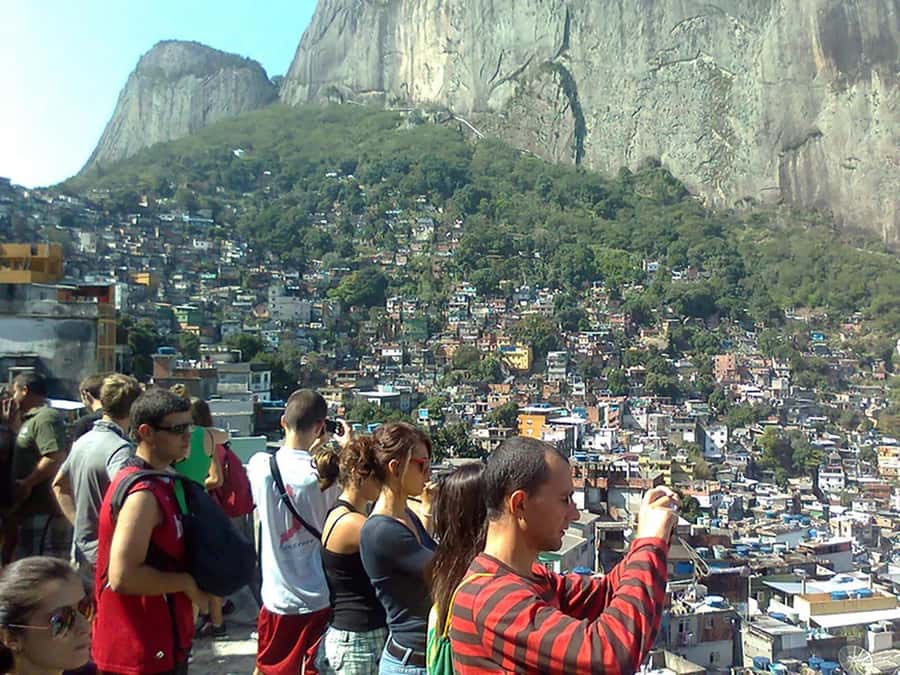
The tour includes a professional guide who speaks English, Spanish, and Portuguese. Since this visit involves a working residential area, the guide is more than someone who points out views. The guide helps you understand where to walk, when to stop, and how to behave.
Martin received especially strong praise for giving useful insight into favela life and helping the group feel safe. That does not guarantee Martin will lead your departure, but it shows how much the guide can affect the day.
A good guide can also help with the delicate balance between curiosity and respect. You may have questions about housing, daily life, local services, or the way the community is organized. Ask politely, and accept that some answers may not be appropriate to pursue in the middle of someone’s home area.
Keep the group’s instructions in mind. The advice to follow the guide’s directions and remember that you are a guest is not a small courtesy. It is the key rule for this kind of visit.
Is $46 a fair price?
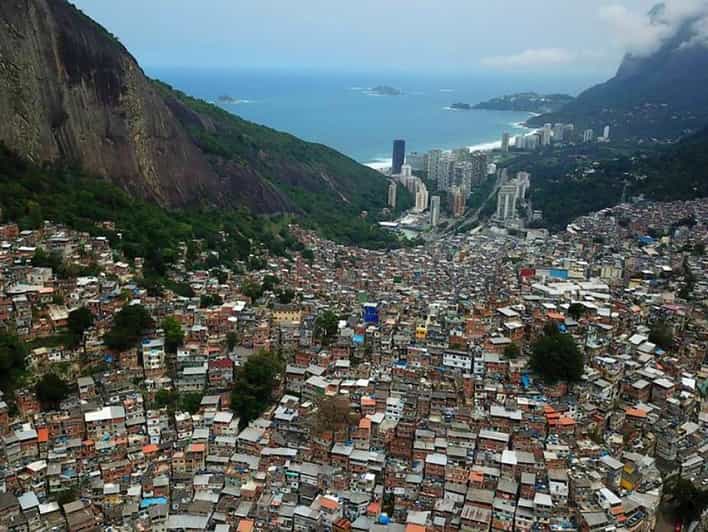
At $46 per person, the tour offers three hours, hotel pickup and drop-off in several central Rio districts, transport, and a live guide in three languages. For someone staying in Copacabana, Ipanema, Leblon, Botafogo, Flamengo, or Lapa, that convenience adds real value.
You are paying for more than a viewpoint. The price covers a guided route into Rocinha, transportation between your hotel area and the community, interpretation in English, Spanish, or Portuguese, and help navigating a place that may be unfamiliar.
The value is weaker if you want a completely private or highly personalized experience. This is a shared tour, and one visitor found it too tourist-focused for the level of authenticity expected. The motorcycle ride also costs extra, and food and drinks are not included.
For many people, the cost is reasonable because arranging transport and entering the community independently would create more uncertainty. The tour does not turn Rocinha into a simple sightseeing stop, but it gives you a structured way to see it.
Pickup zones and the three-hour schedule
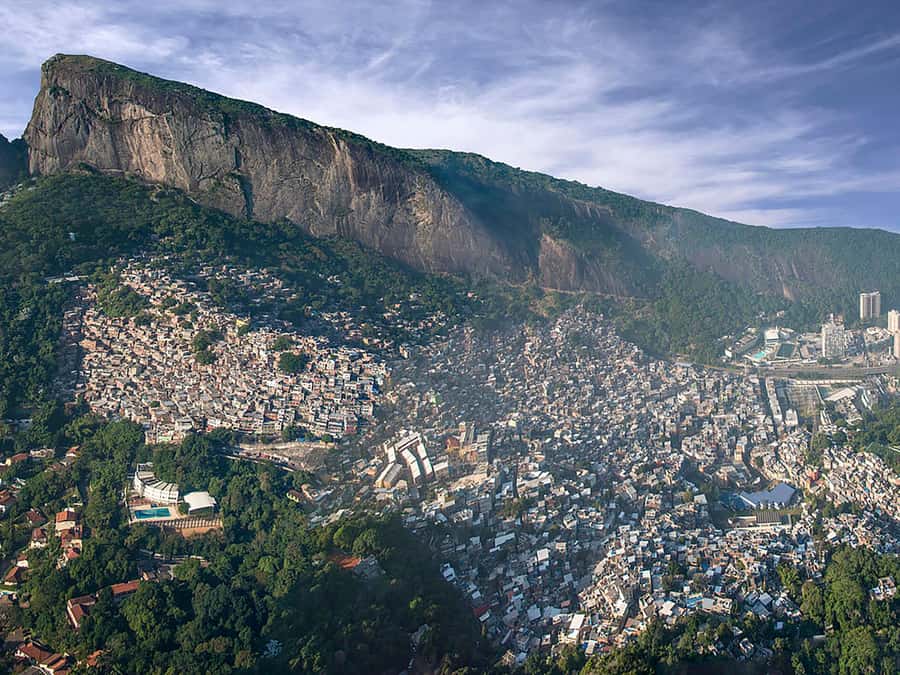
Pickup is available from hotels in Copacabana, Ipanema, Leblon, Botafogo, Flamengo, and Lapa. Drop-off is offered in those same six districts. Barra da Tijuca and Recreio are not included, so you would need to arrange your own connection if you are staying there.
During high season, pickup may shift to a meeting point near your hotel rather than the hotel entrance. This is done to reduce delays and traffic problems. If you do not provide a pickup address, the default meeting point is Socialtel Lapa at Rua Visconde de Maranguape, 9.
The total duration is three hours, but hotel transfers form part of the practical schedule. You should not treat every minute as walking time inside Rocinha. Shared pickup can also mean that the start feels less exact than a private car departure.
The tour is not private, and the guide may switch between English, Spanish, and Portuguese. That can be helpful if your group includes different nationalities, though explanations may take longer or feel less tailored to you.
Who should book this experience?
I would recommend this tour to you if you want a guided introduction to Rocinha and are comfortable with a real neighborhood setting rather than a polished attraction. It suits visitors who value context, street art, city views, and direct contact with local life.
It also works well if you are staying in one of the listed southern or central neighborhoods and want transport handled for you. The three-hour length leaves room for other Rio plans on the same day, provided you allow enough flexibility for shared pickup.
You should think carefully before booking if you want complete privacy, a fixed photography schedule, or a tour centered only on architecture. The route includes steep ground, narrow lanes, and a motorcycle climb, so it is not suitable for wheelchair users.
Carry your passport or ID card, protect your belongings, and do not leave valuables in the vehicle. The provider does not accept responsibility for items lost on buses or vans.
How to visit Rocinha respectfully
The best attitude is quiet curiosity. Listen before judging, and remember that the people you see are not part of a performance arranged for your camera.
Ask before taking photographs. If someone declines, accept it without argument. Avoid photographing private interiors or residents who are simply trying to get through their day.
Stay with the guide and follow instructions about where to stand and when to move. Do not wander away to chase a better view or mural. A shared tour depends on the group moving together, and the local setting makes that especially important.
You can also support the experience by asking thoughtful questions instead of treating the community as a backdrop. The most useful visit is one that leaves you with a fuller understanding of Rio, not just a collection of dramatic images.
Should you book the Rocinha tour?
Book it if you want a structured, affordable introduction to one of Rio’s most talked-about communities, with strong hilltop views, street art, and a downhill route. The guide can make the difference, and Martin’s praised approach suggests the best version of this tour is thoughtful, clear, and respectful.
Do not book it expecting total privacy or an untouched local experience. One person found it too tourist-focused, and that is a fair caution. This is still a commercial tour through a residential community.
My practical call: choose it if you can accept the shared format, extra 15-real motorcycle cost, changing weather, and photography limits. Go with an open mind, follow the guide, and treat Rocinha as a place where people live first and a sightseeing stop second.
FAQ
How long does the Rocinha tour last?
The tour lasts three hours, including the guided visit and the associated transport arrangements.
Where can I be picked up?
Pickup is available from hotels in Copacabana, Ipanema, Leblon, Botafogo, Flamengo, and Lapa.
Where can I be dropped off?
Drop-off is available in Ipanema, Flamengo, Copacabana, Botafogo, Leblon, and Lapa.
Is the motorcycle ride included in the price?
No. The climb by motorcycle costs 15 Brazilian reais and is not included in the tour price.
What languages does the guide speak?
The live guide speaks English, Spanish, and Portuguese. The tour is shared rather than private.
What should I bring?
Bring your passport or ID card. You should also prepare for rain because the tour operates in all weather, and photographs should only be taken when permitted.
Newest reviews from around Rio De Janeiro
- PRIVATE TOUR – Christ the Redeemer and Sugar Loaf★ 4.5 · 9 reviews
- Christ Statue and Sugarloaf Private Tour with a Photographer★ 5.0 · 9 reviews
- Cidade do Samba Behind-the-Scenes Carnival Tour in Rio de Janeiro★ 4.0 · 5 reviews
- Christ the Redeemer Trail x Lage Park★ 5.0 · 7 reviews
- Christ the Redeemer and City Tour★ 5.0 · 20 reviews
- Christ the Redeemer, Selaron Steps and Santa Teresa Half-day Tour★ 4.5 · 15 reviews
- Christ the Redeemer Adventure★ 5.0 · 12 reviews
- Private Tour of Christ the Redeemer in Rio de Janeiro★ 5.0 · 2 reviews
Favela Tours, compared.



3 Hour Rocinha Favela Walking Tour with a Local Guide
Read our review →

Favela Tour Rio de Janeiro – Vidigal Walking Tour by Russo Guide
Read our review →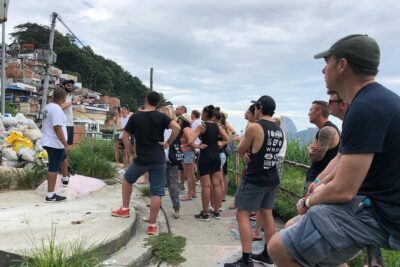
Browse the lists this tour appears in