
Reviewed · FOOTBALL & STADIUM TOURS
Football in Rio: Visit to the Flamengo Museum
Feel Flamengo’s history up close. This Rio visit pairs a modern museum with the club’s Gávea facilities, giving you both the polished trophy room and a look at where athletes train. I like the sweep of the collection, from a 1900 rowing trophy to the 2019 Copa Libertadores, and I like that the combo tour reaches beyond football into swimming, tennis, basketball, volleyball, gymnastics, and fighting sports. The main consideration is that the club facilities visit is available only with the combo option, and its route can change depending on club availability.
I also appreciate the short museum visit, which fits neatly into a busy Rio day. A guide adds stories and context, and the museum shop gives you a chance to take home a Flamengo memento. You should plan carefully, though: transport, food, and drinks are not included, and you cannot enter wearing clothing from another football club.
In This Review
- Key points at a glance
- Flamengo’s story begins before the football trophies
- The museum’s biggest football moments
- What you see inside Gávea
- The guide adds the human side
- How the two options compare
- Price, timing, and getting ready
- What the visit does especially well
- Who should book this Flamengo visit?
- Should you book it?
- FAQ
- Where does the Flamengo Museum visit meet?
- How long does the Flamengo Museum tour take?
- What does the combo option include?
- What time does the visit operate?
- Is transportation included?
- Can children join the tour?
- What happens if I need to cancel?
Key points at a glance
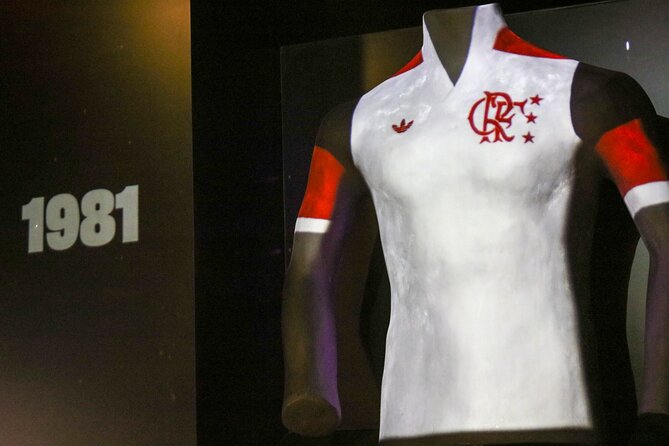
- See Flamengo’s 1981 World Clubs Championship legacy: Replicas of the Sacred Mantle, photographs, reports, and memorabilia recall one of the club’s defining triumphs.
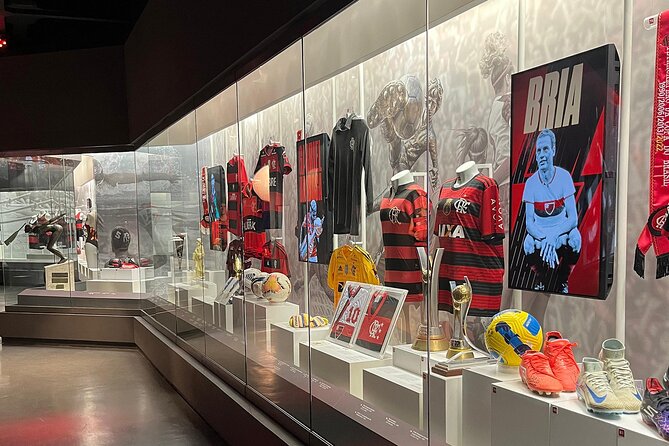
- Trace the club back to rowing: The collection begins with Flamengo’s first rowing trophy from 1900, showing that this is a multi-sport institution, not only a football team.
- Choose between two useful formats: The museum visit averages 30 minutes, while the combo adds about 60 minutes at Gávea.
- Visit the former professional football pitch: The field once used by Flamengo’s senior squad still hosts youth and women’s matches.
- Use the practical timing to your advantage: Museum visits can begin from 9 a.m. through 5:30 p.m.; combo tours start every hour.
- Dress for the club rules and Rio weather: Light clothes, sunglasses, and sunscreen help on hot days, while rain gear is sensible in wet weather.
Flamengo’s story begins before the football trophies
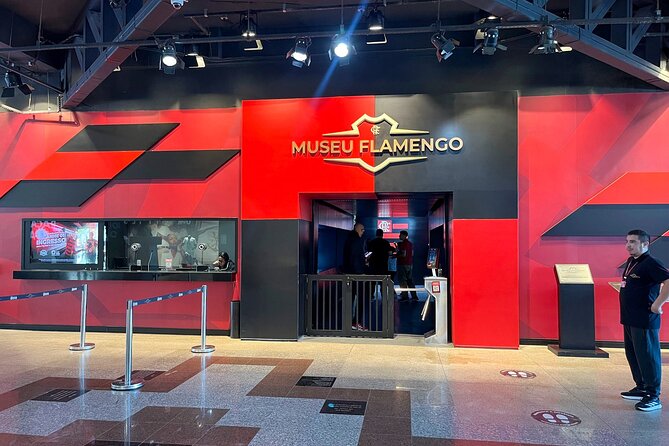
Flamengo was born in 1895 as a rowing club. That detail gives the museum visit more depth than a simple display of football cups. You will see how the red and black club grew into a sporting institution with major achievements across several disciplines.
The first trophy in the collection dates from 1900, when rowing was still central to Flamengo’s identity. From there, the displays move through more than a century of competition, including football triumphs and awards from other sports practiced by the club.
I find this especially useful if you are visiting with someone who is not a devoted football fan. The collection gives you a wider picture of Flamengo’s place in Brazilian sport. You can look at the football stars, then turn to the club’s work in swimming, water polo, artistic swimming, basketball, volleyball, gymnastics, tennis, and fighting sports.
The museum is described as modern and regularly renewed. That matters because a club with such a long sporting life could easily feel stuck in the past. Instead, the displays are intended to connect old trophies and photographs with more recent achievements.
More Museum Tours in Rio de Janeiro
- Petrópolis Day Trip from Rio de Janeiro including Imperial Museum and Crystal Palace
★ 4.0 · 101 reviews - Museum of Tomorrow, AquaRio & Olympic Boulevard in Rio de Janeiro
★ 4.5 · 69 reviews - Olympic Boulevard, Museum of Tomorrow & Historical Rio
★ 4.5 · 66 reviews
The museum’s biggest football moments
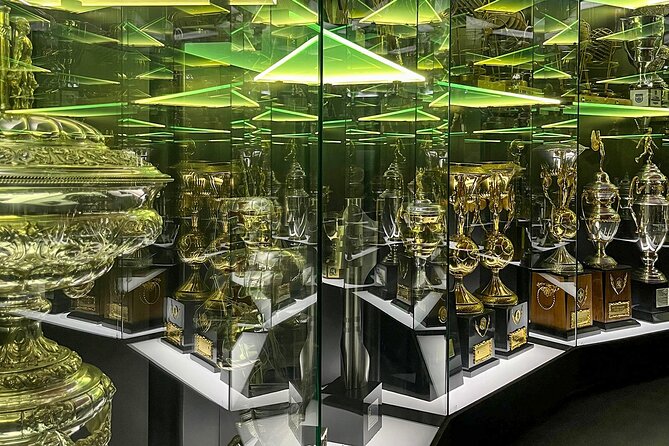
The football section is the emotional center for many people. The most important pieces include material connected with the 1981 World Clubs Championship and the 2019 Copa Libertadores.
You can see replicas of the Manto Sagrado, or Sacred Mantle, associated with the 1981 title. The nickname refers to Flamengo’s famous shirt, and the replicas help make an otherwise distant match feel more tangible. Photographs, reports, and historic images add the setting around the objects.
The 1981 championship has a special place in Flamengo’s story. The display is not only about a cup in a case. It recalls the club’s place on the world stage and the generation of idols who made that period so important to supporters.
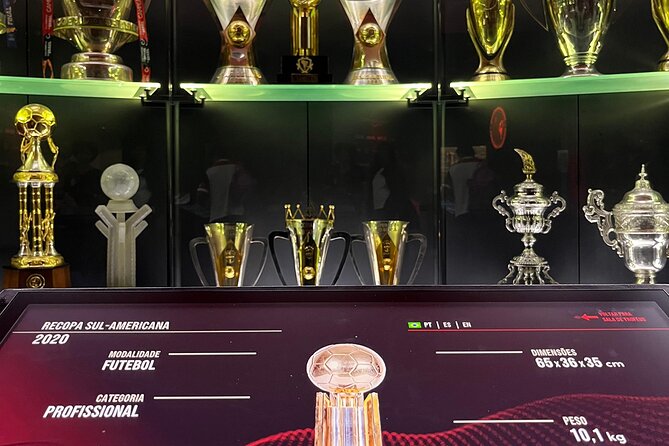
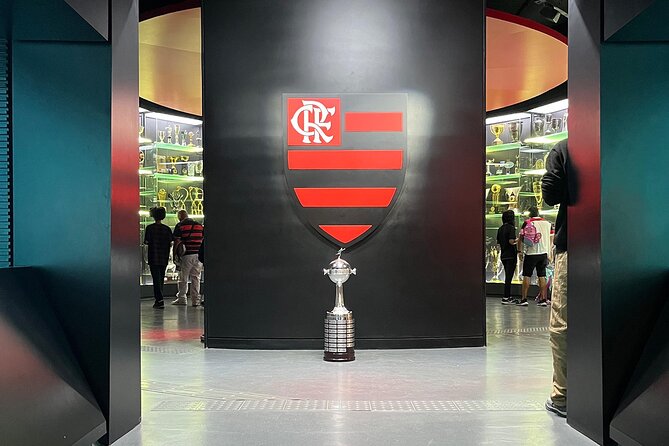
The 2019 Libertadores victory gives the collection a more recent landmark. Seeing that title alongside older rowing awards and earlier football trophies helps you follow the club’s changing identity over time.
You should allow roughly 30 to 40 minutes for the museum itself. The published visit window runs from the first start at 9 a.m. to the last start at 5:30 p.m., and museum visits can begin at any point during that period. That flexibility is handy if you are fitting Flamengo into a day around other Rio plans.
The museum ticket is included in the visit price. The stated cost is $31.76 per person, though the final amount you see when booking should be checked because prices can change. For a committed Flamengo supporter, the value comes from access to original club material, the historical context, and the chance to visit the official store afterward. For a casual football fan, the museum alone may feel brief for that price, especially if you are not adding the Gávea tour.
What you see inside Gávea
The combo option adds a visit to Clube de Regatas do Flamengo’s facilities. This part averages about 50 minutes in the stated route, while the full combo is listed at about 60 minutes and begins every hour.
The visit starts at the water park. Members use it for leisure on sunny days, while swimmers, water polo players, and artistic swimmers train there for national and international competition. This opening stop makes the club’s wider sporting purpose clear right away.
From there, you pass the administrative building and tennis courts. These may not have the same immediate pull as a trophy cabinet, but they help show how much activity fits inside Flamengo’s club operation.
The football pitch is a key stop. It is the field where Flamengo’s professional team played and trained in the past. Today, it continues to host matches involving the club’s youth and women’s teams.
Do not expect this to be the same as attending a Flamengo match or touring every restricted area of a major stadium. The focus is on the club’s facilities, its sporting structure, and the stories told by the guide. Still, seeing the pitch gives you a physical connection to Flamengo’s football life that a museum cannot provide.
The route also includes the basketball and volleyball courts, the artistic gymnastics gym, the fight center, and other areas. Since Flamengo developed from rowing and now competes at a high level in several Olympic sports, this broader visit is one of the combo’s strongest features.
The club has an active working environment, so the itinerary may change according to availability. You should treat the route as a guided look at Gávea rather than a fixed checklist. That flexibility is practical, but it also means you cannot count on every stop being available in exactly the same way.
The guide adds the human side
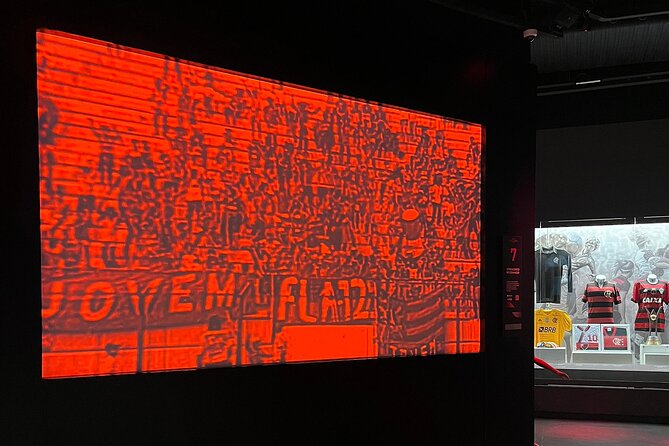
The guide is an important part of the visit. The tour is not just a walk past cups and rooms. You hear stories and club anecdotes from someone specialized in Flamengo.
The strongest comments about the visit focus on the explanations, organization, friendliness, and care shown by the guide. One account specifically describes a museologist explaining the club’s full trajectory, while another praises a guide for being polite, attentive, and clear with every display.
That detail matters. Football museums can be hard to read if you do not already know the names, dates, and rivalries. A good explanation helps you understand why a particular shirt, report, trophy, or image matters.
The tour is offered in English, which makes it a practical choice for English-speaking visitors. The supplied information does not provide a guide’s name for this museum and club visit. A separate football match account mentions a guide named Michael, but that was connected with a different game outing, so you should not assume he leads this tour.
More Football & Stadium Tours in Rio de Janeiro:
- Rio: Maracanã Stadium Official Entrance Ticket
★ 4.4 · 1,632 reviews - Skip The Line to Christ Redeemer By Train with Maracanã Stadium
★ 3.5 · 235 reviews - Skip the Line Maracana Stadium Entrance Ticket
★ 4.0 · 203 reviews - Private tour: Christ the Redeemer, Maracanã,Sugarloaf, Old Downtown and Selaron
★ 5.0 · 173 reviews
How the two options compare
You have two basic ways to visit.
Museum only: This is the shorter choice, averaging about 30 minutes, with the museum ticket and guide included. It works well if you want Flamengo’s trophies and football story but have a full sightseeing schedule.
Combo with Gávea: This adds the club facilities visit and averages about 60 minutes overall. It is the better choice if you want to see the pitch, learn about Flamengo’s Olympic sports, and understand how the club functions beyond its famous football team.
The extra time is modest, so I would choose the combo if the price difference is reasonable at booking. You gain the water park, courts, pitch, and training areas without turning the visit into a half-day commitment.
The museum-only option makes more sense if your main interest is football memorabilia or if you are traveling with young children who may not want a longer club tour. Children up to age five are exempt, which can help families keep the cost down.
Price, timing, and getting ready
At $31.76 per person, this is not an ultra-cheap museum stop. Its value depends on what you want from it.
For a Flamengo fan, the price is easier to justify because you receive a guided museum visit, access to major club memorabilia, and the chance to shop at the Flamengo Store. The combo gives you more time and a much broader view of the club’s facilities.
For a general Rio sightseeing day, compare the cost with your interest level. If you only want to take a quick look at a football shirt or a few trophies, the visit may feel costly. If you want a serious look at one of Brazil’s best-known sporting institutions, the guided context makes the price more sensible.
The meeting and ticket redemption point is at Av. Borges de Medeiros, 997, Lagoa, Rio de Janeiro, RJ, 22430-041. The location is near public transportation. Hotel pickup and drop-off are not included, so you need to make your own way there and back.
For the museum, visits can start at any time within the operating window. The combo starts every hour, making it easier to plan a specific arrival. Confirmation is provided when you book, and most people can take part.
Wear light clothing for the Gávea portion on hot days. Sunglasses and sunscreen are useful because part of the route may be exposed. On rainy days, bring an umbrella or raincoat.
One rule deserves special attention: clothing from other football clubs, Brazilian or international, is not permitted on any tour. If you support another team, wear neutral clothing rather than risking a problem at the entrance.
What the visit does especially well
The most praised qualities are consistent: the tour feels organized, the explanations are clear, the guide is friendly, and the historical material makes a strong impression.
The museum’s best feature is its range. You are not limited to one famous match or one star player. You move from rowing in 1900 to football victories in 1981 and 2019, with many other club achievements in between.
The combo’s strength is its variety. You see places linked with swimming, tennis, basketball, volleyball, gymnastics, and fighting sports. That helps you understand why Flamengo is more than a football brand.
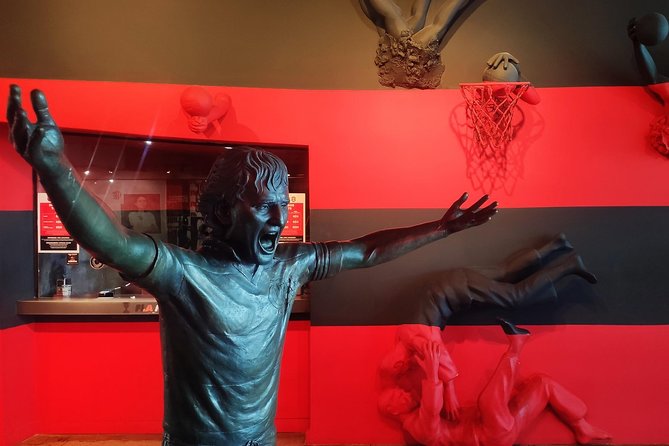
The atmosphere can also be powerful for supporters. The club’s trophies, Sacred Mantle replicas, images, and reports create a sense of place that a standard city museum cannot match. If Flamengo means something to you, the visit may feel personal and moving.
The tradeoff is scale. The museum tour is short, and the Gávea route can change. You also may not see the exact areas you hoped for if club activity affects access. Go expecting a guided introduction to Flamengo, not an all-access backstage tour.
Who should book this Flamengo visit?
I would recommend it first to Flamengo supporters, Brazilian football fans, and anyone interested in the cultural side of sport. It is also a good choice for families, since the museum is compact and the club facilities add variety for children who may not care about every trophy.
The combo is best for you if you want to see the playing field and understand Flamengo as a multi-sport club. Choose the museum-only option if your schedule is tight or your interest centers on football history and memorabilia.
You should think twice if you have no interest in football, sports, or club culture. Rio offers many sights with broader appeal, and the museum’s short length may not justify the price for you.
Free cancellation is available if you cancel at least 24 hours before the local start time. Cancellations or changes made inside that period are not accepted for a refund.
Should you book it?
Book this visit if Flamengo’s story matters to you, or if you want a clear look at Brazilian club culture beyond match day. The museum gives you the trophies and famous moments, while the combo shows the club’s working facilities and its strength in several sports.
I would pick the combo when possible. For a modest increase in time, you see the former professional pitch, the water park, courts, training spaces, and other parts of Gávea. Choose the museum alone only when you need a quick, focused stop.
Plan your transport, wear club-neutral clothing, and arrive ready for a guided visit rather than a free-roaming museum. For the right audience, this is a thoughtful and well-organized way to meet Flamengo on its own ground.
FAQ
Where does the Flamengo Museum visit meet?
The ticket redemption point is Av. Borges de Medeiros, 997, Lagoa, Rio de Janeiro, RJ, 22430-041, Brazil.
How long does the Flamengo Museum tour take?
The museum visit lasts an average of 30 minutes. The overall experience is listed as approximately 40 minutes to 1 hour and 30 minutes, depending on the option selected.
What does the combo option include?
The combo includes the Flamengo Museum and a guided visit to the club facilities at Gávea. The facilities route includes areas such as the water park, tennis courts, football pitch, basketball and volleyball courts, gymnastics gym, and fight center, subject to club availability.
What time does the visit operate?
The first visit starts at 9 a.m., and the last starts at 5:30 p.m. Museum visits can begin at any time within that period. Combo tours start every hour.
Is transportation included?
No. Transportation to and from hotels is not included. The meeting point is near public transportation.
Can children join the tour?
Yes. Most people can participate, and children up to five years old are exempt from payment.
What happens if I need to cancel?
You can cancel for a full refund up to 24 hours before the experience start time. Cancellations or changes made less than 24 hours before the start time are not refunded or accepted.
Newest reviews from around Rio de Janeiro
- Hang gliding flight in Rio de Janeiro★ 5.0 · 6 reviews
- Rio de Janeiro: Zip Lining and Canopy Tree Tour★ 3.3 · 6 reviews
- Vidigal Favela Tour★ 4.4 · 26 reviews
- Rio de Janeiro: Attend a Vasco da Gama game with local guide★ 4.8 · 9 reviews
- Unforgettable Boat Party★ 5.0 · 3 reviews
- Parapente Rio de Janeiro★ 5.0 · 4 reviews
- Rio de Janeiro Private Tour with Cruise Terminal Pick-up★ 5.0 · 2 reviews
- Wild Waters: Rio Whitewater Rafting Adventure Tour★ 5.0 · 13 reviews
Football & Stadium Tours, compared.
Skip The Line to Christ Redeemer By Train with Maracanã Stadium
Read our review →

Private tour: Christ the Redeemer, Maracanã,Sugarloaf, Old Downtown and Selaron
Read our review →
Football Match in Rio de Janeiro – Guided with Transportation
Read our review →
Christ the Redeemer, Selaron, Cathedral, Maracana, Sambadrome Half-Day Tour
Read our review →

Browse the lists this tour appears in