
Reviewed · FAVELA TOURS
Favela tour Santa Marta with local guide
Rio looks different from Santa Marta. This two-hour walk offers a close look at daily life in one of Rio de Janeiro’s hillside communities, led by people who live there. I especially like the small group limit of 10 and the chance to visit local homes, including the remarkable house filled with more than 350 watches. The $29.40 price also helps support community projects for children and young people.
The tour feels personal rather than staged. Guides such as Gilson, who was born and raised in Santa Marta, and Ronny introduce you to family members, neighbors, shops, and community projects. The main drawback is physical: steep stairs, uneven stone paths, and roughly 500 steps may be difficult for anyone with knee, balance, or mobility problems. The hillside transport can also be unavailable, so you should be ready to walk.
In This Review
- Key points to know before you book
- Why Santa Marta makes a useful Rio walking tour
- Meeting in Botafogo and getting oriented
- Riding the Santa Marta inclined plane
- Walking downhill through Santa Marta
- Michael Jackson’s Santa Marta connection
- The crèche and the cultural corridor
- A family home and the House of Watches
- Safety, ethics, and the right attitude
- Is $29.40 good value?
- Who should book this Santa Marta tour?
- FAQ
- Where does the Santa Marta tour begin?
- How long does the tour last?
- Is the Santa Marta inclined plane included?
- What happens if the cable car is closed?
- Is the tour suitable for people with limited mobility?
- What is the maximum group size?
- Should you book it?
Key points to know before you book
- A genuinely local guide: Gilson has lived in Santa Marta all his life, while Ronny also guides visitors through the community.
- The funicular may not operate: The included inclined-plane ride has sometimes been closed for repairs or stopped because of power problems.
- The best views come from above: You can see Christ the Redeemer, Sugarloaf Mountain, the city, and the sea from several hillside points.
- Personal visits are central: The tour may include a guide’s home, the +Que Turismo Social Project, and the House of Watches, where more than 350 watches are displayed.
- A small-group format: The maximum group size is 10, though some departures have been much smaller.
- Come prepared for stairs: This is not a flat city walk. The route can involve steep steps without railings and occasional animal waste on the paths.
Why Santa Marta makes a useful Rio walking tour
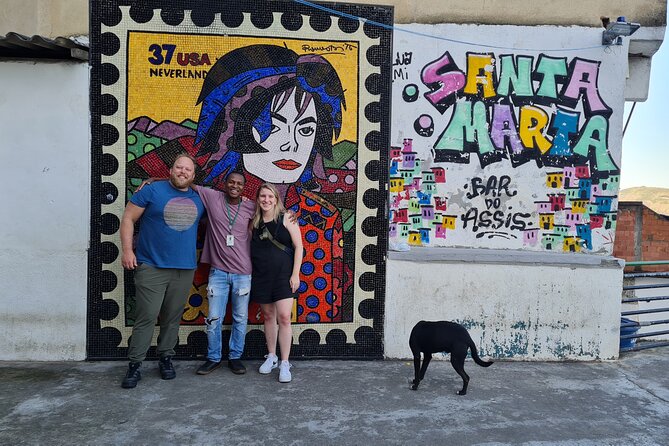
Rio de Janeiro is easy to admire from beaches, viewpoints, and cable cars. Santa Marta asks you to look at the city from a different angle. This is a residential community on a steep hill, with homes, shops, churches, small businesses, public facilities, and social projects woven into everyday life.
I like that the tour does not treat Santa Marta as a collection of photo stops. The guide explains how the community works, answers questions, and points out both its strengths and its problems. You get a feel for the place instead of hearing a polished speech while being driven past it.
That difference matters when taking a favela tour. A large vehicle passing through a neighborhood can easily make local people feel like scenery. Here, you walk with someone who knows the area and is greeted by people along the route. The small group also makes it easier to ask questions without turning the visit into a crowd.
The tour’s social purpose is another important part of its value. The provider says part of the money goes toward community work, including support for children and young people. The itinerary includes a visit to a community crèche serving about 80 children, as well as the +Que Turismo Social Project. You should still approach these visits with care and follow the guide’s instructions about photos and respectful behavior.
Other favela walks led by people who live there:
- Rio de Janeiro: Rocinha Favela Walking Tour with Local Guide
★ 4.8 · 3,052 reviews - Rio De Janeiro: Half-Day Rocinha Favela Walking Tour
★ 4.7 · 2,272 reviews - 3 Hour Rocinha Favela Walking Tour with a Local Guide
★ 5.0 · 833 reviews
Meeting in Botafogo and getting oriented

The tour begins at R. São Clemente, 320, in Botafogo, near public transportation. The first stop is a tourist information stand, scheduled for about 10 minutes. This gives you a place to meet the guide and get your bearings before walking toward Santa Marta.
Finding the correct guide can be confusing if several people are waiting in the same park or meeting area. I would arrive early, keep your booking details handy, and confirm the guide’s name before setting off. Some past departures have involved late guides or confusion over last-minute changes, so clear communication on the day matters.
The experience is generally offered in a small group, with no more than 10 people. It can be much smaller, sometimes only two or three visitors. That is a real advantage if you want to ask about housing, local projects, policing, schools, or daily routines.
The tour lasts about two hours, but timing may shift if the funicular is closed or the group spends longer talking with residents. The itinerary itself adds up to about 90 minutes at named stops, before counting walking time. Allow a little flexibility rather than planning a tight appointment immediately afterward.
Riding the Santa Marta inclined plane
From the meeting area, you walk to the Plano Inclinado da Comunidade Santa Marta, the hillside funicular. The included ride takes you toward the top of the hill, where you can see the city and the upper part of the Santa Marta Chapel.
This is more than a handy lift. The inclined plane shows how residents move through a steep community where ordinary errands can involve serious uphill walking. For visitors, it saves energy at the start of the tour and gives you a quick sense of the terrain.
The important warning is that the funicular is not guaranteed to operate. It has been closed for renovation after years of service, and there have also been occasions when electricity problems stopped it. When that happens, the guide may arrange a car ride to the upper area, followed by a walk downhill, or the group may walk more of the route.
That change can affect the whole character of the tour. A ride followed by stairs is manageable for many people. Walking the hill without the inclined plane is much harder. The provider has apologized for past cases where visitors were not warned clearly enough, so you should ask about the operating status before booking or immediately before the tour.
At the top, the views are a major reward. From Santa Marta, you may see Christ the Redeemer, Sugarloaf Mountain, the sea, and broad portions of Rio. The best viewpoints are not polished observatories. They are part of the community, which makes the setting feel more connected to daily life.
Walking downhill through Santa Marta
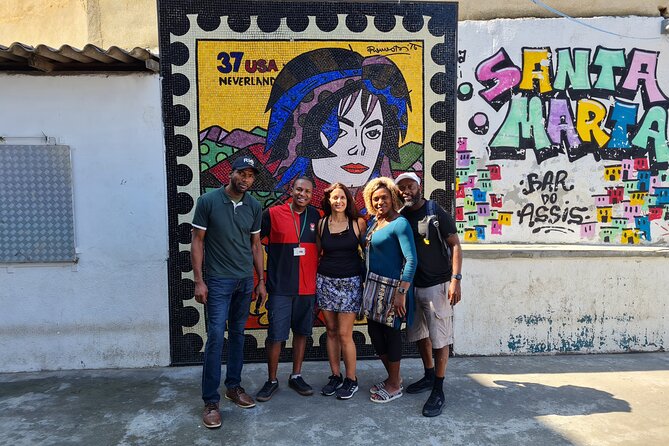
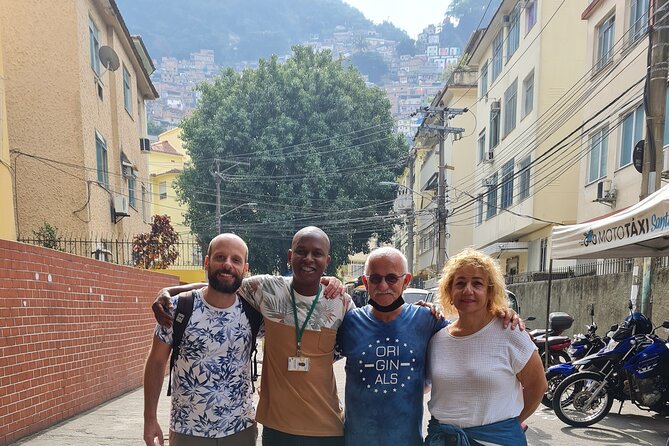
After reaching the upper section, the route continues down stairs through the community. The walk passes homes, small businesses, public spaces, and local facilities. The guide explains what you are seeing and lets you ask questions, rather than rushing from one landmark to the next.
That conversational approach is one of the strongest reasons to choose this tour. Gilson is described as someone who knows nearly everyone in the area, and his connection with Santa Marta gives the walk a natural rhythm. You may meet relatives, friends, or residents who greet him as he passes.
You should not expect a museum-style presentation. The interest comes from ordinary details: how people use the steep lanes, where children gather, how businesses fit into limited space, and how community life continues alongside serious challenges. The tour gives you a more grounded picture of Rio than a quick drive-by could provide.
The route is not easy underfoot. Expect steep stone steps and uneven surfaces. Some steps do not have railings, and there may be cat or dog waste along the way. Wear sturdy shoes, keep your attention on the ground, and avoid bringing anything that makes balance difficult.
The tour is not recommended for people with limited mobility. Even fit visitors should consider heat, stairs, and the possibility that the inclined plane will be unavailable. If you have knee trouble, ask detailed questions before committing.
A few more Rio de Janeiro days to weigh up
- Rio de Janeiro: 6-Stop Highlights of Rio with Lunch
★ 4.4 · 5,157 reviews - Christ the Redeemer Entry Ticket by Corcovado Train
★ 4.4 · 4,476 reviews - Rio’s City Tour – Tickets for Christ, Sugar Loaf & Lunch included
★ 5.0 · 4,389 reviews - Full Day: Christ Redeemer, Sugarloaf, City Tour & Barbecue Lunch
★ 4.5 · 3,142 reviews
Michael Jackson’s Santa Marta connection
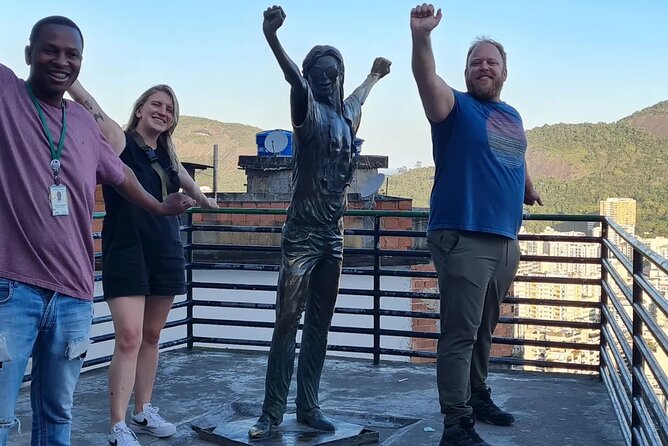
One of the most recognizable stops is the Michael Jackson statue. The statue marks the place connected with the filming of his They Don’t Care About Us music video, and it has become one of Santa Marta’s best-known photo points.
The view here is excellent, with space for souvenir photos and a look across the city. Nearby artisan stalls sell local souvenirs, giving you a chance to buy something from the community rather than from a generic tourist shop.
The stop is not only about Michael Jackson. The guide uses it to explain how international attention affected Santa Marta and how the community presents itself to visitors. You get a famous pop-culture reference, but the wider point is local identity and pride.
Please keep photography respectful. The area is also home to people going about their day, and the tour’s strength depends on visiting without making residents feel observed for entertainment.
The crèche and the cultural corridor

The itinerary includes a visit to a Mundo Infantil crèche, a community childcare center serving around 80 children. The center receives support connected with the guided tours. This gives the social-tourism claim a concrete form: your money is linked to an existing local project rather than only to a guide’s personal income.
The visit should be treated as an introduction to the project, not as a chance to photograph children. Follow the guide’s rules and ask before taking any pictures. The value comes from understanding what the community is trying to provide for families.
The route then continues through a cultural corridor lined with photographs. These images show the development of Santa Marta over time and help explain how the community has changed. This section adds context to the walk, connecting the homes and streets around you with a longer local story.
I find this combination useful. The views and statue are memorable, but the crèche and photo corridor explain why community-based tourism matters here. You see both the public face of Santa Marta and the work being done behind the scenes.
A family home and the House of Watches
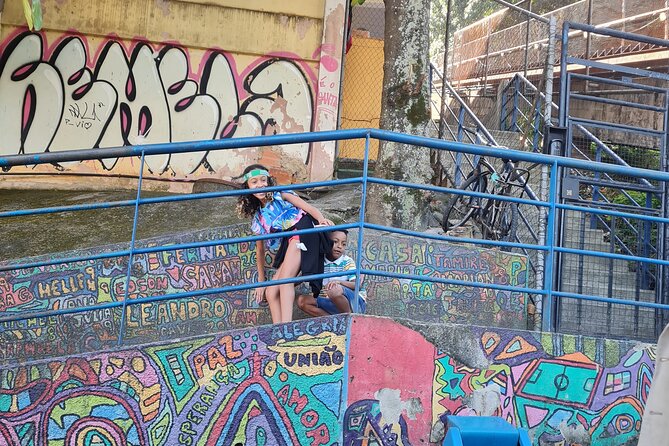
The included visits to a guide’s house and the House of Watches are what make this tour unusually personal. The House of Watches belongs to a resident known as Dona Maria Helena, who has a collection of more than 350 watches throughout her home. Many were gifts from visitors from different countries.
This is not a conventional attraction with display cases and museum labels. It is a resident’s home and personal collection. That makes the visit memorable, but it also means you should behave as you would in anyone’s house: listen, ask permission before taking photos, and avoid treating the space as a curiosity.
Several accounts describe meeting Gilson’s family and seeing a home from inside. A visit like this can help correct simple assumptions about favela housing. Homes may include living rooms, kitchens, bathrooms, and bedrooms, and the community has electricity and running water. At the same time, the guide also discusses the pressures and limits of life on the hill.
The House of Watches is an especially good example of the tour’s tone. It is quirky, human, and impossible to predict from a standard sightseeing route. You are not just looking at a building. You are meeting a resident with a collection built through years of contact with visitors.
Safety, ethics, and the right attitude
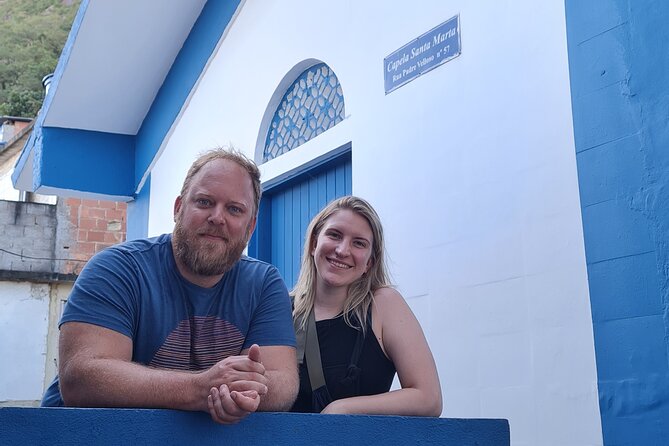
Safety is a serious consideration, and you should follow local instructions without debate. Many people feel comfortable walking with a guide who lives in Santa Marta, but the community has its own realities. One past visitor felt uneasy after seeing residents carrying weapons during the walk.
That does not mean the tour is automatically unsafe, nor does it mean you should ignore your surroundings. The best approach is to stay with the guide, avoid wandering off, keep valuables discreet, and do not photograph people or sensitive locations unless invited.
The ethical question is just as important. I would choose this tour over a bus-based route because it is small, locally led, and tied to community projects. The guide introduces you to people, rather than simply pointing cameras at homes from outside.
Still, ethical tourism depends on your behavior. Dress and act respectfully, ask before entering homes, and listen when the guide explains what is appropriate. Santa Marta is not a theme park. It is a living neighborhood where people work, study, raise children, and deal with the same daily demands found anywhere else.
Is $29.40 good value?
At $29.40 per person, I consider the tour fairly priced if you want a local walking experience rather than a long list of major attractions. The price includes the inclined-plane entrance when it is operating, the guide, access to the personal and community visits, and the chance to support social projects.
You are not paying for luxury transport or a polished visitor center. Private transportation is not included, and the route depends on walking. If the funicular is closed, the tour may involve extra effort without a lower price, which is a fair concern.
The value comes from access and local connection. A guide such as Gilson can explain Santa Marta through personal experience, introduce you to relatives and residents, and answer questions that a general city guide may not be able to address. For me, that makes the price reasonable, provided you accept the physical demands and the informal nature of the tour.
Who should book this Santa Marta tour?
I would recommend it to curious visitors who want to understand Rio beyond beaches and landmark viewpoints. It suits solo visitors, couples, and small groups who prefer conversation and local contact over a fixed script.
It is also a good choice if you care about where your tourism money goes. The crèche, social project, and family visits give the tour a community focus that is easy to understand.
I would be cautious if you have limited mobility, dislike steep stairs, or need a tightly timed excursion. I would also think twice if you expect a conventional sightseeing tour with reliable transport and carefully controlled conditions. The funicular may be closed, the guide may be delayed, and the route can be demanding.
FAQ
Where does the Santa Marta tour begin?
The meeting point is at R. São Clemente, 320, Botafogo, Rio de Janeiro. The location is near public transportation.
How long does the tour last?
The experience lasts approximately two hours.
Is the Santa Marta inclined plane included?
Yes. Entrance to the favela cable car, also called the inclined plane or funicular, is included when it is operating.
What happens if the cable car is closed?
The funicular has sometimes been unavailable because of renovation or power problems. In those cases, the guide may arrange transport to the upper area or the group may need to walk more of the hill.
Is the tour suitable for people with limited mobility?
No. The tour is not recommended for people with limited mobility because it includes steep stairs, uneven paths, and potentially about 500 steps without railings.
What is the maximum group size?
The tour allows a maximum of 10 people.
Should you book it?
Book this tour if you want a small, locally led look at Santa Marta and you are comfortable with an informal route, steep steps, and changing conditions. The strongest parts are the personal guide, the hillside views, the Michael Jackson statue, the House of Watches, and the links to community projects.
Before booking, confirm the meeting details, the guide’s name, the language, and whether the inclined plane is operating. If you can accept those practical uncertainties, this is a thoughtful way to see a part of Rio that most conventional sightseeing leaves out.
Newest reviews from around Rio de Janeiro
- Hang gliding flight in Rio de Janeiro★ 5.0 · 6 reviews
- Rio de Janeiro: Zip Lining and Canopy Tree Tour★ 3.3 · 6 reviews
- Vidigal Favela Tour★ 4.4 · 26 reviews
- Rio de Janeiro: Attend a Vasco da Gama game with local guide★ 4.8 · 9 reviews
- Unforgettable Boat Party★ 5.0 · 3 reviews
- Parapente Rio de Janeiro★ 5.0 · 4 reviews
- Rio de Janeiro Private Tour with Cruise Terminal Pick-up★ 5.0 · 2 reviews
- Wild Waters: Rio Whitewater Rafting Adventure Tour★ 5.0 · 13 reviews
Favela Tours, compared.



3 Hour Rocinha Favela Walking Tour with a Local Guide
Read our review →

Favela Tour Rio de Janeiro – Vidigal Walking Tour by Russo Guide
Read our review →
Browse the lists this tour appears in