
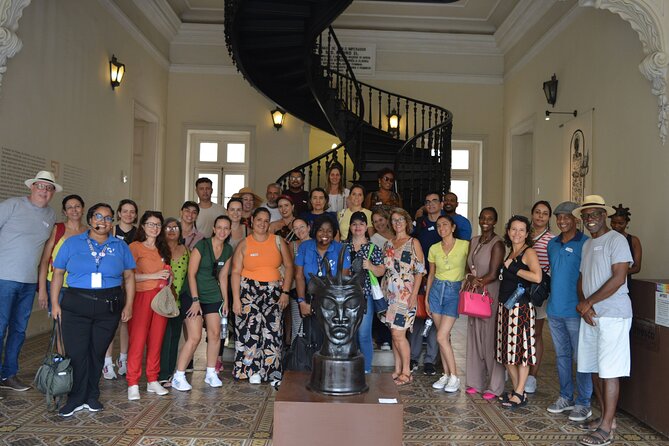
Reviewed · HISTORICAL TOURS
Explore Little Africa : Unveiling Afro Heritage in Rio de Janeiro
Rio’s past is written into its streets. This 3.5-hour walking tour connects churches, museums, port sites, and gathering places in the Little Africa district, offering a clear look at the African roots of Rio de Janeiro. I especially like the decolonial approach, which puts Black voices and experiences at the center, and the way the route links major sites instead of treating each one as an isolated stop.
The guides are the heart of the experience. Carolina, Rafael, Malu, Carol, Val, and other guides have been praised for their warmth, clarity, and ability to handle serious subjects without turning the tour into a lecture. The main drawback is practical: you will walk quite a bit, and the afternoon start can mean fading light at the final stops. Anyone with limited mobility should also take care, since the tour is not recommended for people with disabilities.
In This Review
- Key points to know before you go
- Why Little Africa belongs on your Rio schedule
- Santa Rita begins the story with a different point of view
- IPN brings the human cost into focus
- MUHCAB connects history with living culture
- Cais do Valongo is a place of global importance
- Pedra do Sal shows how memory stays active
- Largo São Francisco da Prainha ends with present-day Rio
- Guides make or break a serious history tour
- Is the $82.53 price a fair deal?
- Who should book this Little Africa experience?
- Should you book Little Africa in Rio?
- FAQ
- How long does the Little Africa tour last?
- Where does the tour begin?
- Where does the tour end?
- Is public transportation included?
- Is food included?
- Is the IPN admission ticket included?
- Is the tour available every day?
Key points to know before you go
- The route follows Rio’s Little Africa district: You visit places tied to slavery, Black resistance, religion, music, memory, and present-day culture.
- The history is direct and carefully handled: The tour addresses the Atlantic slave trade and its continuing effects without softening the subject.
- The IPN visit adds archaeological weight: The Institute for Research and Memory of the Pretos Novos preserves a site connected to people who died after being brought to Brazil.
- A short VLT ride is included: The light rail helps connect the opening point near Santa Rita to the port-side section of the walk.
- Afternoon timing has a reason: The later start can avoid Rio’s worst heat, but photos may suffer as daylight fades.
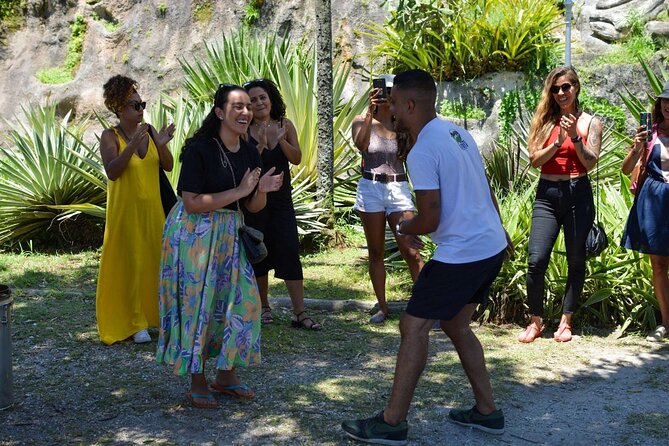
- A small group keeps the discussion personal: The maximum group size is 20, useful for questions and conversation with your guide.
Why Little Africa belongs on your Rio schedule
Most first-time visits to Rio focus on Christ the Redeemer, Sugarloaf Mountain, beaches, and samba. Those sights deserve their place, but they can leave you with only a partial picture of the city. Little Africa provides the missing context.
This part of central Rio was shaped by African people and their descendants. The streets carry stories of forced migration, survival, religious practice, labor, music, and community life. The tour does not present Black culture as a side note to Rio’s story. It treats it as one of the foundations of the city.
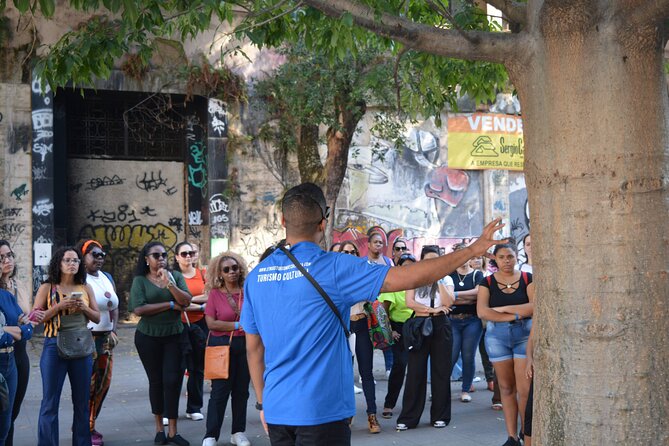
I like that the experience moves between formal museums and ordinary public spaces. A church exterior, a port landmark, a square, and a stone outcrop can all carry meaning. You begin to see how memory lives not only behind museum doors, but also in streets that people still use every day.
The subject is serious. You will hear about slavery, death, exploitation, and institutional inequality. At the same time, the tour also gives space to endurance, faith, celebration, and cultural creation. Several guides have been praised for making the conversation accessible, warm, and open to questions, including questions from people who may know little about Brazil’s Black history.
More History Tours in Rio de Janeiro
- Rio de Janeiro Historical Center Walking Tour
★ 4.5 · 336 reviews - Private Walking and Cultural Tour Rocinha-Rio de Janeiro
★ 5.0 · 239 reviews - Discover Rio Little Africa: A Cultural and Historical Journey
★ 5.0 · 238 reviews
Santa Rita begins the story with a different point of view
The tour starts at the Santuário de Santa Rita, at Largo de Santa Rita in central Rio. The external visit lasts about 20 minutes, so you should not expect a long interior church tour. The value is the explanation of the site and its place within a broader cultural and heritage story.
This opening sets the tone. Instead of beginning with a famous monument or a polished official version of Rio, the guide introduces a decolonial reading of the area. That means asking whose stories have been preserved, whose experiences were ignored, and how public memory changes when Black history is placed at the center.
The church stop also gives you a useful starting point for the route. Your guide can connect the religious setting to the Black presence that shaped the surrounding district. Keep an open mind here. The first stop is less about visual spectacle and more about learning how to read the city.
From Santa Rita, the group takes a short ride on Rio’s VLT public transport. The fare is included in the tour price. This is a small but helpful feature because it lets you cover ground without turning the entire afternoon into a long walk.
IPN brings the human cost into focus
The Instituto de Pesquisa e Memória Pretos Novos, usually called IPN, is one of the most important stops. The visit lasts about 40 minutes, and admission is included.
The institute is located at an archaeological site connected to the Pretos Novos, enslaved Africans who arrived in Rio and died before being sold or established in Brazil. The site gives physical form to a part of the slave trade that is often reduced to numbers and dates. Here, the subject becomes tied to a specific place and to the people whose lives ended there.
Your guide’s role matters greatly at IPN. The material can be emotionally heavy, and the best guides provide context without turning suffering into spectacle. The strongest parts of this tour appear to come from guides who explain the site plainly, allow time for questions, and connect the past to the unequal systems that still affect Brazil.
Do not expect a large museum complex filled with conventional displays. The importance of IPN comes from its purpose as a research and memory institution, as well as from the archaeological evidence connected to the site. Admission is included, but the stop is valuable for reasons far beyond the ticket itself.
This is also the point where the tour may feel most demanding emotionally. If you prefer only light sightseeing, this experience may not suit you. If you want a more honest understanding of Rio, it is difficult to imagine skipping this stop.
MUHCAB connects history with living culture
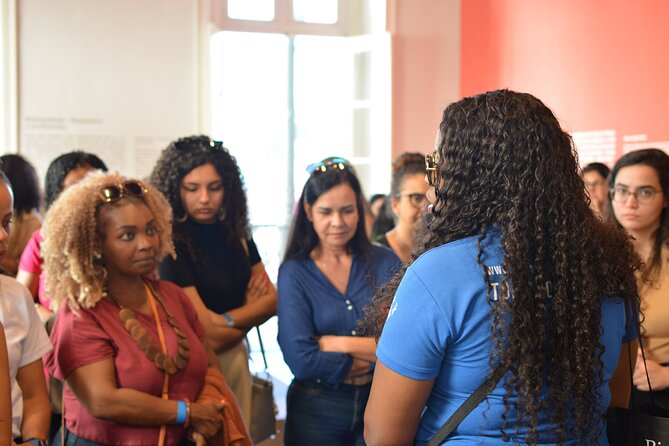
The next major stop is MUHCAB, the Museu da História e da Cultura Afro-Brasileira. The visit lasts around 40 minutes, and admission is free.
MUHCAB functions as a territory museum in the Gamboa area. That phrase matters because the museum is tied to the neighborhood around it. Instead of presenting Afro-Brazilian culture as something sealed away in the past, the museum helps you understand how the local area remains connected to Black identity and cultural expression.
The museum visit balances the archaeological focus of IPN. At IPN, the emphasis is on death, displacement, and the machinery of slavery. At MUHCAB, the story expands toward culture, memory, community, and the many ways African traditions shaped Brazil.
Guide quality makes a big difference here. Carolina has been praised for explaining difficult material with care and positive energy. Other guides, including Rafael and Val, have received similar praise for making the information enjoyable as well as clear. English is not every guide’s first language, but the experience has included guides who communicate effectively in English.
You may find that MUHCAB gives you the vocabulary to understand later stops. Music, faith, public gatherings, and neighborhood identity make more sense after the museum places them in historical context.
Same patch of Brazil, a completely different sort of day:
- Rio de Janeiro: 6-Stop Highlights of Rio with Lunch
★ 4.4 · 5,157 reviews - Christ the Redeemer Entry Ticket by Corcovado Train
★ 4.4 · 4,476 reviews - Rio’s City Tour – Tickets for Christ, Sugar Loaf & Lunch included
★ 5.0 · 4,389 reviews - Full Day: Christ Redeemer, Sugarloaf, City Tour & Barbecue Lunch
★ 4.5 · 3,142 reviews
Cais do Valongo is a place of global importance
Cais do Valongo is a former wharf in Rio’s port district. The stop lasts about 30 minutes, and there is no separate admission fee.
The wharf was a major arrival point for enslaved Africans brought to Brazil. Its importance extends well beyond Rio. It is one of the clearest physical reminders of the scale of the Atlantic slave trade in the Americas, and its presence in the modern port district forces the past into the present.
The site can appear simple at first. There is no need for an elaborate structure to make it meaningful. The stones and location carry the weight, while your guide supplies the historical frame. This is exactly the kind of place where a guide helps you see more than you would on your own.
I appreciate the time allowed here. Thirty minutes is enough to explain the site, pause for reflection, and answer questions without rushing you through. The stop also fits naturally after IPN and MUHCAB, building a clear sequence from personal loss to institutional memory and then to the wider port system.
Bring patience and respect. This is not a photo stop in the usual Rio sightseeing sense. You may take pictures where appropriate, but the main purpose is to understand what happened here and why the place matters now.
Pedra do Sal shows how memory stays active
Pedra do Sal is an external visit lasting about 25 minutes. The historic and religious landmark is in the Saúde neighborhood, near Largo da Prainha.
The name refers to a rocky outcrop, but the meaning reaches far beyond the stone itself. Pedra do Sal is tied to Black religious life, community gathering, and the development of musical traditions in Rio. It helps show that Afro-Brazilian history is not only about oppression. It is also about creating spaces for faith, art, social life, and identity.
Your guide will help you connect this stop to the wider district. The power of Pedra do Sal comes partly from its continued place in local life. You are not simply looking at an old marker. You are seeing a site that has remained part of the cultural conversation.
The stop is fairly short, so do not expect a full performance or a long free period. Its purpose is interpretation. You will get more from it if you listen closely to the guide rather than treating it as another scenic pause.
The ground and route may require comfortable shoes. Several hours of walking, combined with the VLT ride and outdoor stops, can be tiring in Rio’s heat. The tour provider generally favors an afternoon start because the temperature is often easier later in the day and participants are less likely to be hungry. That choice makes sense, but you should still carry water and wear practical footwear.
Largo São Francisco da Prainha ends with present-day Rio
The tour finishes at Largo São Francisco da Prainha, with about 20 minutes at the square. The official end point is on Rua São Francisco da Prainha, near the port district.
The square was once a symbolic part of Little Africa, marked by Black presence and the zungus, communal spaces connected to Black life in Rio. Today it is also known as one of the city’s trendier places, with restaurants and a social atmosphere. That contrast makes it a fitting final stop.
You finish with a reminder that history does not stay locked in the past. The district has changed, but its older layers remain important. The square links the historical route to the Rio you can experience now.
The tour does not include lunch, but ending at Largo da Prainha gives you a practical chance to find food afterward. This is one reason I would avoid scheduling a major attraction immediately after the tour. Give yourself time to eat, think over what you have learned, and enjoy the area.
If you take the tour late in the afternoon, the final stop may come after the best light has gone. That is a real drawback for anyone hoping for bright photos. The tour provider favors the afternoon for comfort and attention, but private groups may be able to request a morning option.
Guides make or break a serious history tour
The strongest feature here is the human delivery. Carolina has been praised for her command of the subject and her thoughtful pacing, including with older family members. Rafael has been described as both entertaining and highly informed. Malu, Carol, Val, and other guides have also been praised for making the subject approachable.
That range of feedback points to a consistent strength: the guides do not simply recite dates. They explain the meaning of the places, welcome questions, and adjust their pace when needed. One guide even shared a connection to a teaching location, showing how the history discussed on the route remains part of present-day education.
The tone is important. You can expect an honest account of slavery and its effects, but the tour is not presented in a cold or purely academic way. Guides bring warmth, humor, and personal energy without avoiding the painful parts.
The experience has a maximum of 20 people. That is not a private tour, but it is small enough to keep the discussion manageable. If you want to ask questions, stay near the guide and speak up when something catches your attention.
Is the $82.53 price a fair deal?
At $82.53 per person, this is not a bargain-priced city walk. The value depends on what you want from Rio.
The price covers the guide, all fees and taxes, the IPN ticket, and the VLT ride. The other sites have no separate admission charge. You are paying mainly for interpretation, route planning, and access to a connected story that would be difficult to assemble on your own.
I consider the price reasonable for a specialized half-day experience, especially if Afro-Brazilian history is a major reason for your visit. A basic self-guided walk would cost less, but it would also leave you to work out the historical links between Santa Rita, IPN, MUHCAB, Cais do Valongo, Pedra do Sal, and Largo da Prainha.
The price feels less attractive if you want a fast, photo-focused tour or only have a short time in Rio. The route is thoughtful rather than flashy, and much of its value comes from listening.
Who should book this Little Africa experience?
I would recommend it to first-time visitors who want more than Rio’s postcard sights. It is also a strong choice for repeat visitors, students, families interested in cultural education, and anyone studying the African Diaspora in the Americas.
Families can make it work, though parents should prepare children for serious material. The tour has been adapted successfully for older relatives, but the walking and uneven outdoor conditions may still be tiring. People with limited mobility should contact the provider before booking, since the experience is not recommended for people with disabilities.
I would book it early if the date matters. The experience is booked, on average, about 24 days ahead. Confirmation arrives when you book, and service animals are allowed.
The schedule requires attention. The IPN is closed on Sundays. All museums close from December 16 through January 5 and during Carnival season, so check the date before paying. Free cancellation is available up to 24 hours before the start time. Weather can also affect the tour, with a new date or full refund offered if poor conditions force cancellation.
Should you book Little Africa in Rio?
Yes, if you want to understand Rio through its Black history and present-day culture. The route is well planned, the included VLT ride is useful, and the guides bring unusual care to difficult material.
I would not choose it for a relaxed sightseeing afternoon with little walking. I would also avoid it if you prefer only famous landmarks or feel uncomfortable discussing slavery and inequality.
For the right audience, this can be as important to Rio as its better-known attractions. Wear comfortable shoes, bring water, plan a meal for the end, and choose your date carefully around museum closures. If you want the city to make sense beyond Christ the Redeemer and Sugarloaf, this is a strong booking.
FAQ
How long does the Little Africa tour last?
The tour lasts approximately 3 hours and 30 minutes.
Where does the tour begin?
It begins at the Santuário de Santa Rita, at Largo de Santa Rita, in central Rio de Janeiro.
Where does the tour end?
The tour ends at Largo da Prainha, at Rua São Francisco da Prainha, 7, in the Saúde neighborhood.
Is public transportation included?
Yes. The tour includes a short ride on Rio’s VLT public transport, and that ride is included in the final price.
Is food included?
No. Lunch is not included, and tips are also not included.
Is the IPN admission ticket included?
Yes. The tour includes the ticket for the Institute for Research and Memory of the Pretos Novos. The other listed museum and outdoor stops have no separate admission charge.
Is the tour available every day?
The IPN is closed on Sundays. All museums are closed from December 16 to January 5 and during Carnival season, so the full route may not operate during those periods.
Newest reviews from around Rio de Janeiro
- PRIVATE TOUR – Christ the Redeemer and Sugar Loaf★ 4.5 · 9 reviews
- Christ Statue and Sugarloaf Private Tour with a Photographer★ 5.0 · 9 reviews
- Cidade do Samba Behind-the-Scenes Carnival Tour in Rio de Janeiro★ 4.0 · 5 reviews
- Christ the Redeemer Trail x Lage Park★ 5.0 · 7 reviews
- Christ the Redeemer and City Tour★ 5.0 · 20 reviews
- Christ the Redeemer, Selaron Steps and Santa Teresa Half-day Tour★ 4.5 · 15 reviews
- Christ the Redeemer Adventure★ 5.0 · 12 reviews
- Private Tour of Christ the Redeemer in Rio de Janeiro★ 5.0 · 2 reviews
Historical Tours, compared.

Private Walking and Cultural Tour Rocinha-Rio de Janeiro
Read our review →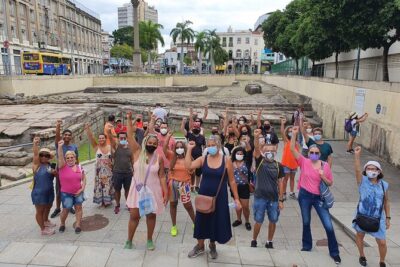
Discover Rio Little Africa: A Cultural and Historical Journey
Read our review →

Scenic Train ride to historical cities of Morretes and Antonina
Read our review →
Browse the lists this tour appears in