
Reviewed · SALVADOR & BAHIA TOURS
Cultural Treasure of Salvador – Drumming
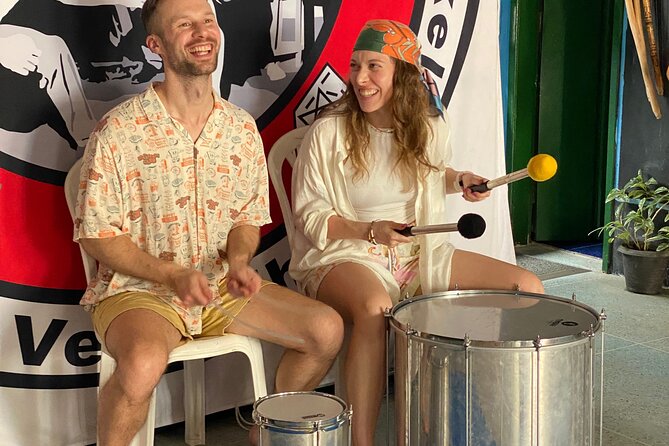
Rhythm is Salvador’s second language. This one-hour class in Pelourinho gives you a direct, hands-on way to meet Bahia’s musical culture, with professional instructors teaching beats, movements, and the story behind them. You do not need musical training. A willingness to try is enough.
I like the personal feel of the lesson, especially the chance to work with several different instruments rather than simply watch a performance. I also like the warm teaching style praised by one participant, who singled out Yasmin and called the class a highlight of a Salvador trip. The main consideration is time: at about one hour, this is a compact introduction, not a full music workshop.
In This Review
- Key points to know before booking
- Meeting the rhythm in Pelourinho
- A lesson built for complete beginners
- What happens during the one-hour class
- Why the cultural explanation matters
- Yasmin’s friendly teaching style
- Is $42.18 good value?
- Who will enjoy this class most?
- Practical planning for your Salvador day
- The best way to approach the class
- Should you book Cultural Treasure of Salvador: Drumming?
- FAQ
- How long does the drumming class last?
- Where does the class start?
- Where does the activity finish?
- Is the class offered in English?
- Do I need musical experience to participate?
- How many people can join the activity?
- Can I cancel for a full refund?
Key points to know before booking
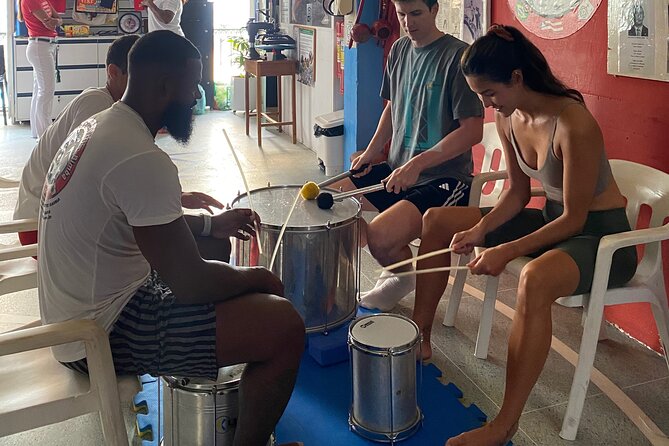
- You play rather than just observe: The class is built around active participation, so you should expect to make sounds, follow instruction, and try the rhythms yourself.
- Yasmin receives special praise: Her friendly, warm manner and clear teaching style made the class memorable for one participant.
- No prior music experience is needed: The school welcomes beginners who simply want to connect with Salvador’s rhythms.
- The setting is Pelourinho: You meet at Associação de Capoeira Mestre Bimba, in the center of Salvador’s well-known historic district.
- The lesson includes cultural context: Along with beats and movements, instructors explain historical and cultural meaning.
- It costs $42.18 and lasts about an hour: That makes it easy to fit into a day of sightseeing, though the short length limits how far the lesson can go.
Meeting the rhythm in Pelourinho
Your class begins at Associação de Capoeira Mestre Bimba, at Rua das Laranjeiras, number 01, first floor, in Pelourinho. The address places the activity in one of Salvador’s most recognizable areas, so the setting itself helps frame the lesson before the first beat begins.
The class does not take you on a sightseeing route. You arrive at the meeting point, take part in the session, and finish back there. That simple arrangement matters if you are planning a full day in Salvador. You will not need to organize a separate return transfer, and the activity should be easy to pair with time spent exploring Pelourinho.
The meeting point is near public transportation, which adds practical value. The supplied information does not specify a particular bus route or station, so you should check your route before setting out. A mobile ticket is accepted, and confirmation is provided when you book.
A few more Salvador da Bahia days to weigh up
- Round trip transfer, Salvador, Bahia, Brazil
★ 5.0 · 228 reviews - Salvador City Tour – Discover Brazil’s First Capital En, It, Es
★ 5.0 · 217 reviews - Cooking class in Salvador, an authentic dinning experience
★ 5.0 · 132 reviews
A lesson built for complete beginners
The school makes a clear promise: no previous musical experience is required. I see that as one of the strongest reasons to book this class. Many visitors like the idea of trying Brazilian percussion but worry they will slow everyone down or fail to keep time. Here, eagerness matters more than skill.
You can expect the instructors to introduce the beats and movements in a way that welcomes first-timers. The aim is not to test your musical ability. It is to help you take part, listen closely, and understand how rhythm connects to local culture.
That beginner-friendly approach also makes the class suitable for people with different levels of confidence. You might already play an instrument, or you might have never held one. The information provided does not promise different levels or private instruction, so advanced musicians should treat this as a cultural introduction rather than technical training.
The instructors are described as professional and passionate about sharing their heritage. That combination is important. A teacher can show you a pattern, but a teacher who also explains its cultural place gives the activity more meaning.
What happens during the one-hour class
The session focuses on beats, movements, and cultural and historical context. You should expect a practical lesson rather than a talk about music. The class gives you time to try the material yourself, with instructors guiding the group.
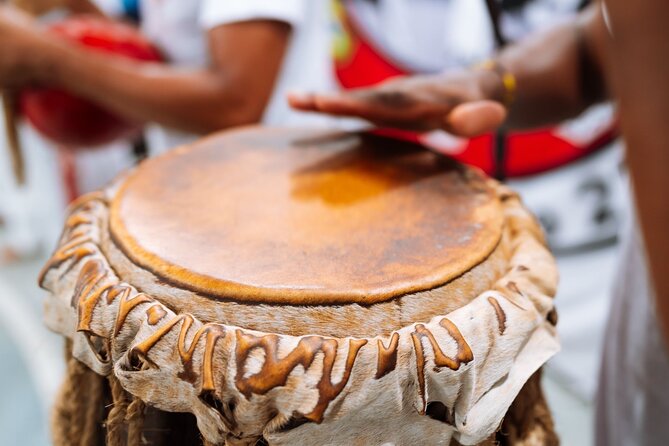
One participant specifically enjoyed working with different instruments. The available information does not name those instruments, so I would not promise any particular drum or percussion tool. Still, the mention of several instruments suggests a lesson with some variety instead of a single repetitive exercise.
The class is also described as fun and interactive. Those words matter here because drumming can feel awkward when you are only asked to copy a pattern without understanding it. The combination of movement, sound, and explanation should help you stay involved even if your first attempts are uneven.
Do not expect a polished concert or a long performance. This is a teaching session. You are there to learn the basic ideas and take part in the rhythm, not sit back while professionals do all the work.
The one-hour length is both a benefit and a limit. It is short enough to fit before lunch, after a morning walk through Pelourinho, or between other Salvador plans. It is not long enough for a detailed study of percussion traditions, advanced technique, or many extended practice rounds.
Why the cultural explanation matters
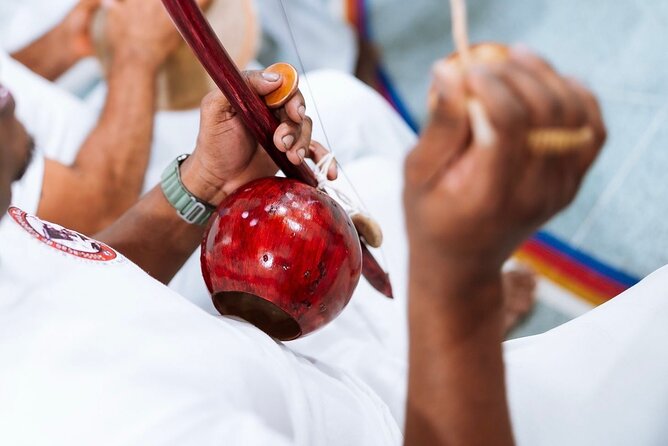
A drumming class can be enjoyable on its own, but the cultural and historical material gives it a stronger purpose. Salvador’s music is not just background sound. It is tied to identity, community, movement, and heritage. The class offers a way to approach that subject through action instead of a distant explanation.
You will learn the beats and movements while hearing why they matter. The supplied information does not list the specific traditions, songs, or historical periods covered, so you should not expect a set lecture on one named style. Instead, think of the cultural material as context that helps you understand what you are practicing.
I like this balance. A purely technical lesson might leave you with a few patterns but little sense of place. A purely historical talk might give you facts without the physical feeling of rhythm. This class tries to connect the two.
That connection is especially useful if you are already spending time in Pelourinho. You can look at the neighborhood, hear its sounds, and then take part in a small piece of that musical world. It gives your visit a more active angle.
Same patch of Brazil, a completely different sort of day:
- Tour to the Frades Islands and Itaparica, from Salvador – Ba
★ 4.0 · 130 reviews - Transfer Salvador Airport / Hotel Litoral Norte
★ 5.0 · 111 reviews - Private City Tour in Salvador
★ 5.0 · 110 reviews - Tour Praia do Forte and Guarajuba, Leaving Salvador-Bahia.
★ 4.5 · 97 reviews
Yasmin’s friendly teaching style
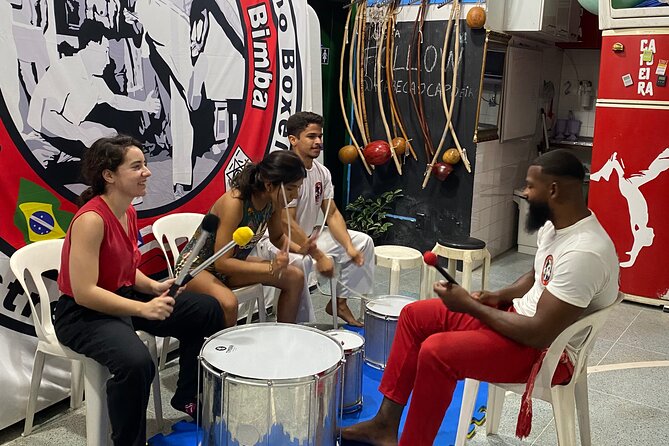
The strongest individual praise goes to Yasmin. One participant described her as friendly and warm, with a great teaching style. That is a meaningful detail for a beginner class, where the instructor’s attitude can shape the whole hour.
A patient teacher makes it easier to try without worrying about mistakes. A warm teacher also helps turn a class into a social and cultural exchange rather than a stiff demonstration. Yasmin’s welcome was important enough that the participant called the lesson the highlight of a Salvador trip.
You should keep in mind that instructor availability can vary. Yasmin is associated with the praise provided, but the available details do not guarantee that she will teach every scheduled class. If meeting her is important to you, ask when booking.
The class has a maximum capacity of 45 people. That is a fairly large possible group for hands-on instruction, although the information does not say how many people are normally present. If you prefer very small classes, this capacity is worth considering. If you enjoy a social setting, the larger limit may feel more lively.
Is $42.18 good value?
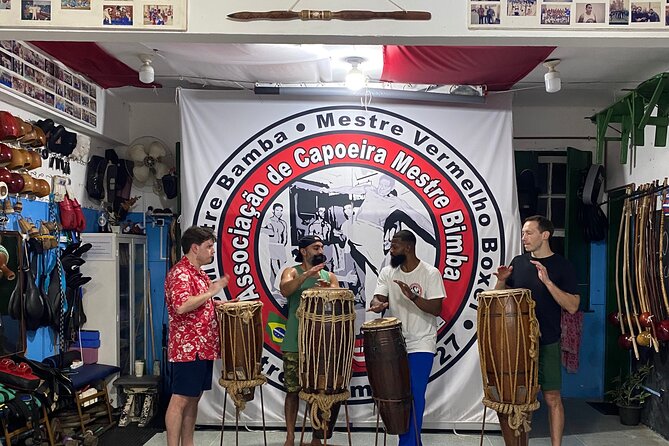
At $42.18 per person, this is not the cheapest way to spend an hour in Salvador. Its value depends on what you want from the activity. You are paying for instruction, participation, cultural explanation, and the convenience of a central meeting point, not simply for a short show.
I think the price makes the most sense for people who want a structured cultural activity. You receive guidance from professional instructors and get to handle instruments and practice rhythms. That is more personal than watching a performance, and it gives you something to do rather than something to consume.
The value is less clear if you want a long, technical music course. The class lasts about an hour, and no extended program is described. You should book it for a lively introduction, not for mastery.
The timing helps protect the value. Because the lesson is short, you can add it to a broader Salvador itinerary without giving up half a day. If you already plan to visit Pelourinho, the location saves extra travel time and makes the activity easier to combine with nearby plans.
Who will enjoy this class most?
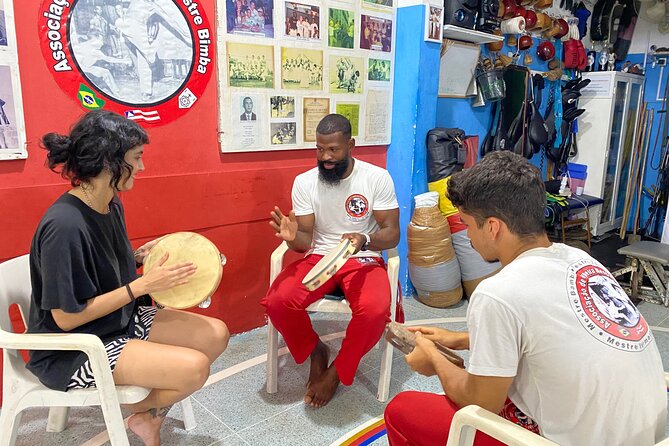
I would recommend it first to beginners, curious visitors, and anyone who wants a cultural activity that asks for participation. You do not need to read music or have percussion experience. You only need to be willing to try the rhythm and follow the instructor.
It also suits people looking for a break from standard sightseeing. Museums and walking tours give you information. This class gives you a physical way to connect with the place. You may remember the beat and the feeling of taking part longer than another set of facts from a guidebook.
Families and mixed groups may also find the format appealing because the activity is designed for general participation. Still, the supplied information does not state a minimum age or give details about child-specific instruction, so you should confirm those points if you are booking for young children.
People with mobility concerns should note that the class includes beats and movements. Service animals are allowed, and most people can participate, but specific information about seating, floor space, or movement adaptations is not provided. Contact the provider if you need a particular accommodation.
Practical planning for your Salvador day
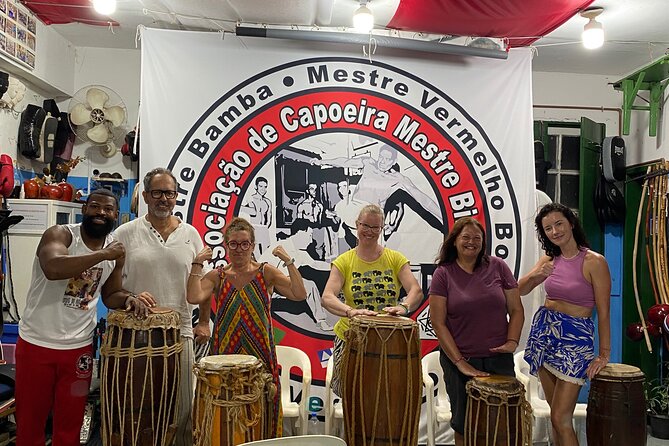
You can receive confirmation at booking, and the mobile ticket makes the entry process simple. The activity starts and ends at Associação de Capoeira Mestre Bimba, so plan to return to that same location after the lesson.
Public transportation is nearby. Since no detailed transit instructions are supplied, allow enough time to find Rua das Laranjeiras, number 01, and the first-floor entrance. Pelourinho can be distracting in the best way, with plenty to see, so do not leave the search for the address until the last minute.
The class is offered in English. That is useful if you do not speak Portuguese and want to follow explanations about rhythm and culture. The supplied details do not say how much Portuguese is used during demonstrations, so the safest expectation is English instruction with the music itself crossing language lines.
The maximum group size is 45. That limit tells you the activity can accommodate a sizable group, but it does not reveal the usual class size. If close personal correction is a priority, ask about the expected attendance for your date.
You can cancel free of charge up to 24 hours before the local start time for a full refund. Changes or cancellations inside that 24-hour window are not accepted, so keep your schedule firm once the deadline passes.
The best way to approach the class
Come ready to participate, not to perform perfectly. The point is to listen, copy, adjust, and enjoy the process. If you are shy, remember that the class is intended for people without prior musical experience.
I would also pay attention to the explanations between exercises. The cultural and historical material is part of what separates this class from a casual drumming activity. Ask questions if the format allows, especially if you want to understand how the rhythms connect to Salvador and Bahia.
Keep your expectations in proportion to the schedule. One hour can give you a memorable first taste, but it cannot cover every instrument, tradition, or historical detail. The strongest payoff comes from treating the class as a focused introduction that may deepen your appreciation of the music you hear elsewhere in Salvador.
Should you book Cultural Treasure of Salvador: Drumming?
Book it if you want an affordable, active cultural lesson in central Salvador and like the idea of learning directly from instructors who share their heritage. The beginner-friendly format, English availability, several instruments, and Yasmin’s praised warmth all work in its favor.
Think twice if you want a private lesson, advanced training, or a longer session. The one-hour format and possible 45-person capacity mean this is best understood as a lively introduction, not a full percussion course.
For most first-time visitors who want more than sightseeing, I think $42.18 is a fair price for the chance to make music in Pelourinho and connect rhythm with place. It is short, practical, and refreshingly hands-on.
FAQ
How long does the drumming class last?
The activity lasts approximately one hour.
Where does the class start?
It starts at Associação de Capoeira Mestre Bimba, Rua das Laranjeiras, number 01, first floor, in Pelourinho, Salvador, Bahia.
Where does the activity finish?
The activity ends back at the meeting point.
Is the class offered in English?
Yes. The activity is offered in English.
Do I need musical experience to participate?
No. The school states that no prior musical experience is needed.
How many people can join the activity?
The maximum group size is 45 people.
Can I cancel for a full refund?
Yes. You can cancel at least 24 hours before the local start time for a full refund. Cancellations or changes made less than 24 hours before the start time are not accepted for a refund.
Newest reviews from around Salvador da Bahia
- Transfer North-Ba Coast and Salvador Airport★ 5.0 · 25 reviews
- Curated Nightlife Experience in the Heart of the City★ 3.5 · 5 reviews
- One-Way Private Transfer to Boipeba Island★ 5.0 · 21 reviews
- Transfer Costa do Sauipe – Private★ 5.0 · 2 reviews
- Ilhas Maravilhas Frades and Itaparica Full Day Tour, Salvador, Bahia, Brazil★ 3.5 · 13 reviews
- Transfer Salvador to Barra Grande Round Trip★ 5.0 · 3 reviews
- Hotel Vila Galé Mares – Transfers In / Out★ 5.0 · 29 reviews
- Salvador de Bahia: Private Round-Trip Airport–Hotel Transfer★ 4.5 · 25 reviews
Salvador & Bahia Tours, compared.


Salvador City Tour – Discover Brazil’s First Capital En, It, Es
Read our review →
Cooking class in Salvador, an authentic dinning experience
Read our review →
Tour to the Frades Islands and Itaparica, from Salvador – Ba
Read our review →
Itinerary 1:CAVES – Booking from 2 people – Chapada Diamantina by Zentur
Read our review →
Transfer Salvador Airport / Hotel Litoral Norte
Read our review →

Browse the lists this tour appears in