
Reviewed · SALVADOR & BAHIA TOURS
Cultural Treasure of Salvador – Capoeira
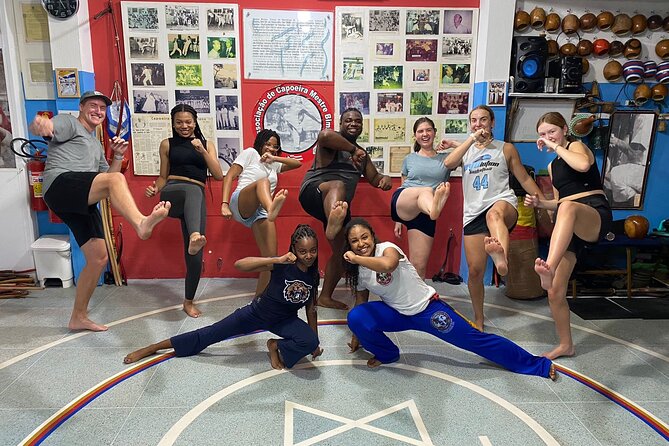
Feel Salvador move. This beginner capoeira class brings together martial arts, music, dance, and Afro-Brazilian culture in the heart of Pelourinho. I especially like the welcoming approach for first-time students and the chance to train at Associação de Capoeira Mestre Bimba, a place tied to the capoeira tradition Salvador is known for. The other strong point is the personal teaching: Yasmin guides English-speaking participants, while the Mestre leads the physical work.
The main consideration is simple: this is a real workout, not just a short dance show. You may leave with sore knees or tired muscles, especially if you are not used to squats, balance work, and floor movements. Still, the one-hour format keeps the commitment manageable, and the class is designed for beginners with no previous training.
In This Review
- Key Points to Know Before You Book
- Why Capoeira Fits Salvador So Well
- Arriving at Mestre Bimba School in Pelourinho
- The First Hour: From Ginga to Flow
- Music Makes the Lesson Feel Alive
- A Workout That Deserves Respect
- The Cultural Story Behind the Movements
- What the One-Hour Format Gives You
- Is $42.15 a Fair Price?
- Who Will Enjoy This Most?
- Practical Tips for a Better Class
- Should You Book Cultural Treasure of Salvador?
- FAQ
- Is this capoeira class suitable for complete beginners?
- How long does the activity last?
- Where does the class meet?
- Where does the activity end?
- What movements might I learn?
- Is bottled water included?
- Is the class available near public transportation?
- Can service animals attend?
- What is the cancellation policy?
Key Points to Know Before You Book
- Beginner-friendly from the first move: You do not need capoeira experience or any martial arts background.
- A class at Associação de Capoeira Mestre Bimba: The school is in Pelourinho, near Salvador’s main visitor areas.
- Yasmin helps bridge the language gap: She teaches and translates greetings, making the lesson easier for English-speaking participants.
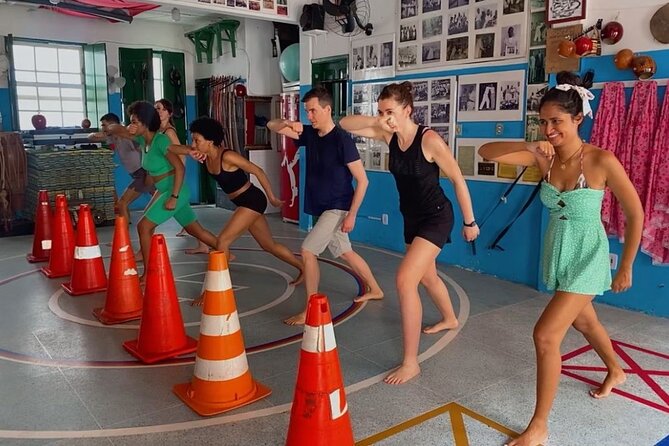
- You learn real foundational movements: Expect the Ginga, Aú, Cocorinha, and Negativa, along with basic attacks, defenses, and flow.
- Music is part of the lesson: The class connects movement to capoeira’s musical and cultural roots.
- Small-group scale: A maximum of 15 people allows for a more personal class than a large performance session.
Why Capoeira Fits Salvador So Well
Capoeira is not simply a sequence of kicks and acrobatics. It is an Afro-Brazilian martial art shaped by movement, rhythm, discipline, self-defense, and community. In Salvador da Bahia, that mix feels especially appropriate because the city is a major center of Afro-Brazilian culture.
This class gives you a way to meet that culture through your body instead of only through museums, churches, and walking tours. You hear about capoeira’s background, then try its basic movements yourself. That connection matters. You are not just watching a polished performance from the sidelines. You are learning how the art feels to a beginner.
I also like that the class does not pretend you can master capoeira in an hour. You get a first set of tools: how to move, how to protect yourself, how to link steps, and how to follow the rhythm. That is enough to make the experience meaningful without turning it into an unrealistic crash course.
A few more Salvador da Bahia days to weigh up
- Round trip transfer, Salvador, Bahia, Brazil
★ 5.0 · 228 reviews - Salvador City Tour – Discover Brazil’s First Capital En, It, Es
★ 5.0 · 217 reviews - Cooking class in Salvador, an authentic dinning experience
★ 5.0 · 132 reviews
Arriving at Mestre Bimba School in Pelourinho
The meeting point is Associação de Capoeira Mestre Bimba, at Rua das Laranjeiras, number 1, first floor, in Pelourinho. The school is near the main tourist areas and public transportation, so it can fit neatly into a day spent exploring Salvador’s historic center.
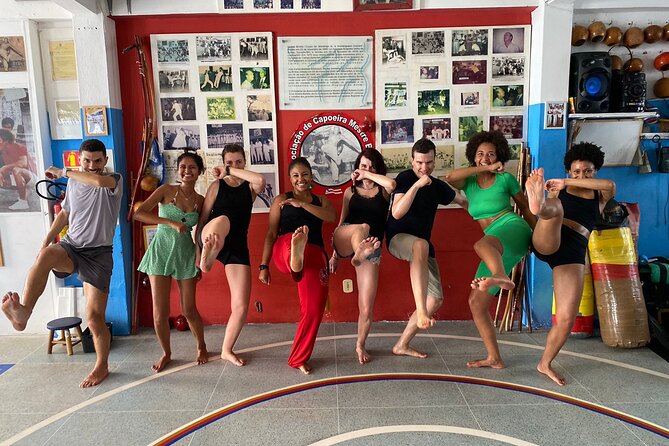
The setting adds weight to the lesson. The walls are covered with photographs and newspaper clippings connected to capoeira and the school. Before the movement begins, this display helps place the class inside a living tradition rather than treating it as a generic fitness session.
Yasmin greets participants and helps with the initial introductions. She speaks English well, which is useful when you are learning unfamiliar terms or trying to understand how a movement should work. The Mestre leads the capoeira practice, and the class soon becomes less dependent on spoken language. Once the music starts, you can follow by watching, copying, and moving.
That is one of the pleasures of this experience. The language barrier becomes less important when the lesson shifts to rhythm and physical demonstration. You still benefit from clear explanations, but you do not need advanced Portuguese to take part.
The First Hour: From Ginga to Flow
The class is aimed at people who have never trained capoeira. You begin with the basics, including attacks, defenses, and flow movements. The teaching pace is meant to challenge you without assuming that you already know how to stand, shift your weight, or move close to the floor.
The Ginga is a key starting point. It is the swaying base movement of capoeira, and it teaches you to keep moving rather than stand squarely in one place. At first, it may feel awkward. That is normal. The point is not to make it look perfect right away, but to understand how it becomes the platform for other movements.
You may also learn the Aú, a cartwheel-like movement; the Cocorinha, a low defensive position; and the Negativa, a floor-based movement that demands balance and leg control. These names can sound impressive, but the lesson is built around copying the instructor step by step.
The class gradually links individual movements into short combinations. This is where the activity becomes more than exercise. You begin to feel the logic of capoeira: attack and defense are connected, movement stays fluid, and the rhythm helps guide the exchange.
Do not expect a full performance routine after 60 minutes. You may manage a few combinations and earn an approving nod, but your first achievement is learning to keep moving with control. That is a fair and satisfying goal for a beginner session.
Music Makes the Lesson Feel Alive
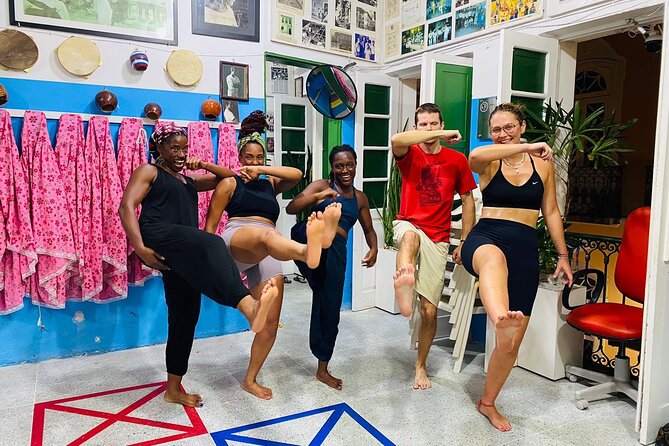
Music is not background decoration here. It is part of capoeira’s structure and mood. The rhythms help create the setting for movement, and they show why capoeira cannot be reduced to a standard martial arts workout.
The class can also feel connected to the street outside. Music from the school and sounds from Pelourinho may overlap, giving the hour a strong sense of place. You are practicing inside, but Salvador does not disappear at the door.
This is one reason I would choose the class over a purely theatrical capoeira performance if you want participation. A show can be exciting, but a lesson lets you understand a little of how the art works. You hear about the cultural background, try the physical vocabulary, and experience how music and movement work together.
The music also helps participants communicate without relying on perfect shared language. You watch the Mestre, listen to the rhythm, and repeat the pattern. That makes the class approachable for international visitors.
Same patch of Brazil, a completely different sort of day:
- Tour to the Frades Islands and Itaparica, from Salvador – Ba
★ 4.0 · 130 reviews - Transfer Salvador Airport / Hotel Litoral Norte
★ 5.0 · 111 reviews - Private City Tour in Salvador
★ 5.0 · 110 reviews - Tour Praia do Forte and Guarajuba, Leaving Salvador-Bahia.
★ 4.5 · 97 reviews
A Workout That Deserves Respect
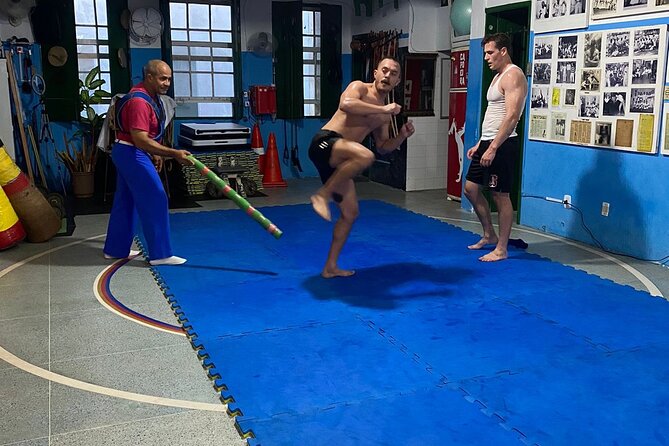
The organizers describe capoeira as a way to build discipline, self-defense skills, and physical fitness. The class supports that description, but you should arrive ready to move.
The Ginga keeps you active. The defensive positions ask you to bend and lower your body. The Aú and Negativa require coordination, strength, and comfort with unusual angles. Even a short class can make your legs work hard, especially if you are trying to copy every movement carefully.
One participant needed help with sore knees after class and received ice and muscle spray. That is a useful reminder to respect your own limits. If your knees or other joints are sensitive, move carefully and tell the instructor when something feels wrong. The class is for beginners, but beginner-friendly does not mean effortless.
I like that the physical side is honest. You are not simply posing for a photograph in a capoeira circle. You are learning movements that require attention and effort. If you want a workout during your vacation, this class delivers more than a passive cultural visit.
At the same time, you should not book it expecting a gentle sightseeing stop. Wear something that allows free movement, though the supplied information does not specify a dress code. Give yourself time to recover if you have a full day of walking planned afterward.
The Cultural Story Behind the Movements
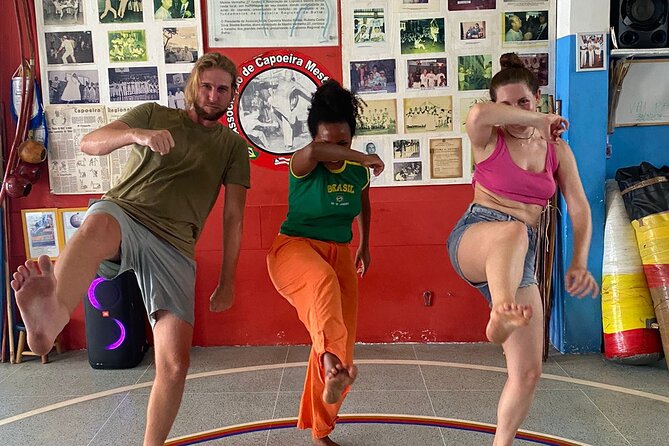
The lesson includes an explanation of capoeira’s history, its importance to the community, and the story of the school. This cultural context gives the physical practice more meaning.
Capoeira carries a strong connection to Afro-Brazilian ancestry. Learning the basic movements without hearing anything about that background would leave out an important part of the experience. Here, the photographs and clippings on the walls help make the story visible before the class even starts.
The Associação de Capoeira Mestre Bimba setting is also significant because the school is presented as the first capoeira school where the form known worldwide today began. That gives the class a sense of place that a hotel activity or generic gym lesson could not offer.
You do not need to arrive with prior knowledge. In fact, the class is designed for complete beginners. The combination of explanation and practice works well for someone who has seen capoeira before but never understood what was happening.
Families can also take part. The activity has been praised as suitable for the whole family, and most people can participate. Still, the physical demands mean that each person should judge their own comfort level, especially with low positions and balance movements.
What the One-Hour Format Gives You
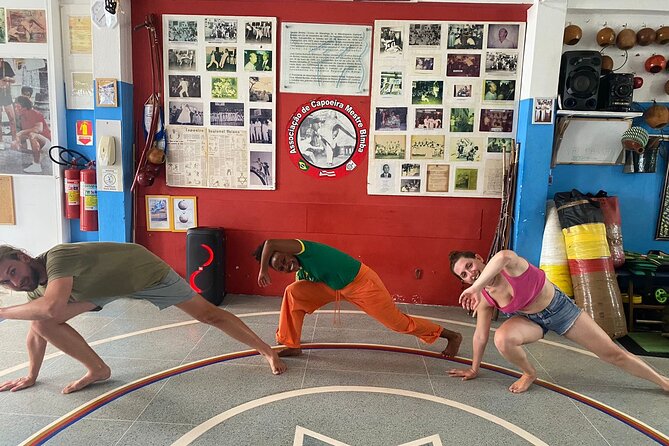
At about one hour, this is an easy experience to fit around a full Salvador schedule. You can visit Pelourinho, attend the class, and continue sightseeing without giving up half a day.
The short format also lowers the risk of overcommitting. If you are curious about capoeira but unsure how your body will handle it, one hour is a sensible introduction. You get the cultural background and a practical lesson without signing up for a long training session.
The trade-off is limited depth. You will learn several basic movements, but you will not receive advanced instruction or a long period of free practice. If you already train capoeira, this class may feel introductory. If you are new, the pace should feel purposeful rather than rushed.
A group limit of 15 people is another plus. That is small enough for the instructor to keep an eye on beginners and adjust the pace. It is not a private lesson, but it should feel more personal than a large group demonstration.
Is $42.15 a Fair Price?
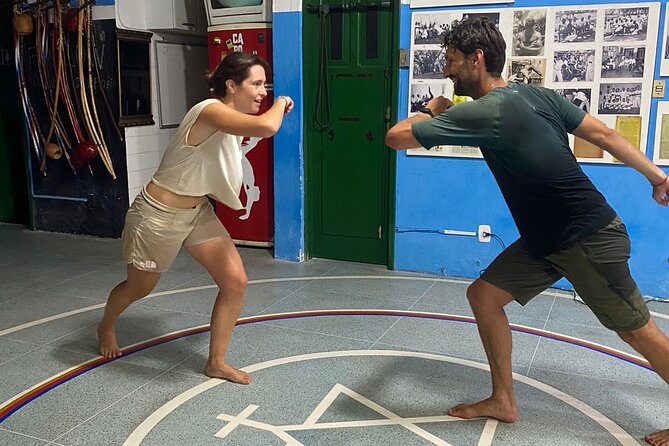
At $42.15 per person, the cost is not just payment for an hour of exercise. You are also paying for instruction, cultural context, access to a historic capoeira school, and a central Salvador location.
The value is strongest if you want an active cultural experience. A standard walking tour may explain Pelourinho, while a performance may show you capoeira’s speed and style. This class lets you take part and gives you a better sense of the concentration behind the movements.
The price may feel high if you are comparing it with a basic fitness class in your home city. It is easier to justify when you consider the setting and the specialized teaching. You are in Salvador, the city most closely associated with the capoeira tradition described in this activity, and the lesson is shaped around that local connection.
I would also consider the small maximum group size. Personal attention matters when you are learning movements that involve balance and coordination. A cheaper, crowded class could offer less guidance and a less comfortable first attempt.
The experience is booked around 18 days in advance on average, so I would not leave it until the last minute if it is important to your itinerary. You can cancel for a full refund up to 24 hours before the start time. Cancellations inside that window are not refunded.
Who Will Enjoy This Most?
I would recommend this to you if you want to:
- Try a cultural activity that involves real participation
- Learn about Afro-Brazilian culture through movement and music
- Get a workout during a Salvador holiday
- Explore capoeira without any prior training
- Add something active to a day in Pelourinho
- Take a family-friendly class with a clear beginner focus
It is also a good choice if you have watched capoeira before and wondered how the movements fit together. The lesson gives you a basic vocabulary and helps you see the relationship between defense, attack, rhythm, and flow.
You may want to skip it if you are looking only for a relaxed cultural show. You may also find the class unsuitable if low positions, floor movements, or a physical workout are difficult for you. The organizers say most people can participate, but that does not mean every movement will suit every body.
Practical Tips for a Better Class
Plan to arrive at the named school in Pelourinho rather than treating the experience as a street performance. The address is Rua das Laranjeiras, number 1, first floor, and the activity returns to that same meeting point.
Keep your expectations realistic. You will learn useful basics, not become a capoeira expert in an hour. Watch the instructor closely, accept that the Ginga may feel strange at first, and focus on staying relaxed enough to keep moving.
If you are traveling with family or friends, remember that everyone can work at a different pace. The class is beginner-friendly, but it still includes a workout. Let the instructor know if a movement causes pain, particularly around the knees.
Bottled water is included. You may still want to think ahead about comfort, since you will be moving and may work up a sweat. Afterward, you can continue exploring Pelourinho from the same central area.
Should You Book Cultural Treasure of Salvador?
Yes, I would book it if you want Salvador culture with your feet moving, not just your camera clicking. The strongest reasons are the beginner-level instruction, Yasmin’s English support, the Mestre Bimba school setting, and the way music, history, and physical training come together.
The class is short, active, and honest about what capoeira demands. You may finish tired, and your first attempts at the Aú or Negativa may look more like a careful experiment than polished capoeira. That is part of the fun.
At $42.15, it offers good value for a one-hour lesson when the setting, instruction, and cultural meaning matter to you. Book it if you want a memorable introduction and a workout. Skip it only if you are seeking a quiet activity or have no interest in physical participation.
FAQ
Is this capoeira class suitable for complete beginners?
Yes. The class is directed at beginners who have never trained capoeira, and no previous experience is required.
How long does the activity last?
The class lasts approximately one hour.
Where does the class meet?
It meets at Associação de Capoeira Mestre Bimba, Rua das Laranjeiras, number 1, first floor, in Pelourinho, Salvador.
Where does the activity end?
The class ends back at the same meeting point.
What movements might I learn?
The lesson may include the Ginga, Aú, Cocorinha, and Negativa, along with basic attacks, defenses, and flow movements.
Is bottled water included?
Yes. Bottled water is included in the experience.
Is the class available near public transportation?
Yes. The meeting point is near public transportation.
Can service animals attend?
Yes. Service animals are allowed.
What is the cancellation policy?
You can cancel at least 24 hours before the start time for a full refund. Cancellations or changes made less than 24 hours before the start time are not accepted for a refund.
Newest reviews from around Salvador da Bahia
- Transfer North-Ba Coast and Salvador Airport★ 5.0 · 25 reviews
- Curated Nightlife Experience in the Heart of the City★ 3.5 · 5 reviews
- One-Way Private Transfer to Boipeba Island★ 5.0 · 21 reviews
- Transfer Costa do Sauipe – Private★ 5.0 · 2 reviews
- Ilhas Maravilhas Frades and Itaparica Full Day Tour, Salvador, Bahia, Brazil★ 3.5 · 13 reviews
- Hotel Vila Galé Mares – Transfers In / Out★ 5.0 · 29 reviews
- Salvador de Bahia: Private Round-Trip Airport–Hotel Transfer★ 4.5 · 25 reviews
- Transfer Salvador to Barra Grande Round Trip★ 5.0 · 3 reviews
Salvador & Bahia Tours, compared.

Salvador City Tour – Discover Brazil’s First Capital En, It, Es
Read our review →
Cooking class in Salvador, an authentic dinning experience
Read our review →
Tour to the Frades Islands and Itaparica, from Salvador – Ba
Read our review →
Itinerary 1:CAVES – Booking from 2 people – Chapada Diamantina by Zentur
Read our review →
Transfer Salvador Airport / Hotel Litoral Norte
Read our review →

Browse the lists this tour appears in