
Reviewed · CYCLING TOURS
Bike Tour of the 4 Scales of Lucio
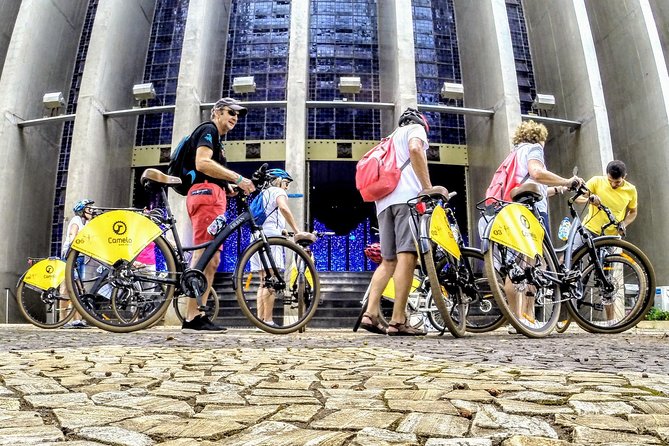
See Brasília beyond the postcards. This seven-hour bicycle tour links Oscar Niemeyer’s famous buildings with Lúcio Costa’s urban plan, quiet residential blocks, parks, cultural spaces, and working city streets. I especially like the visit to the model superblock at SQS 308 and the chance to reach places that are awkward to connect on foot. The route also brings you to the Television Tower, Cathedral, Three Powers Square, Itamaraty Palace, and Brasília’s central commercial districts.
The experience costs $97.03 per person, which is not cheap for a bicycle outing, but the long duration and unusually broad route help explain the price. The main consideration is bike fit and condition. One rider found the available bicycles less suitable for two short adults, while another praised the bikes, so I would ask about sizing in advance.
In This Review
- Why this Brasília bike tour is worth a close look
- Starting near Asa Sul and getting comfortable on the bike
- The Television Tower gives you Brasília’s first big clue
- Clube do Choro brings music into the architecture tour
- Parque da Cidade and Renato Russo add breathing room
- SQS 308 is the tour’s best urban-planning lesson
- Igrejinha and Superquadra Sul 302 show two sides of the residential plan
- Itamaraty, Bosco, and the Cathedral form a strong central sequence
- Commercial districts reveal the city that plans cannot fully control
- The National Museum and Three Powers Square deliver the famous Brasília
- The National Theater and cultural corridor close the loop
- What the $97.03 price really buys you
- Practical tips for a smoother seven-hour ride
- Should you book the 4 Scales of Lucio bike tour?
- FAQ
- Where does the bike tour begin and end?
- How long does the experience last?
- What is included in the price?
- Is lunch included?
- Can children join the tour?
- How many people can join the tour?
Why this Brasília bike tour is worth a close look
- It covers both monumental Brasília and ordinary Brasília, from Niemeyer’s government buildings to pharmacies, shops, residential superblocks, and pedestrian plazas.
- The SQS 308 model superblock explains the city better than a quick photo stop, with its planned buildings, schools, shops, gardens, and public spaces.
- Clube do Choro adds a strong cultural note, including the music school and the venue where Paul McCartney gave a surprise intimate concert in November 2023.
- The route is designed around Lúcio Costa’s four urban scales, making the ride about city planning as much as sightseeing.
- A small group of no more than 15 people allows the guide to manage crossings, explain buildings, and help with the bikes.
- You get water and a bicycle, but lunch is your responsibility, and the seven-hour schedule calls for sensible clothing and a little stamina.
Starting near Asa Sul and getting comfortable on the bike
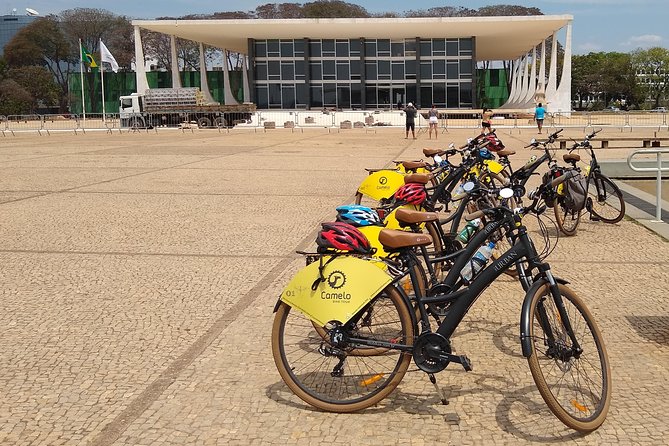
The ride begins at Camelo Bike Tour in Centro Empresarial Brasil 21, on SHS Quadra 06, Asa Sul. The starting point is near public transportation, and the tour returns there at the end.
Allow time at the start for a proper bike check. The guide may need to adjust the saddle, handlebars, or riding position, and this matters more than it sounds on a seven-hour route. A poorly fitted bike becomes a problem long before the final stop.
The available bicycles have received mixed feedback. Some riders found them good, while one couple had difficulty finding bikes suited to shorter adults. I would contact the operator before booking if you are short, tall, or particular about frame size. Children from roughly four to ten or twelve can use an articulated tandem passenger trailer or bike, but you need to ask in advance.
Helmets are available, though helmet use is not mandatory in Brazil. I would wear one. The route includes city streets, crossings, and a long afternoon on two wheels. The operator also supplies two 500-milliliter bottles of mineral water. That is helpful, but it is not a substitute for carrying a little extra water if you need it.
More Bike Tours in Brasilia:
- Monumental Axis Bike Tour – Brasilia
★ 5.0 · 133 reviews - Fatima Neighborhood and Church Unit Bike Tour
★ 5.0 · 58 reviews - Pirenópolis, the charming baroque city inaugurated in 1723 in the gold cycle
★ 4.5 · 40 reviews
The Television Tower gives you Brasília’s first big clue
The first stop is the Television Tower pilotis, with about 30 minutes to look around. It is a useful opening because you begin with Brasília’s broad spatial idea rather than a single isolated monument.
From here, you also pass the Television Tower Craft Fair. That brief passage adds a practical local note to a district otherwise associated with grand civic planning. I like this contrast. Brasília makes more sense when you see both its ceremonial buildings and the places where people shop, eat, work, and spend ordinary afternoons.
Clube do Choro brings music into the architecture tour
The next stop is Clube do Choro, a Niemeyer-designed concert hall built for about 500 people. It is also home to the Raphael Rabello Choro School, described as the first music school of its kind in Brazil.
More than a thousand students learn instruments there, including cavaquinho, mandolin, tambourine, guitar, saxophone, flute, accordion, harmonica, violin, and viola caipira. That list tells you something important about the venue. This is not merely a striking building for a quick photograph. It is an active music center.
The stage gained extra fame after Paul McCartney gave a surprise intimate performance there on November 28, 2023. The stop lasts about 20 minutes, so you should expect an exterior and contextual visit rather than a concert or extended indoor program.
You also pass the Ulysses Guimarães Convention Center. Its original project was by Sérgio Bernardes, and the complex has five auditoriums, 13 modular meeting rooms, cafeterias, dressing rooms, a medical center, and space for up to 9,400 people at once. It is a reminder that Brasília’s planned center is still used for large modern events, not frozen in its founding era.
Parque da Cidade and Renato Russo add breathing room
Parque da Cidade Sarah Kubitschek is one of the world’s largest urban parks, and the tour gives you about 25 minutes there. After a run of monuments and formal buildings, this is a welcome change of pace.
The park helps you understand the scale of Brasília. The city was planned with generous open areas, and a bicycle lets you move through that space without the cramped feeling of a car. You also pass Renato Russo Hall, linking the park section to Brasília’s music and performance culture.
The tour is not a park-focused ride, so do not expect a long pause for recreation. The stop is more about seeing how open space fits into the city plan.
A few more Brasilia days to weigh up
- Civic, Legal and Architectural Citytour
★ 4.5 · 81 reviews - Brasilia : Private Custom Tour with a Local Guide
★ 4.7 · 30 reviews - Brasilia Sightseeing
★ 3.0 · 23 reviews - Airport pick up services Same day booking. Driver speak English, Spanish and Portuguese.
★ 5.0 · 9 reviews
SQS 308 is the tour’s best urban-planning lesson
The 45-minute visit to SQS 308, the model superblock in Asa Sul, is one of the most valuable parts of the day. Lúcio Costa designed the court, Burle Marx handled its urbanism and landscaping, and Banco do Brasil built it. It opened on February 19, 1962.
Here you see the residential scale of the plan in a way that a passing view from a vehicle cannot provide. Buildings sit in planned projections, with local shops, schools, and leisure areas arranged around them. The point is not simply that the buildings look modern. The point is how daily life was meant to work inside a large planned city.
I would pay close attention to the relationship between the blocks and the open areas. The model superblock shows Brasília as a living experiment in housing, movement, greenery, and shared space. It also helps you compare the ideal plan with the more commercial and civic districts later in the ride.
Igrejinha and Superquadra Sul 302 show two sides of the residential plan

Nossa Senhora de Fátima Church, commonly called Igrejinha, receives about 20 minutes. It opened in June 1958 as the first church in the residential sector, built at Dona Sarah Kubitschek’s request after her daughter recovered from an illness.
The church’s exterior walls carry Athos Bulcão’s tiles, with stylized figures of the dove of the Divine and the Star of the Nativity. This is a small building compared with the ministries and palaces, but that is exactly why it matters. It shows how Brasília’s modern design reached into neighborhood life.
At Superquadra Sul 302, the guide explains what makes a superblock a superblock. This is not the original model court, but its arrangement is similar, with building projections, local commercial lots, schools, and leisure areas. The 15-minute stop is short, yet it reinforces the lesson from SQS 308 before the route moves toward the civic center.
Itamaraty, Bosco, and the Cathedral form a strong central sequence
The ride then shifts toward major public architecture. Palácio Itamaraty, also called the Palace of Arches, houses Brazil’s Ministry of Foreign Affairs and is one of Niemeyer’s best-known works. The stop lasts about 10 minutes.
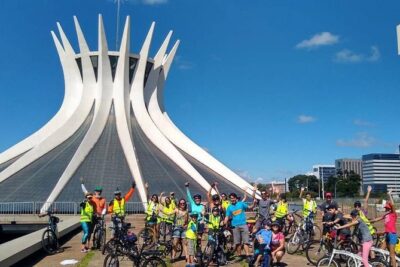
You next spend about 15 minutes at the Sanctuary of Saint John Bosco, built in honor of Brasília’s patron saint. Its place in the route gives you a religious counterpoint to the governmental buildings. After that comes the Metropolitan Cathedral, another Niemeyer work and a key moment in the story of modern architecture in Brasília. The Cathedral visit lasts about 15 minutes.
The stops are short, so manage your expectations. This is a survey tour, not a series of long museum visits. You see many major sites in one day, but the tradeoff is limited time inside each one.
Commercial districts reveal the city that plans cannot fully control
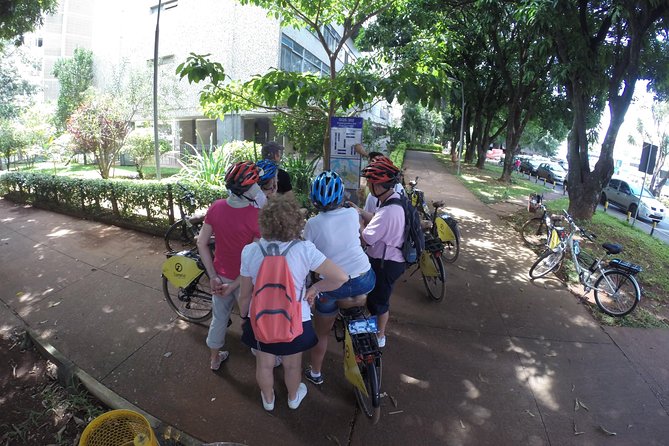
The route passes Rua das Farmácias, a street dominated by pharmacies because of its proximity to the South Medical and Hospital Sector. It is a small detail, but a useful one. You see how a district’s real function shapes its shops.
Praça do Povo in the South Commercial Sector was renovated in 2021. Its redesign received a regional award from the Instituto de Arquitetos do Brasil in the Urbanism, Planning and Cities category. The space now accommodates skateboarding, shows, and kiosks.
The tour allows about 30 minutes in the South Commercial Sector. During weekdays, this central area carries heavy pedestrian movement because of its services and institutions. Its closeness to the bus station and the Esplanade of Ministries adds to that flow.
This may be the most revealing part of the day for anyone who wants more than Brasília’s famous photographs. The commercial sector reflects the city’s social and working life, with older buildings, public spaces, local commerce, and a mix of people moving through the center. The bicycle makes it easier to connect these spaces without losing the sense of the city between monuments.
You also pass the Sarah Hospitals network’s first unit, a rehabilitation center specializing in locomotion and orthopedic diseases. The buildings were designed by João da Gama Filgueiras Lima, known as Lelé, who worked with Niemeyer and Lúcio Costa and taught at the University of Brasília.
The hospital design focuses on natural ventilation, daylight, flexible interiors, and large open areas. Vierendeel beams mark the main facades, while terraces and double-height spaces soften the long stays of patients. Even from outside, this stop broadens the architectural story beyond the two names most visitors already know.
The National Museum and Three Powers Square deliver the famous Brasília
The National Museum of the Republic is part of Brasília’s original cultural plan, though its project was commissioned from Niemeyer in the 1970s. The stop is brief, about five minutes, so you should think of it as an architectural pause rather than a museum visit.
The centerpiece of the civic route is Praça dos Três Poderes. Inaugurated on April 21, 1960, it was created by Lúcio Costa and designed by Oscar Niemeyer. This large civic space brings together the symbolic heart of the capital.
Nearby, Espaço Lúcio Costa opened in 1992 for Lúcio Costa’s 90th birthday. It is an underground structure holding a model of Brasília and a tactile model of the Plano Piloto. If the space is accessible during your visit, these models can make the city’s plan much easier to understand. The stop lasts about 15 minutes.
The route continues to the Supreme Federal Court, which occupies one vertex of the square opposite the Planalto Palace. Niemeyer designed it, with an original design by Lúcio Costa. The stop lasts only five minutes.
You also pass the Brasília Classic Mall, the National Congress, and the place where the President of the Republic conducts official business. The National Congress is the major visual marker at the head of the Esplanade of Ministries. These are quick views, but together they give you the capital’s central civic composition.
The National Theater and cultural corridor close the loop
The Claudio Santoro National Theater is another Niemeyer work, with about 10 minutes scheduled. Afterward, the ride passes Cultura Inglesa, Aliança Francesa, Praça 21 de Abril, and Espaço Cultural Renato Russo at 508 Sul.
The Renato Russo cultural center includes rooms, galleries, and theaters for different forms of artistic presentation. It has Teatro Galpão and the renovated Teatro de Bolso. You also pass the National Library of Brasília.
The final stop is Jardim Burle Marx, with about 10 minutes, followed by the Ministries Esplanade. The garden provides a landscape-design note after the dense architectural sequence, while the Esplanade returns you to Brasília’s monumental axis.
What the $97.03 price really buys you
At $97.03, this is a premium half-day and evening-length activity. You are paying for roughly seven hours, bicycle use, two bottles of water, a helmet option, route planning, and a guide who keeps a complicated city circuit moving.
The value is strongest if you want context. A car tour can cover many of the same buildings, but it will not give you the same feel for superblocks, pedestrian areas, local commerce, and the distances built into Brasília’s plan. Walking would be too slow for this route.
The cost is harder to justify if you only want photographs of the Cathedral, Congress, and Three Powers Square. In that case, a shorter city tour may suit you better. Here, the appeal is the full connection between design, culture, residential life, and government.
The group limit is 15 people. That is large enough to create some waiting at crossings, but small enough for a guide to help with bike adjustments and explanations. Previous guides praised by name include Larissa, Romain, Rui, and Daniel. Daniel received especially strong notice for managing crossings and traffic lights, helping riders, explaining the city clearly, and taking photos.
Practical tips for a smoother seven-hour ride
Wear comfortable clothes and shoes suitable for extended cycling. Bring sun protection and, if you need more than one liter of water over a long outing, carry an extra bottle.
Ask about the bike before the day of the tour if you need a smaller frame. Also ask about lights if your ride may continue into the evening. The operator has lights for nighttime tours, but one afternoon departure ran into evening without the expected lighting being prepared.
Lunch is not included, so plan for that cost and timing. The supplied schedule does not identify a restaurant or lunch break, so ask the operator how the meal fits into the day.
The tour requires good weather. If poor weather cancels it, you are offered another date or a full refund. Standard cancellation allows a full refund if you cancel at least 24 hours before the start time. Confirmation is normally immediate, though bookings made within two days of departure can take up to 48 hours and remain subject to availability.
Should you book the 4 Scales of Lucio bike tour?
I would book this if you want to understand Brasília rather than simply collect its famous buildings. The model superblock, commercial districts, Clube do Choro, Sarah hospital architecture, and civic center create a much fuller picture than a monument-only route.
You should be comfortable spending seven hours on a bicycle and willing to accept short visits at many stops. Ask about bike sizing, lighting, and lunch before committing. Families can ask about the child trailer or tandem option, and most people can participate, but the route still calls for reasonable cycling stamina.
For architecture, urban planning, music, and an active look at Brasília’s daily life, the price is defensible. For a quick introduction or a low-cost outing, it may be more than you need.
FAQ
Where does the bike tour begin and end?
It begins and ends at Camelo Bike Tour, SHS Quadra 06 Conjunto A, Bloco A, Loja 17, Centro Empresarial Brasil 21, Asa Sul, Brasília.
How long does the experience last?
The tour lasts approximately seven hours.
What is included in the price?
The price includes use of a bicycle, two 500-milliliter bottles of mineral water, and access to a helmet. Helmet use is not mandatory in Brazil.
Is lunch included?
No. Lunch at the restaurant is not included.
Can children join the tour?
An articulated tandem passenger trailer or bike is available for children from about four to ten or twelve years old. You need to ask about this in advance.
How many people can join the tour?
The maximum group size is 15 people.
Newest reviews from around Brasilia
- Airport pick up services Same day booking. Driver speak English, Spanish and Portuguese.★ 5.0 · 9 reviews
- Transfer Brasilia Pirenópolis★ 5.0 · 3 reviews
- Brasilia City Highlights Tour with Guide★ 3.5 · 8 reviews
- JK Memorial Bike Tour and Crystal Square★ 5.0 · 4 reviews
- Brasilia Private Custom Walking Tour With A Guide (Private Tour)★ 4.5 · 6 reviews
- Pirenópolis, the charming baroque city inaugurated in 1723 in the gold cycle★ 4.5 · 40 reviews
- 3h Cooking Class in Brasília with 9 Recipes & Bottomless Drinks★ 5.0 · 4 reviews
- Brasilia Sightseeing★ 3.0 · 23 reviews
Cycling Tours, compared.
Small-Group Panoramic Bike Tour in Rio de Janeiro
Read our review →
E-Bike Tour: Local Guide, Historic Center to Ipanema
Read our review →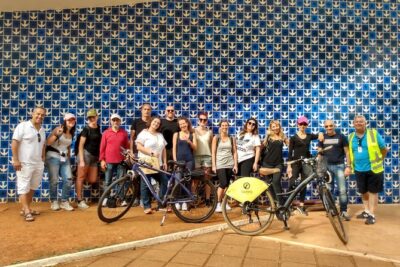
Browse the lists this tour appears in