
Reviewed · SAMBA & CARNIVAL SHOWS
Afro Walking Tour – Samba and resistance (Pedra do Sal)
Rio’s samba story begins far from the beach. This four-hour walk connects Afro-Brazilian history with the places where samba, resistance, port life, and Carnival took shape. You move through central Rio, Small Africa, the renovated port area, and Cidade do Samba with a local guide.
I like the small maximum group of 15, which gives the tour a better chance of feeling personal rather than like a street lecture. I also like that the route reaches places many first-time visitors miss, including the Afro-Brazilian landmarks around Saúde and the Carnival school complex.
The main caution is reliability. Two people reported waiting for a guide who never arrived and then having trouble getting a refund. That is a serious concern, so confirm the meeting details before setting out and keep the provider’s contact information handy.
In This Review
- Key points to know before booking
- Why this route matters beyond Carnival
- Meeting at CCBB in central Rio
- Olympic Boulevard and the new port
- The Tomorrow’s Museum stop
- Small Africa and the heart of the walk
- UNESCO heritage and the old port story
- Kobra’s Ethnicities mural
- Cidade do Samba and Rio’s Carnival schools
- Is $50 a fair price?
- Who should book this walk?
- The reliability question
- My verdict: book it for the story, not just the sights
- FAQ
- How long does the Afro Walking Tour last?
- How much does the tour cost?
- What is included in the price?
- Is hotel pickup included?
- Where does the tour begin?
- Where does the tour end?
- How many people can join the tour?
- What documents and physical requirements apply?
Key points to know before booking
- The story centers on Small Africa: This area helps explain the African roots of Rio’s music, culture, and modern identity.
- You walk from Centro to Saúde: The route begins at CCBB and ends at Largo São Francisco da Prainha, with several stops in between.
- Cidade do Samba includes admission: You spend about one hour at the complex used by Rio’s samba schools.
- Kobra’s mural is a major visual stop: The Ethnicities mural is promoted as the world’s largest graffiti artwork.
- The group is capped at 15 people: That is a useful size for questions and conversation with the guide.
- The price is $50 per person: The fee includes activities, entrance to Cidade do Samba, taxes, fees, and handling charges, but not hotel transport.
Why this route matters beyond Carnival
Rio is often sold through beaches, viewpoints, and nightlife. Those are worthwhile, but they tell only part of the city’s story. This walk shifts attention toward the central port district, where African culture, forced migration, labor, religious traditions, music, and resistance shaped Brazil in lasting ways.
The title, Samba and Resistance, gives you a good clue about the tone. You are not simply visiting a Carnival workshop or taking a photo beside a mural. The route links cultural celebration with the difficult history behind it. That makes the experience useful if you want a better understanding of Brazil today, not just a pleasant walk through old streets.
A Spanish-language note connected to the experience describes the tour as a way to understand Afro-Brazilian history and the country’s present. That is exactly the value here. The route gives cultural context to places that can otherwise look like ordinary streets, plazas, warehouses, and public art.
The walk lasts about four hours. That is long enough to create a connected story, but short enough to fit into a day of sightseeing. You should still expect steady movement and a moderate level of physical effort. The tour requires moderate fitness, and hotel pickup is not included, so you need to reach the meeting point yourself.
More Walking Tours in Rio de Janeiro
- Rio de Janeiro: Rocinha Favela Walking Tour with Local Guide
★ 4.8 · 3,052 reviews - Rio De Janeiro: Half-Day Rocinha Favela Walking Tour
★ 4.7 · 2,272 reviews - 3 Hour Rocinha Favela Walking Tour with a Local Guide
★ 5.0 · 833 reviews
Meeting at CCBB in central Rio
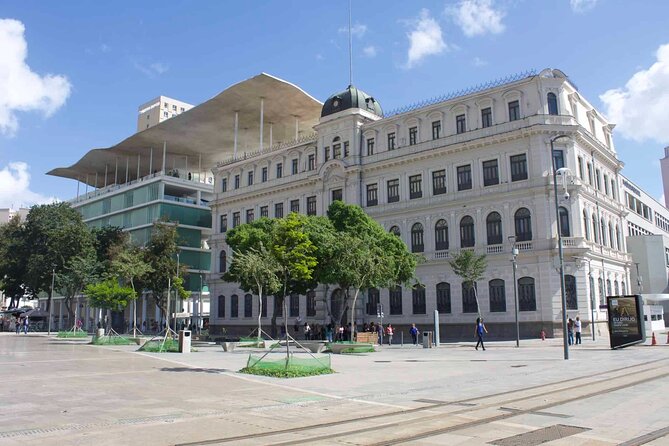
The tour begins outside Centro Cultural Banco do Brasil, at R. Primeiro de Março, 66, in Centro. This is a practical starting point for a walking route through the historic center and port district.
Arrive with enough time to find the exact meeting point. The two serious complaints attached to this experience involve a guide not showing up, with long waits and unanswered calls or messages. I cannot treat that as a minor hiccup. If you book, save the confirmation, check your phone, and make sure you know how to contact Rio by Foot Tours before the start time.
The starting point also means you should plan your own way there. There is no hotel pickup. The end point is in a different part of the city, so think of this as a one-way urban walk rather than a round trip from your accommodation.
Your guide is the key to the experience. The streets and landmarks are important, but much of the value comes from having someone explain how the sites connect. Since no guide names are provided, you should not expect to book a particular person.
Olympic Boulevard and the new port
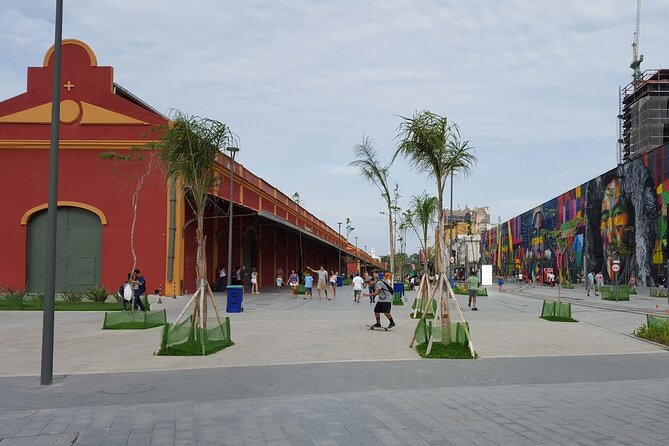
From the central area, the route reaches Olympic Boulevard and Rio’s new port district. This part of the city has seen major change, and it gives you a chance to see Rio beyond the postcard version.
The port area is useful because it brings old and new Rio into the same frame. Public art and large civic projects meet places tied to much older stories of migration, commerce, and African heritage. The tour is not only about preserved buildings. It also asks you to consider how the city presents its past in a redeveloped public space.
You might find this section less intimate than Small Africa. Olympic Boulevard is a broad public area, and the experience here depends heavily on the guide’s explanation. Some people will enjoy the contrast between the modern boulevard and the historic sites. Others may prefer the more focused cultural stops later in the walk.
The Tomorrow’s Museum stop
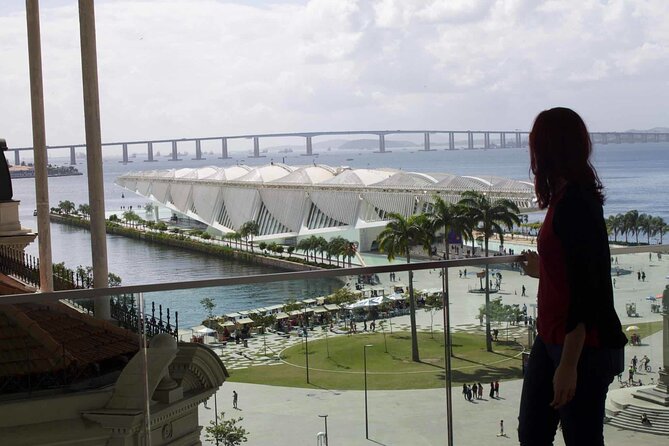
The route includes Museu do Amanhã, or the Tomorrow’s Museum, in the port area. The tour does not list an entrance ticket for the museum itself, so you should understand this as an exterior or contextual stop rather than a museum visit included in the $50 price.
Its location helps show how the port has been reshaped into a major public district. It also creates a clear contrast with the nearby Afro-Brazilian sites. You see a city looking toward the future while still working through the stories held in its older streets.
This is one place where expectations matter. If you want time inside the museum, ask the provider whether that can be added separately. The listed admission included with the tour is for Cidade do Samba, not for every attraction along the route.
Other samba nights worth staying up for:
- Rio de Janeiro: Beginner Samba Lesson in Ipanema
★ 4.9 · 1,071 reviews - Rio: Pub Crawl in Lapa with Cachaça Tasting and Live Samba
★ 4.7 · 881 reviews - Rio: Carnival Backstage Tour at Samba City with Cocktail
★ 4.6 · 520 reviews - Hop-ON Hop-OFF Sightseeing Bus in Rio de Janeiro – Rio Samba Bus
★ 3.5 · 457 reviews
Small Africa and the heart of the walk
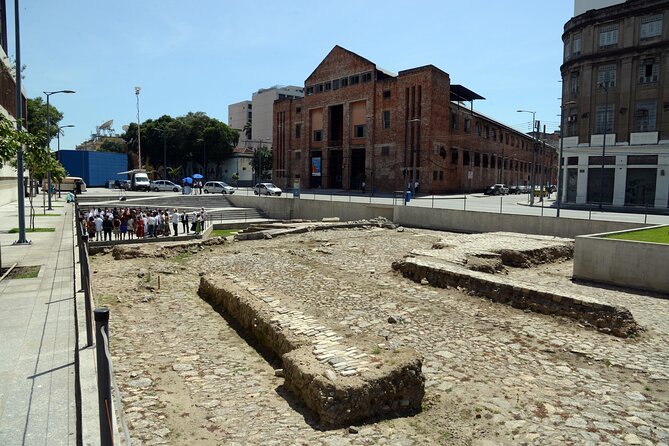
Small Africa is the most important stop for many people booking this experience. The name refers to an area in Rio’s port zone connected to the African presence in the city and to the roots of Afro-Brazilian culture.
This is where the tour’s subject becomes most focused. Your guide can help connect local places with the broader story of African communities in Brazil. The experience is valuable because it treats samba as more than entertainment. Music, dance, memory, faith, and resistance all form part of the cultural picture.
Small Africa may also challenge a quick sightseeing style. You are not moving from one famous monument to another. You are being asked to pay attention to streets, public spaces, and historical references that can be easy to miss without explanation.
I would give this section your full attention. Ask questions. Listen for the links between the port, Afro-Brazilian identity, and Rio’s Carnival traditions. The most praised element of the experience is its ability to help you understand Afro-Brazilian history in relation to Brazil today, and Small Africa is where that promise is most likely to be fulfilled.
UNESCO heritage and the old port story
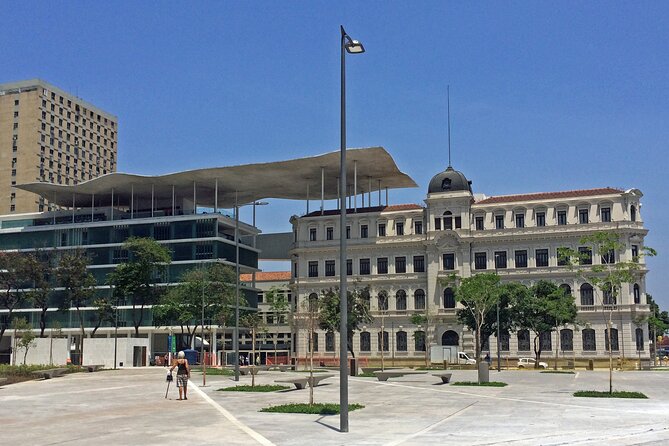
Part of the route is connected with a UNESCO World Heritage site. The supplied details do not identify the exact UNESCO designation or specify whether an entrance ticket is involved, so you should not assume that this portion includes a formal museum visit or guided access inside a monument.
Even without an interior visit, the stop adds weight to the route. UNESCO recognition signals that the area has international historical importance. Here, that importance fits the broader subject of the tour: the port district is not just a redeveloped part of Rio, but a place tied to major chapters in the city’s past.
This stop will be most useful if you care about context. It may feel less dramatic than a viewpoint or Carnival performance, but it helps turn the walk into a connected history lesson. Wear comfortable shoes, since the experience is built around moving through the district rather than sitting in one place.
Kobra’s Ethnicities mural
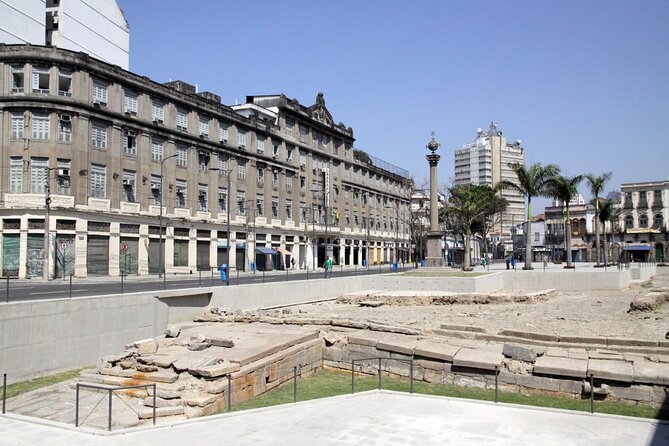
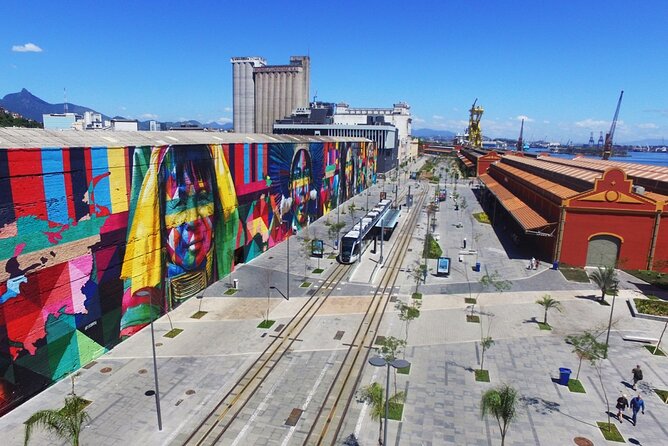
The tour also visits Eduardo Kobra’s Ethnicities mural, described as the world’s largest graffiti artwork. This is the most immediately visual part of the route.
The mural depicts Indigenous people from different parts of the world and uses bold color and large-scale faces to make its point. Even if public art is not your main interest, the size alone makes it hard to ignore. It gives the walking tour a strong photo stop and breaks up the more historical sections.
The mural also fits the route’s larger concern with identity. After hearing about African heritage and resistance, you encounter a public artwork focused on Indigenous peoples and global cultural identity. Your guide may help connect these themes, but the provided information does not promise a detailed art lesson.
As with any outdoor artwork, your experience can depend on the conditions at the time of your visit. Still, this is one of the stops that gives the tour visual variety. You move from historical streets to a large contemporary work without leaving the port district.
Cidade do Samba and Rio’s Carnival schools
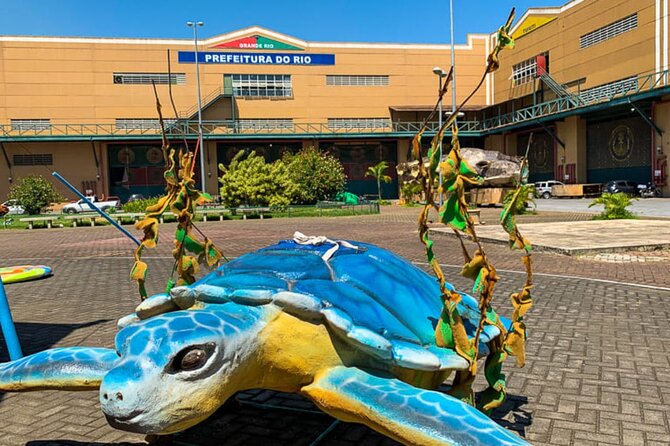
The final major stop is Cidade do Samba, where Rio’s samba schools prepare for Carnival. The tour includes admission and allows about one hour here.
This is a strong inclusion because it takes the discussion of samba from history into the working world of Carnival. Samba schools are central to Rio’s Carnival tradition, and Cidade do Samba offers a place to understand the production behind the parades.
Do not confuse this with a guaranteed Carnival parade or live performance. The supplied details promise entrance to the complex, not a show, rehearsal, costume fitting, or meeting with performers. Your experience may depend on what is open and happening during your visit.
The one-hour visit should give the stop a clear role without taking over the entire tour. You have enough time to look around and connect what you see with the earlier discussion of Afro-Brazilian culture and resistance. For many people, this will be the tour’s most memorable stop because it makes samba feel like a living cultural practice rather than a sound associated only with nightlife.
Is $50 a fair price?
At $50 per person, this is not the cheapest way to walk through central Rio. The value depends on how much you want a guided cultural explanation rather than a self-guided stroll.
The price includes all activities, taxes, fees, handling charges, and admission to Cidade do Samba. It does not include transport to the start or from the finish. You are paying mainly for the guide, the organized route, the small group, and access to the samba school complex.
For me, the small group improves the value. A cap of 15 people is much better than a large coach-style outing for a subject that depends on questions and conversation. If your guide is strong and the tour runs as planned, the price can be reasonable for a four-hour introduction to an important part of Rio that many people skip.
The value falls quickly if you want only sightseeing photos or if you dislike historical explanation. You can see public areas such as Olympic Boulevard and the mural without booking a tour. The reason to pay is the cultural interpretation and the connection between the sites.
Who should book this walk?
I would recommend it most to people who want to understand Rio’s Afro-Brazilian identity and the roots of samba. It suits first-time visitors who have already planned time for the city’s famous sights and want something less predictable.
It also suits anyone interested in port districts, public art, Carnival, and the social history of Brazil. The Spanish-language option appears especially useful for Spanish speakers who want to follow the historical discussion comfortably.
I would be more cautious if you have limited mobility, since the experience requires moderate physical fitness and covers several locations on foot. Children must be accompanied by an adult. The minimum drinking age is 18, although the supplied information does not describe drinking as a central part of the tour.
You must bring a current valid passport on the day of the experience. That requirement is easy to overlook, so keep it with you.
Free cancellation is available if you cancel at least 24 hours before the start time. Changes or cancellations made within 24 hours are not accepted for a refund. The tour also requires a minimum number of people, and if the provider cancels for that reason, you should be offered another date or experience, or a full refund.
The reliability question
The biggest issue is not the route. It is the risk of a missed departure.
The experience has an overall rating of 4.4 from 16 ratings, which suggests that the positive cultural experience matters to many people. But two separate one-star accounts describe the same serious problem: no guide appeared, calls and messages went unanswered, and the people waiting lost much of their afternoon.
That does not prove the tour will fail on your date. It does mean you should take the operational risk seriously. Confirm the appointment shortly before the start, arrive at CCBB with your booking details, and avoid scheduling an expensive timed attraction immediately afterward.
If nobody appears, document your arrival and contact attempts. That will not fix the missed walk, but it gives you a clear record when requesting help or a refund.
My verdict: book it for the story, not just the sights
I would book Afro Walking Tour: Samba and Resistance if I wanted a compact, guided introduction to Rio’s African heritage, Small Africa, port redevelopment, public art, and Carnival culture. The route has a strong theme, the group size is sensible, and admission to Cidade do Samba gives the $50 fee real substance.
I would not book it casually without confirming the departure details. The no-show complaints are too specific to ignore. If the provider confirms the meeting and you are comfortable with the walking requirement, this can be one of the more meaningful ways to spend four hours in central Rio.
FAQ
How long does the Afro Walking Tour last?
The tour lasts approximately four hours.
How much does the tour cost?
The listed price is $50 per person.
What is included in the price?
The price includes all activities, taxes, fees, handling charges, and admission to Cidade do Samba.
Is hotel pickup included?
No. Hotel pickup and drop-off are not included.
Where does the tour begin?
The meeting point is Centro Cultural Banco do Brasil, at R. Primeiro de Março, 66, Centro, Rio de Janeiro.
Where does the tour end?
The tour ends at Largo São Francisco da Prainha in Saúde, Rio de Janeiro.
How many people can join the tour?
The group has a maximum of 15 people.
What documents and physical requirements apply?
You need a current valid passport on the day of the tour and should have a moderate level of physical fitness. Children must be accompanied by an adult.
Newest reviews from around Rio de Janeiro
- Hang gliding flight in Rio de Janeiro★ 5.0 · 6 reviews
- Rio de Janeiro: Zip Lining and Canopy Tree Tour★ 3.3 · 6 reviews
- Vidigal Favela Tour★ 4.4 · 26 reviews
- Rio de Janeiro: Attend a Vasco da Gama game with local guide★ 4.8 · 9 reviews
- Unforgettable Boat Party★ 5.0 · 3 reviews
- Parapente Rio de Janeiro★ 5.0 · 4 reviews
- Rio de Janeiro Private Tour with Cruise Terminal Pick-up★ 5.0 · 2 reviews
- Wild Waters: Rio Whitewater Rafting Adventure Tour★ 5.0 · 13 reviews
Samba & Carnival Shows, compared.

Pub Crawl in Lapa with Cachaça Tasting and Live Samba
Read our review →
Carnival Backstage Tour at Samba City with Cocktail
Read our review →
Hop-ON Hop-OFF Sightseeing Bus in Rio de Janeiro – Rio Samba Bus
Read our review →
Santa Teresa, Lapa, and Cinelândia with Tram Ride and Selarón Steps
Read our review →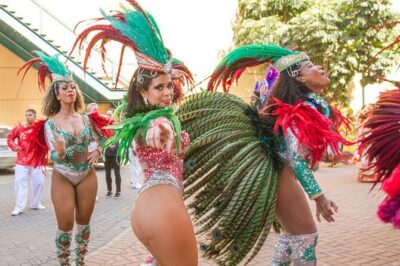
Carnaval Experience: Backstage Tour at Samba City with Cocktail
Read our review →

Browse the lists this tour appears in