
Reviewed · HISTORICAL TOURS
African Heritage: Gastronomy and Musicality Experience
Rio’s history comes alive through sound and food. This private five-hour experience connects Afro-Brazilian heritage with powerful sites in the city center, including the Morrinho Project, the Pretos Novos memorial, Cais do Valongo, Pedra do Sal, and Largo de São Francisco da Prainha. I especially like the way it combines serious historical context with a meal and percussion workshop, rather than treating heritage as something you only look at behind museum glass. I also like the private format, which gives you room to ask questions and follow the subjects that matter most to you.
The main consideration is that the tour is not a light sightseeing outing. Some stops address slavery, death, racism, and the lasting effects of inequality in Brazil. You should also know that drinks are extra and the experience is not suitable for people with food restrictions. Guides Isabella and Jaíse are praised for making difficult subjects clear, personal, and engaging.
In This Review
- Key points to know before booking
- Starting at Praça Mauá with Rio’s Black history in view
- Morrinho at MAR, a different way to see the favela
- IPN and the evidence beneath Rio’s colonial center
- Cais do Valongo and the meaning of Little Africa
- Pedra do Sal, where food and percussion carry the story
- Largo de São Francisco da Prainha and the city after dark
- What $110 means in practical value
- Timing, comfort, and who should book
- Cancellation and weather details
- Should you book African Heritage: Gastronomy and Musicality?
- FAQ
- Where does the African Heritage experience begin?
- Where does the tour end?
- How long does the experience last?
- Is this a private tour?
- Is food included?
- Is admission to IPN included?
- Can people with food restrictions participate?
- What happens if the tour is canceled because of bad weather?
Key points to know before booking
- A five-hour walk through Afro-Brazilian Rio: The route links art, archaeology, historic sites, food, music, and present-day community life.
- The Morrinho Project changes the favela conversation: Its detailed miniature recreation shows daily life, creativity, and community rather than relying on crime-focused stereotypes.
- IPN and Cais do Valongo deal with painful history: You will encounter archaeological evidence connected to Africans brought to Brazil under slavery.
- Pedra do Sal is the main event: Expect Afro-Brazilian and Yoruba food tasting plus a percussion workshop led by an instructor and drummer from Africa.
- It is private, not a large group tour: Only your party participates, making it easier to ask direct questions and shape the conversation.
- The $110 price buys more than sightseeing: The value rests in the guide’s teaching, included food, IPN admission, and the unusual combination of history and music.
Starting at Praça Mauá with Rio’s Black history in view
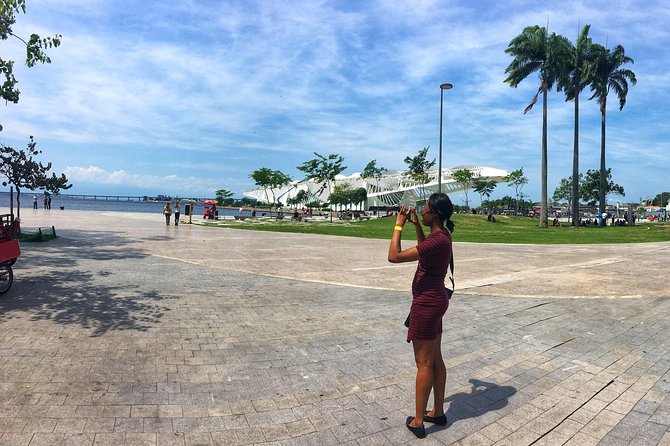
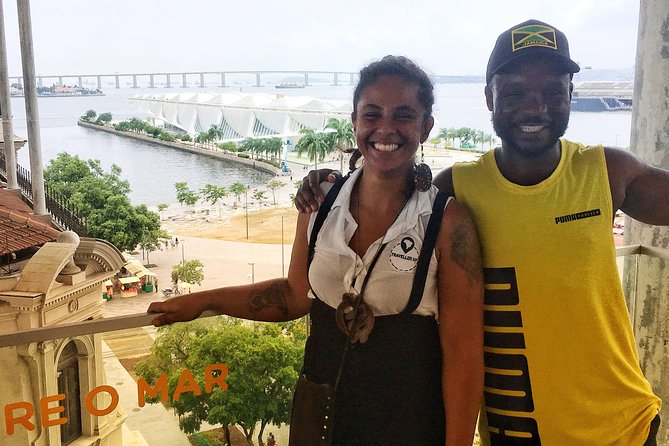
The tour begins at 10:00 a.m. near Museu do Amanhã at Praça Mauá. This is a practical meeting place in central Rio, and the experience ends at Largo de São Francisco da Prainha in the Saúde area. Because the start and finish are different, you get a short route through the historic center rather than returning to the original meeting point.
I like this setup because it gives the day a clear shape. You begin with art and historical interpretation, then move toward sites tied directly to the African presence in Rio, and finish in a neighborhood known for music, food, and social life. It feels less like checking off isolated attractions and more like following a thread through the city.
The route is private, so the tone can be conversational. If you are curious about religion, music, food, the formation of favelas, or the social effects of the slave trade, you can ask for more explanation. Past descriptions of the guiding style point to Isabella as personable and passionate, while Jaíse is also named as a guide connected with the experience. Availability of a particular guide may vary, so do not assume you will have one specific person unless that is confirmed when booking.
More History Tours in Rio de Janeiro
- Rio de Janeiro Historical Center Walking Tour
★ 4.5 · 336 reviews - Private Walking and Cultural Tour Rocinha-Rio de Janeiro
★ 5.0 · 239 reviews - Discover Rio Little Africa: A Cultural and Historical Journey
★ 5.0 · 238 reviews
Morrinho at MAR, a different way to see the favela
The first major stop is the Morrinho Project, permanently displayed at the Museu de Arte do Rio, or MAR. The installation recreates the Pereira da Silva favela in miniature, including streets, residents, buildings, and scenes from everyday life.
The point is not simply that the model is detailed. Its value is that it challenges the usual outsider image of a favela as a place defined only by danger or poverty. The miniature presents a lived-in community with creativity, routine, social ties, and visual character. That shift in viewpoint is important, especially if you have never had a chance to understand how favela life is represented by the people who live it.
You spend about 25 minutes here, with no separate admission charge listed for this part of the experience. That is enough time for an introduction and discussion, though not enough for a full visit to every part of MAR. If you are hoping for a broad art museum tour, this experience is more focused. The museum stop serves the tour’s larger purpose: examining how Afro-Brazilian communities and urban life are portrayed.
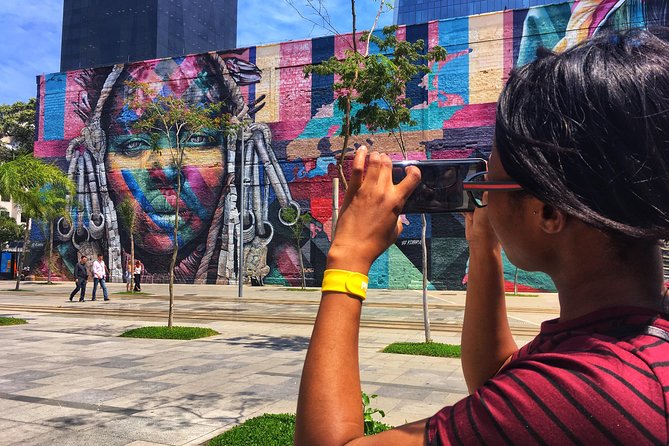
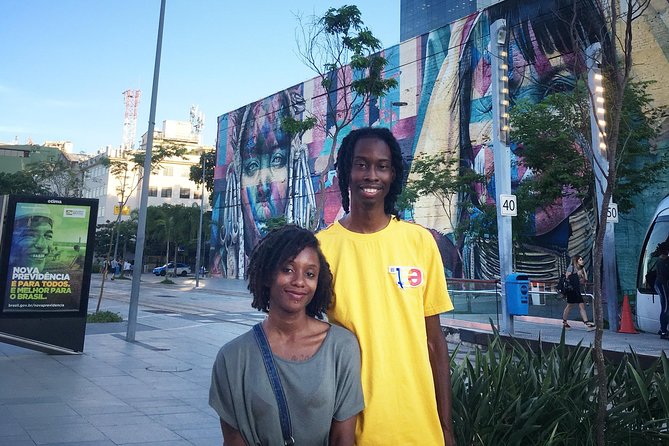
A related section of the route features Eduardo Kobra’s enormous graffiti mural. The mural highlights ancestral ethnic groups and older cultures that helped shape Brazil. It gives you a more public and colorful expression of the same theme found at Morrinho: history is not only stored in textbooks and monuments. It can also appear in the streets, on walls, and in the way communities tell their own stories.
IPN and the evidence beneath Rio’s colonial center
At the Instituto de Pesquisa e Memória Pretos Novos, known as IPN, the subject becomes more direct and emotionally difficult. The institute includes an archaeological site and a permanent display of bones belonging to Africans discovered there.
You should not expect a casual museum stop. The site forces the history of slavery into physical terms. Instead of hearing only about numbers, laws, and economic systems, you confront evidence of the people who suffered under those systems. The visit is listed at about 40 minutes, with admission included.
I consider this one of the most important parts of the experience, but also one that requires attention and respect. The display may be upsetting, particularly for people with a personal or family connection to the African diaspora. The guide’s role matters here, and the tour’s strongest quality is its effort to explain the site within the wider story of Brazil, rather than presenting human remains as a spectacle.
The tour is especially useful if you want to understand how the slave trade shaped Brazil beyond the plantation economy. The history reaches into urban growth, labor, social class, religion, food, music, and present-day inequality. This is where the experience moves from broad cultural appreciation to a more honest account of suffering and survival.
Cais do Valongo and the meaning of Little Africa

The next stop is Cais do Valongo, the historic pier in the area often called Little Africa. The visit is short, about 15 minutes, but the location carries major weight. This was a place connected to the arrival and forced processing of enslaved Africans, and it helps explain why the surrounding area became central to Afro-Brazilian life in Rio.
A short stop can work well here because the site itself is part of the lesson. You are not spending hours inside a building. You are standing in an urban district where history, modern streets, and community memory overlap. The guide provides the context that a quick independent visit would lack.
I would pay close attention to how the guide connects Cais do Valongo with the later cultural life of the area. The story does not end with the slave trade. The neighborhoods around the port became places where African traditions survived, changed, and influenced Brazilian identity. That connection leads naturally to Pedra do Sal.
Same patch of Brazil, a completely different sort of day:
- Rio de Janeiro: 6-Stop Highlights of Rio with Lunch
★ 4.4 · 5,157 reviews - Christ the Redeemer Entry Ticket by Corcovado Train
★ 4.4 · 4,476 reviews - Rio’s City Tour – Tickets for Christ, Sugar Loaf & Lunch included
★ 5.0 · 4,389 reviews - Full Day: Christ Redeemer, Sugarloaf, City Tour & Barbecue Lunch
★ 4.5 · 3,142 reviews
Pedra do Sal, where food and percussion carry the story
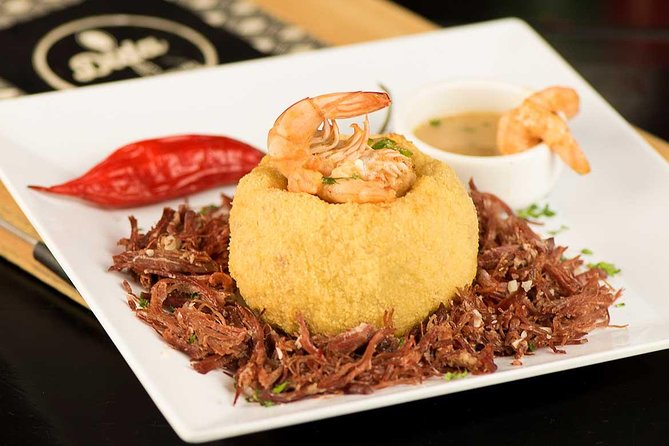
Pedra do Sal is the longest section of the day, listed at about three hours. It focuses on the remaining Quilombo Pedra do Sal community, a place of cultural resistance and Afro-descendant heritage. The area is also associated with weekly outdoor samba sessions, giving the stop a living musical context rather than a purely historical one.
This is where the experience becomes hands-on. You taste typical dishes from Afro-Brazilian and Yoruba cooking, foods connected with everyday practice and religions of African origin. The tasting is included, but drinks are not, so bring extra money if you want something to drink with the meal.
The food is not an optional side note. It helps explain how African traditions survived through ingredients, cooking methods, religious practice, and family life. One past participant singled out the lunch as delicious, while another said the food changed their expectations about Brazilian cooking. That is useful advice for anyone arriving with a narrow idea of what Brazilian cuisine will be.
The tour also includes a percussion workshop with an instructor and drummer from the African continent. I like this element because rhythm is discussed in many cultural tours but rarely taught in a practical way. Here, you get to focus on how African musical traditions continue to influence people in Brazil today.
Do not expect a polished stage performance designed only for photos. The goal is participation and understanding. If you enjoy music, you will likely find this the most memorable part of the day. If you prefer quiet museums and formal lectures, the workshop may feel less comfortable, but it is central to the experience rather than an add-on.
Pedra do Sal can also be an important place for understanding continuity. Afro-Brazilian culture is not presented as something trapped in the past. Samba, communal gatherings, religious practice, food, and percussion remain part of contemporary life. The tour makes that connection clearly.
Largo de São Francisco da Prainha and the city after dark
The final stop is Largo de São Francisco da Prainha, where the tour ends. The listed visit is about 15 minutes, but the square is worth understanding as more than a quick photo stop.
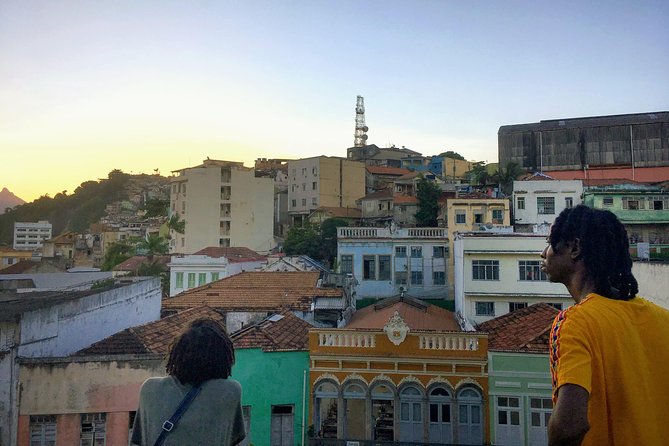
The area sits near Morro da Conceição and is surrounded by Portuguese-era architecture. In the evening, outdoor tables and local bars create a social setting where samba, funk, jazz, and chorinho may be heard. Cold beer and snacks are available for purchase, but they are not included in the tour.
The end point works well because it leaves you in a place where you can continue your evening on your own. You might find the square especially appealing if you want to see how history fits into ordinary urban life. The old buildings, music, bars, and public gathering space all occupy the same small area.
The short scheduled time means you should not treat this as a full nightlife outing. It is more of a closing scene and orientation to the neighborhood. If you want to stay for music or food, plan to do that after the tour and pay separately.
What $110 means in practical value
At $110 per person, this is not the cheapest way to spend five hours in central Rio. You can visit some public areas independently for little or no admission cost. The real value comes from having a guide connect the places, explain the historical record, and help you understand how African traditions continue in present-day Rio.
The price includes Afro-Brazilian food tasting and IPN tickets. Drinks are excluded. Since the tour is private, your group is not sharing the experience with strangers, and the guide can give more attention to your questions. That matters here because the subjects are layered and sometimes difficult to understand from brief signs or a guidebook paragraph.
I see the price as fair for people who want an educational cultural experience rather than a standard city highlights tour. It is especially good value for solo visitors who want conversation and structure, or for families and small groups who would otherwise need to arrange several separate visits.
The price is less appealing if your main goal is samba nightlife, a large meal, or a broad art museum visit. Those are only parts of the day. You are paying primarily for interpretation, access to a focused route, food tasting, and a private format.
Timing, comfort, and who should book
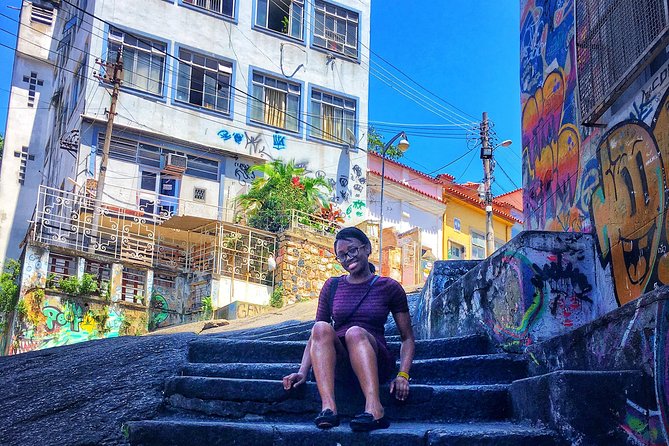
The start time is 10:00 a.m., and the experience lasts about five hours. The individual stop times add up quickly, especially because Pedra do Sal takes about three hours. The schedule can feel full, so wear comfortable shoes and avoid planning a tight appointment immediately afterward.
The tour is near public transportation, and most people can participate. Service animals are allowed. No special mobility details are provided, so you should ask the operator directly if you have specific access needs.
Food restrictions are the clearest practical limitation. The experience is listed as unsuitable for people with food restrictions, and the tasting is a central feature. If you have allergies, dietary rules, or strong limitations, contact Traveller XP before booking rather than assuming substitutions will be available.
This is best for you if:
- You want Afro-Brazilian history presented from a Black or diasporic perspective.
- You care about how slavery shaped modern Brazilian society.
- You enjoy connecting museums and historic sites with food and music.
- You prefer a private tour where you can ask questions freely.
- You are open to discussing painful subjects with care and attention.
It may not suit you if you want a relaxed sightseeing loop with little walking, a conventional museum tour, or a food experience built around flexible dietary choices.
Cancellation and weather details
You can cancel up to 24 hours before the start time for a full refund. Changes or cancellations made less than 24 hours before the start time are not accepted for a refund.
The tour requires good weather. If poor weather causes cancellation, you will be offered another date or a full refund. The experience also requires a minimum number of participants, and if that requirement is not met, you will be offered another date or experience, or a full refund.
Should you book African Heritage: Gastronomy and Musicality?
I would book this tour if you want to understand Rio through its African roots, not simply admire its beaches and famous viewpoints. The most valuable parts are the careful explanation at IPN, the connection between Cais do Valongo and Little Africa, and the way Pedra do Sal turns history into food, rhythm, and community.
Book it with an open mind and enough time to listen. The subject is serious, and the tour does not pretend that cultural celebration erases historical suffering. At the same time, it shows how African-descended communities shaped Brazil through resilience, creativity, cooking, religion, and music.
At $110, it is a worthwhile choice for a private, focused cultural lesson with food and a workshop included. I would skip it only if you have strict food restrictions, want a purely entertaining outing, or prefer to explore Rio without confronting difficult history.
FAQ
Where does the African Heritage experience begin?
It begins at Museu do Amanhã, Praça Mauá, 1, in central Rio de Janeiro. The start time is 10:00 a.m.
Where does the tour end?
It ends at Largo de São Francisco da Prainha in the Saúde area of Rio de Janeiro.
How long does the experience last?
The experience lasts approximately five hours.
Is this a private tour?
Yes. Only your group participates in the private tour or activity.
Is food included?
An Afro-Brazilian gastronomy tasting is included. Drinks are not included.
Is admission to IPN included?
Yes. IPN tickets are included in the experience.
Can people with food restrictions participate?
The experience is listed as not suitable for people with food restrictions. Contact Traveller XP before booking if you have dietary concerns.
What happens if the tour is canceled because of bad weather?
You will be offered a different date or a full refund if poor weather causes cancellation.
Newest reviews from around Rio de Janeiro
- PRIVATE TOUR – Christ the Redeemer and Sugar Loaf★ 4.5 · 9 reviews
- Christ Statue and Sugarloaf Private Tour with a Photographer★ 5.0 · 9 reviews
- Cidade do Samba Behind-the-Scenes Carnival Tour in Rio de Janeiro★ 4.0 · 5 reviews
- Christ the Redeemer Trail x Lage Park★ 5.0 · 7 reviews
- Christ the Redeemer and City Tour★ 5.0 · 20 reviews
- Christ the Redeemer Adventure★ 5.0 · 12 reviews
- Private Tour of Christ the Redeemer in Rio de Janeiro★ 5.0 · 2 reviews
- Christ the Redeemer, Selaron Steps and Santa Teresa Half-day Tour★ 4.5 · 15 reviews
Historical Tours, compared.
Private Walking and Cultural Tour Rocinha-Rio de Janeiro
Read our review →
Discover Rio Little Africa: A Cultural and Historical Journey
Read our review →

Scenic Train ride to historical cities of Morretes and Antonina
Read our review →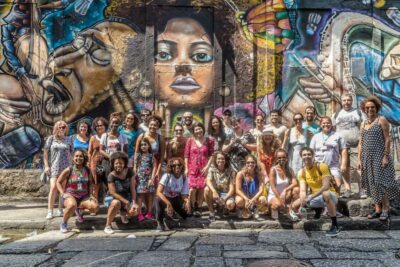
Browse the lists this tour appears in