
Reviewed · HISTORICAL TOURS
A Self-Guided Black History Audio Tour of Rio de Janeiro’s Little Africa
Rio’s past is under your feet. This self-guided walk links Praça Mauá, Pedra do Sal, the old port remains, and Eduardo Kobra’s huge murals in one compact route. I like the freedom to pause when you want, and I like that the VoiceMap app works offline, so you do not need a constant data connection.
The price is $11.99 per person, a fair deal for lifetime access to the English tour, maps, and audio. The main catch is timing: 40 minutes is the short estimate, and you may want longer if you stop for photos, drinks, or more time around Pedra do Sal.
In This Review
- Key points to know before you go
- Why this Little Africa walk is worth your time
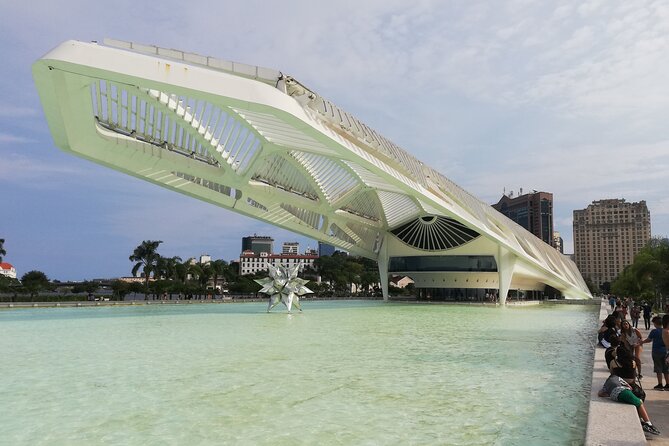
- Beginning at Museu de Arte do Rio and Praça Mauá
- The first square and Rio’s slave history
- Pedra do Sal, the walk’s cultural center
- The old port remains and the harder history
- Ending with Eduardo Kobra’s Etnias murals
- What $11.99 gets you
- Timing, group size, and the self-guided format
- Who should choose this audio tour?
- Should you book this Rio audio walk?
- FAQ
- Where does the tour start?
- Where does the tour end?
- How long does the audio tour take?
- What language is available?
- How much does the tour cost?
- Is a smartphone included?
- Can I use the tour without mobile data?
- Are museum tickets or transportation included?
- Can I cancel or change the booking?
Key points to know before you go
- A short route through Rio’s Little Africa: The walk connects Praça Mauá, a slave-history stop, Pedra do Sal, the old port remains, and Kobra’s Etnias murals.
- Offline audio makes the route practical: Download the VoiceMap app content before walking, then use the audio, map, and geodata without relying on mobile service.
- Pedra do Sal is the cultural center of the walk: The stop helps explain why this square matters beyond its physical setting.
- The tour ends at a major public artwork: Eduardo Kobra’s Etnias murals provide a strong visual finish beside the waterfront.
- Plan for more than 40 minutes: A relaxed pace, photos, or a drink at Da Pedro can stretch the outing toward an hour or longer.
- You walk with your own group: This is a private activity, but you provide the smartphone and headphones.
Why this Little Africa walk is worth your time
Rio is often sold through beaches, viewpoints, and samba. This tour gives you another way into the city. It focuses on the port district and the African influence that shaped Rio, using a route that connects public squares, historic remains, and street art.
I like the format because you are not tied to a group schedule. You can pause the recording, look around, take photos, or replay a section. That works especially well in an area where the visual details matter as much as the spoken explanation.
The tour is offered in English and runs through the VoiceMap app on Android and iOS. You receive lifetime access, along with offline audio, maps, and geodata. Download everything before you begin. That small bit of preparation matters more here than it would on a simple museum visit, since you will be moving between several outdoor points.
The experience is private, but it is not a private guided walk with a person beside you. You and your own group follow the route using your phone and headphones. For some people, that independence is the appeal. If you prefer asking questions as you go, a live guide would suit you better.
More History Tours in Rio de Janeiro
- Rio de Janeiro Historical Center Walking Tour
★ 4.5 · 336 reviews - Private Walking and Cultural Tour Rocinha-Rio de Janeiro
★ 5.0 · 239 reviews - Discover Rio Little Africa: A Cultural and Historical Journey
★ 5.0 · 238 reviews
Beginning at Museu de Arte do Rio and Praça Mauá
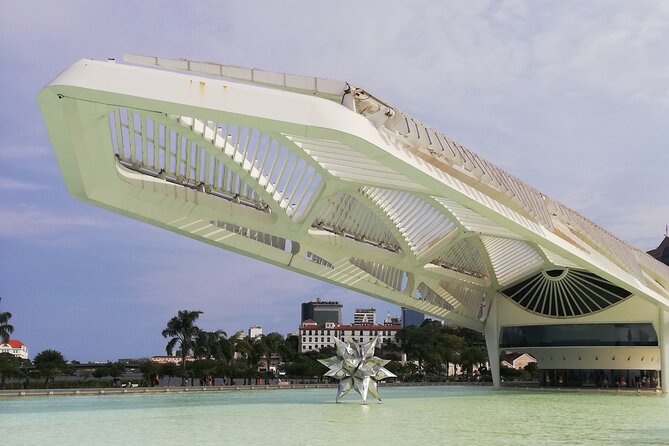
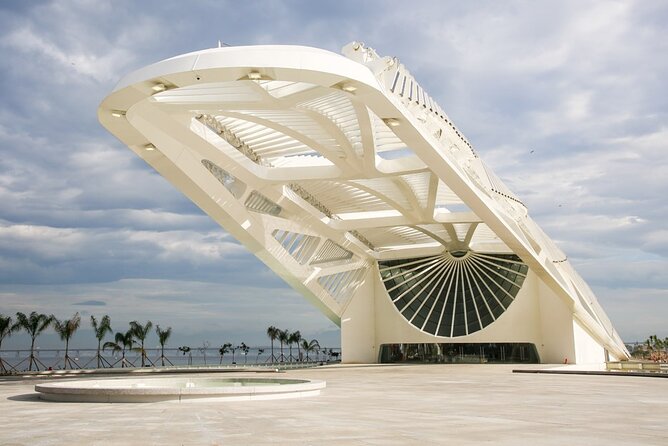
The walk starts outside the Museu de Arte do Rio, at Praça Mauá. The opening section introduces Rio and the museum before the route moves into its main subject.
Starting here gives you a useful geographic reference. Praça Mauá is a broad public space, and the museum provides an easy point to identify before you press play. You do not need to enter the museum, and no admission ticket is included.
The audio introduction is important because it frames the walk before you reach the more specific stops. You begin with Rio as a city, then move toward the port district’s connection to slavery and African heritage. That order helps the route feel like a story rather than a list of unrelated locations.
Give yourself a few minutes at the start to check the app, confirm the map is working, and make sure your headphones are connected. The tour does not provide a phone or headphones, so those are your responsibility.
The first square and Rio’s slave history
The route pauses briefly at a square where the audio explains the history of enslaved people in Rio. The stop is short, but its subject gives the rest of the walk its moral and historical weight.
This is not simply a sightseeing circuit. The audio asks you to connect the port area with the forced movement of people and the systems that shaped the city. That context helps you understand why the district is called Little Africa and why locations that look ordinary today can carry difficult memories.
I would not rush this part. Even though the itinerary describes it as a brief stop, pause the recording if you want time to take in the surroundings. An audio tour can move at its own speed, but you do not have to.
Because the square is an outdoor public place, the experience depends on what you can see and hear at the time of your visit. Street noise or activity around you may affect the audio, so headphones are useful. The app’s offline map also lets you keep your attention on the route instead of searching for directions.
Pedra do Sal, the walk’s cultural center
Pedra do Sal is the most distinctive stop on the route. The audio explains the importance of this square and its place as a cultural hub before guiding you onward.
This is where I would build in extra time. You can complete the tour’s audio section quickly, but Pedra do Sal rewards a slower look. The supplied timing of 40 minutes to one hour is best understood as an estimate for the route itself, not a limit on how long you should remain in the area.
One useful tip is to allow time for a drink at Da Pedro if that appeals to you. A stop there can turn the walk into a more relaxed neighborhood outing, and it helps explain why the route may take longer than the shortest estimate. You might also choose to return to the area later for nightlife, rather than trying to fit everything into the audio walk.
The stop is valuable because it connects history with living culture. You are not only hearing about past events. You are also being pointed toward a place that continues to matter in Rio’s public and cultural life.
Same patch of Brazil, a completely different sort of day:
- Rio de Janeiro: 6-Stop Highlights of Rio with Lunch
★ 4.4 · 5,157 reviews - Christ the Redeemer Entry Ticket by Corcovado Train
★ 4.4 · 4,476 reviews - Rio’s City Tour – Tickets for Christ, Sugar Loaf & Lunch included
★ 5.0 · 4,389 reviews - Full Day: Christ Redeemer, Sugarloaf, City Tour & Barbecue Lunch
★ 4.5 · 3,142 reviews
The old port remains and the harder history
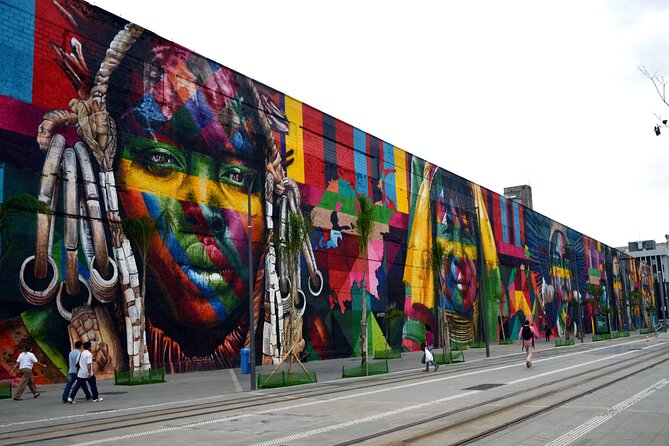
The next short stop takes place in front of the remains of the Old Port. Here, the audio returns to the history of slavery and the port’s role in that story.
This section gives the walk a physical anchor. Instead of discussing the past in general terms, the recording places the subject beside remnants of the port itself. You can look at what remains while listening, which makes the information easier to connect to the location around you.
The visit is brief, but I would treat it as more than a pass-through. The Old Port section is one of the reasons this tour offers more than a standard city stroll. It links Rio’s present-day public spaces with the human cost behind the city’s growth.
The audio format also has a practical advantage here. You can stop at the remains, replay the explanation, or move on when you are ready. Nobody is waiting for you to catch up, and your group does not have to follow another party’s pace.
Ending with Eduardo Kobra’s Etnias murals
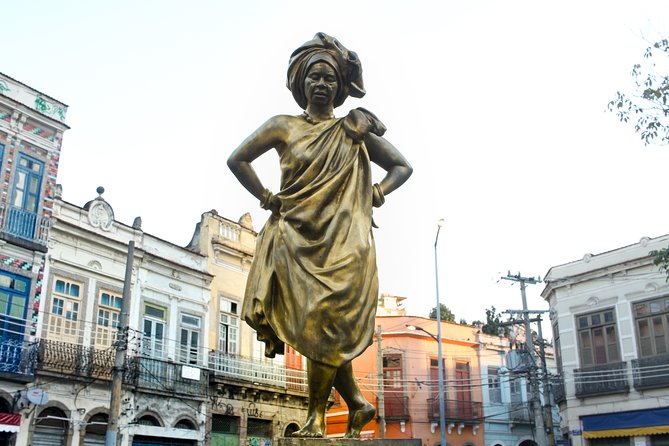
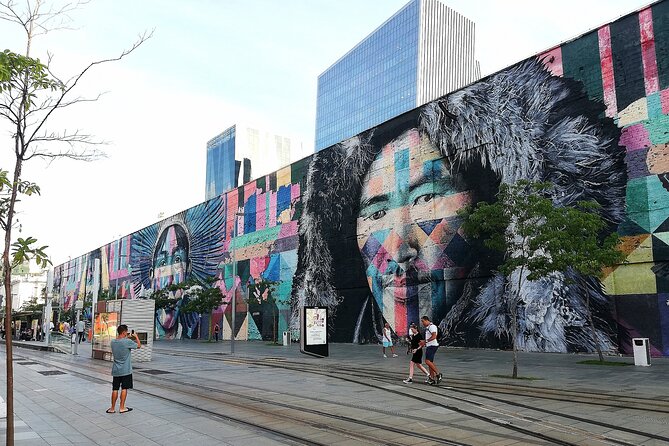
The tour finishes at the Etnias murals, created by artist Eduardo Kobra. The endpoint is on Orla Prefeito Luiz Paulo Conde, near the waterfront, and the murals offer a dramatic change of mood after the heavier historical sections.
Kobra’s work gives the route a clear visual ending. After hearing about slavery, the port, and Pedra do Sal, you arrive at a large public artwork that adds modern color and scale to the walk. The mural is also a practical meeting point if you are continuing elsewhere afterward.
Take time to look closely rather than treating the murals as a quick photo stop. The artwork is impressive from a distance, but the scale is part of the experience. Since the tour ends here, you are free to finish the audio, take photos, and decide what to do next without a guide urging you along.
The listed opening hours cover all day and every day, from midnight to 11:59 p.m. That means the endpoint is not tied to a ticketed attraction schedule. Still, this is an outdoor route, so your comfort and preference for daylight should guide your timing.
What $11.99 gets you
At $11.99, the tour offers good value if you want a focused introduction to this part of Rio. You receive lifetime access to the English audio, the VoiceMap app, offline maps, and route data.
The value improves if you use the tour as a framework rather than a one-time race from start to finish. You can return to the audio later because access is not limited to one day. That is useful if you want to revisit Pedra do Sal or repeat a section after learning more about Rio.
The price does not include museum tickets, other admission fees, transport, food, drinks, a phone, or headphones. In practical terms, the tour is inexpensive, but it is not an all-inclusive outing. Your main extra cost might be a drink or meal if you extend your time around the route.
I would choose this over a more expensive guided walk if I wanted privacy and control. I would choose a live guide instead if personal questions, conversation, or detailed local recommendations were my top priorities.
Timing, group size, and the self-guided format
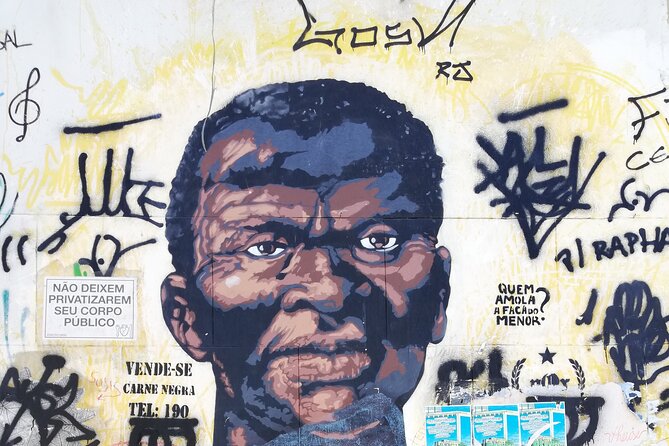
The stated duration is about 40 minutes to one hour. That is realistic for the audio route if you keep moving, but it is easy to spend longer at Praça Mauá, Pedra do Sal, the old port remains, or the Kobra murals.
A practical plan is to reserve at least an hour, with extra time if you want photos or a drink at Da Pedro. Rushing would work against the tour’s purpose, especially at the historical stops.
Only your group participates, so you control the pace. You can pause for a conversation, stop the recording, or take a break without affecting anyone else. The tradeoff is that you must manage the route yourself and keep an eye on your phone.
Confirmation is provided at booking, and most people can participate. Since transportation is not included, you need to arrange your own way to Praça Mauá and from the mural endpoint. The route begins and ends at different places, so plan your onward movement instead of assuming you will finish where you started.
Who should choose this audio tour?
I would recommend it to you if you enjoy walking, prefer independent sightseeing, and want historical context without committing to a long tour. It also suits visitors who want a private outing for their own group and who are comfortable using a smartphone app.
It is a good match for someone who wants to understand the port area through slavery, African heritage, public spaces, and modern art. The route has a clear subject, rather than trying to cover all of Rio in one short walk.
You may want another option if you need step-by-step personal assistance, a live guide, or transportation. The supplied information does not give detailed accessibility notes for the route, so you should consider your own mobility needs before booking.
The audio is currently offered only in English. That makes it useful for English-speaking visitors, but it is not the right choice if you need another language.
Should you book this Rio audio walk?
Book it if you want an affordable, flexible way to explore Rio’s Little Africa and you already have a smartphone and headphones. The combination of slavery history, Pedra do Sal, the old port remains, and Kobra’s murals gives the walk a strong arc, and offline access makes it easy to use.
Skip it if you want a social guide-led experience or a package with transport and food. The tour is non-refundable and cannot be changed after booking, so make sure the language, date, equipment, and self-guided format suit you first.
For most independent visitors, the best plan is simple: start at Praça Mauá, allow more than 40 minutes, pause often, and leave room for Pedra do Sal and the murals. At $11.99, that is a sensible way to give Rio’s port district the attention it deserves.
FAQ
Where does the tour start?
The tour starts at Praça Mauá, outside the Museu de Arte do Rio in Rio de Janeiro.
Where does the tour end?
It ends in front of the Etnias murals by Eduardo Kobra, at Orla Prefeito Luiz Paulo Conde in central Rio.
How long does the audio tour take?
The approximate duration is 40 minutes to one hour. Stops for photos, drinks, or extra time at Pedra do Sal can make the outing longer.
What language is available?
The tour is offered in English.
How much does the tour cost?
The price is $11.99 per person.
Is a smartphone included?
No. You need to provide your own smartphone and headphones.
Can I use the tour without mobile data?
Yes. The VoiceMap app provides offline access to the audio, maps, and geodata.
Are museum tickets or transportation included?
No. Museum and other attraction admission fees, transportation, food, and drinks are not included.
Can I cancel or change the booking?
No. The experience is non-refundable and cannot be changed for any reason after booking.
Newest reviews from around Rio de Janeiro
- PRIVATE TOUR – Christ the Redeemer and Sugar Loaf★ 4.5 · 9 reviews
- Christ Statue and Sugarloaf Private Tour with a Photographer★ 5.0 · 9 reviews
- Cidade do Samba Behind-the-Scenes Carnival Tour in Rio de Janeiro★ 4.0 · 5 reviews
- Christ the Redeemer Trail x Lage Park★ 5.0 · 7 reviews
- Christ the Redeemer and City Tour★ 5.0 · 20 reviews
- Private Tour of Christ the Redeemer in Rio de Janeiro★ 5.0 · 2 reviews
- Christ the Redeemer, Selaron Steps and Santa Teresa Half-day Tour★ 4.5 · 15 reviews
- Christ the Redeemer Adventure★ 5.0 · 12 reviews
Historical Tours, compared.


Private Walking and Cultural Tour Rocinha-Rio de Janeiro
Read our review →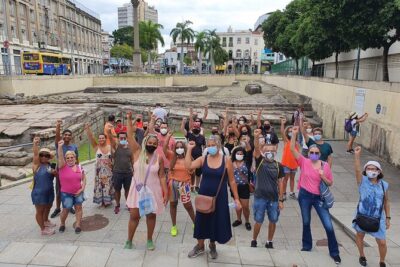
Discover Rio Little Africa: A Cultural and Historical Journey
Read our review →

Scenic Train ride to historical cities of Morretes and Antonina
Read our review →
Browse the lists this tour appears in