

Reviewed · SANTA TERESA & SELARóN STEPS TOURS
Santa Teresa – Bohemia and Art
Rio’s hillside soul is waiting. This three-hour walk through Santa Teresa brings together yellow trams, old mansions, street murals, colonial homes, and sweeping views toward Christ the Redeemer. I especially like the stop for açaí and pão de queijo, plus the chance to see Parque das Ruinas and the former home of Laurinda Santos Lobo.
The tour also has two practical strengths: it is offered in English, Portuguese, and Spanish, and tram tickets are included. The main concern is the tram plan. If the line is longer than an hour, you will use taxis instead, and some past routes have included places that felt only loosely tied to the art theme.
In This Review
- Quick takeaways for planning your visit
- Why Santa Teresa makes a good walking tour
- Starting near the Santa Teresa tram station
- Cobblestones, mansions, and everyday Santa Teresa
- The views toward Christ the Redeemer
- Parque das Ruinas and Laurinda Santos Lobo’s home
- Açaí, pão de queijo, and the snack stop
- How strong is the art focus?
- The guides can shape the whole afternoon
- What can go wrong on the route?
- Is $60 a fair price?
- Shoes, weather, and who should skip it
- Should you book Santa Teresa: Bohemia and Art?
- FAQ
- How long does the Santa Teresa tour last?
- Where does the tour meet?
- Is the tram ride guaranteed?
- Are tram tickets included?
- What food is included?
- Is hotel transportation included?
- Which languages are available?
- What should I wear?
- Can people with mobility impairments join?
Quick takeaways for planning your visit
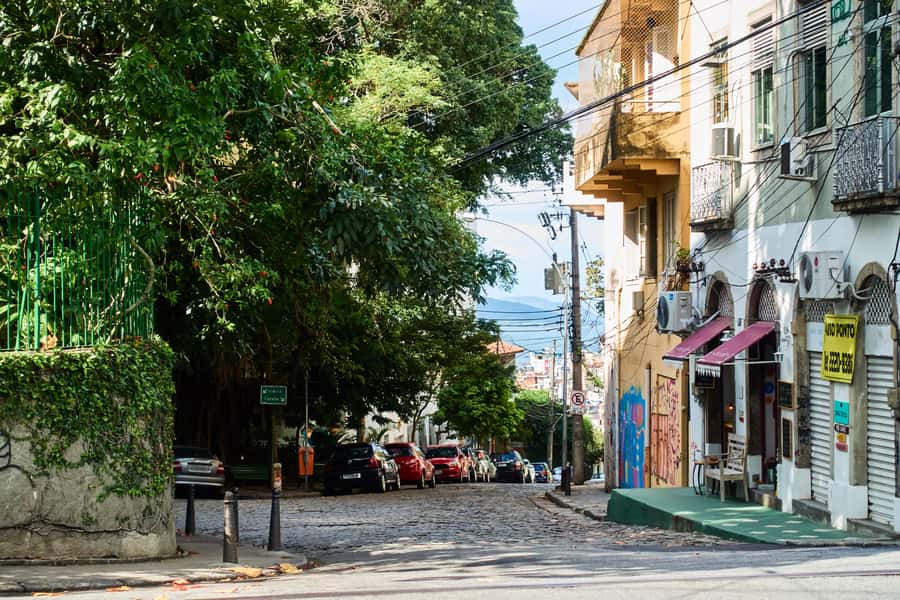
- Santa Teresa’s yellow tram: Tram tickets are included, but a long queue can lead to a taxi transfer instead.
- Laurinda Santos Lobo’s mansion: Parque das Ruinas offers a look at a restored belle époque home and broad Rio views.
- Açaí and pão de queijo stop: The snack adds a taste of everyday Rio without making the tour all about food.
- Art around the neighborhood: Expect murals, galleries, and creative work, though the gallery visit may feel more like a shop than an artist studio.
- Three hours on foot: Wear comfortable shoes and leave large bags behind. This is not a good choice for anyone with limited mobility.
- Guide quality matters: Rafael and Fernanda have earned especially warm praise for their detailed explanations and friendly approach.
Why Santa Teresa makes a good walking tour

Santa Teresa feels unlike the beach districts most people picture when they think of Rio. Its cobblestone streets climb through an older hilltop neighborhood, where mansions, colonial houses, painted walls, and the famous yellow tram share the same narrow setting.
The area’s appeal comes from contrast. You might look past a weathered façade and see Christ the Redeemer in the distance. A tram may rattle through the street while a mural fills the wall beside an old home. That mix gives the neighborhood its bohemian character.
I like that this tour does not treat Santa Teresa as just a photo stop. The guide talks about the neighborhood’s past while you walk, linking its architecture to the period of the Brazilian Empire and later to the belle époque associated with Laurinda Santos Lobo.
Still, you should set your expectations correctly. This is primarily a guided neighborhood walk. It is not a private studio visit, a museum tour, or a long tram ride through Rio.
Other wanders through Santa Teresa and the tiled steps:
- Rio’s Full Day: Selarón Steps, Christ & Sugarloaf – Tickets & Lunch Included
★ 5.0 · 2,724 reviews - Rio: Christ the Redeemer, Sugarloaf, Selaron & BBQ Lunch
★ 4.5 · 2,428 reviews - Rio’s Best_Corcovado, Sugar Loaf, Selaron, Cathedral and more
★ 5.0 · 864 reviews
Starting near the Santa Teresa tram station
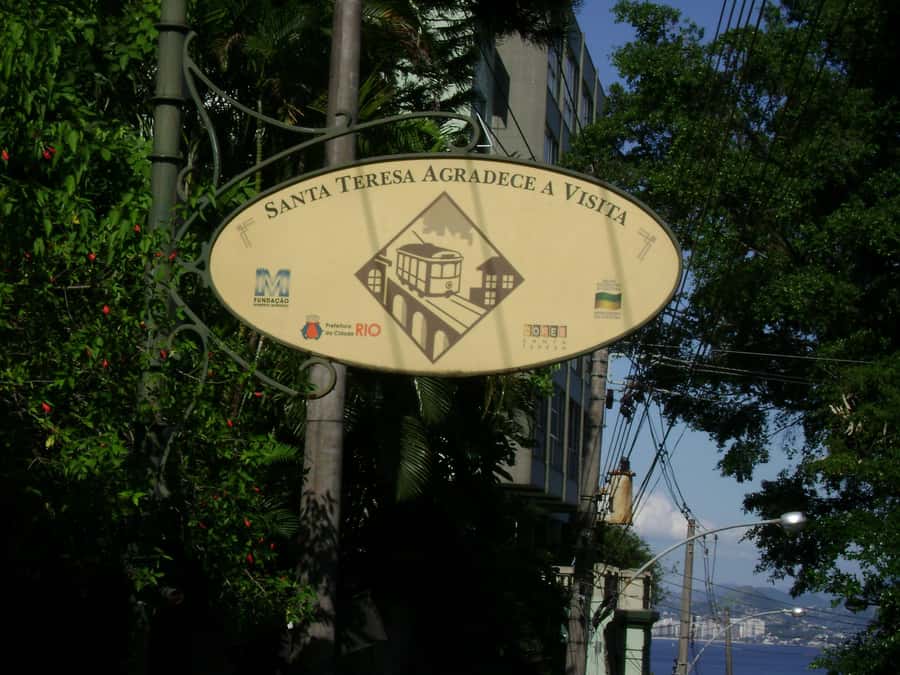
The meeting point is in front of the Estação de Bondes de Santa Teresa, the station connected with the neighborhood’s beloved tram service. The tour begins with a roughly 15-minute journey before the main walk, although that plan can change when the tram queue is too long.
The tram is part of Santa Teresa’s identity, so riding it adds real flavor. The yellow cars are not simply transport from one sight to another. They are one of the visual symbols of the district, and passing through the narrow streets helps you understand why Santa Teresa feels so different from other parts of Rio.
The important catch is timing. If the line exceeds one hour, the tour operator will not wait for the tram. You will take taxis to Santa Teresa instead, with the aim of keeping the tour close to its planned length.
That policy is sensible for a three-hour activity, but it does reduce one of the experience’s headline attractions. One previous outing lost the tram ride because of the queue, and the replacement route included the National Library and the Justice Court before continuing by taxi. Those stops did not feel closely connected to the promised art-focused walk.
So I would treat the tram as a welcome possibility, not a guarantee. If riding the yellow tram is your main reason for booking, you may prefer to confirm the day’s conditions before setting out.
Cobblestones, mansions, and everyday Santa Teresa
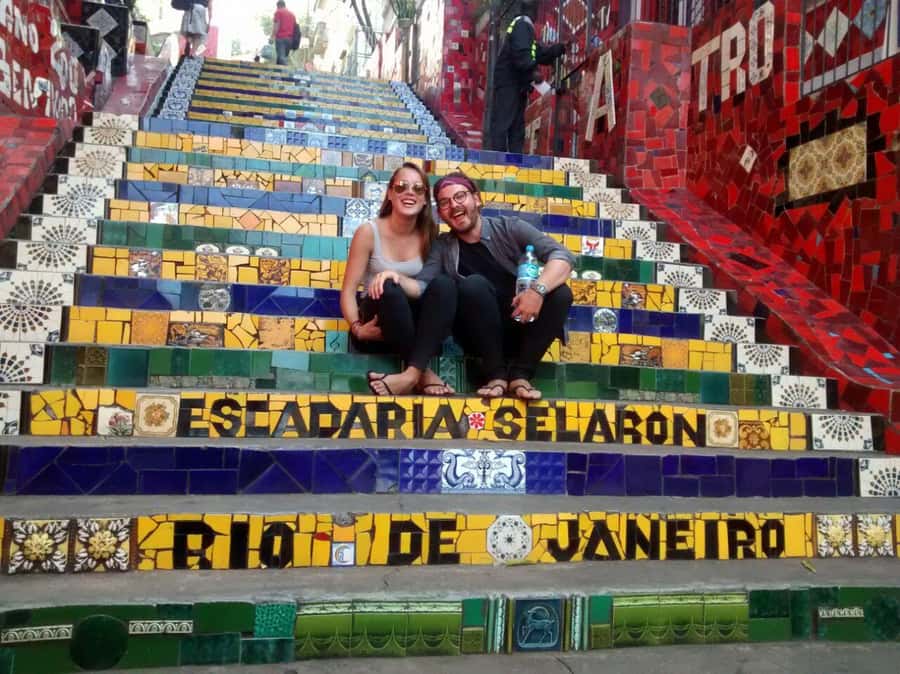
Once in the neighborhood, the tour continues on foot through cobblestone streets. This is where the experience earns its keep, especially if you enjoy architecture and local atmosphere more than a checklist of major landmarks.
The guide points out colonial houses, old palaces, and grand residences that recall earlier periods of Rio’s development. Some buildings show the polish of former wealth. Others carry the worn surfaces and altered details that make an old neighborhood feel lived in rather than preserved for display.
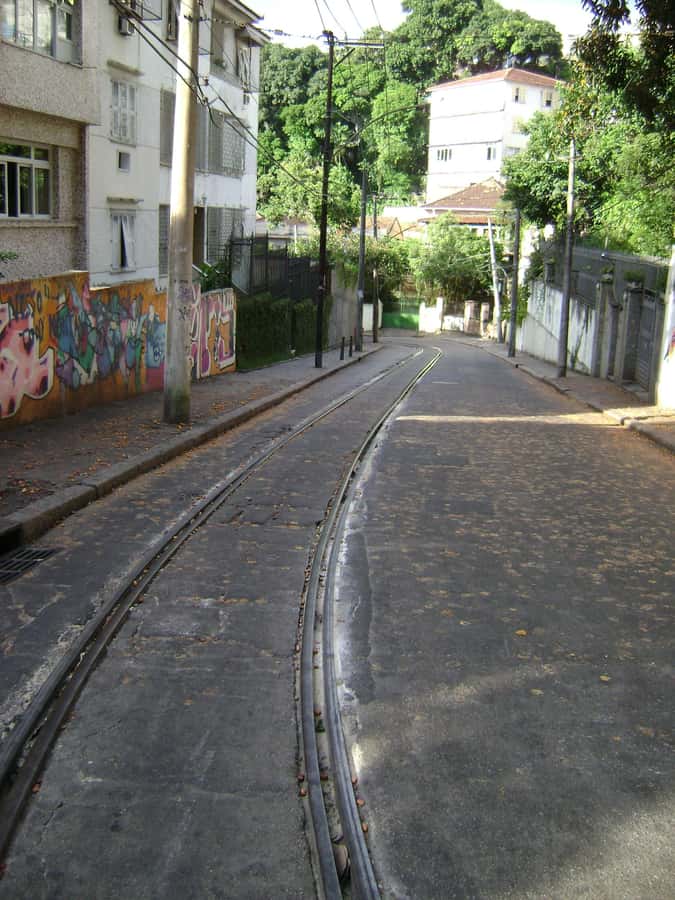
The walking route also includes urban murals and other examples of local creative work. That gives the tour a useful rhythm: one moment you are looking at a historic façade, and the next you are discussing a painted wall or a gallery.
I like this combination because it helps you read Santa Teresa as a neighborhood with several layers. The architecture is not isolated from modern city life. It shares the streets with cafés, art spaces, tram tracks, and ordinary movement through the district.
The route is not described as a visit to working artists’ studios, however. If you are hoping to meet several artists or see how local pieces are made, you may find the art portion lighter than expected. One gallery stop was described as feeling more like a souvenir shop, and that is useful to keep in mind.
The views toward Christ the Redeemer
The tour includes privileged views of Christ the Redeemer, one of its strongest features. Santa Teresa’s elevated position gives you a different angle on the famous statue than you get from the usual postcard viewpoints.
The sight is especially effective when paired with the old streets and houses in the foreground. You are not simply looking at the monument from a dedicated platform. You are seeing it as part of Rio’s wider setting, framed by the neighborhood as you move through it.
The exact quality of the view will depend on weather and where the group pauses. The activity continues in rain, so cloudy conditions are possible. You should bring suitable protection and accept that the views may not be at their sharpest on a wet day.
Even with that limitation, the outlooks are a strong reason to choose Santa Teresa. They help explain the neighborhood’s appeal and give the walking route several memorable pauses.
A few more Rio De Janeiro days to weigh up
- Rio de Janeiro: 6-Stop Highlights of Rio with Lunch
★ 4.4 · 5,157 reviews - Christ the Redeemer Entry Ticket by Corcovado Train
★ 4.4 · 4,476 reviews - Rio’s City Tour – Tickets for Christ, Sugar Loaf & Lunch included
★ 5.0 · 4,389 reviews - Full Day: Christ Redeemer, Sugarloaf, City Tour & Barbecue Lunch
★ 4.5 · 3,142 reviews
Parque das Ruinas and Laurinda Santos Lobo’s home
The tour eventually reaches Parque das Ruinas, one of the most distinctive stops. The park includes the rehabilitated home of Laurinda Santos Lobo, a mansion that had been abandoned for more than 50 years.
Laurinda Santos Lobo was an important figure in Rio’s belle époque social world, and the house once represented the wealth and style of that period. Its later abandonment gives the site a more unusual character than a fully restored palace. You get a sense of both former splendor and the passage of time.
The building’s setting is valuable for two reasons. First, it gives the guide a place to explain how elite life looked during the Brazilian Empire and the years that followed. Second, the park provides a spectacular panoramic view of Rio de Janeiro.
I would give this stop proper attention rather than rushing through it for photos. The combination of architecture, social history, and views makes it the most substantial part of the route.
The tour description says you can enter the rehabilitated house, but it does not promise a detailed interior exhibition or a long private visit. Think of it as an atmospheric historic site within a public park, not a full museum experience.
Açaí, pão de queijo, and the snack stop

The food break includes açaí and pão de queijo, two familiar Brazilian favorites that give the tour a pleasant local touch.
Açaí is served as a cold, sweet dish, while pão de queijo is a small cheese bread with a soft, chewy center. Together, they make a simple snack rather than a full meal. If you are hungry after walking uphill on cobblestones, you should not count on this as lunch.
I like the stop because it slows the pace and gives you a chance to talk with the guide. It also lets you try two foods that are easy to find throughout Brazil, with enough explanation to make the break feel connected to the place.
At the same time, the food is not unique to Santa Teresa. You can find açaí and pão de queijo in many parts of Rio. If the snack is your only reason for booking, the price will not make much sense. Its value comes from being part of a guided neighborhood visit.
How strong is the art focus?
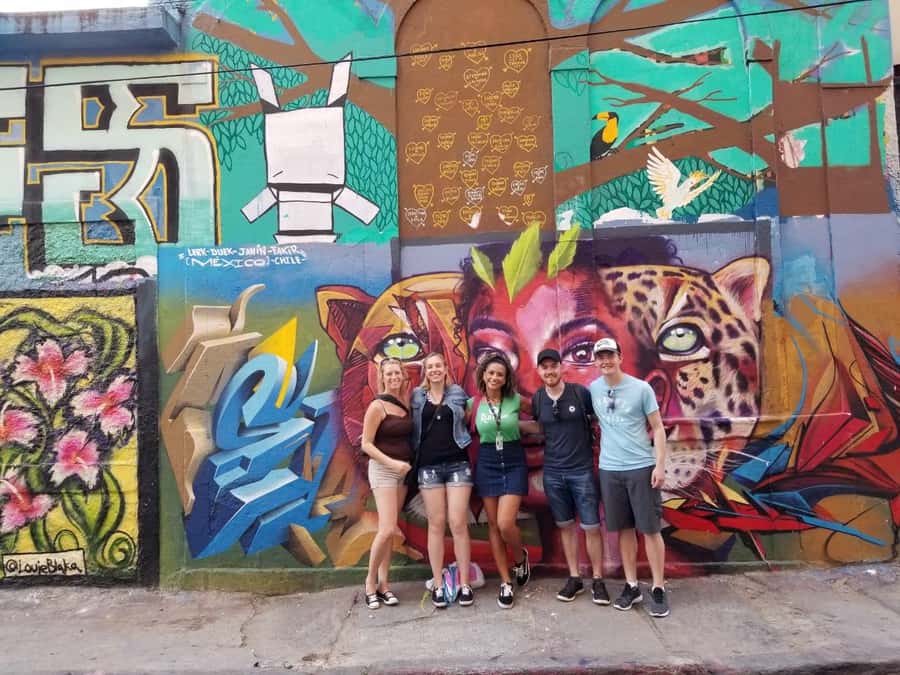
The tour’s title promises bohemia and art, and Santa Teresa certainly provides the setting for that theme. Murals, galleries, unusual buildings, and independent creative spaces are woven into the walk.
The strongest art element is the way the guide connects visual details to the neighborhood. A good guide can point out work you might pass without noticing and explain how it fits the area’s personality.
Rafael received especially warm praise for sharing many interesting anecdotes and giving detailed explanations. Fernanda was also praised for knowing the details of the route and for being attentive and pleasant. Those comments matter because the experience depends heavily on the person leading it.
The weaker point is that the route may not always reach the less obvious corners of Santa Teresa. One outing spent too long in a gallery that felt commercial, with no visit to a local artist. A museum stop was also approached but turned out to be closed, which made that portion feel unnecessary.
I would book this for art in the broad sense: murals, architecture, galleries, and neighborhood character. I would not book it expecting a carefully planned studio crawl.
The guides can shape the whole afternoon

This is the sort of tour where the guide’s storytelling affects your experience more than the number of stops. The route itself is fairly compact, but a well-prepared guide can turn a mansion, tram passage, or painted wall into something worth remembering.
Rafael’s ability to add anecdotes is a real plus. Fernanda’s friendly and attentive manner is useful for a small group or for anyone who wants to ask questions. The tour is available in English, Portuguese, and Spanish, so you can choose the language that lets you follow the historical details most easily.
The experience can also become almost private if very few people book the same departure. One person found themselves alone with the guide, which allowed questions throughout the route and made it easier to hear every explanation.
That possibility is not guaranteed, but it shows why the tour can work well for curious visitors. You are not locked into a large group with a fixed script.
What can go wrong on the route?
The biggest risk is a mismatch between the advertised theme and the actual day’s route. A long tram line may force a taxi transfer. A closed museum can make a stop feel pointless. A gallery may not offer the artist contact or creative insight you hoped for.
Another concern is time. The planned duration is three hours, but one outing ended after about two and a half hours. That is not a huge difference, but it matters when you are paying $60 per person and scheduling other plans around the activity.
The tour also follows a main-road route at times, according to one disappointing experience. If you already know Santa Teresa and only want obscure corners, you may find the walk too familiar.
These problems do not cancel out the tour’s strengths, but they make the value dependent on execution. Ask yourself what you want most: an introduction to Santa Teresa with a guide, or a rare, behind-the-scenes art experience. The first is a fair description. The second may leave you disappointed.
Is $60 a fair price?
At $60 per person, this is not the cheapest way to reach Santa Teresa. You could take a taxi or rideshare to the neighborhood and walk around with a guidebook. The tour’s value comes from the interpretation, the organized route, the included tram ticket when conditions allow, the snack, and the chance to ask questions in your language.
The price feels more reasonable if you are new to Rio and want context for the buildings, tram, murals, and Parque das Ruinas. It is also more appealing if you prefer a structured three-hour walk rather than planning the route yourself.
The price feels less attractive if the tram is replaced by taxis, the route includes unrelated stops, or you already know the neighborhood. One person compared the cost unfavorably with simply taking an inexpensive Uber to the same area. That criticism is fair when the guide’s commentary feels superficial.
I would see this as a paid introduction, not a bargain transportation option. Book it for the guide and the story of Santa Teresa. Do not book it just to get there.
Shoes, weather, and who should skip it
Wear comfortable shoes. Cobblestones, walking, and the neighborhood’s hilly setting make high heels a poor choice, and high-heeled shoes are specifically not allowed.
Large bags and luggage are also not allowed, so this is not an activity to schedule while moving between hotels with your belongings. There is no hotel pickup or drop-off, so you must reach the meeting point in front of the tram station on your own.
The tour runs in the rain, which makes a rain jacket or compact umbrella sensible. Bad weather may also affect how much you enjoy the panoramic views.
This is not suitable for people with mobility impairments. Anyone who dislikes uneven streets, walking, or a flexible route should choose a different way to see the area.
The tour suits you best if you enjoy:
- Historic homes and unusual architecture
- Street art and neighborhood character
- Short cultural walks with food included
- Scenic viewpoints
- Guides who explain local details and answer questions
It is less suitable if you want a full meal, guaranteed tram transportation, a private artist visit, or a museum-heavy itinerary.
Should you book Santa Teresa: Bohemia and Art?
I would book this tour if you are visiting Santa Teresa for the first time and want a friendly introduction to its architecture, tram, art, and views. The stop at Parque das Ruinas is the strongest anchor, and the açaí and pão de queijo break adds an easy local touch.
I would book with one condition: confirm that you are comfortable with a possible taxi transfer and a route that may change. The tram is not guaranteed, and the art component can be modest rather than deeply focused.
At $60, the tour is worth it when the guide is strong and the walk stays centered on Santa Teresa. Rafael and Fernanda suggest the kind of personal guidance that can make the difference. If you want to explore independently, you can likely spend less. If you want history, views, and a clear introduction without doing the planning yourself, this is a reasonable choice.
FAQ
How long does the Santa Teresa tour last?
The planned duration is three hours. One past outing finished in about two and a half hours, so the exact length may vary slightly.
Where does the tour meet?
You meet in front of the Estação de Bondes de Santa Teresa.
Is the tram ride guaranteed?
No. If the tram queue is longer than one hour, the group will use taxis to reach Santa Teresa instead, so the tour does not lose time waiting.
Are tram tickets included?
Yes, tram tickets are included when the group rides the tram.
What food is included?
The tour includes a snack stop with açaí and pão de queijo.
Is hotel transportation included?
No. Hotel pickup and drop-off are not included.
Which languages are available?
The live guide service is available in English, Portuguese, and Spanish.
What should I wear?
Wear comfortable shoes suitable for walking on cobblestones. High-heeled shoes are not allowed.
Can people with mobility impairments join?
No. The tour is a walking experience and is not suitable for people with mobility impairments.
Newest reviews from around Rio De Janeiro
- Cidade do Samba Behind-the-Scenes Carnival Tour in Rio de Janeiro★ 4.0 · 5 reviews
- PRIVATE TOUR – Christ the Redeemer and Sugar Loaf★ 4.5 · 9 reviews
- Christ Statue and Sugarloaf Private Tour with a Photographer★ 5.0 · 9 reviews
- Christ the Redeemer Trail x Lage Park★ 5.0 · 7 reviews
- Christ the Redeemer and City Tour★ 5.0 · 20 reviews
- Christ the Redeemer, Selaron Steps and Santa Teresa Half-day Tour★ 4.5 · 15 reviews
- Christ the Redeemer Adventure★ 5.0 · 12 reviews
- Private Tour of Christ the Redeemer in Rio de Janeiro★ 5.0 · 2 reviews
Santa Teresa & Selarón Steps Tours, compared.

Rio’s Full Day: Selarón Steps, Christ & Sugarloaf – Tickets & Lunch Included
Read our review →
Christ the Redeemer, Sugarloaf, Selaron & BBQ Lunch
Read our review →
Rio’s Best_Corcovado, Sugar Loaf, Selaron, Cathedral and more
Read our review →

Full Day in Rio: Christ by Train, Sugarloaf, Selarón & Barbecue
Read our review →
Half-Day Tour: Christ the Redeemer, Selarón & Sunset at Sugarloaf
Read our review →

Santa Teresa, Lapa, and Cinelândia with Tram Ride and Selarón Steps
Read our review →Browse the lists this tour appears in