
Reviewed · SAMBA & CARNIVAL SHOWS
Samba Soul Tour
Samba tells Rio’s story with feet and drums. This 4 to 5 hour Samba Soul Tour links port landmarks, street art, carnival workshops, and the birthplace of urban samba. I like its clear focus on Afro-Brazilian culture, and I like that the VLT tram ride and Cidade do Samba admission are included. The main consideration is that the tour moves through several stops quickly, so it gives you a strong introduction rather than a slow, detailed look at every site.
The tour is offered in English and keeps its group to a maximum of 15 people. Guide Celine earned special praise for explaining both samba and Brazil’s wider social, economic, and political story. You should also note that the MAR museum is closed on Mondays, its admission is not included, and the experience depends on good weather.
In This Review
- Key points at a glance
- Why this samba tour offers more than music
- Starting above Praça Mauá at MAR
- Praça Mauá and Rio’s port story
- Taking the VLT past Olympic Boulevard
- Behind the parade at Cidade do Samba
- Pedra do Sal and the birth of carioca samba
- Ending with Mercedes Baptista and Largo da Prainha
- What the 4 to 5 hour format feels like
- Value, inclusions, and limits
- Booking details worth checking
- Who should book the Samba Soul Tour?
- FAQ
- How long does the Samba Soul Tour last?
- Is the tour offered in English?
- Where does the tour start?
- Where does the tour end?
- Are VLT tram tickets included?
- Is Cidade do Samba admission included?
- Is MAR museum admission included?
- Is lunch included?
- What is the maximum group size?
- Is the tour available on Mondays?
- Can I cancel for a full refund?
Key points at a glance
- MAR terrace views: Begin above Praça Mauá with a broad look toward Guanabara Bay and the port area.
- Samba City workshop: See how Grande Rio Samba School creates costumes, carnival designs, and large parade cars by hand.
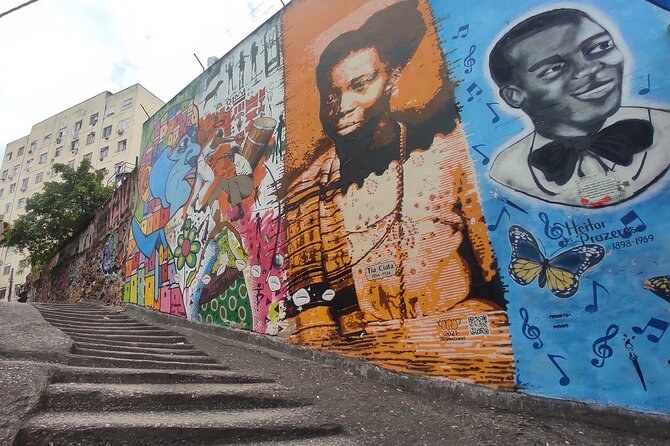
- Historic Little Africa: Visit Pedra do Sal, a place tied to the birth of urban carioca samba.
- VLT included: Ride the tram from Praça Mauá toward Cidade do Samba while taking in the old docks and Olympic Boulevard art.
- A tribute to Mercedes Baptista: Finish near the statue honoring a major black woman in Brazilian dance and samba.
- Small English-language group: With no more than 15 people, the tour should feel easier to follow than a large bus outing.
Why this samba tour offers more than music
Samba is often sold as a party sound, but Rio’s samba tradition carries stories about work, race, migration, class, carnival, and cultural survival. That is the useful idea behind this tour. You are not simply taken to a dance performance and sent home with a few colorful photographs.
The route moves through Rio’s port district, an area tied to the city’s growth and to Afro-Brazilian life. You see where public squares, docks, museums, street art, workshops, and music meet. The result is a walking and tram tour that gives you context before the carnival costumes and parade cars take center stage.
I especially like the way the experience builds in stages. The opening view helps you understand the port. The VLT connects the area’s past with its more recent renewal. Cidade do Samba explains the work behind carnival, and Pedra do Sal brings you back to the community roots of samba itself.
That said, this is not a full carnival night out. The visit to Cidade do Samba lasts about an hour, and the stop at Pedra do Sal is only around 20 minutes. If you want hours of live music, dancing, or a full samba-school rehearsal, you will need another activity afterward.
Other samba nights worth staying up for:
- Rio de Janeiro: Beginner Samba Lesson in Ipanema
★ 4.9 · 1,071 reviews - Rio: Pub Crawl in Lapa with Cachaça Tasting and Live Samba
★ 4.7 · 881 reviews - Rio: Carnival Backstage Tour at Samba City with Cocktail
★ 4.6 · 520 reviews
Starting above Praça Mauá at MAR
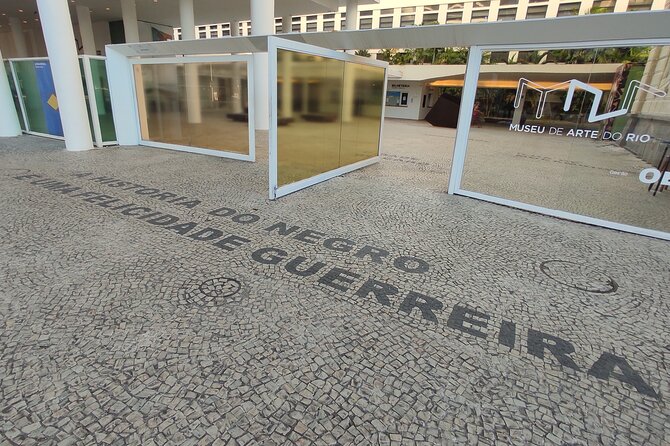
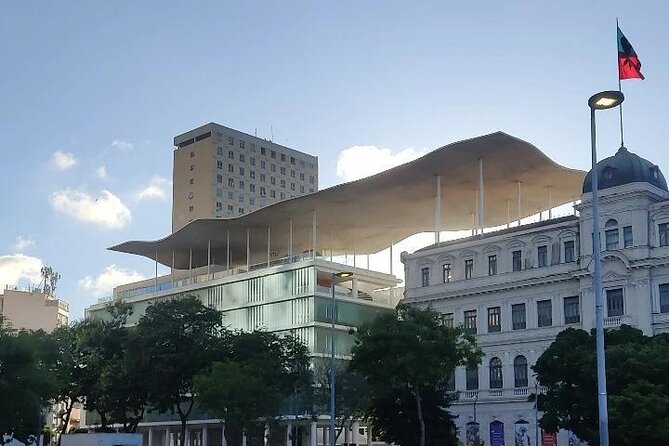
The meeting point is the Rio Museum of Art, known as MAR, at Praça Mauá 5 in Saúde. The group goes up to the museum terrace for a panoramic view of Praça Mauá and Guanabara Bay. This opening stop lasts about 30 minutes.
Even if you do not enter the museum, the terrace gives the tour a useful beginning. You can orient yourself around the port and see how the public square connects with the waterfront district. It is a better introduction than starting in an anonymous meeting room because the city itself becomes part of the lesson from the first minutes.
Admission to MAR is not included, so you should not assume that the tour includes the museum galleries. The experience uses the terrace as a viewpoint and meeting place. If seeing the exhibitions matters to you, check the museum’s opening details separately.
Monday requires extra care. MAR is closed on Mondays, so confirm the tour date and meeting arrangements if your Rio schedule includes that day. The supplied information identifies the VLT Museum stop as the nearby tram station, which is useful for reaching the start point by public transport.
Praça Mauá and Rio’s port story
The next stop is Praça Mauá, with about 30 minutes to look around. The square marks the beginning of Avenida Rio Branco and the Port Region. From 1910, after the opening of Rio’s port, it became an important arrival point for ships and people coming to the city.
This is where the tour’s social and political side begins to make sense. The port was not just a place for cargo and cruise arrivals. It helped shape Rio’s growth and connected the city to wider movements of people, labor, and culture.
Several major buildings frame the square. MAR and the Museum of Tomorrow give the area a strong museum presence, while the Night building, built in 1930, is identified as Rio’s first skyscraper. You get a compact lesson in how the district changed from port gateway to modern public space.
The stop is free, but the museums are separate attractions. I would treat the square as an outdoor orientation stop, not as a substitute for visiting either museum. The tour’s value here comes from connecting the setting to samba’s wider story.
Taking the VLT past Olympic Boulevard
The tram ride from Praça Mauá to Cidade do Samba is one of the most practical parts of the experience. Your VLT ticket is included, and the ride takes about 30 minutes as part of the tour.
From the tram, you can see the old docks and the street art gallery along Olympic Boulevard. This gives you a moving view of the port district rather than another block of commentary on foot. It also saves you from arranging a separate transfer between the first part of the route and Cidade do Samba.
The VLT matters because it keeps the tour connected to everyday Rio. You are not sealed inside private transportation, and you can see how the port area works as a public district. The route also shows the meeting point between older docklands and newer urban projects around Olympic Boulevard.
Private transportation is not included, but that is less of a concern here because the tram tickets are covered. You should still allow time to reach the starting point independently and plan your return from the end point. The tour finishes in Saúde, where bars, taxis, and Ubers are available.
A few more Rio de Janeiro days to weigh up
- Rio de Janeiro: 6-Stop Highlights of Rio with Lunch
★ 4.4 · 5,157 reviews - Christ the Redeemer Entry Ticket by Corcovado Train
★ 4.4 · 4,476 reviews - Rio’s City Tour – Tickets for Christ, Sugar Loaf & Lunch included
★ 5.0 · 4,389 reviews - Full Day: Christ Redeemer, Sugarloaf, City Tour & Barbecue Lunch
★ 4.5 · 3,142 reviews
Behind the parade at Cidade do Samba
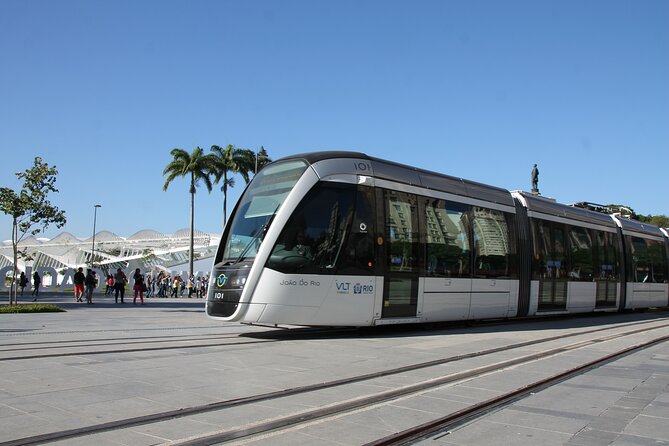
Cidade do Samba is the centerpiece for anyone curious about carnival production. The visit lasts about one hour, and admission is included.
The Carnival Experience is promoted by Grande Rio Samba School. It opens the school’s workshop to show how a parade takes shape long before the costumes and floats reach the Sambadrome at Marquês de Sapucaí. You can see carnival designs, costume work, and the construction and assembly of the large allegorical cars.
This behind-the-scenes view is valuable because carnival can look effortless from the street. In reality, it depends on long preparation and skilled handwork. The workshop helps you see the people and processes behind the glitter, feathers, painted surfaces, and giant moving forms.
One of the strongest features is the close look at the production team’s work. You are shown how costumes and parade elements are made by hand, which gives the spectacle a human scale. A guide can explain what you are seeing, but the objects themselves do much of the teaching.
The visit is not the same as watching a parade. You will not get the full sound, crowd energy, or late-night performance atmosphere of carnival in the Sambadrome. Instead, you get the workshop story. For many people, that is the more revealing part, especially if they want to understand how Rio’s famous celebrations are built.
The tour has received especially warm praise for this stop and for the personal approach of Celine, who explained samba alongside a short account of Brazil’s wider past. The experience also includes a few surprises, but those are best left unspoiled.
Pedra do Sal and the birth of carioca samba
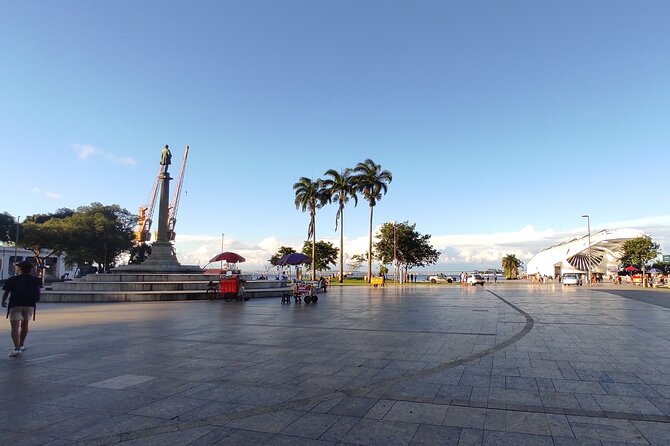
After Cidade do Samba, the route reaches Pedra do Sal, on Conceição Hill. The stop lasts about 20 minutes, so expect a concise introduction rather than an extended neighborhood walk.
Pedra do Sal belongs to the area once known as Little Africa, stretching roughly from Praça Mauá toward Cidade Nova. The site is tied to the development of urban carioca samba, which grew from popular samba and older carnival ranches.
The description of music here is wonderfully physical. Earlier rural samba used hands, tambourines, plates, and knives, with dancing that included tap steps, shuffling, and umbigadas. These details help you understand that samba was not born as a polished stage product. It grew from community gatherings, rhythm, movement, and shared participation.
The short visit is still meaningful, but you should keep your expectations in check. The stop gives you a historical and cultural anchor. It does not promise a long performance or a full guided exploration of every nearby street.
Pedra do Sal is also an important counterweight to Cidade do Samba. At the workshop, you see organized carnival production. Here, you hear about the community traditions and Afro-Brazilian roots that helped shape the music in the first place.
Ending with Mercedes Baptista and Largo da Prainha
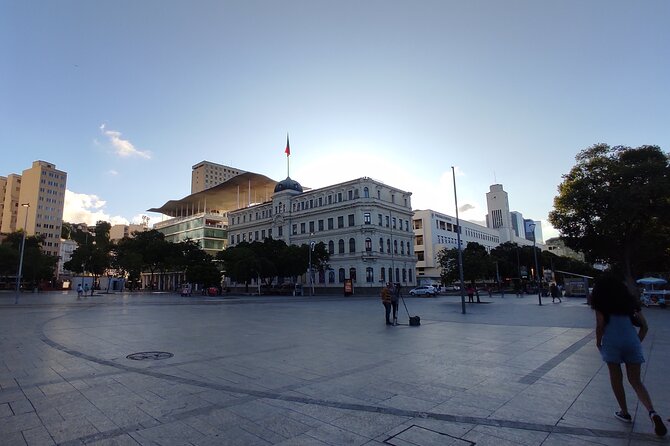
The final stop is the statue of Mercedes Baptista at Largo São Francisco da Prainha. The tour spends about 30 minutes here and ends in the same general port district.
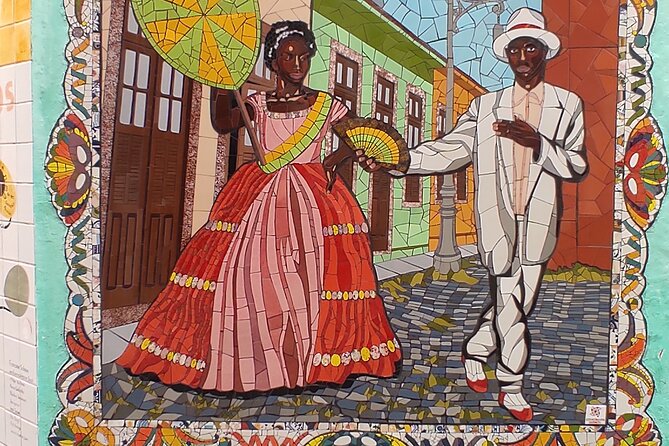
Mercedes Baptista is honored for her role as a black woman in samba music and Afro-Brazilian dance. Ending with her gives the tour a clear point of focus. The experience is not only about famous carnival schools or colorful floats. It also highlights people whose work expanded the place of black women in Brazilian dance.
You can get a snack and refreshments at Largo da Prainha. The area has bars, and you are close to the Pedra do Sal samba circle, making it possible to continue the evening with live local music after the guided portion ends.
This final option is one of the tour’s best practical touches. The official experience ends after the statue, but you are left in an area where you can keep exploring instead of being dropped somewhere without food or transport. The guide can get you oriented, while you decide how long to stay.
What the 4 to 5 hour format feels like
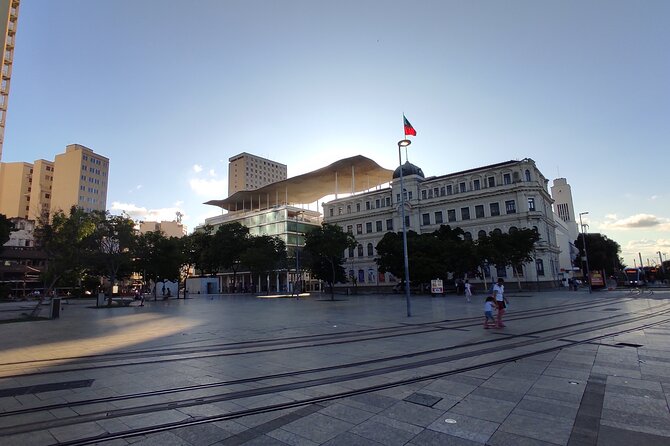
The route is active but not extreme. Most travelers can participate, and the group size is capped at 15. You will move between viewpoints, a square, a tram, a workshop, a historic samba site, and a statue, so comfortable walking shoes make sense even though no special physical ability is stated.
The timetable adds up to a fairly full half-day:
- MAR terrace: about 30 minutes
- Praça Mauá: about 30 minutes
- VLT and Olympic Boulevard: about 30 minutes
- Cidade do Samba: about 1 hour
- Pedra do Sal: about 20 minutes
- Mercedes Baptista statue and Largo da Prainha: about 30 minutes
The total listed stop time is shorter than five hours, leaving room for transit, explanations, and movement between locations. You should not plan another tightly timed attraction immediately afterward.
The English-language format is useful if you want the cultural and political context explained clearly. A guide such as Celine can make the difference here, since the tour depends on interpretation as much as sightseeing. You are learning why each place matters, not just collecting locations.
Value, inclusions, and limits
The tour includes the VLT tickets and admission to Cidade do Samba. Lunch is not included, and private transportation is not included. The final stop has bars and snack options, but you should bring or buy food according to your own schedule.
No tour price is provided in the information available here, so I cannot give you a fair dollar value. The sensible way to judge the cost is to compare it with arranging the same route yourself: public transport, a visit to Cidade do Samba, a guide who can connect samba to Brazilian society, and time spent finding Pedra do Sal and Largo da Prainha.
The strongest value comes from the guide and the sequence. A do-it-yourself visit could reach Praça Mauá and Pedra do Sal, but you might miss the connection between the port district, Little Africa, carnival labor, and Afro-Brazilian dance. If that context matters to you, the guided format earns its keep.
The tour is less useful if you only want a performance. It also may feel rushed if you prefer to linger at museums, photograph every building, or spend a long time in one neighborhood.
Booking details worth checking
You receive confirmation when booking, and the experience uses a mobile ticket. It is near public transportation, with the VLT Museum stop serving the meeting area.
Free cancellation is available if you cancel at least 24 hours before the start time. A cancellation inside 24 hours is not refundable, and changes inside that window are not accepted. The tour also requires good weather and a minimum number of participants. If bad weather or low enrollment cancels the experience, you are offered another date or experience, or a full refund.
The tour begins at Rio Museum of Art and ends at the Mercedes Baptista statue at Largo São Francisco da Prainha. Since taxis and Ubers are available near the finish, you can continue to dinner or a samba circle without arranging a private car.
Who should book the Samba Soul Tour?
I would recommend this tour if you want cultural context, a small group, and a look behind carnival. It suits first-time visitors who want to understand Rio beyond beaches and viewpoints, as well as repeat visitors who have already seen the main postcard sights.
It is especially good for anyone interested in Afro-Brazilian culture, music, dance, urban history, and the practical work behind carnival. The English explanations and compact group should help you ask questions and follow the story.
I would think twice if your main goal is an evening of dancing or a full samba performance. This is a daytime cultural route with a short final stop near local bars and a samba circle. You may enjoy it most when you treat that final area as an invitation to continue on your own.
FAQ
How long does the Samba Soul Tour last?
The tour lasts approximately 4 to 5 hours.
Is the tour offered in English?
Yes. The experience is offered in English.
Where does the tour start?
It starts at the Rio Museum of Art, Praça Mauá 5, Saúde, Rio de Janeiro.
Where does the tour end?
It ends at the Mercedes Baptista statue at Largo São Francisco da Prainha, Saúde.
Are VLT tram tickets included?
Yes. VLT tram tickets are included.
Is Cidade do Samba admission included?
Yes. Admission to Cidade do Samba is included.
Is MAR museum admission included?
No. Admission to the Rio Museum of Art is not included.
Is lunch included?
No. Lunch is not included, though bars and snack options are available near the final stop.
What is the maximum group size?
The tour accepts a maximum of 15 people.
Is the tour available on Mondays?
MAR is closed on Mondays, so you should check the date carefully before booking.
Can I cancel for a full refund?
Yes, if you cancel at least 24 hours before the experience start time. Cancellations within 24 hours are not refundable.
Newest reviews from around Rio de Janeiro
- Hang gliding flight in Rio de Janeiro★ 5.0 · 6 reviews
- Rio de Janeiro: Zip Lining and Canopy Tree Tour★ 3.3 · 6 reviews
- Vidigal Favela Tour★ 4.4 · 26 reviews
- Rio de Janeiro: Attend a Vasco da Gama game with local guide★ 4.8 · 9 reviews
- Unforgettable Boat Party★ 5.0 · 3 reviews
- Parapente Rio de Janeiro★ 5.0 · 4 reviews
- Rio de Janeiro Private Tour with Cruise Terminal Pick-up★ 5.0 · 2 reviews
- Wild Waters: Rio Whitewater Rafting Adventure Tour★ 5.0 · 13 reviews
Samba & Carnival Shows, compared.

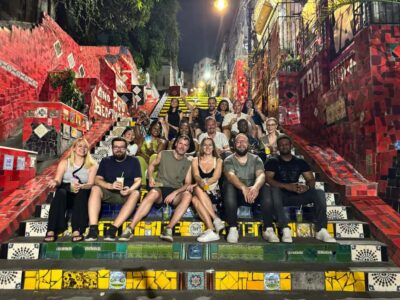
Pub Crawl in Lapa with Cachaça Tasting and Live Samba
Read our review →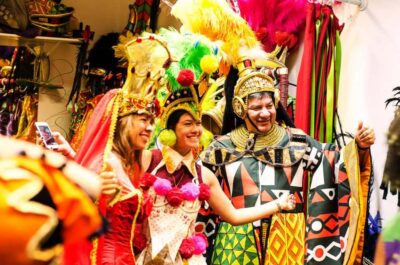
Carnival Backstage Tour at Samba City with Cocktail
Read our review →
Hop-ON Hop-OFF Sightseeing Bus in Rio de Janeiro – Rio Samba Bus
Read our review →
Santa Teresa, Lapa, and Cinelândia with Tram Ride and Selarón Steps
Read our review →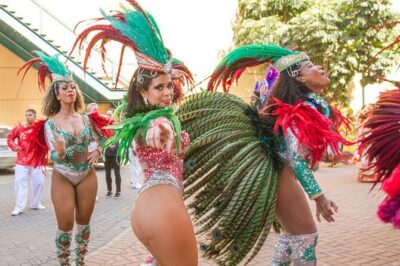
Carnaval Experience: Backstage Tour at Samba City with Cocktail
Read our review →

Browse the lists this tour appears in