
Reviewed · SAMBA & CARNIVAL SHOWS
Samba Night in Pedra do Sal with 1 free caipirinha
Let the drums explain Rio’s past. This four-hour evening walk connects Little Africa with the live samba gathering at Pedra do Sal, giving you both cultural context and a real night out. Starting at Largo de São Francisco da Prainha at 7:30 PM, you walk through the Saúde area, visit Cais do Valongo, and finish where local samba fills the streets on Monday nights.
I like the way this experience links music to the Afro-Brazilian story of Rio, rather than treating samba as a show made only for visitors. I also like the welcome caipirinha, the friendly guidance from Bruno, and the chance to dance beside local musicians. The main drawback is practical: this is a walking tour over uneven city streets, so it is not suitable for wheelchair users or people with mobility impairments.
In This Review
- Key points to know before booking
- Why Little Africa gives this samba night meaning
- Cais do Valongo: the difficult stop that should not be skipped
- Walking through Saúde for about two hours
- Arriving at Pedra do Sal after the history
- The caipirinha and the real cost of the evening
- What the guide adds to the experience
- Who will enjoy this Monday night?
- Practical advice for a smoother evening
- Should you book Samba Night in Pedra do Sal?
- FAQ
- Where does the samba night begin?
- What time does the experience start?
- How long does the activity last?
- Which places are included?
- Is a drink included?
- Which languages are available?
- Is the activity suitable for wheelchair users?
Key points to know before booking
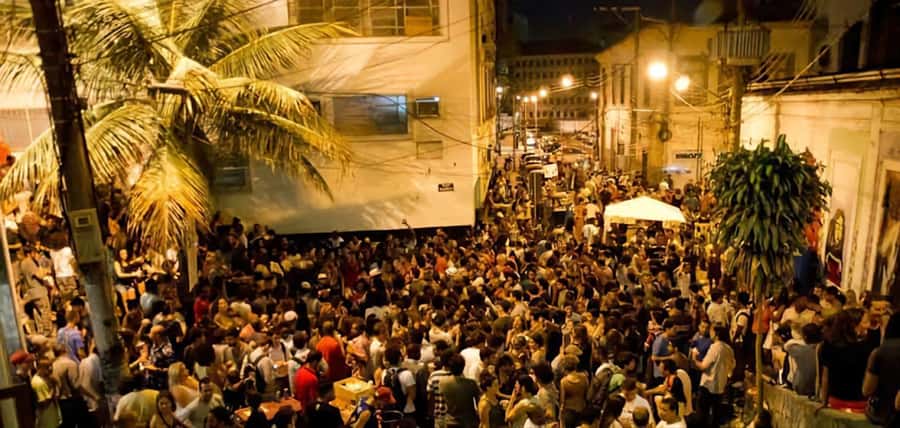
- Pedra do Sal on Monday night: You finish at one of Rio’s best-known street samba gatherings, with live drums, dancing, and cold drinks.
- A serious history lesson: The route includes Cais do Valongo, a UNESCO World Heritage site and former slave port connected to Rio’s African heritage.
- Bruno receives repeated praise: He guides in English, Spanish, and Portuguese, and is noted for his friendly manner, strong Spanish, and careful coordination.
- One caipirinha is included: You receive a complimentary drink at the start of the evening. Extra food and drinks are your responsibility.
- Walking shoes matter: The experience lasts four hours and includes a guided walk through Saúde, so comfortable footwear is essential.
- A small photo souvenir is optional: You can add one Polaroid photo for an extra $20.
Why Little Africa gives this samba night meaning
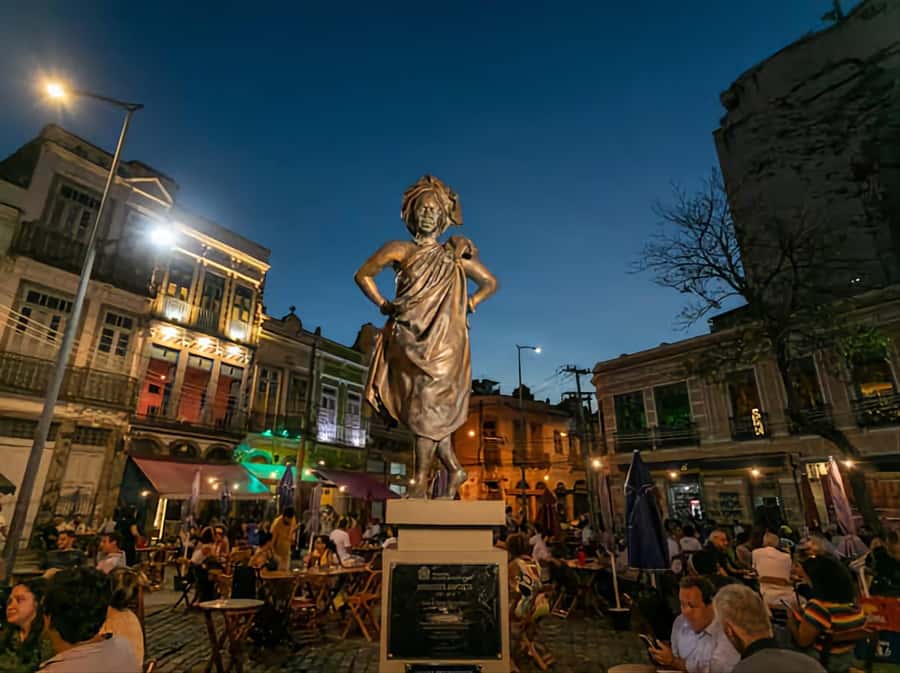
Rio’s samba is not just a musical style. It grew from Afro-Brazilian communities, religious traditions, port neighborhoods, and years of cultural survival. This experience gives you a chance to hear that story before you reach the party.
The walk begins at Largo de São Francisco da Prainha, a square close to Pedra do Sal. That makes the meeting point fairly practical, since you are already near the evening’s main stop. From there, the guide leads you into the historic port area and toward Saúde.
I value this order. If you arrive at Pedra do Sal without context, you may simply see a crowd, hear drums, and enjoy a caipirinha. That can still be a great night, but the walk helps you understand why this particular place matters to Rio’s Black culture and music.
The guide also discusses the influence of African traditions on Rio’s music and religion. That matters because samba does not exist in isolation. It is tied to communities that preserved identity and expression through music, dance, faith, and social gatherings.
You should expect a cultural walk, not a formal museum tour. The experience is built around streets, landmarks, stories, and conversation. If you prefer a polished stage performance with assigned seating, this is not the right format. If you want to learn before joining a local music gathering, it makes much more sense.
Other samba nights worth staying up for:
- Rio de Janeiro: Beginner Samba Lesson in Ipanema
★ 4.9 · 1,071 reviews - Rio: Pub Crawl in Lapa with Cachaça Tasting and Live Samba
★ 4.7 · 881 reviews - Rio: Carnival Backstage Tour at Samba City with Cocktail
★ 4.6 · 520 reviews
Cais do Valongo: the difficult stop that should not be skipped
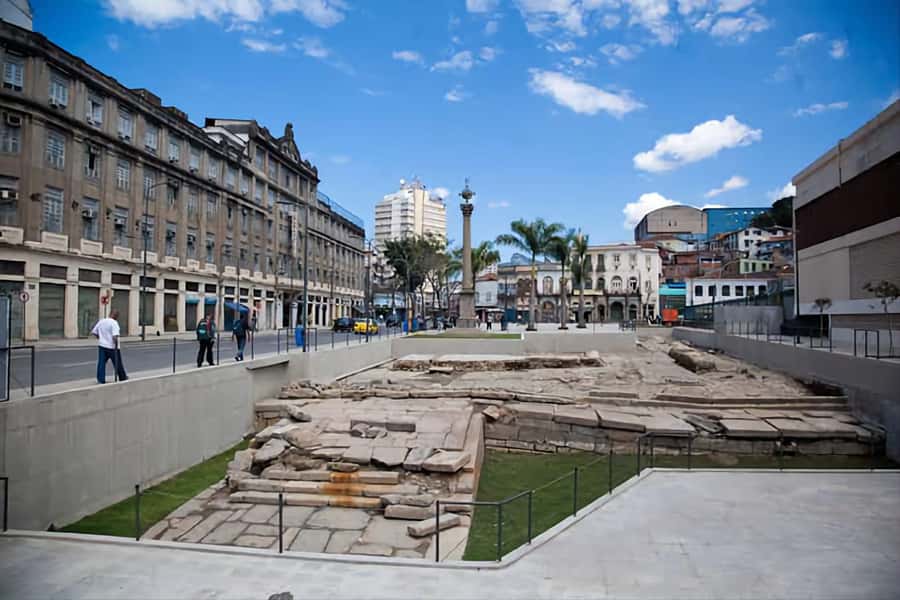
One of the most important stops is Cais do Valongo, a former slave port and UNESCO World Heritage site. It is a place where the past is painful, and the visit deserves a thoughtful tone.
The site connects Rio directly to the forced arrival of Africans in Brazil. Its presence in a night centered on samba makes an important point: celebration and suffering are not separate chapters here. Afro-Brazilian culture developed through hardship, resistance, and the continued work of communities protecting their traditions.
Your guide explains the area’s past and the resilience of the Afro-Brazilian population. That discussion gives the later music more weight. When the drums begin at Pedra do Sal, you are not hearing background entertainment. You are hearing a form of expression with roots in a community that endured and shaped the city.
Cais do Valongo may not be the cheerful part of the evening, and some people may find the transition from a former slave port to a party emotionally sharp. I see that as a reason to include it, not a reason to avoid it. Rio’s culture is easier to understand when you allow both the difficult history and the joy to exist together.
Walking through Saúde for about two hours
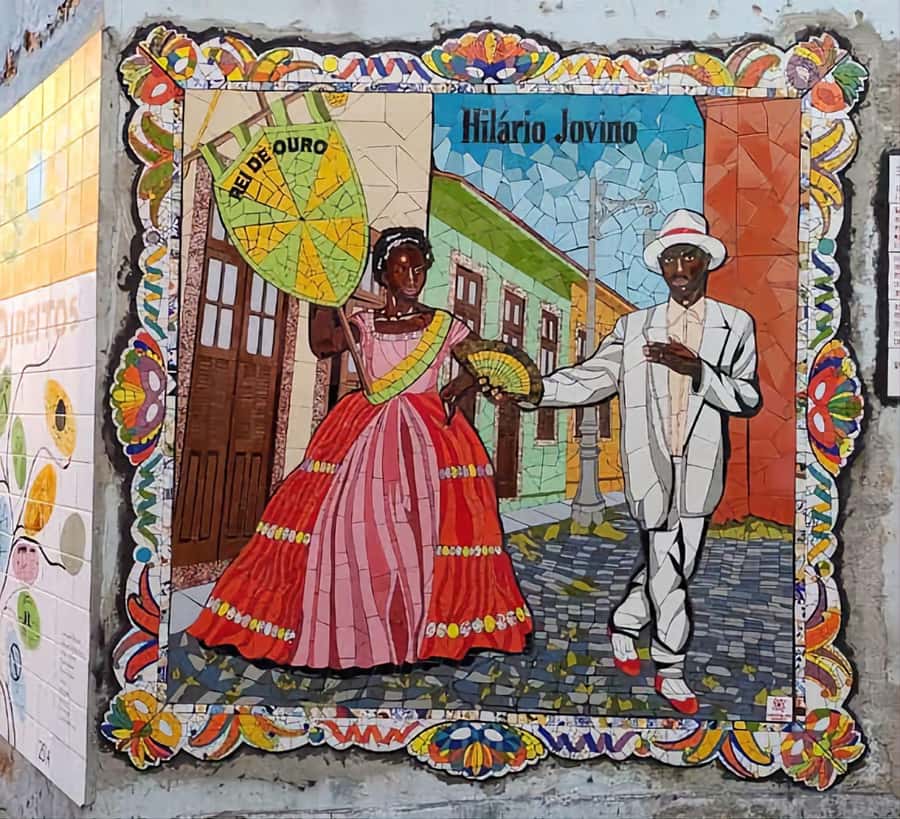
The guided portion in Saúde takes about two hours. You will spend this time walking between historic points, hearing stories about Little Africa, and learning how African culture influenced Rio’s music and religious life.
The route also offers a look at street art, so bring a camera if you like photographing walls, public spaces, and neighborhood details. The supplied information does not promise a fixed list of murals or a specific number of stops, so I would treat the street art as an extra feature rather than the main reason to book.
Wear comfortable clothes and shoes. This is not the evening for stiff sandals or dress shoes. Sun protection is also advised, even though the activity begins at night, since the walk can include time outdoors before the samba gathering gets going.
The meeting point is Largo de São Francisco da Prainha, described as the main square near Pedra do Sal. There is no hotel pickup or drop-off, so you need to make your own way there and return afterward. The evening ends back at Largo de São Francisco da Prainha, which gives you a clear finish point near where you started.
Bruno appears to be a major part of the experience. He is described as friendly, attentive, and lively, with strong Spanish. One person was able to coordinate a booking only an hour before the start, and Bruno handled that communication carefully. That suggests useful flexibility, though I would still avoid leaving a Monday night plan until the last minute if you can help it.
Arriving at Pedra do Sal after the history
After the walking portion, the experience reaches Pedra do Sal. The site is known as the birthplace of samba, and on Monday nights it becomes a street gathering with live music, drumming, dancing, and drinks.
This is the point where the evening changes pace. The first part asks you to listen and think. The second asks you to move. That contrast is one of the best features of the experience.
You are not simply watching a samba performance from a distance. The description emphasizes real street samba, local dancing, and an atmosphere that cannot be recreated in a theater. You may hear live percussion, see people dancing nearby, and find yourself pulled into the rhythm even if you arrived with no dance plans.
The phrase be prepared to dance is good advice. You do not need to be an expert, but you should be comfortable standing, moving, and joining the mood. If you are shy about dancing, you can still enjoy the music and watch the crowd. The evening does not require you to perform.
The gathering is also less controlled than a ticketed show. Street music means changing crowd levels, open-air conditions, and a more informal setting. That is exactly what makes it appealing, but it also means you should not expect a quiet, carefully timed concert.
Other cachaça sessions around Rio De Janeiro:
- Rio: Caipirinha Workshop and Samba Class
★ 4.8 · 113 reviews - Rio Experience: Caipirinha Workshop (2 Caipis) + Funk Class
★ 4.8 · 22 reviews - Rio: Pub Crawl on Cachaça and Samba with Transfer
★ 5.0 · 2 reviews - Paraty: Jungle Waterfalls and Cachaça Distillery Jeep Tour
★ 4.7 · 491 reviews
The caipirinha and the real cost of the evening
The price is $42 per person. For four hours, that is a fair price if you want both a cultural walk and a guided samba night rather than only a drink and a short stop at Pedra do Sal.
The included caipirinha helps the value. It is a small touch, but it gives the evening a clear welcome and lets you try one of Brazil’s classic drinks without paying extra for the first glass. The drink may be prepared in different flavors. Bruno has been praised for caipirinhas such as kiwi, passion fruit, and lime.
You should not treat the complimentary drink as a meal or a full drinks package. Meals are not included, and additional drinks are not listed as included. Plan your budget around the $42 tour price plus whatever you choose to eat or drink during the evening.
There is also an optional Polaroid photo for $20. I would consider it only if you want a physical reminder of the night. It is not needed to enjoy the tour, and the activity already encourages you to bring your own camera.
The reserve-now, pay-later option can help if your Rio schedule is still changing. You can hold a place without paying immediately, and cancellation is allowed up to 24 hours before the activity for a full refund. Those terms reduce the risk of booking a Monday night plan early.
What the guide adds to the experience
A good guide matters here because the evening has two very different sides. You need someone who can explain the historical sites with care, then help you feel comfortable in a lively public music setting.
Bruno is repeatedly described as friendly, attentive, and fun to spend time with. One person called the experience relaxed and unforgettable, while another praised his Spanish and his care in coordinating the meeting. A further comment highlights how well he showed the neighborhood.
The rating is 5 out of 5 from 12 reviews. That is a small sample, so I would not treat it as proof that every evening will feel identical. Still, the praise is consistent in the areas that matter most here: the guide’s attitude, the explanation of culture, and the quality of the Pedra do Sal experience.
Language choice is another practical strength. The tour is offered in English, Spanish, and Portuguese. If you are more comfortable discussing complex historical subjects in Spanish or Portuguese, that can make the first half of the night easier to follow.
The guide’s role is not just to point out buildings. He helps connect the neighborhood, the music, and the people who shaped Rio. That connection is what turns this from a basic nightlife outing into a more meaningful cultural experience.
Who will enjoy this Monday night?
I would recommend this experience to you if you want a social evening with some historical depth. It suits solo visitors, couples, and small groups who like walking, live music, and meeting a city through its neighborhoods.
It is especially useful for a first visit to Rio if you want an introduction to Afro-Brazilian culture without spending a full day in museums. The four-hour format gives you enough time to learn the setting, then enjoy the music without making the entire night about sightseeing.
You should also consider it if you want a local-feeling alternative to a formal samba show. The street setting, live drums, dancing, and informal atmosphere offer something more spontaneous.
This may not suit you if you dislike crowds, standing, dancing, or open-air nightlife. It is also a poor choice if you need step-free access or have difficulty walking for an extended period. The activity specifically excludes wheelchair users and people with mobility impairments.
Families with young children should think carefully, since the event takes place at night and includes a street party. The supplied information does not give a minimum age or child policy, so you would need to confirm that point before booking.
Practical advice for a smoother evening
Arrive at Largo de São Francisco da Prainha ready to walk. Since there is no hotel transfer, give yourself enough time to reach the square and find the guide without rushing.
Choose light, comfortable clothing and reliable walking shoes. You may want to carry only what you need, especially once the music and dancing begin. A camera is welcome for the street art and the evening atmosphere, but the optional Polaroid is the only specified souvenir service.
Bring sun protection for the walking section, even with the 7:30 PM start. Most importantly, arrive with the right expectation: this is a guided cultural walk that ends in a real samba gathering, not a performance designed around a fixed theater schedule.
The evening lasts four hours, and you return to Largo de São Francisco da Prainha. That clear end point is helpful, but hotel drop-off is not provided, so arrange your onward plans yourself.
Should you book Samba Night in Pedra do Sal?
Book it if you want Rio’s music connected to the people and places behind it. The combination of Cais do Valongo, Saúde, Little Africa, and Monday night samba gives you far more context than a quick visit to a music venue.
The strongest reasons to choose it are Bruno’s warm, attentive guiding, the serious discussion of Afro-Brazilian culture, and the chance to hear live samba at Pedra do Sal in its street setting. The free caipirinha is a pleasant bonus, and $42 is reasonable for a four-hour experience that combines guiding and nightlife.
Skip it if you need accessible routes, dislike walking, or want a quiet, seated concert. For everyone else, this is a strong way to spend a Monday night in Rio, especially if you want to understand the rhythm before you dance to it.
FAQ
Where does the samba night begin?
It begins at Largo de São Francisco da Prainha, a main square close to Pedra do Sal.
What time does the experience start?
The experience starts at 7:30 PM.
How long does the activity last?
The activity lasts four hours.
Which places are included?
The experience includes a walking tour of Rio’s Little Africa, a guided visit through Saúde, Cais do Valongo, and Pedra do Sal.
Is a drink included?
Yes. Each person receives one complimentary caipirinha.
Which languages are available?
The live guide is available in English, Spanish, and Portuguese.
Is the activity suitable for wheelchair users?
No. It is not suitable for wheelchair users or people with mobility impairments. Comfortable walking shoes and clothes are advised.
More Evening Experiences in Rio De Janeiro
- Rio de Janeiro: Sunset Sailing Tour
★ 4.8 · 994 reviews - Rio de Janeiro Sunset Sailing Tour with Drinks
★ 5.0 · 947 reviews - Half-Day Tour: Christ the Redeemer, Selarón & Sunset at Sugarloaf
★ 4.5 · 786 reviews - Rio de Janeiro: Sunset Sailboat Tour with Open Bar
★ 4.9 · 785 reviews
Newest reviews from around Rio De Janeiro
- PRIVATE TOUR – Christ the Redeemer and Sugar Loaf★ 4.5 · 9 reviews
- Christ Statue and Sugarloaf Private Tour with a Photographer★ 5.0 · 9 reviews
- Cidade do Samba Behind-the-Scenes Carnival Tour in Rio de Janeiro★ 4.0 · 5 reviews
- Christ the Redeemer Trail x Lage Park★ 5.0 · 7 reviews
- Christ the Redeemer and City Tour★ 5.0 · 20 reviews
- Christ the Redeemer, Selaron Steps and Santa Teresa Half-day Tour★ 4.5 · 15 reviews
- Christ the Redeemer Adventure★ 5.0 · 12 reviews
- Private Tour of Christ the Redeemer in Rio de Janeiro★ 5.0 · 2 reviews
Samba & Carnival Shows, compared.

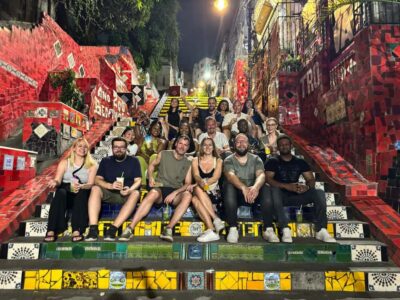
Pub Crawl in Lapa with Cachaça Tasting and Live Samba
Read our review →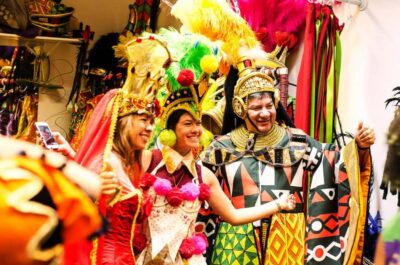
Carnival Backstage Tour at Samba City with Cocktail
Read our review →
Hop-ON Hop-OFF Sightseeing Bus in Rio de Janeiro – Rio Samba Bus
Read our review →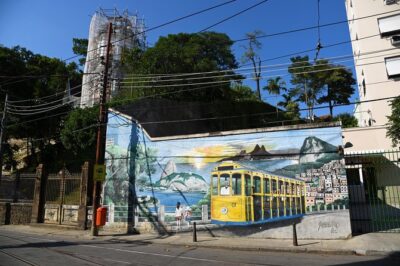
Santa Teresa, Lapa, and Cinelândia with Tram Ride and Selarón Steps
Read our review →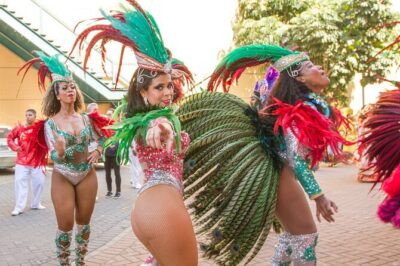
Carnaval Experience: Backstage Tour at Samba City with Cocktail
Read our review →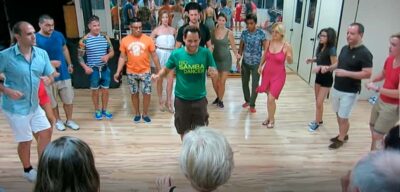

Browse the lists this tour appears in