
Reviewed · SAMBA & CARNIVAL SHOWS
Samba Class in Copacabana
Samba gets you moving fast. This one-hour class in Copacabana gives you a friendly introduction to Brazilian dance without requiring a partner or any previous experience. I like the easy format, which fits neatly between Rio sightseeing stops, and I like the social side, especially for solo visitors who want to meet people without committing to a full evening out. The main consideration is space: classes can feel crowded during late December and Carnival season.
You meet your instructor at a professional studio on the sixth floor of an office building at Avenida Nossa Senhora de Copacabana, 807. The lesson is welcoming, energetic, and aimed at mixed abilities. I also appreciate that the class includes cultural background, not just footwork. Still, the teaching language can vary, and one past class relied heavily on translation by phone.
The experience costs $35 per person, includes bottled water and a local professional guide, and earns a strong 4.7 rating, with 94 percent of participants recommending it. It ends where it begins, making it simple to pair with a day at the beach, a visit to Sugarloaf, or an evening meal in Copacabana.
In This Review
- Key points to know before you book
- Arriving at the sixth-floor Copacabana studio
- The first minutes: introductions, rhythm, and nerves
- Learning real samba in one focused hour
- Carnival costumes and the cultural side of the class
- Group size, studio space, and the best time to go
- Language and teaching style
- Is $35 a fair price in Rio?
- Who will enjoy this Copacabana activity?
- Booking details and useful timing advice
- Should you book the Samba Class in Copacabana?
- FAQ
- Do I need previous dance experience?
- Do I need to bring a dance partner?
- How long does the samba class last?
- Where does the class meet?
- Is the studio accessible by public transportation?
- Are costumes included?
- What is included in the price?
Key points to know before you book
- No partner or dance background required: You can arrive alone, with a friend, or as a couple and still take part.
- A compact one-hour lesson: It is long enough to learn basic steps and short enough to fit into a busy Rio itinerary.
- The class teaches Brazilian samba: You will work on samba steps rather than a generic ballroom version of the dance.
- Daytime costume option: A daytime class may include a chance to try on a Carnival costume.
- Sixth-floor studio location: Look for room 603 inside the mixed office building at Avenida Nossa Senhora de Copacabana, 807.
- Group size can change the feel: The maximum is 50 people, but very small classes are also possible.
Arriving at the sixth-floor Copacabana studio
The meeting point is at Av. Nossa Senhora de Copacabana, 807, room 603, in Copacabana. The address sits on a main road and is near public transportation, so you can reach it by transit or taxi without arranging a private transfer.
The studio is inside a mixed office building, not a large street-level dance venue. Enter through the doorway on the main road and go up to the sixth floor. The room number matters, since the setting can initially feel more like a working office block than a tourism facility. Follow the arrival instructions carefully, and allow a few extra minutes if you are unfamiliar with Brazilian building entrances.
The practical upside is the location. Copacabana is one of Rio’s easiest bases for visitors, with plenty of hotels, restaurants, taxis, and transit links. You do not lose half a day getting to the class. The activity also returns you to the same meeting point, so you can continue your plans from there.
The class provider sends confirmation at booking. The experience is also near public transportation, and most people can participate. Children must be accompanied by an adult. The class may be led by a multilingual instructor, but the exact language support depends on who teaches your session.
More Beach Tours in Rio de Janeiro
- Rio de Janeiro: Beginner Samba Lesson in Ipanema
★ 4.9 · 1,071 reviews - Pedra do Telégrafo Hike and Beach Full-Day Tour
★ 4.5 · 417 reviews - Arraial do Cabo Day Trip from Rio de Janeiro: Boat Tour & Beach
★ 4.5 · 390 reviews
The first minutes: introductions, rhythm, and nerves
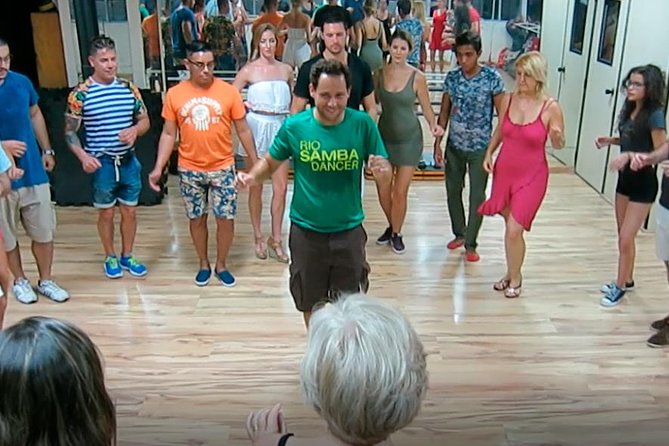
Once inside, you meet the local guide and instructor and get settled in the studio. The tone is informal and social rather than stiff. That matters if you are arriving alone or feel unsure about dancing in front of other people.
The instructors begin with simple movements and build from there. Several instructors are praised for giving clear demonstrations, using counts, and repeating steps until students feel more comfortable. Bem Vind, for example, was especially careful with step-by-step instruction, turns, and movement across the floor. Marcos is praised for his energy, while Carla and Carmen are singled out for making their classes fun and active.
You do not need a dance partner. The group can include solo participants, couples, friends, different ages, and people with very different levels of coordination. The class is designed so you can follow the instructor rather than depend on another person.
That makes it a useful first activity in Rio. You can test the waters without buying special shoes, preparing a routine, or worrying about looking polished. One important comfort detail: a class has been taught barefoot, so you should not assume formal dance footwear is needed. Bring clothing that lets you move easily.
Learning real samba in one focused hour
The main part of the session is a practical introduction to samba. You learn basic steps, rhythm, turns, and changes of direction, with the instructor demonstrating and then giving you a chance to repeat the movement.
This is not a long dance course. One hour gives you a crash course, not mastery. That short format is part of the appeal, but it also sets a fair limit on what you should expect. You may leave able to recognize the basic rhythm and perform a few steps with more confidence. You will not become a Carnival dancer in a single session.
The instructors receive the most praise for their energy and ability to simplify the steps. That combination is important. Samba can feel quick and unfamiliar, but an encouraging teacher keeps the class from becoming a technical exam. Even people who describe themselves as poor dancers have found the steps approachable.
The lesson may also include movement across the floor, forward and backward steps, turns, and repeated practice. If you already have dance training, you may find samba more demanding than the easy opening suggests. One experienced dancer found the rhythm challenging but valued the clear counts and professional instruction.
The class also introduces some samba culture and history. That short context adds meaning to the movements. You are not simply copying a sequence from a video. You get a small window into a dance tied closely to Rio and Brazilian celebration.
Carnival costumes and the cultural side of the class
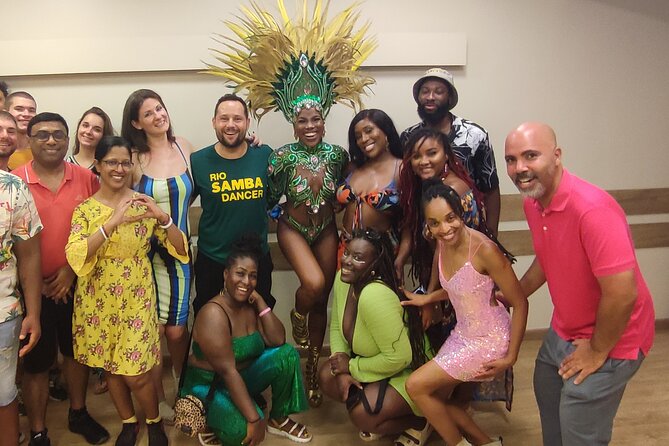
In a daytime session, you may have the chance to try a Carnival costume. This adds a playful Rio touch and gives you a memorable photo opportunity without requiring you to attend a parade or buy a costume yourself.
Some instructors also take photos and videos during the lesson and afterward with flags and samba clothing, then share them with participants. This is associated particularly with Carla’s classes, so treat it as a possible extra rather than a guaranteed feature of every session.
The costume element works best when you see it as part of the fun, not as the core of the class. The real value is learning a few authentic samba movements and hearing about the culture behind them. The costume simply helps connect the lesson to the public image of Carnival that many people associate with Rio.
If you prefer a quiet, technical dance lesson, the photos, costumes, and social energy may feel like a distraction. If you want a light cultural activity with a bit of theater, they add to the experience.
Other samba nights worth staying up for:
- Rio: Pub Crawl in Lapa with Cachaça Tasting and Live Samba
★ 4.7 · 881 reviews - Rio: Carnival Backstage Tour at Samba City with Cocktail
★ 4.6 · 520 reviews - Hop-ON Hop-OFF Sightseeing Bus in Rio de Janeiro – Rio Samba Bus
★ 3.5 · 457 reviews - Santa Teresa, Lapa, and Cinelândia with Tram Ride and Selarón Steps
★ 4.5 · 274 reviews
Group size, studio space, and the best time to go
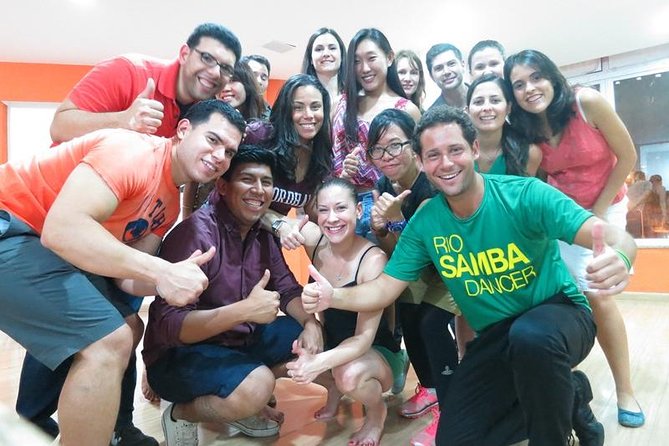
The activity allows a maximum of 50 participants, but the actual class can be much smaller. One session had only one student, which allowed the instructor to use the whole room and adjust every step to the student’s ability. Another class had only a few people and felt more like a private lesson than a party.
That variation is worth understanding before you book. A small class is excellent if you want close instruction and repeated practice. It is less suitable if you expect a large social gathering with lots of people dancing around you.
Crowding is the main practical weakness. During late December, one class became too packed for some participants to see the instructor clearly, even after moving to a larger space. The provider has said it plans to use a bigger studio during the end-of-year and Carnival period, while classes during the rest of the year generally run more comfortably.
If group atmosphere matters to you, ask how many people are booked before you arrive. If you want personal attention, a quieter date may be a plus. If you want a party-like setting, a larger class could be more appealing, though too many participants can make the movements harder to follow.
Language and teaching style
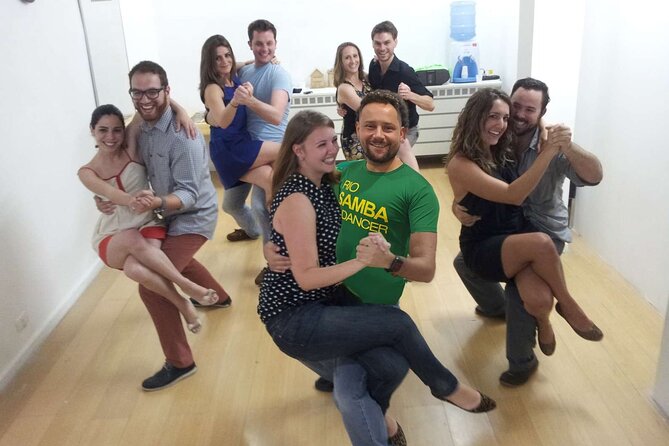
The class may be operated by a multilingual guide, but English ability is not guaranteed for every instructor. Most of the lesson is visual, so demonstrations and repetition carry much of the instruction. Still, language matters when you are learning rhythm, foot placement, and body movement.
One past participant enjoyed the instructor’s energy but found that about a third of the class involved typing instructions into a translation tool. That is a fair concern, especially for anyone who wants detailed technical feedback.
At the same time, other classes have received praise for clear explanations, counted steps, and attentive correction. The experience can depend heavily on the instructor assigned that day. If language support is important to you, contact the provider before booking and ask whether an English-speaking instructor is available for your date.
The best instructors appear to combine humor, demonstration, and repetition. That is exactly what a beginner needs. You should not feel embarrassed if you miss a step. The format is built around trying again.
Is $35 a fair price in Rio?
At $35 per person, this is not the cheapest way to spend an hour in Rio, but it offers more than a basic drop-in dance lesson. The fee includes bottled water, a local professional guide, and a host or escort. You also get a central Copacabana location and a cultural introduction that is easy to fit into your schedule.
The value is strongest for three types of people. Solo visitors get a ready-made social activity. Couples get something more active than another meal or viewpoint. First-time visitors get a low-risk way to connect with Brazilian culture without spending an entire evening at a samba show.
The value is weaker if you already take samba classes regularly or want a long, technical workshop. In that case, one hour may feel too short. It can also feel less worthwhile if your only goal is to watch professional dancers rather than participate.
You will need to pay for your own transportation to and from attractions. The studio itself is accessible by taxi and public transit, but transport is not included. Since the class ends at the starting point, you can control the rest of your day and avoid being tied to a fixed sightseeing route.
Who will enjoy this Copacabana activity?
I would recommend this class to:
- Solo visitors who want an easy way to meet people
- Couples looking for a playful shared activity
- Beginners who feel nervous about dance
- Families with older children, provided an adult accompanies each child
- Visitors with a free hour between major Rio sights
- Anyone curious about samba culture but not ready for an all-night dance event
You may want to skip it if you dislike group instruction, do not want to participate physically, or expect a polished Carnival performance. This is a hands-on class. You are there to move, repeat, laugh at missed steps, and try again.
It also suits people who want a taste rather than a commitment. The one-hour length is a strength for most sightseeing schedules. If you enjoy the experience, you can look for a longer dance course or a samba event later in your trip.
Booking details and useful timing advice
Confirmation is received at the time of booking. Free cancellation is available if you cancel at least 24 hours before the local start time. Changes or cancellations inside that window are not accepted for a refund.
The experience requires a minimum number of participants. If that minimum is not reached and the class is canceled, you will be offered another date or experience, or a full refund.
The activity is often booked about 13 days ahead, so reserving before your trip is sensible if your Rio schedule is tight. I would also avoid placing the class immediately before a major timed attraction. Rio traffic and building navigation can take longer than expected, and you will enjoy the lesson more if you are not watching the clock.
Bring water if you prefer more than the provided bottle, wear comfortable clothes, and check the confirmation for the building directions. For a daytime class, ask whether the Carnival costume option is available on your date.
Should you book the Samba Class in Copacabana?
Yes, if you want a friendly, affordable introduction to Brazilian samba and are willing to participate. The strongest parts are the enthusiastic instructors, beginner-friendly steps, social format, central location, and cultural context. At 4.7 out of 5 and 94 percent recommended, it has a strong track record.
Book with realistic expectations. Class size can vary, language support is not always consistent, and the one-hour lesson is a quick introduction rather than a full course. Ask about the expected group size and instructor language if those details matter to you.
For most visitors, this is a smart little addition to a Rio itinerary. You get moving, learn something tied to the city, and leave with a few samba steps that may make your next Brazilian evening more fun.
FAQ
Do I need previous dance experience?
No. The class is designed for beginners and can be adapted to different ability levels. You learn simple steps through demonstration and repetition.
Do I need to bring a dance partner?
No. You can attend alone, with friends, or as a couple. A partner is not required.
How long does the samba class last?
The class lasts approximately one hour. One past session was reported as about 45 minutes, so the exact teaching time may vary.
Where does the class meet?
You meet at Av. Nossa Senhora de Copacabana, 807, room 603, in Copacabana, Rio de Janeiro. The studio is on the sixth floor of a mixed office building.
Is the studio accessible by public transportation?
Yes. The studio is near public transportation and can also be reached by taxi.
Are costumes included?
In a daytime samba class, you may be able to try a Carnival costume. Photos and videos with costumes and flags may also be offered by some instructors, but this is not stated as a guaranteed part of every class.
What is included in the price?
The price includes bottled water, a local guide, a professional guide, and a tour escort or host. Transportation to and from attractions is not included.
More Workshops in Rio de Janeiro
- Rio de Janeiro: Samba Class in Copacabana
★ 4.6 · 262 reviews - samba class in Ipanema
★ 5.0 · 182 reviews - Samba Class and Samba Night Club Tour in Rio
★ 5.0 · 177 reviews - Brazilian BBQ Class in Rio (3.5h): 10 Recipes & Bottomless Drinks
★ 5.0 · 118 reviews
Newest reviews from around Rio de Janeiro
- Hang gliding flight in Rio de Janeiro★ 5.0 · 6 reviews
- Rio de Janeiro: Zip Lining and Canopy Tree Tour★ 3.3 · 6 reviews
- Vidigal Favela Tour★ 4.4 · 26 reviews
- Rio de Janeiro: Attend a Vasco da Gama game with local guide★ 4.8 · 9 reviews
- Unforgettable Boat Party★ 5.0 · 3 reviews
- Parapente Rio de Janeiro★ 5.0 · 4 reviews
- Rio de Janeiro Private Tour with Cruise Terminal Pick-up★ 5.0 · 2 reviews
- Wild Waters: Rio Whitewater Rafting Adventure Tour★ 5.0 · 13 reviews
Samba & Carnival Shows, compared.


Pub Crawl in Lapa with Cachaça Tasting and Live Samba
Read our review →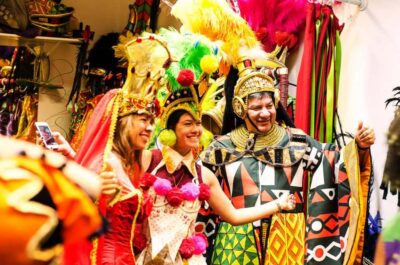
Carnival Backstage Tour at Samba City with Cocktail
Read our review →
Hop-ON Hop-OFF Sightseeing Bus in Rio de Janeiro – Rio Samba Bus
Read our review →
Santa Teresa, Lapa, and Cinelândia with Tram Ride and Selarón Steps
Read our review →
Carnaval Experience: Backstage Tour at Samba City with Cocktail
Read our review →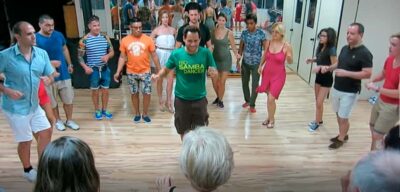

Browse the lists this tour appears in