

Reviewed · SAMBA & CARNIVAL SHOWS
Rio Samba Bus: hop-on hop-off city tour in Rio de Janeiro
Rio is best seen in motion. The Rio Samba Bus links Copacabana, Sugarloaf Mountain, downtown, Lapa, and Christ the Redeemer in one guided route, with music and open-air views along the way. I like the wide city coverage and the chance to ride past famous sights before deciding where to stop. I also like that local guides provide live commentary in Portuguese, English, and Spanish. The main concern is reliability: buses may arrive later than the posted schedule, making a true hop-on hop-off day harder to manage.
The advertised fare is $31 per person, and the experience is described as a one-day pass, although the full circuit itself takes about two hours. You get Wi-Fi and musical performances, but attraction tickets, food, drinks, hotel transport, and cable car or train rides are extra. If you treat the bus first as a guided orientation tour, rather than a precise public transport service, you are more likely to enjoy it.
In This Review
- Key points to know before you ride
- What the Rio Samba Bus really offers
- Copacabana gives you the right opening view
- Sugarloaf Mountain is the biggest optional upgrade
- Flamengo connects beach scenery with open parkland
- Downtown Rio packs history into a small area
- The port area adds modern attractions and big event spaces
- Christ the Redeemer requires separate planning
- The return route shows Rio’s quieter South Zone
- Music adds local character, but keep expectations flexible
- Is $31 a fair price?
- How to handle the schedule and boarding points
- Who should book the Rio Samba Bus?
- Should you book it?
- FAQ
- How long does the Rio Samba Bus tour last?
- How much does the Rio Samba Bus cost?
- Does the bus ticket include Christ the Redeemer?
- Does the ticket include the Sugarloaf cable car?
- What languages are available on the bus?
- Does the bus have Wi-Fi and air conditioning?
- Where does the Rio Samba Bus stop?
Key points to know before you ride

- Start in Copacabana: The route begins near Shopping Cassino Atlântico and runs along several beach stops before heading west toward Sugarloaf.
- See Rio’s major sights in one circuit: The bus covers Copacabana, Urca, Flamengo, downtown, Lapa, the port area, Corcovado, Lagoa, and Ipanema.
- Expect a long sightseeing loop: The route list is numbered from 1 to 26, while the activity description refers to 24 stops, so confirm the current stop map before setting your plans.
- Attractions cost extra: Sugarloaf cable cars and the Corcovado train to Christ the Redeemer are not included in the bus fare.
- Music is part of the promise: MPB, samba, and other Brazilian rhythms are planned onboard, though this feature may not operate on every departure.
- Best for first-day orientation: The bus gives you a useful overview, but delayed arrivals and poorly marked stops can make tight sightseeing schedules frustrating.
What the Rio Samba Bus really offers
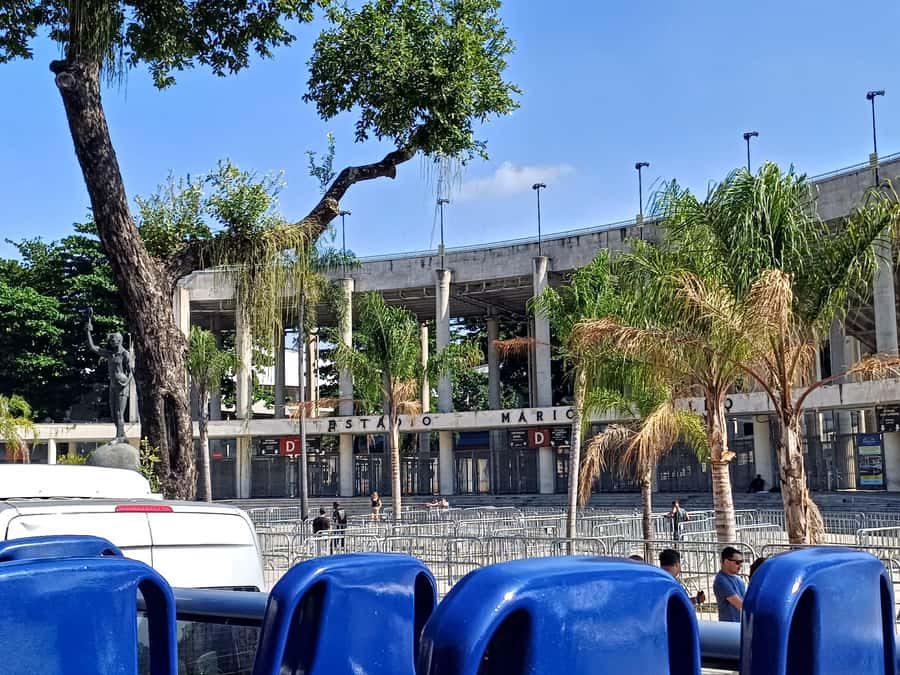
This is a sightseeing circuit through Rio’s South Zone and central districts, not simply a ride between two attractions. From the upper deck, you can connect the city’s postcard views with its cultural landmarks, waterfront parks, historic squares, and major visitor sites.
The bus begins in Copacabana and travels toward Sugarloaf Mountain before crossing through Flamengo and central Rio. It then returns through the Corcovado area and Lagoa, finishing around Ipanema. That broad route is the experience’s biggest strength. You get a quick sense of how Rio’s beaches, mountains, colonial center, and modern districts fit together.
The bus is described as panoramic, with both open and enclosed vehicles in service. The enclosed buses have air conditioning, while the open buses give you a better view for photographs. If you are riding on a hot or rainy day, the enclosed option may be more comfortable. On a clear day, I would choose the open upper deck if available.
The operator describes the ride as lasting two hours, but the hop-on hop-off format changes the time you need. A ride without leaving the bus may fit that estimate. If you stop at Sugarloaf, Lapa, Christ the Redeemer, or another attraction, you will need much longer, and your schedule will depend on the next bus.
More City Tours in Rio de Janeiro
- Rio’s City Tour – Tickets for Christ, Sugar Loaf & Lunch included
★ 5.0 · 4,389 reviews - Full Day: Christ Redeemer, Sugarloaf, City Tour & Barbecue Lunch
★ 4.5 · 3,142 reviews - A Day in Rio – City Tour
★ 4.5 · 1,128 reviews
Copacabana gives you the right opening view
The first section follows Copacabana Beach, with stops near Posts 5, 4, 3, and 2, plus a stop near the Hilton Hotel. This is a good introduction to Rio because the beach is more than a strip of sand. The promenade, oceanfront road, apartment buildings, and mountains behind the city all appear in one sweeping view.
I would use the opening stretch to get your bearings rather than hop off immediately. The beach stops are close enough in character that you may get more value by staying onboard, listening to the commentary, and saving your walking time for a major attraction.
The first departure is listed at 9:15 a.m., followed by departures at roughly 45-minute intervals through the afternoon, with later departures at 4:15 and 5:15 p.m. The schedule looks generous on paper, but an actual bus can run behind time. Arrive at your chosen stop early, and do not build a demanding chain of timed tickets around the published minutes.
Sugarloaf Mountain is the biggest optional upgrade

The route continues to Rio Sul Shopping Mall and the Sugarloaf Cable Car Park. This is one of the most useful stops because the bus gets you close to one of Rio’s signature attractions without requiring you to arrange a separate sightseeing transfer.
The bus fare does not include the cable car. You must buy that ticket separately if you want to ride up to Morro da Urca and continue toward Sugarloaf Mountain. The cable car stop is worth considering because it changes the view completely. From the heights, you can look back toward Copacabana, the waterfront, and the city’s mountain setting.
Allow more time than the two-hour ride length suggests. Queues, cable car boarding, photography, and the return to the bus stop can easily turn this into a major part of your day. If you only want a photo of Sugarloaf, staying on the bus can work. If you want the full mountaintop visit, think of the bus as your transportation link, not the attraction itself.
Flamengo connects beach scenery with open parkland
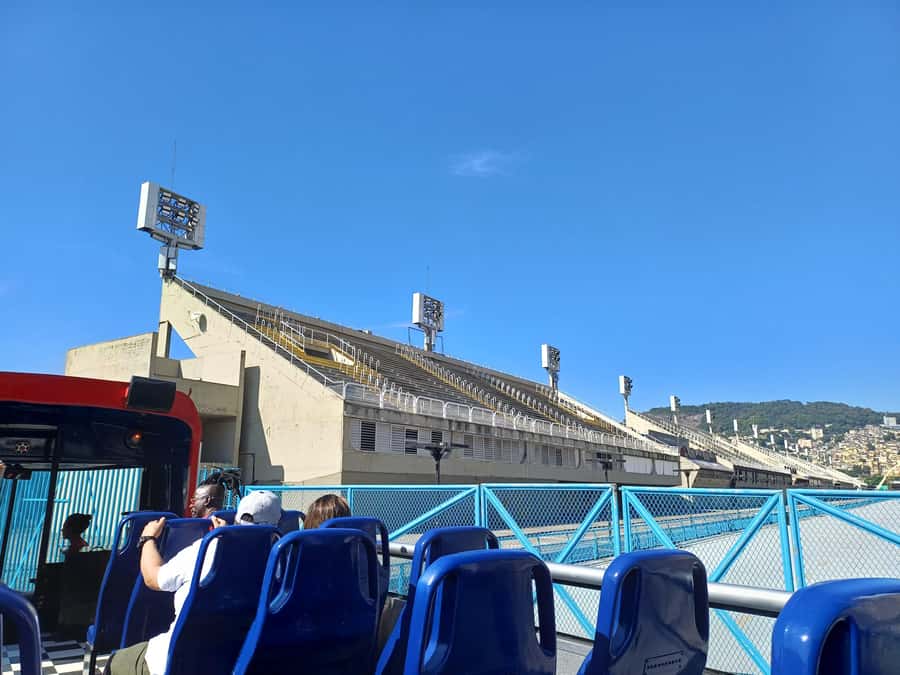
After Urca and Sugarloaf, the route heads past Aterro do Flamengo. This broad waterfront park gives you a different view of Rio from Copacabana. Instead of a dense beach neighborhood, you see open public space, the bay, and long views toward the city and mountains.
The Flamengo section is especially useful from the upper deck. The driver may slow down or pause briefly so people can take photographs, which helps when the bus is moving through scenic stretches. Still, a slow pass is not the same as a stop with plenty of time, so keep your camera ready and avoid assuming you can explore every point on foot.
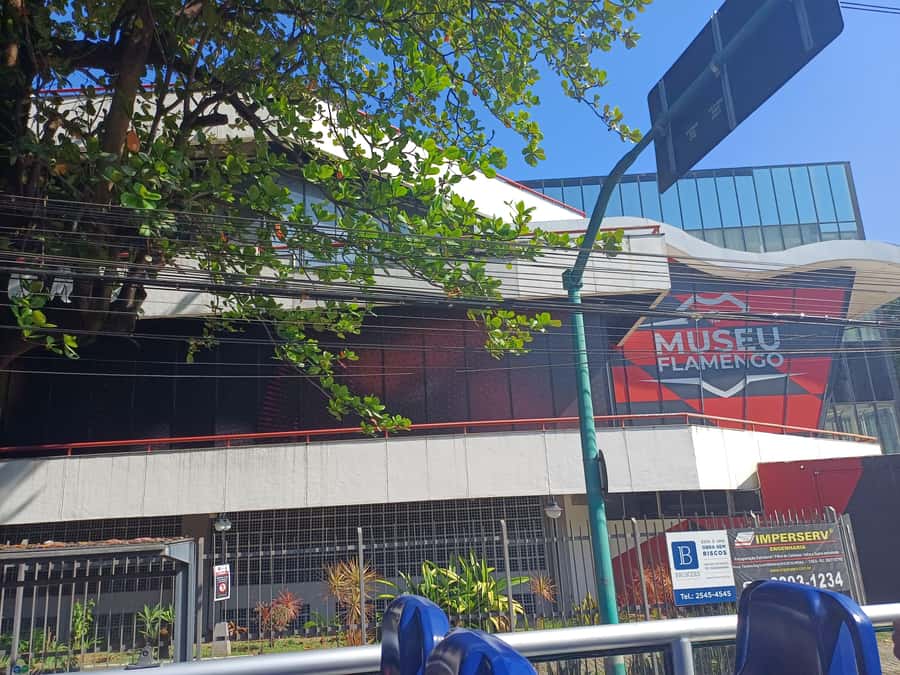
The Flamengo Museum is listed on the return route. The stop can appeal to people who want a cultural pause rather than another beach view, but admission is not included. Check the bus timing before getting off, since waiting for a later vehicle may take longer than expected.
Other samba nights worth staying up for:
- Rio de Janeiro: Beginner Samba Lesson in Ipanema
★ 4.9 · 1,071 reviews - Rio: Pub Crawl in Lapa with Cachaça Tasting and Live Samba
★ 4.7 · 881 reviews - Rio: Carnival Backstage Tour at Samba City with Cocktail
★ 4.6 · 520 reviews - Hop-ON Hop-OFF Sightseeing Bus in Rio de Janeiro – Rio Samba Bus
★ 3.5 · 457 reviews
Downtown Rio packs history into a small area

The central section is the strongest part of the tour for anyone who wants more than scenery. The route passes Cinelândia, home to the Municipal Theatre, the Museum of Fine Arts, and the National Library. This is Rio’s main monumental civic area, where grand public buildings sit close together.
From there, the bus heads toward Lapa. The Arcos da Lapa, or Lapa Arches, are among the city’s most recognizable urban landmarks. Nearby, the Selarón Steps bring bright ceramic artwork into the route. These are good places to hop off because they offer a clear change from the waterfront and do not depend on a cable car or mountain railway.
The central route also includes the Metropolitan Cathedral, Paço Imperial, and Candelária Church. Each stop gives you a different piece of Rio’s cultural and architectural story. You may not have time to enter every building, but the bus helps you identify which ones deserve a closer visit later.
A practical warning: some stops may be small or hard to identify. One useful map is not always enough to find the correct boarding point if you did not get off there first. Before leaving the bus, look carefully at the stop location, take a screenshot of the map, and ask the guide where you should wait for the return bus.
The port area adds modern attractions and big event spaces
The route includes the Aquarium and Yup Star Rio, as well as the Sambadrome on the return side. AquaRio offers a family-friendly stop, while Yup Star is a large observation wheel with views over the port area. Their entrance fees are separate from the bus fare.
The route also lists Maracanã, but the exact service can vary. One rider specifically found that the bus did not pass the stadium, so I would not buy a separate Maracanã ticket or arrange a timed visit based only on its appearance on the stop list. Confirm the current route with the operator before making it a central part of your day.
The Sambadrome is particularly meaningful during Carnival season, but it is also an interesting piece of Rio’s event culture at other times. From the bus, you get an overview rather than a full visit. That is fine if you are collecting landmarks, but not enough if you want a detailed stadium or museum experience.
Christ the Redeemer requires separate planning

The Corcovado Train stop is one of the most important points on the entire circuit. The bus takes you toward the railway used to reach Christ the Redeemer, but the train ticket and the entrance to the monument are not included.
The train travels through Tijuca Forest and climbs toward the summit, where the Christ statue overlooks Rio. This is not a quick roadside photo stop. You need time for boarding, the train ride, the viewing area, and the return to the bus.
I would not attempt to combine Christ the Redeemer, Sugarloaf, downtown walking, and several beach stops in one tightly timed afternoon. The bus can connect these places, but the attraction visits require their own time. For many people, Christ the Redeemer deserves a dedicated block of the day, with the Rio Samba Bus used either before or after it.
The Corcovado stop also shows why schedule uncertainty matters. If the bus is late on the way to the railway, you may miss a planned departure or wait longer than expected. Keep your attraction plans flexible, especially if you are traveling during a busy period.
The return route shows Rio’s quieter South Zone

After Corcovado, the bus returns through Largo do Boticário and Lage Park. These stops offer a change from the best-known city icons. Largo do Boticário is a small historic square, while Lage Park is known as a scenic cultural stop near the base of Corcovado.
The route then reaches Lagoa Skating Park and the Lagoa district. The lagoon gives you another broad city view, with water, hills, and residential neighborhoods replacing the tight streets of downtown.
From there, the bus heads toward Rua Garcia Dávila, described as a gastronomic center, and then Ipanema Beach at Posts 9 and 8. Ipanema is a natural place to finish because it returns you to Rio’s beach culture, restaurants, and walking routes.
If you are staying near Ipanema, these final stops may be more convenient than returning to Copacabana. If you are using the bus to get back to your hotel, confirm the final departure time. The service may not function like a city bus with exact, frequent arrivals at every point.
Music adds local character, but keep expectations flexible

The Rio Samba Bus includes live musical performances and promises MPB, samba, and other Brazilian rhythms during the ride. This is a nice idea. A soundtrack tied to Rio’s musical culture can make a long city circuit feel less like a checklist of monuments.
The music program is not guaranteed on every departure. A recent ride had no musical performance at all, so I would treat it as a welcome extra rather than the main reason to book. The live guide commentary is the more dependable part of the cultural program, and it is offered in Portuguese, English, and Spanish.
The musical element works best when you are staying onboard for a full circuit. If you hop off repeatedly, you may miss the performance or find that the next bus has a different onboard setup.
Is $31 a fair price?
At $31 per person, the tour can be good value if you want a broad introduction to Rio and plan to ride past many districts in one day. You get the bus, multilingual commentary, Wi-Fi, and the chance to reach areas that would otherwise require several separate taxi or rideshare trips.
The price is less attractive if you plan to visit only one attraction. Since Sugarloaf, Christ the Redeemer, museums, the aquarium, and other sites charge separate admission, the total cost can rise quickly. The bus also does not include hotel pickup, food, drinks, or attraction transfers.
I see the best value in the first day of a Rio visit. Ride the full circuit if possible, note the places that interest you, and return later to the most important ones. That approach avoids spending the whole day waiting for buses between short stops.
How to handle the schedule and boarding points
The listed departures begin at 9:15 a.m. and continue through 5:15 p.m. The first bus is the safest choice if you want to cover a lot of ground, but you should still expect the entire day to require patience once you start getting off.
The route information presents 24 stops, while the detailed stop list runs from 1 to 26. Treat the current map and the guide’s instructions as more useful than the printed total. This matters because the difference may reflect route changes, grouped stops, or updated service.
The biggest practical issue is finding the stop after you leave the bus. Some boarding points may not have clear signs, and a small map can be difficult to use in an unfamiliar neighborhood. Before getting off, ask exactly where to wait and take a photo of the surrounding street corner.
Rain can also change the experience. Much of the appeal comes from open views of the coast and mountains, so a wet day may reduce the pleasure, particularly if the open bus is unavailable. The enclosed, air-conditioned buses provide a useful backup, but they cannot replace clear weather at the lookout points.
Who should book the Rio Samba Bus?
I would recommend this tour to first-time visitors who want a city overview, families who prefer sightseeing from one vehicle, and anyone who wants to compare Rio’s beaches, center, port, and South Zone before choosing where to spend more time.
It also suits you if you are comfortable with an informal pace and can accept that the next bus may not arrive exactly when promised. The experience is less suitable for a traveler with fixed timed tickets, limited hours, or a plan to visit several attractions in one day.
Should you book it?
Book the Rio Samba Bus if your priority is seeing a lot of Rio with live commentary, scenic views, and minimal transport planning. The ride is particularly useful as an orientation circuit, and the Copacabana, Flamengo, Sugarloaf, downtown, and Ipanema sections give you a strong first look at the city.
Skip it if you need exact departure times or want a fully packaged visit to Christ the Redeemer and Sugarloaf. In that case, arrange those attractions separately and use the bus only if you have spare time. For the best result, start early, stay flexible, confirm the stop map, and regard the music and open-top seating as bonuses rather than guarantees.
FAQ
How long does the Rio Samba Bus tour last?
The activity lists a duration of two hours. That refers to the sightseeing ride itself. If you get off at attractions and wait for later buses, your total day will be much longer.
How much does the Rio Samba Bus cost?
The listed price is $31 per person. Attraction tickets, food, drinks, and transportation to and from your hotel are not included.
Does the bus ticket include Christ the Redeemer?
No. The bus takes you to the Corcovado Train stop, but the train ride and attraction tickets are separate.
Does the ticket include the Sugarloaf cable car?
No. The route stops at the Sugarloaf Cable Car Park, but the cable car ticket is not included.
What languages are available on the bus?
Live guide commentary is offered in Portuguese, English, and Spanish.
Does the bus have Wi-Fi and air conditioning?
Free Wi-Fi is included. Some buses are enclosed and air-conditioned, while others are open so you can enjoy clearer city views.
Where does the Rio Samba Bus stop?
The route begins near Shopping Cassino Atlântico in Copacabana and includes beach stops, Sugarloaf, downtown landmarks, Lapa, the port area, Corcovado, Flamengo, Lagoa, Garcia Dávila, and Ipanema. The detailed stop list should be checked before boarding because the advertised stop count and numbered route list do not match exactly.
Newest reviews from around Rio De Janeiro
- PRIVATE TOUR – Christ the Redeemer and Sugar Loaf★ 4.5 · 9 reviews
- Christ Statue and Sugarloaf Private Tour with a Photographer★ 5.0 · 9 reviews
- Cidade do Samba Behind-the-Scenes Carnival Tour in Rio de Janeiro★ 4.0 · 5 reviews
- Christ the Redeemer Trail x Lage Park★ 5.0 · 7 reviews
- Christ the Redeemer and City Tour★ 5.0 · 20 reviews
- Christ the Redeemer Adventure★ 5.0 · 12 reviews
- Private Tour of Christ the Redeemer in Rio de Janeiro★ 5.0 · 2 reviews
- Christ the Redeemer, Selaron Steps and Santa Teresa Half-day Tour★ 4.5 · 15 reviews
Samba & Carnival Shows, compared.


Pub Crawl in Lapa with Cachaça Tasting and Live Samba
Read our review →
Carnival Backstage Tour at Samba City with Cocktail
Read our review →
Hop-ON Hop-OFF Sightseeing Bus in Rio de Janeiro – Rio Samba Bus
Read our review →
Santa Teresa, Lapa, and Cinelândia with Tram Ride and Selarón Steps
Read our review →
Carnaval Experience: Backstage Tour at Samba City with Cocktail
Read our review →

Browse the lists this tour appears in