

Reviewed · SAMBA & CARNIVAL SHOWS
Rio Carnival Experience at Backstage of Carnaval Factory (Pick-up included)
Carnival’s real work happens before the parade. This three-hour visit takes you behind the doors of Rio’s Cidade do Samba, where costumes are made, floats are prepared, and samba schools turn months of labor into one spectacular night. I like the behind-the-scenes access and the chance to try on genuine carnival costumes, but you should allow for some waiting before the guided portion begins.
Hotel, airport, or port pickup within Rio makes the outing easy, especially if you are staying outside the central area. The experience also includes a samba lesson, a caipirinha, and a private guide. Just keep your expectations sensible: this is an educational backstage visit with hands-on fun, not a full Carnival parade or a lengthy stage show.
In This Review
- Key Points to Know Before You Go
- Why Cidade do Samba Matters
- Hotel Pickup Makes the Visit Simple
- Entering the Carnival Workshops
- The Exhibition Hall and a Century of Samba
- Trying on Costumes and Taking Photographs
- A Short Samba Class With a Professional Dancer
- Ending With a Caipirinha
- Is the $128 Price Good Value?
- Who Will Enjoy This Most?
- Practical Details for a Smooth Visit
- Should You Book the Rio Carnival Factory Experience?
- FAQ
- How long does the Rio Carnival Factory Experience last?
- Is hotel pickup included?
- What is included in the price?
- Can I try on Carnival costumes?
- Is a samba lesson included?
- What happens if I need to cancel?
Key Points to Know Before You Go
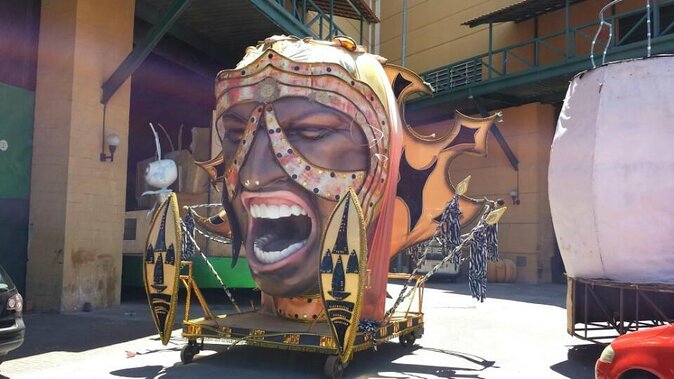
- See the working side of Carnival: Visit costume and float areas at Cidade do Samba, including pieces from past parades and work connected with Acadêmicos da Grande Rio.
- Try on parade costumes: A dressing-room stop gives you time to put on carnival outfits and take photographs.
- Learn samba from a professional dancer: The short class turns the visit from a museum-style tour into a lively group activity.
- Finish with a caipirinha: The traditional Brazilian drink is included at the end of the visit.
- Enjoy door-to-door transport: Pickup and drop-off are included from hotels, airports, and ports within Rio de Janeiro City.
- Plan ahead: The tour is often reserved about 89 days in advance, and groups can reach 15 people.
Why Cidade do Samba Matters
Rio Carnival can look spontaneous from the street: feathers, drums, glitter, and dancers moving as one. Behind that spectacle is a careful system of samba schools, workshops, costume makers, designers, builders, and performers. Cidade do Samba gives you a look at that working process.
This is not simply a place where costumes are stored. It is tied to the samba-school tradition that produces the major parade entries at the Marquês de Sapucaí sambadrome. The tour helps you understand that Carnival is a competition as much as a party. Each school prepares an artistic theme, costumes, floats, music, and choreography for a formal parade judged on several elements.
I find that context valuable because the parade itself moves too quickly for you to notice much of the craft. A float may pass in seconds, while a costume can take months of planning and construction. At the factory, you have time to look closely at the details and understand how much labor hides behind the feathers and sequins.
The visit is connected with Acadêmicos da Grande Rio, one of the samba schools represented at the site. The exact workshop activity can vary, but you may see floats in different states of use or preparation, along with costumes from earlier events. That slightly unfinished look is part of the appeal. You are seeing the machinery of Carnival, not a polished theme-park display.
Other samba nights worth staying up for:
- Rio de Janeiro: Beginner Samba Lesson in Ipanema
★ 4.9 · 1,071 reviews - Rio: Pub Crawl in Lapa with Cachaça Tasting and Live Samba
★ 4.7 · 881 reviews - Rio: Carnival Backstage Tour at Samba City with Cocktail
★ 4.6 · 520 reviews
Hotel Pickup Makes the Visit Simple
The experience begins with pickup at your hotel, airport, or port within Rio de Janeiro City. Transport is provided in a fully equipped vehicle, and drop-off is included as well. For groups larger than four, a private driver accompanies the guide. For smaller groups, the guide may drive the vehicle personally.
That arrangement is useful in Rio, where getting from a hotel to an unfamiliar industrial or event area can take extra planning. You do not need to arrange a taxi to Cidade do Samba or work out the return journey after a caipirinha. The pickup also makes this a practical choice for a first day in the city, provided your arrival schedule leaves enough time.
The total experience lasts about three to three and a half hours. The exact length can depend on driving time and how the visit unfolds. The guided portion described at Cidade do Samba includes about 45 minutes in the backstage area and another 45 minutes in the exhibition and costume areas, with transport and transitions filling out the rest.
Pickups are limited to Rio de Janeiro City. If you are staying outside the city, confirm the meeting point before booking. The experience is capped at 15 people, which keeps it smaller than a major Carnival event but does not guarantee a private tour for every booking.
Entering the Carnival Workshops

The first part of the visit takes you into areas that ordinary parade spectators do not see. The focus is on how the costumes and floats are made, stored, and prepared.
Costumes are the easiest place to appreciate the work. Carnival clothing is not just decorative fabric. It must be eye-catching from a distance, strong enough for movement, and suited to the school’s larger theme. The tour gives you a chance to study the construction and decoration at close range.
The float area offers a different lesson. At the sambadrome, you see the final result moving under lights and music. Here, you may see large parade structures in less polished condition, including floats from a previous year. That contrast helps you understand that Carnival is a year-round project rather than a one-week celebration.
One especially useful part of the visit is seeing floats in disarray while new work is being planned. It may sound less glamorous, but it is more revealing than viewing only finished pieces. You see that the spectacle is built, dismantled, reused, and reworked. The workshop is where the fantasy meets practical labor.
Your guide explains what you are seeing and places the objects within the larger Carnival tradition. Guide quality matters here. Antonio received especially warm praise for being attentive and helpful throughout the visit, while Leandro was singled out for making the costume and parade process easy to understand. The guide’s ability to explain the work can make the difference between a quick look at large objects and a useful lesson in Brazilian culture.
The Exhibition Hall and a Century of Samba
After the workshop areas, the tour moves into an exhibition hall focused on samba and Rio Carnival. This section provides the cultural background that the costume and float displays need.
Rio’s Carioca Carnival has been celebrated for more than a century. The exhibition helps explain how samba schools developed and why their parades carry such emotional weight. You will learn that a samba school is not simply a dance club. It is a community with performers, musicians, designers, builders, costume makers, and supporters working toward a shared presentation.
The display also helps explain the unity surrounding Carnival. For many people in Rio, the event is tied to identity, neighborhood, music, family, and community life. Calling it only a party misses the point. The parade is entertainment, but it is also a major cultural expression with serious preparation and competition behind it.
Video footage of Carnival is included in the visit. This is helpful because the workshop itself may be quiet and unfinished, while the footage shows how the same costumes and floats look once they are combined with music, dancers, lighting, and a full parade audience.
I would pay attention to the sequence here. First, you see the physical work. Then you learn the social and historical setting. Finally, you get a chance to participate. That order gives the activities more meaning than simply putting on a costume and posing for photographs without context.
A few more Rio de Janeiro days to weigh up
- Rio de Janeiro: 6-Stop Highlights of Rio with Lunch
★ 4.4 · 5,157 reviews - Christ the Redeemer Entry Ticket by Corcovado Train
★ 4.4 · 4,476 reviews - Rio’s City Tour – Tickets for Christ, Sugar Loaf & Lunch included
★ 5.0 · 4,389 reviews - Full Day: Christ Redeemer, Sugarloaf, City Tour & Barbecue Lunch
★ 4.5 · 3,142 reviews
Trying on Costumes and Taking Photographs
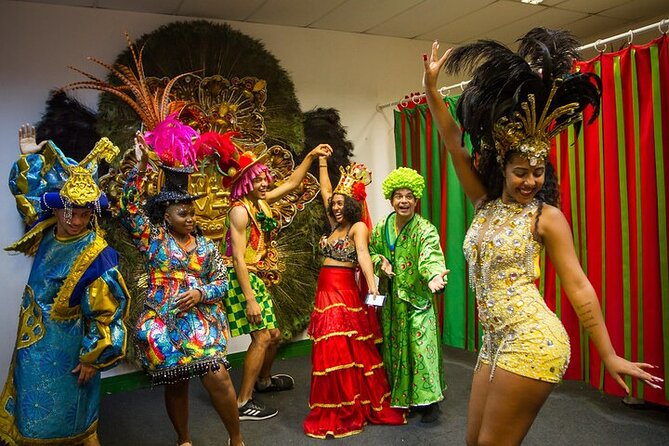
The dressing-room visit is the most playful part of the experience. You can try on some of Rio’s Carnival costumes and take photographs.
This is not a full performer’s wardrobe fitting, and the available costumes can vary. Still, the opportunity adds something you cannot get from viewing floats behind a barrier. You feel the weight, scale, and visual drama of the clothing. You also gain a better sense of how costumes are meant to read during a fast-moving parade.
For families, first-time visitors, and anyone who enjoys design, this is likely to be a highlight. It also gives you a natural break after the explanatory parts of the visit. The activity is lighthearted, but it remains connected to the larger lesson about how samba schools create a unified visual theme.
Photography is clearly part of the appeal, so have your phone ready. The experience provides costumes to wear and photograph, but it does not promise a particular costume, size, or style. If costume choice matters greatly to you, ask the guide what is available on the day rather than assuming you will wear a specific outfit.
A Short Samba Class With a Professional Dancer
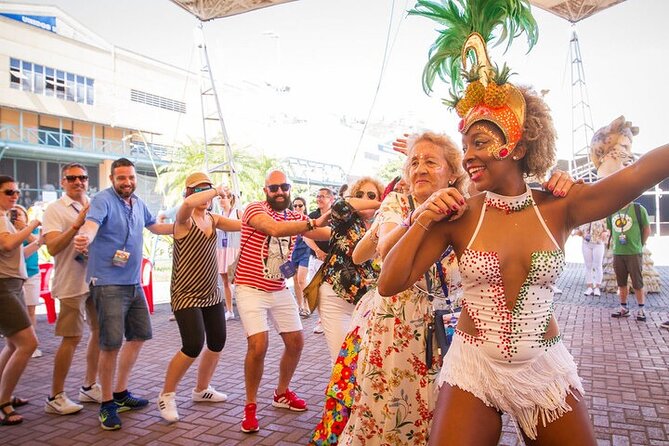
The final activity turns the room into a dance floor. A professional dancer leads a short samba lesson, inviting you to learn basic movements and join in.
You do not need to arrive as a skilled dancer. The class is designed as a brief introduction, not a serious dance course. It works best if you are willing to laugh at yourself and participate. If you prefer to watch, you can still enjoy the demonstration, but the activity has more energy when the whole group joins.
This part of the visit also corrects a common misunderstanding. Samba is not simply fast footwork performed by people in elaborate costumes. It involves rhythm, posture, confidence, and a physical connection to the music. Even a short lesson gives you a small sense of the coordination required during the Carnival parade.
The professional dancers were praised for being fun and engaging. That matters because the class could otherwise feel awkward, especially in a mixed group of strangers. A good instructor keeps the mood relaxed and gives you permission not to be perfect.
Ending With a Caipirinha
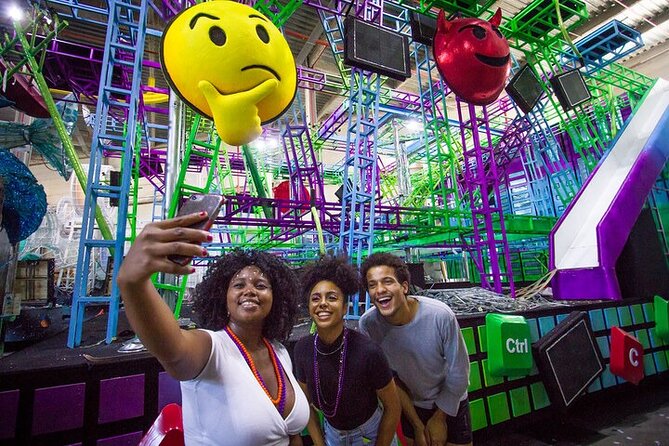
The tour closes with a caipirinha, Brazil’s well-known cocktail made with cachaça, lime, sugar, and ice. It is a modest inclusion, but it gives the visit a pleasant finish after the costume session and dance class.
The drink is included in the price, along with the transport, guide, costume use, and samba lesson. If you do not drink alcohol, the supplied details do not specify an alternative beverage, so it would be sensible to ask the operator in advance.
The caipirinha also gives you a moment to pause and think about what you have seen. You have gone from workshop labor to historical displays, then from watching samba to attempting it yourself. That mix of information and participation is the main reason this experience feels fuller than a standard sightseeing stop.
Is the $128 Price Good Value?
At $128 per person, this is not the cheapest way to spend three hours in Rio. The value depends on how much you would otherwise pay for transport, a private guide, and separate cultural activities.
The price includes hotel, airport, or port pickup and return within Rio de Janeiro City. It also includes a licensed private guide, transport, admission, access to costumes for photographs, the samba class, and a caipirinha. If you are traveling with limited time, putting those pieces together on your own would require extra planning and separate fares.
I see the strongest value in the transport and explanation. Cidade do Samba is much more meaningful when someone can explain the samba-school system, the competition, and the work behind the parade. Without context, you might simply see large floats and decorated costumes. With a guide, you can understand why they matter.
The weaker value comes if you want a long or highly active experience. The total duration is only about three to three and a half hours, and the hands-on sections are short. One person found there was too much waiting and felt the site’s own guides could have handled the visit. That is a fair caution. The tour is convenient, but convenience comes with a premium.
The current rating is 4.8 out of 5, with 93 percent of customers recommending it. That suggests strong overall satisfaction, though the small number of published ratings means you should still consider the possible waiting time and the short length of each activity.
Who Will Enjoy This Most?
I would recommend this experience to anyone who wants more than a postcard view of Rio Carnival. It suits first-time visitors who want cultural context, people interested in costume and parade design, and families looking for an activity that includes both learning and participation.
It is also a good fit if you are in Rio outside Carnival season. You will not see the live parade, but you can still learn how the event is created and see the spaces connected with the samba schools.
The visit may be less satisfying if you want a nonstop performance. There is no promise of a full samba show, a parade rehearsal, or access to the actual Carnival competition. The main focus is the backstage process, exhibition material, costumes, and a short dance lesson.
I would also think carefully about timing. Because the experience includes pickup and driving, the three-hour estimate is not three full hours inside the workshop. If your schedule is tight, leave room for traffic and possible waiting at the venue.
Practical Details for a Smooth Visit
The tour accepts most participants and is near public transportation, though the included vehicle pickup means you may not need to use public transit. Confirmation is provided when you book.
A group can contain up to 15 people. That is small enough for a social atmosphere, but it may not feel like a one-on-one cultural lesson. If you want the guide’s full attention, a smaller booking is likely preferable.
The tour provider is Gregtur Turismo. Staff members named in feedback include Antonio and Leandro, both praised for their personal attention and clear explanations. Guide assignments can change, so treat those names as examples rather than a guarantee.
You may cancel for a full refund if you do so at least 24 hours before the start time. Changes or cancellations inside that 24-hour window are not accepted for a refund. The cutoff uses Rio’s local time, so check the clock carefully if you are arranging the tour from another country.
Should You Book the Rio Carnival Factory Experience?
Book it if you want to understand how Rio Carnival is built, not simply watch people dance. The chance to see workshops, study floats, try on costumes, learn samba, and finish with a caipirinha gives you a friendly introduction to one of Brazil’s defining traditions.
I would especially choose it when pickup convenience matters or when you are visiting outside Carnival season. The educational side is strong, and the best guides, including Antonio and Leandro, can turn the visit into a personal cultural lesson.
Skip it if you want a major performance or dislike scheduled group activities. Expect a short class, a modest tasting, and some possible waiting. For the right audience, though, the $128 price buys more than photographs. It gives you a look at the work, people, and community behind Rio’s famous parade.
FAQ
How long does the Rio Carnival Factory Experience last?
The experience lasts approximately three to three and a half hours, including transport and the visit at Cidade do Samba.
Is hotel pickup included?
Yes. Pickup and drop-off are included from hotels, airports, or ports within Rio de Janeiro City.
What is included in the price?
The price includes transport, a professional licensed private guide, a guided visit connected with Acadêmicos da Grande Rio, costumes to wear and photograph, a samba class with a professional dancer, and a welcome caipirinha.
Can I try on Carnival costumes?
Yes. The visit includes access to a backstage dressing room where you can try on some Carnival costumes and take photographs.
Is a samba lesson included?
Yes. A professional dancer provides a short samba lesson during the visit.
What happens if I need to cancel?
You can receive a full refund if you cancel at least 24 hours before the experience begins. Cancellations or changes made less than 24 hours before the start time are not accepted for a refund.
Newest reviews from around Rio de Janeiro
- PRIVATE TOUR – Christ the Redeemer and Sugar Loaf★ 4.5 · 9 reviews
- Christ Statue and Sugarloaf Private Tour with a Photographer★ 5.0 · 9 reviews
- Cidade do Samba Behind-the-Scenes Carnival Tour in Rio de Janeiro★ 4.0 · 5 reviews
- Christ the Redeemer Trail x Lage Park★ 5.0 · 7 reviews
- Christ the Redeemer and City Tour★ 5.0 · 20 reviews
- Private Tour of Christ the Redeemer in Rio de Janeiro★ 5.0 · 2 reviews
- Christ the Redeemer, Selaron Steps and Santa Teresa Half-day Tour★ 4.5 · 15 reviews
- Christ the Redeemer Adventure★ 5.0 · 12 reviews
Samba & Carnival Shows, compared.

Pub Crawl in Lapa with Cachaça Tasting and Live Samba
Read our review →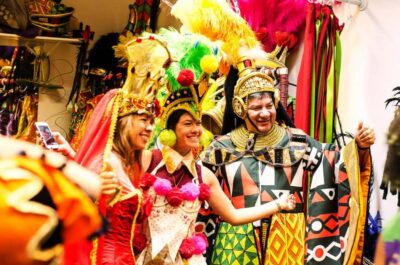
Carnival Backstage Tour at Samba City with Cocktail
Read our review →
Hop-ON Hop-OFF Sightseeing Bus in Rio de Janeiro – Rio Samba Bus
Read our review →
Santa Teresa, Lapa, and Cinelândia with Tram Ride and Selarón Steps
Read our review →
Carnaval Experience: Backstage Tour at Samba City with Cocktail
Read our review →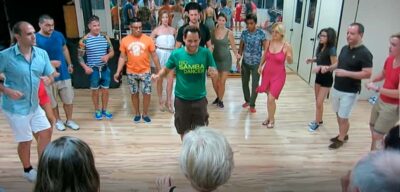

Browse the lists this tour appears in