
Reviewed · WALKING TOURS
Half-Day Architecture Walking Tour in Rio
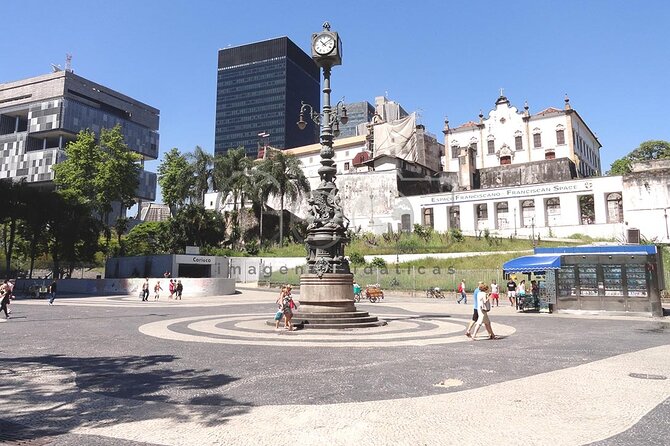
Rio’s best stories are written in stone. This four-hour walk through Centro connects colonial churches, Beaux Arts buildings, Art Deco facades, and modernist design, giving you a useful history lesson while the city carries on around you. I like the easy central meeting point at Carioca and the chance to explore a part of Rio many tourists skip.
I also like the tour’s focus on real buildings rather than a museum-only lecture, plus the choice of two start times. The main point to consider is that the walk is outdoors and weather-dependent, and the two paid admissions cost extra. The advertised price is $60 per person.
In This Review
- Key Points
- Why This Rio Architecture Walk Is Worth Your Time
- Meeting at Largo da Carioca
- Inside the Convent of St. Anthony
- Cinelandia and Rio’s Grand Civic Face
- Palacio Capanema and the Arrival of Brazilian Modernism
- The Museum of Modern Art and Brutalist Form
- What the Guide Adds
- Timing, Walking, and Practical Comfort
- Is the $60 Price Good Value?
- Who Should Book This Walk?
- Should You Book the Half-Day Architecture Walking Tour?
- FAQ
- How long does the architecture tour last?
- Where does the tour begin?
- Where does the tour end?
- Are entrance fees included?
- Is transportation included?
- How large is each guide group?
- Are there different start times?
- Can I cancel for a refund?
Key Points

- Colonial Rio begins at Largo da Carioca, one of the city center’s most important historic spaces.
- The Convent of St. Anthony dates to 1608 and may offer a chance to attend Mass if timing allows.
- Cinelandia reveals Rio’s Beaux Arts and Art Deco side, though Art Deco is not the only architectural style you will see.
- Palacio Capanema connects Rio to Le Corbusier, Lucio Costa, Reidy, and Oscar Niemeyer.
- The four-hour route is capped at 15 people per guide, a useful size for questions and conversation.
- Expect 30 BRL in additional admission fees, 10 BRL for the convent and 20 BRL for the Museum of Modern Art.
Why This Rio Architecture Walk Is Worth Your Time
Most first-time visits to Rio focus on beaches, Sugarloaf Mountain, Christ the Redeemer, and the city’s famous viewpoints. Those sights deserve their place, but Centro gives you a different Rio. Here, the city’s past appears in churches, civic buildings, theaters, banks, and office blocks.
This tour works because you move through several centuries in only four hours. You begin where the occupation of the city started, then pass through Catholic architecture, Belle Epoque design, Art Deco, and Brazilian modernism. The result is not just a list of buildings. You get a rough timeline for understanding how Rio changed.
I especially like the walking format. You can look up at details, compare one facade with the next, and notice how people use the streets today. You are not sealed inside a bus while the city flashes past. You are close to the sounds, movement, and daily rhythm of downtown.
The tour is a good match for anyone who enjoys architecture, urban history, art, or old churches. You do not need to be an expert. A good guide can explain why a building matters without turning the walk into a technical lecture.
The experience has earned a five out of five rating from 14 reviews, with 100 percent recommending it. That is a small sample, but the praise is consistent about the guide’s historical storytelling and the way the walk links Rio’s past with its present.
More Walking Tours in Rio de Janeiro
- Rio de Janeiro: Rocinha Favela Walking Tour with Local Guide
★ 4.8 · 3,052 reviews - Rio De Janeiro: Half-Day Rocinha Favela Walking Tour
★ 4.7 · 2,272 reviews - 3 Hour Rocinha Favela Walking Tour with a Local Guide
★ 5.0 · 833 reviews
Meeting at Largo da Carioca
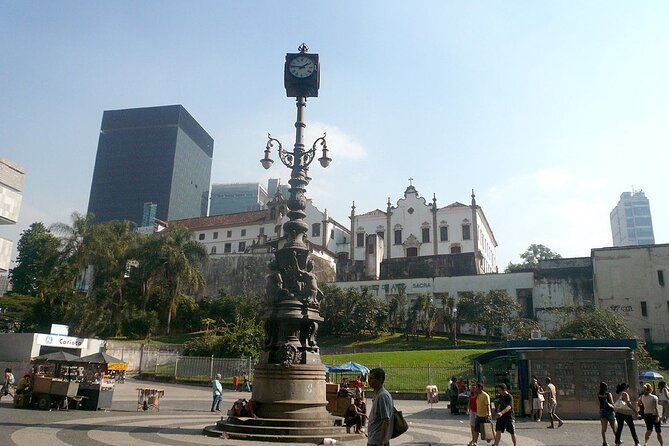
The tour starts at Carioca in Centro, a practical location near public transportation. Largo da Carioca is described as the heart of downtown Rio, and it is a fitting place to begin because the city’s story starts here.
Give yourself enough time to find the meeting point. The operator asks you to contact them if you need further directions or to confirm pickup timing according to your hotel location. Round-trip hotel transfer is not included, so you should plan your own way to Carioca unless separate arrangements are confirmed.
At the square, your guide introduces the setting before the route moves toward the Church and Convent of Saint Anthony. This first hour is not simply filler before the main sights. It gives you a sense of how central Rio developed and why this part of town remains important.
A walking start also helps you settle into the tour. You can ask questions early, learn the basic timeline, and get your bearings before the architecture becomes more detailed.
Inside the Convent of St. Anthony
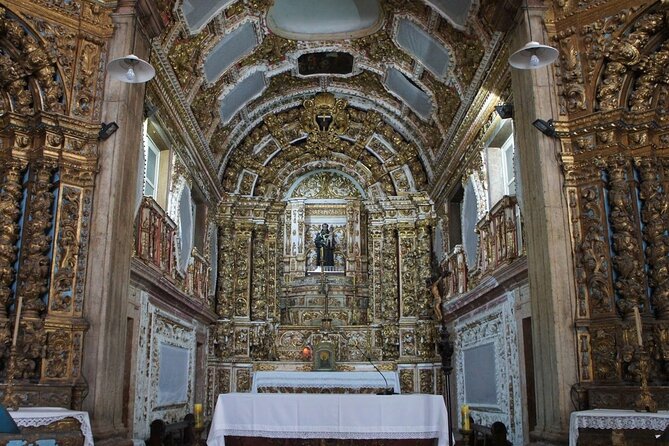
The Convent of St. Anthony was built in 1608 by the Order of Saint Francis. It is described as one of the first and most important Catholic constructions in Rio, so it provides a strong connection to the city’s early colonial period.
Admission costs 10 BRL per person and is not included in the tour price. The planned visit lasts about 30 minutes. If timing and access are favorable, you may also be able to attend Mass. That possibility adds a living religious setting to what could otherwise feel like a standard historic stop.
You should expect this part of the tour to focus on the building’s age, purpose, and role in Rio’s development. The supplied route also connects the church area with Igreja de São Francisco de Penitência, whose interior received especially strong praise. One account describes a guide named Alberto inviting the participant to lie on the floor of the central aisle to see the painted ceiling correctly. The unusual angle made the trompe l’oeil vault easier to appreciate.
That detail is worth keeping in mind, but access and the exact route may vary. Do not assume every group will receive the same interior experience. Still, it shows the kind of close looking that makes an architecture walk worthwhile. A painted ceiling can seem flat from the wrong place, then suddenly appear to curve when you find the intended viewpoint.
The church interiors are also a useful reminder that Rio’s architecture is not only about modern concrete and famous architects. Baroque and Rococo decoration, colonial religious buildings, and later civic styles all form part of the city’s visual story.
Cinelandia and Rio’s Grand Civic Face
The route continues to Cinelandia, with about 30 minutes to admire its Art Deco buildings. This is one of the tour’s more recognizable urban spaces, and it helps explain Rio’s early twentieth-century ambition.
The name Art Deco appears in the tour description, but you should keep your expectations flexible. One detailed account found that Belle Epoque Beaux Arts design was more noticeable than Art Deco. That is useful advice. You will see architecture from an era of grand public buildings, but the style may not fit a neat Art Deco-only label.
Cinelandia is valuable because it lets you compare decorative public architecture with the colonial structures seen earlier. The scale changes. The city feels more formal and monumental, with larger facades and a different idea of what a modern capital should look like.
I would not book this tour expecting every stop to be a pure example of one architectural movement. Rio’s buildings often overlap styles and periods. That is part of the appeal, but it also means the guide’s explanation matters. The best part of the stop is learning how the city’s cultural and civic identity changed over time.
The visit is free, though you should remember that this is an outdoor stop. Comfortable shoes and clothing are strongly recommended.
Same patch of Brazil, a completely different sort of day:
- Rio de Janeiro: 6-Stop Highlights of Rio with Lunch
★ 4.4 · 5,157 reviews - Christ the Redeemer Entry Ticket by Corcovado Train
★ 4.4 · 4,476 reviews - Rio’s City Tour – Tickets for Christ, Sugar Loaf & Lunch included
★ 5.0 · 4,389 reviews - Full Day: Christ Redeemer, Sugarloaf, City Tour & Barbecue Lunch
★ 4.5 · 3,142 reviews
Palacio Capanema and the Arrival of Brazilian Modernism
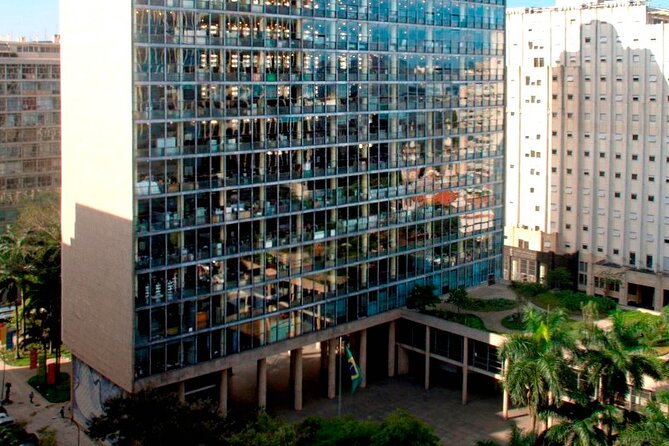
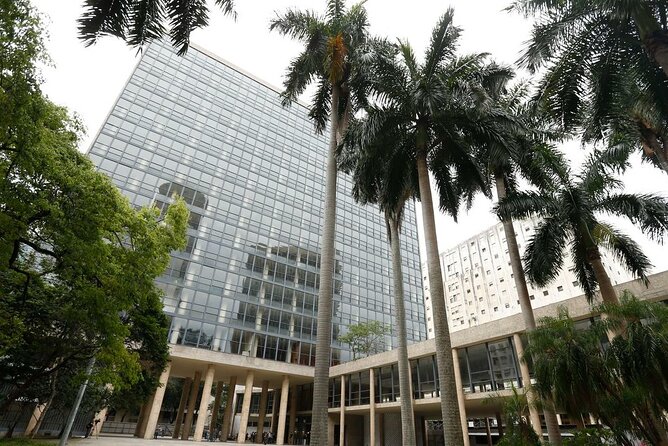
Palacio Capanema is likely the most important stop for architecture enthusiasts. The building incorporates Le Corbusier’s Five Points of a New Architecture, giving you a chance to see how international modernist ideas were adapted in Brazil.
The building was designed between 1935 and 1936 by a team that included Lucio Costa and Affonso Eduardo Reidy. Oscar Niemeyer, who later became Brazil’s best-known architect, was an intern in Costa’s office at the time.
That context makes the building more than a handsome modernist office block. It represents a moment when young Brazilian architects were testing new ideas about structure, open space, light, and form. If you care about twentieth-century architecture, this is the stop that gives the tour its strongest academic value.
The planned visit lasts about 30 minutes and admission is free. You can expect the guide to point out how the building applies modernist principles rather than simply naming the architects.
The tour also includes a modernist building located inside the Edifício Austregésilo de Athayde. The information provided describes it as a symbol of modernist architecture in Rio. Since the details of this stop are limited, you should treat it as a short architectural observation rather than expect a full interior visit or long museum-style explanation.
This section of the walk creates a good contrast with the convent. In the church, decoration and religious imagery shape the space. In the modernist buildings, structure, proportion, openness, and new construction ideas take the lead.
The Museum of Modern Art and Brutalist Form
The final listed stop is the Museum of Modern Art of Rio de Janeiro, or MAM Rio. The tour describes it as an introduction to brutalist aesthetics in the city, with about 30 minutes set aside for the visit.
Admission costs 20 BRL per person and is not included. That extra fee is modest, but it matters when you calculate the full cost. Along with the 10 BRL convent admission, you should budget 30 BRL per person beyond the $60 tour price, subject to exchange rates and any changes in admission prices.
The museum gives the route a strong ending because it moves from historic religious buildings to modern public architecture. Brutalism can be an acquired taste. Its concrete forms and forceful lines are not designed to charm everyone, but they are useful for understanding how Rio’s architectural conversation continued after the modernist work of the 1930s.
You should also note that the supplied schedule does not specify how much time is spent inside the museum or which galleries are visited. The stop is listed as 30 minutes, so this is not a long museum tour. Think of it as a focused architectural visit rather than a complete survey of the collection.
What the Guide Adds
The guide is central to the value of this experience. Buildings can be easy to miss when you do not know what to look for. A guide can explain why a plain facade matters, show you a design feature above street level, or connect a church to a larger chapter in Rio’s political and social development.
One guide named Alberto received special praise for speaking three languages and for bringing four centuries of Rio history to life. His explanations covered colonial Brazil, nineteenth-century political changes during the Napoleonic period, Portuguese royalty, banking, customs, and the growth of wealthy Brazilian society.
That range suggests the walk goes beyond architectural labels. You may learn how buildings reflect power, trade, religion, and changing ideas about national identity. You may even pick up the story behind Brazil’s name, though the guide keeps some details for the walk itself.
The tour is limited to 15 people per guide, which is a good arrangement for an architecture experience. You can usually hear explanations more clearly than in a large group, and there is a better chance to ask questions. The activity information also gives a maximum of 100 participants overall, but the more useful figure for you is the 15-person guide limit.
Timing, Walking, and Practical Comfort
The experience lasts about four hours and offers two start times. That makes it easier to fit around other Rio plans, though you should confirm the exact start time and any hotel-related pickup details with the operator.
There is no included round-trip transfer and no lunch. Plan to eat before or after the walk. Since the activity ends back at the meeting point, you can continue exploring Centro afterward or use nearby public transportation.
Wear walking shoes. The route is built around exploring on foot, and comfortable clothing will make the four hours easier. Children must be accompanied by an adult, and most people can participate.
You may be asked to present a copy of your ID. Have one available if requested. Confirmation is provided at booking, and the operator asks you to contact them if you need more help finding the meeting point.
Weather matters. The activity requires good weather, and it is nonrefundable in case of bad weather under the stated conditions. If the operator cancels because of poor weather, you will be offered another date or a full refund. If you cancel, you can receive a full refund when you do so at least 24 hours before the start time. Cancellations or changes made less than 24 hours ahead are not accepted for a refund.
Is the $60 Price Good Value?
At $60 per person, this is not the cheapest way to walk around central Rio. You can see many exterior buildings without paying for a guided experience. The value comes from the explanations, route planning, and access to a clear story about how Rio’s architecture changed.
The two known admissions add 30 BRL per person, so the final cost is higher than the headline price. Still, the tour covers four hours and several distinct periods, from the 1608 convent to twentieth-century modernism and brutalism.
I think the price makes more sense if you are genuinely interested in architecture or history. A casual sightseer who mainly wants photos may find the pace too focused. Someone who wants to understand the city, ask questions, and notice details will get more from it.
The small guide group also supports the price. You are paying for interpretation, not just transport between landmarks. Since transportation and lunch are not included, compare the tour with your own plans for Centro rather than treating it as a complete day package.
Who Should Book This Walk?
I would recommend it to:
- Architecture students and design fans
- History buffs interested in colonial and modern Brazil
- First-time visitors who want more than Rio’s famous viewpoints
- Museum and church lovers
- Anyone who enjoys exploring cities on foot
- Visitors who want a guided introduction to Centro
I would be more cautious if you dislike walking, prefer a relaxed sightseeing pace, or want a tour devoted only to Art Deco. The route includes Art Deco, but it also gives major attention to colonial religious buildings, Belle Epoque Beaux Arts design, modernism, and brutalism.
The experience also depends on access to the buildings and the guide’s interpretation. The most memorable church details may not be available every time, and the museum visit is short.
Should You Book the Half-Day Architecture Walking Tour?
Book this tour if you want to understand Rio through its buildings rather than simply photograph them. The route covers a wide span of time, the central meeting point is practical, and a 15-person guide limit should keep the experience personal.
I especially like the contrast between the Convent of St. Anthony, Cinelandia, Palacio Capanema, and MAM Rio. You move from colonial faith to civic grandeur, then to the bold modern ideas that helped shape Brazilian architecture.
Skip it if you are looking for a general highlights tour, a beach day, or a ride with hotel transfers and meals included. For the right audience, though, this is a thoughtful four-hour introduction to a side of Rio that is easy to miss.
FAQ
How long does the architecture tour last?
The tour lasts approximately four hours.
Where does the tour begin?
It begins at Carioca, in Centro, Rio de Janeiro, at the Carioca / CentroCentro meeting point.
Where does the tour end?
The activity ends back at the meeting point.
Are entrance fees included?
No. Admission to the Convent of St. Anthony costs 10 BRL per person, and admission to the Museum of Modern Art costs 20 BRL per person.
Is transportation included?
No. Round-trip transfer is not included. The meeting point is near public transportation.
How large is each guide group?
The activity states that each tour guide can lead a maximum of 15 people. It also lists a maximum of 100 participants for the overall activity.
Are there different start times?
Yes. You can choose between two start times, and the operator asks you to confirm pickup timing according to your hotel location.
Can I cancel for a refund?
Yes, if you cancel at least 24 hours before the experience start time. Cancellations or changes made less than 24 hours before the start time are not refunded. If poor weather causes the operator to cancel, you will be offered another date or a full refund.
Newest reviews from around Rio de Janeiro
- Hang gliding flight in Rio de Janeiro★ 5.0 · 6 reviews
- Rio de Janeiro: Zip Lining and Canopy Tree Tour★ 3.3 · 6 reviews
- Vidigal Favela Tour★ 4.4 · 26 reviews
- Rio de Janeiro: Attend a Vasco da Gama game with local guide★ 4.8 · 9 reviews
- Unforgettable Boat Party★ 5.0 · 3 reviews
- Parapente Rio de Janeiro★ 5.0 · 4 reviews
- Rio de Janeiro Private Tour with Cruise Terminal Pick-up★ 5.0 · 2 reviews
- Wild Waters: Rio Whitewater Rafting Adventure Tour★ 5.0 · 13 reviews
Walking Tours, compared.



3 Hour Rocinha Favela Walking Tour with a Local Guide
Read our review →
Favela Tour Rio de Janeiro – Vidigal Walking Tour by Russo Guide
Read our review →

Private Walking and Cultural Tour Rocinha-Rio de Janeiro
Read our review →
Browse the lists this tour appears in