
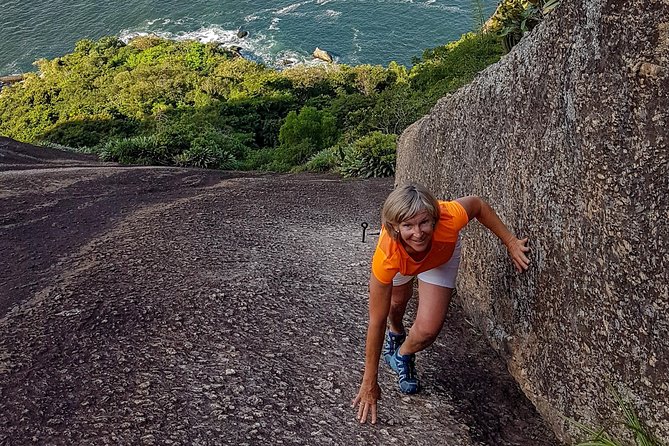
Reviewed · SUGARLOAF MOUNTAIN TOURS
Climb to the Top of Sugarloaf Mountain
Reach Sugarloaf by hand and foot. This three-hour climb gives you small-group attention from guides such as Mingo, Andrew, or Domingos, plus views that cable-car passengers never see. I like the short, roped climbing pitch because it adds real adventure without turning the outing into a serious mountaineering test. I also like the cable-car descent, which saves your knees after the climb. The main caution is simple: this is a climb, not an easy hike, and the exposed scrambling can unsettle anyone with a strong fear of heights.
You begin at Sugarloaf’s base, work around the back of the mountain, and follow a steep, well-used route toward the summit. Most of the ascent is technically simple, but you still need good fitness, steady footing, and comfort with heights. Bring water, snacks, mosquito repellent, breathable climbing clothes, and hiking shoes with excellent traction. Running shoes are a poor choice on this terrain.
In This Review
- Key points to know before you book
- Why climb Sugarloaf instead of taking the cable car?
- Meeting at Urca at 2 p.m.
- The first ascent: steep, exposed, and mostly unroped
- The 15-meter climbing pitch halfway up
- Philosopher’s Stone and the views only climbers get
- Reaching the summit at 396 meters
- The cable-car descent and 15-minute walk back
- What the $98.10 price really covers
- Who should book this climb?
- Should you book the Sugarloaf climb?
- FAQ
- How long does the Sugarloaf climb take?
- Where does the activity start?
- Is climbing equipment included?
- Is the cable-car ride included?
- Do I need to bring food and water?
- How many people can join the group?
Key points to know before you book

- A 15-meter roped pitch adds genuine climbing: Halfway up, you use a harness and rope on a short technical section that is not considered difficult.
- A maximum of six people keeps the guide close: You get direct instruction, encouragement, and help on exposed sections.
- The climb reaches 396 meters: The height gives you a strong sense of achievement, not just another city viewpoint.
- The famous Philosopher’s Stone is along the route: Several viewpoints are available only to people making the climb.
- The cable car brings you down to Morro da Urca: You then walk about 15 minutes back to the starting point.
- The $98.10 price includes safety equipment: Transportation, food, water, and summit purchases cost extra.
Why climb Sugarloaf instead of taking the cable car?
Rio’s cable car is easy, quick, and scenic. It is also the standard way to reach Sugarloaf. This climb offers something else: the mountain becomes an activity, not just a viewpoint.
You gain height slowly. The city opens up in stages, and each bend gives you a new angle on Rio, the water, and the rock itself. You also get the satisfying feeling of reaching a place under your own power. I especially like that the route includes the Philosopher’s Stone and other spots that cable-car passengers do not see.
The climb reaches about 396 meters, or 1,299 feet. That is not an alpine expedition, but it is enough to make the summit feel earned. The experience has a useful middle ground: you can try real rock climbing while staying on a route familiar to trained guides.
The trade-off is effort. The description calls the ascent technically simple, but that does not mean easy. You will climb steep ground, scramble without a rope in places, and deal with exposure. One participant reached the top in a little over two hours but described arriving exhausted and soaked with sweat. Plan for exertion, not a relaxed stroll.
Other cable-car runs up Sugarloaf:
- Rio’s City Tour – Tickets for Christ, Sugar Loaf & Lunch included
★ 5.0 · 4,389 reviews - Full Day: Christ Redeemer, Sugarloaf, City Tour & Barbecue Lunch
★ 4.5 · 3,142 reviews - Rio de Janeiro: Sugarloaf Cable Car Official Ticket
★ 4.6 · 2,873 reviews
Meeting at Urca at 2 p.m.
The meeting point is Av. Pasteur, 520, in Urca, Rio de Janeiro. The activity begins at 2 p.m. and ends back at this same point after the cable-car ride and the final trail.
Transportation to the meeting point is not included. The location is near public transportation, but you need to arrange your own way there. Build in enough time to arrive ready, since the group is small and the guide’s schedule depends on a prompt start.
The maximum group size is six. This matters more than it may sound. On a route with steep rock, a large group can mean waiting, lost instructions, and less help when you need it. With only a few people, the guide can watch your foot placement, adjust the pace, and talk you through a nervous moment.
The company’s guides include Mingo, Andrew, and Domingos. Mingo is praised for helping first-time climbers feel calm and confident. Andrew is described as patient, encouraging, and good at setting a comfortable pace. Domingos has also guided first-time climbers and is praised for making the ascent feel safe. English-speaking visitors have specifically appreciated Andrew’s clear instructions in English.
The first ascent: steep, exposed, and mostly unroped
The route starts at the foot of Sugarloaf, then swings around the back of the mountain. From there, the trail turns steep and begins the real work.
The first few hundred meters include unroped scrambling. You use your hands and feet over rocky ground, but this is not described as difficult technical climbing. The bigger issue is exposure. You may look down and see a long drop, and that can make a simple move feel much harder.
If heights make you uneasy, tell your guide at the start. The guides are there to explain the route and talk you through exposed sections. You should not expect a handrail or a flat walking path, but you can expect personal support in a very small group.
Good footwear matters here. Choose hiking shoes with strong traction, as one guide recommendation specifically warns against ordinary running shoes. Wear clothing that lets you move freely. Pants and a breathable shirt make more sense than stiff clothing or anything that restricts your legs.
The pace is not meant to be a race. Andrew has been praised for taking breaks when needed and allowing a slower climber to catch their breath. That flexibility makes the outing more approachable, but you still need a strong level of physical fitness before booking.
The 15-meter climbing pitch halfway up
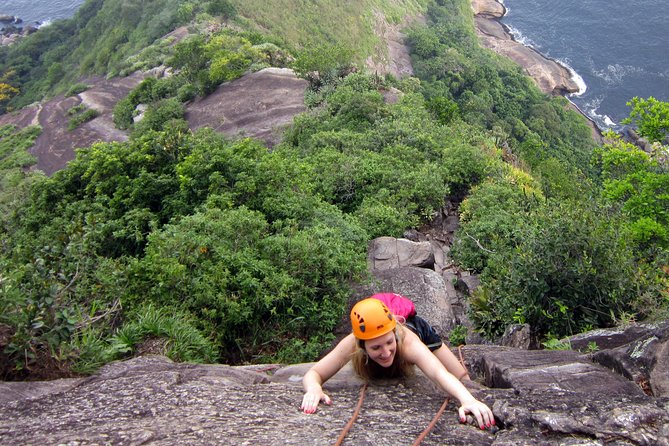
About halfway to the summit, the route reaches its most technical section: a short pitch of roughly 15 meters. Here, you put on the supplied harness and use a rope with the guide’s direction.
This section is not considered difficult, but it is the part that makes the experience more than a steep hike. You get a brief introduction to roped rock climbing without signing up for an extreme day on a cliff. If you have wondered how climbing feels, this is a practical first taste.
The equipment is included, and the guide provides instruction. You do not need to bring your own rope or harness. Still, do not confuse included equipment with a risk-free activity. You must listen closely, follow safety instructions, and move carefully.
For a first-time climber, the pitch can be a highlight. It offers a clear goal and a moment when you rely on the guide’s technique. For a confident hiker, it adds variety to the ascent. For someone with severe fear of heights, it may be the point where the activity becomes too stressful.
The best attitude is to treat the pitch as a learning exercise, not a performance. You are not there to prove anything to the group. You are there to climb safely and enjoy the view when you reach the top.
A few more Rio de Janeiro days to weigh up
- Rio de Janeiro: 6-Stop Highlights of Rio with Lunch
★ 4.4 · 5,157 reviews - Christ the Redeemer Entry Ticket by Corcovado Train
★ 4.4 · 4,476 reviews - Rio de Janeiro: Rocinha Favela Walking Tour with Local Guide
★ 4.8 · 3,052 reviews - Rio’s Full Day: Selarón Steps, Christ & Sugarloaf – Tickets & Lunch Included
★ 5.0 · 2,724 reviews
Philosopher’s Stone and the views only climbers get
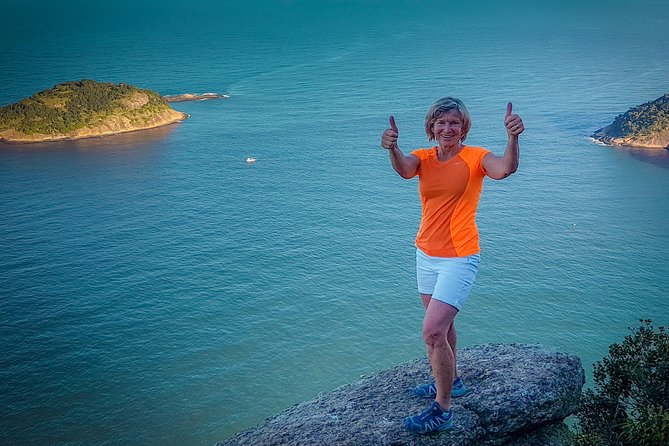
After the roped pitch, the group packs away the equipment and continues toward the summit. The route includes several viewpoints that you cannot reach by simply riding the cable car.
The Philosopher’s Stone is one of the named highlights. Stops like this give the climb a stronger sense of place. You are not just following a direct route to a platform. You are seeing the mountain from its less familiar side, with pauses that reward the effort.
The views change as you gain height. Lower down, you feel the rock and the trail. Higher up, the city and water become more expansive. The exposed sections may demand your attention, but they also create the exciting sensation of climbing above Rio.
The timing may also work well for late-day light. One participant called the climb a great way to see Rio’s sunset. The exact view and timing depend on the day, pace, weather, and season, so I would not book it with a guaranteed sunset in mind. Still, a 2 p.m. start gives the outing a chance to reach the summit later in the afternoon.
Take breaks seriously. A pause is not wasted time here. It lets you recover, enjoy the views, and notice wildlife. Marmosets may come close during a quiet rest, and one climber even saw vultures perched nearby. Do not feed animals, but enjoy the fact that the mountain is more than a lookout above the city.
Reaching the summit at 396 meters
The summit is the emotional payoff. You have climbed the mountain rather than simply arrived by machinery, and that difference is easy to feel.
The top also offers food and drinks for purchase. Those costs are not included, so carry your own water and snacks for the climb. A small snack can help during the ascent, particularly if you are not used to sustained uphill effort.
The summit facilities provide a useful comfort after the physical work. You can rest, take in the wide views, and buy something if you want it. Do not assume that summit food replaces your own supplies. You need water with you during the climb, and the tour price does not cover refreshments.
The route and the summit also create a nice contrast. The ascent is personal and physical, with hands on rock and direct guidance. The top is more social and convenient, with food, drinks, and the familiar Sugarloaf viewpoint. You get both sides of the mountain in one outing.
The cable-car descent and 15-minute walk back
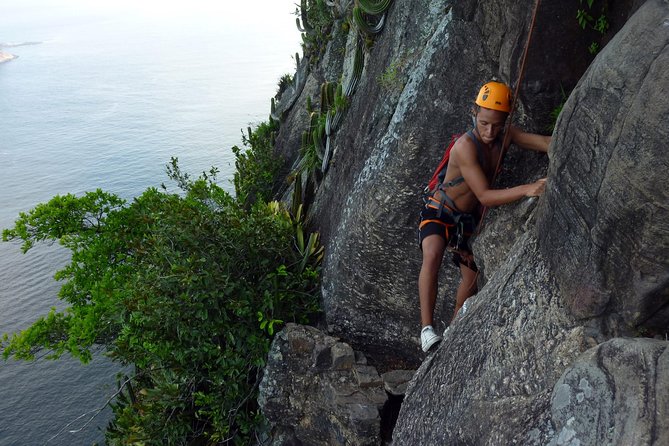
The descent is handled sensibly. You take the cable car from the summit down to Morro da Urca, and that ride is included in the price.
This saves you from repeating the steep route downhill, when tired legs can make careful footwork harder. It also gives you one last scenic ride and lets you see part of Sugarloaf from a different angle.
From Morro da Urca, you walk about 15 minutes on a trail back to the original starting point. The activity ends there. You should still expect to walk after the cable-car ride, but this final section is far less demanding than climbing the mountain itself.
That return plan is one of the tour’s better practical choices. You get the achievement of climbing up, but you do not have to spend another long stretch descending on tired knees.
What the $98.10 price really covers
At $98.10 per person, this is not the cheapest way to see Sugarloaf. The cable car alone is the simpler sightseeing option, and you will need to pay for your own transport, water, snacks, and any food or drinks at the summit.
The price makes more sense if you value instruction and safety support. You are paying for a guide-led climbing experience, a maximum group of six, all required safety gear, and the included cable-car ride down. The small group is especially important. A cheaper large-group outing might not offer the same level of direct help on the scrambling and roped sections.
I would call the price fair for someone who specifically wants to climb Sugarloaf. I would not recommend it to you if your main goal is simply to reach the viewpoint. In that case, the standard cable car gives you the view with much less effort.
The value also rises if you are curious about rock climbing but do not want a full technical course. The 15-meter pitch gives you a manageable introduction, and the guide remains nearby throughout. You should not expect a full climbing lesson, but you do get a real taste of rope, harness, and rock movement.
Who should book this climb?
This outing suits you best if you:
- Exercise regularly and can handle a steep three-hour activity
- Enjoy hiking and want more challenge than a marked walking route
- Feel reasonably comfortable with heights and exposed rock
- Want a first experience with roped climbing
- Prefer a small group and close guide support
- Value achievement and unusual viewpoints more than convenience
It can work for families with fit older children. A 15-year-old completed the climb with a parent, and both found the experience enjoyable. The deciding factor is fitness and comfort with the terrain, not just age.
Think twice if you lead a sedentary lifestyle, have serious height anxiety, or want a calm sightseeing outing. Even with breaks and encouragement, this remains a physical climb. The guides can help with confidence and pacing, but they cannot remove the steepness or exposure.
The weather also matters. The activity requires good conditions. If poor weather causes cancellation, you are offered another date or a full refund. For your own comfort, pack sun protection and expect to sweat, though the supplied information specifically emphasizes water, snacks, breathable clothing, good traction, and mosquito repellent.
Free cancellation is available when you cancel at least 24 hours before the 2 p.m. start. A cancellation or change made less than 24 hours ahead is not refunded, so keep the weather forecast and your fitness plans in mind.
Should you book the Sugarloaf climb?
Book it if you want to earn your view. The small group, patient guides, included safety equipment, short roped pitch, and cable-car descent create a well-shaped adventure rather than a punishing stunt.
I would choose it over the cable car for an active day in Rio, especially if Mingo, Andrew, or Domingos is leading and you want clear support during your first climbing experience. The strongest praise goes to the guides’ calm instruction, personal encouragement, and ability to adjust the pace.
Skip it if you mainly want an easy viewpoint or dislike exposed heights. Sugarloaf is already impressive from the cable car. This tour is for you if the memorable part is not only seeing Rio from above, but reaching that view with your own hands and feet.
FAQ
How long does the Sugarloaf climb take?
The activity lasts approximately three hours, including the ascent, time at the summit, the cable-car descent to Morro da Urca, and the 15-minute trail back to the meeting point.
Where does the activity start?
You meet at Av. Pasteur, 520, in Urca, Rio de Janeiro, at 2 p.m. The activity ends back at the same meeting point.
Is climbing equipment included?
Yes. All required safety equipment is included, including the equipment used for the short roped climbing pitch.
Is the cable-car ride included?
Yes. The cable-car descent from the summit to Morro da Urca is included. You then walk about 15 minutes back to the starting point.
Do I need to bring food and water?
Yes. You should bring your own water and snacks. Food and drinks purchased at the summit are not included in the price.
How many people can join the group?
The maximum group size is six people. A strong level of physical fitness is required, and the route includes steep sections, unroped scrambling, and exposure.
Newest reviews from around Rio de Janeiro
- Cidade do Samba Behind-the-Scenes Carnival Tour in Rio de Janeiro★ 4.0 · 5 reviews
- PRIVATE TOUR – Christ the Redeemer and Sugar Loaf★ 4.5 · 9 reviews
- Christ Statue and Sugarloaf Private Tour with a Photographer★ 5.0 · 9 reviews
- Christ the Redeemer Trail x Lage Park★ 5.0 · 7 reviews
- Christ the Redeemer and City Tour★ 5.0 · 20 reviews
- Christ the Redeemer, Selaron Steps and Santa Teresa Half-day Tour★ 4.5 · 15 reviews
- Christ the Redeemer Adventure★ 5.0 · 12 reviews
- Private Tour of Christ the Redeemer in Rio de Janeiro★ 5.0 · 2 reviews
Sugarloaf Mountain Tours, compared.

Rio’s City Tour – Tickets for Christ, Sugar Loaf & Lunch included
Read our review →
Full Day: Christ Redeemer, Sugarloaf, City Tour & Barbecue Lunch
Read our review →

Rio’s Full Day: Selarón Steps, Christ & Sugarloaf – Tickets & Lunch Included
Read our review →
Christ the Redeemer, Sugarloaf, Selaron & BBQ Lunch
Read our review →
The Best Half Day in Rio with Christ Redeemer and Sugar Loaf Hill
Read our review →
Rio’s Best_Corcovado, Sugar Loaf, Selaron, Cathedral and more
Read our review →
Full Day in Rio: Christ by Train, Sugarloaf, Selarón & Barbecue
Read our review →Browse the lists this tour appears in