
Reviewed · SAMBA & CARNIVAL SHOWS
Carnival Backstage Tour – Visit a traditional Samba School
Carnival is built long before parade night. This two-hour visit to Rio’s Cidade do Samba gives you a close look at how samba schools prepare their floats, costumes, music, and competition entries. I like the chance to see the working side of Carnival, and I like that the experience includes hands-on fun such as trying costumes and learning a little samba. The main drawback is that the tour can feel short if you want a highly detailed look at every part of production.
You meet at Samba City in Santo Cristo, or choose the option with hotel transfers. A bilingual guide leads the visit in English, and the group can have up to 20 people. A caipirinha, Brazil’s famous cocktail, is part of the experience, but food and drinks are not generally included in the tour price, so check exactly what your selected option covers before you go.
In This Review
- Key points to know before booking
- Why Samba City matters to Rio Carnival
- Starting at Cidade do Samba
- Inside the Carnival workshop world
- Floats, costumes, and the work behind the parade
- A small group with room for questions
- Is the $31 price fair?
- How to plan your two hours
- Who will enjoy this Carnival visit most?
- My verdict on the Carnival Backstage Tour
- FAQ
- Where does the Carnival Backstage Tour begin?
- Where does the tour end?
- How long does the tour last?
- Is hotel pickup available?
- Is the tour offered in English?
- What is included in the price?
- Can I cancel for a refund?
Key points to know before booking
- Samba City is the main attraction: The tour takes you behind the parade route and into the place where Carnival materials are prepared.
- You can try on Carnival costumes: This makes the visit more playful than a standard museum tour.
- A little samba is part of the fun: You get more than a talk about Carnival, with a chance to take part.
- The focus is on process and competition: You learn how samba schools work toward parade success, including the effort behind individual floats.
- The tour lasts about two hours: One account describes roughly 70 minutes connected with each float, so timing may vary by the day and the guide.
- Transfers are optional: You can meet at Cidade do Samba or pay for the option with pickup and return transportation.
Why Samba City matters to Rio Carnival
Rio Carnival is often seen from the street, where the parade arrives as a finished spectacle. Cidade do Samba gives you a look at the work behind that spectacle. The huge costumes, decorated floats, music, choreography, and school identity all require planning and labor long before the parade begins.
That change in viewpoint is the main reason I find this tour worthwhile. Instead of only watching dancers pass by for a few minutes, you get time to think about how a samba school creates a full parade entry. The visit also explains the competitive side of Carnival, where schools work toward strong parade performances and recognition.
This matters because Carnival is not simply a party. It is an organized cultural competition, with samba schools presenting carefully planned themes and visual designs. The tour helps you see the difference between the noisy public celebration and the workshops, warehouses, costumes, and floats that make it possible.
You should still set your expectations correctly. This is not a full-day production tour or a technical design course. The supplied description gives an approximate duration of two hours, and one account puts the experience at about 70 minutes for each float. That suggests the amount of time spent on specific displays may depend on the schedule and the day’s presentation.
Other samba nights worth staying up for:
- Rio de Janeiro: Beginner Samba Lesson in Ipanema
★ 4.9 · 1,071 reviews - Rio: Pub Crawl in Lapa with Cachaça Tasting and Live Samba
★ 4.7 · 881 reviews - Rio: Carnival Backstage Tour at Samba City with Cocktail
★ 4.6 · 520 reviews
Starting at Cidade do Samba
The tour begins at Cidade do Samba, at Rua Rivadávia Corrêa, 60, in the Santo Cristo area of Rio de Janeiro. This is the central location for the activity, and the entrance ticket is included.
You should arrive with enough time to find the meeting point. If you choose the self-arranged option, the tour ends back there, so you will also need to plan your next trip from Samba City. If you prefer less effort with Rio transportation, the upgraded option includes round-trip transfers from your hotel.
That transfer choice is useful for visitors staying in central Rio or in an area covered by the provider. It costs more than simply meeting at Cidade do Samba, but it can save time and reduce uncertainty, particularly if you are not comfortable finding your way to Santo Cristo. Since the tour itself lasts only about two hours, a long or confusing trip to the meeting point can take a noticeable bite out of your day.
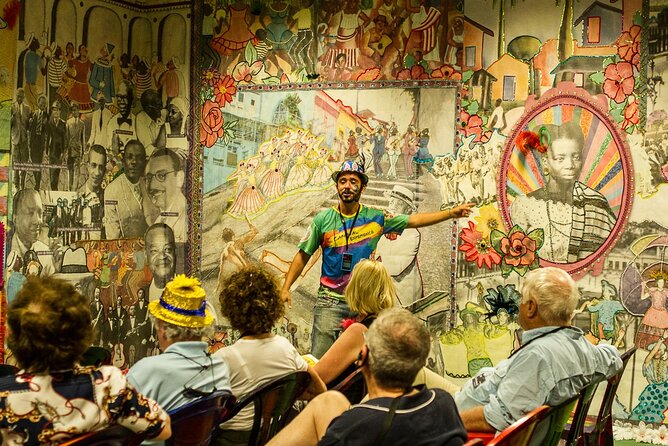
The activity is offered in English with a bilingual guide. That is important here because the value depends heavily on explanation. Without context, a costume or unfinished float can look interesting but rather mysterious. The guide connects the objects to samba school traditions, Carnival competition, and the practical work behind the parade.
Inside the Carnival workshop world
The main visit takes place at Cidade do Samba, where you learn about the samba school and its preparation work. The experience is designed to explain how Carnival happens behind the scenes, rather than simply placing you in front of a finished show.
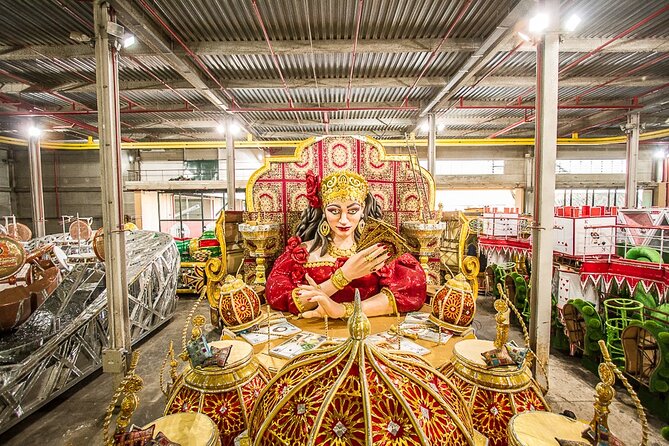
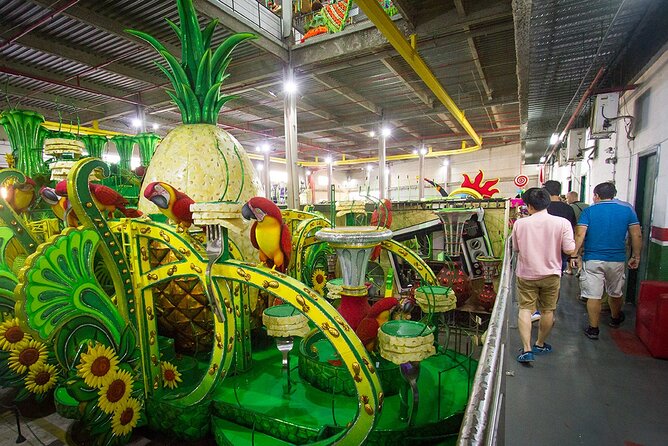
You might see parade materials, float construction areas, costumes, and other visual elements connected with the samba schools. The exact order and depth of the visit may vary, but the focus is clear: this is a production visit with cultural context.
One particularly useful detail is the attention given to a samba school’s winning year. That kind of story helps turn the visit from a general introduction into something more specific. You learn how success in Carnival is remembered and how a school’s identity is tied to its past performances.
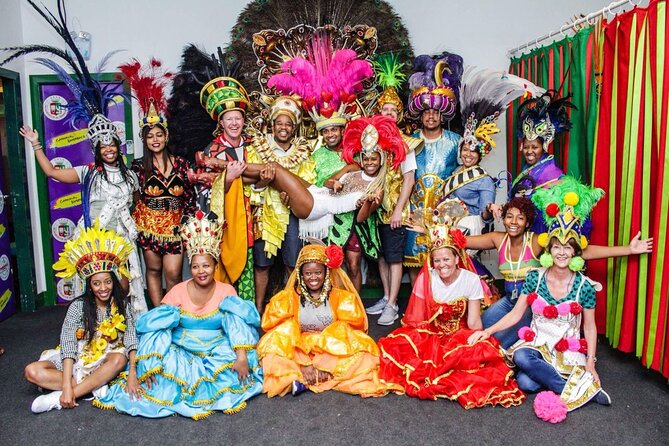
I also like that the experience does not stop at observation. You can try on costumes and learn a little samba. These activities keep the visit from becoming a lecture, and they are likely to appeal to families, first-time visitors, and anyone who wants a more relaxed cultural experience.
Do not expect a full samba lesson. The available information describes learning a little samba, not a formal class. Think of it as a short introduction that adds movement and humor to the visit. If you are shy about dancing, the activity should still be manageable because it is presented as part of a guided cultural outing, not as a test.
Floats, costumes, and the work behind the parade
Floats are among the most useful parts of this experience because they show the scale of Carnival. A parade float is not just decoration rolling down a street. It is part of a larger theme and must work with costumes, music, and choreography.
The tour gives you time to hear how this process works. One account describes the experience as about 70 minutes for each float, though the overall activity is advertised at approximately two hours. I would treat that timing as a rough guide rather than a promise that every float receives the same amount of attention.
This is also where the competitive side becomes clearer. Samba schools are not preparing random displays. They are building a performance that must make sense as a whole and compete with other schools. The guide helps explain the planning and effort that sit behind the final parade.
Costumes offer a more personal way to understand that effort. When you try one on, you get a direct sense of the scale and visual style of Carnival clothing. It is a fun photo opportunity, but it also shows how costume design helps create a shared identity for performers in the parade.
Keep in mind that food and drinks are not included. The caipirinha is listed as one of the tour highlights, but the inclusion wording says food and drinks are not part of the standard package. I would confirm whether the cocktail is included in your chosen booking option or available as an extra. That small check avoids confusion at the start.
A few more Rio de Janeiro days to weigh up
- Rio de Janeiro: 6-Stop Highlights of Rio with Lunch
★ 4.4 · 5,157 reviews - Christ the Redeemer Entry Ticket by Corcovado Train
★ 4.4 · 4,476 reviews - Rio’s City Tour – Tickets for Christ, Sugar Loaf & Lunch included
★ 5.0 · 4,389 reviews - Full Day: Christ Redeemer, Sugarloaf, City Tour & Barbecue Lunch
★ 4.5 · 3,142 reviews
A small group with room for questions
The maximum group size is 20 people. That is not a private tour, but it is small enough to keep the guide’s explanation within reach. You should have a better chance of hearing the presentation and asking questions than you would in a large coach group.
Group size matters more than usual here because the visit combines explanation with activities. If the guide is discussing a float, costumes, and the samba school’s past, you want to be near enough to see what is being discussed. A group of up to 20 also makes costume and samba activities easier to manage than a much larger crowd.
The tour is described as suitable for most people. No special physical requirements are stated, so the activity should work for a wide range of visitors. Still, the information does not provide detailed accessibility notes. If you need step-free access or other specific arrangements, ask the provider before booking.
The English option is another practical advantage. Carnival terms and local traditions can be hard to understand from a quick visual visit alone. A bilingual guide gives you a better chance of following the cultural and competitive details, especially if this is your first introduction to samba schools.
Is the $31 price fair?
At $31 per person, the tour is reasonably priced for a two-hour cultural activity that includes admission and a bilingual guide. The value comes from access to a specialized Carnival site rather than from a long list of extras.
You are paying for three main things:
- Entry to Cidade do Samba
- Guided interpretation of Carnival and samba school preparation
- Activities such as costume use and a short samba introduction
If you choose hotel transfers, the price will be higher. That upgrade may be worthwhile if transportation to Santo Cristo would be inconvenient, but it is less important if you are already comfortable getting to the meeting point.
The price is less appealing if you expect a long, detailed workshop tour or a full meal and drinks. Food and drinks are not included, and the two-hour length puts a natural limit on how much technical detail the guide can cover.
For me, the strongest value is the cultural explanation. You can see Carnival costumes and floats in many settings, but learning how a samba school prepares for competition gives those objects meaning. The cost is also modest compared with a major Carnival event, while offering a useful activity outside the parade season.
How to plan your two hours
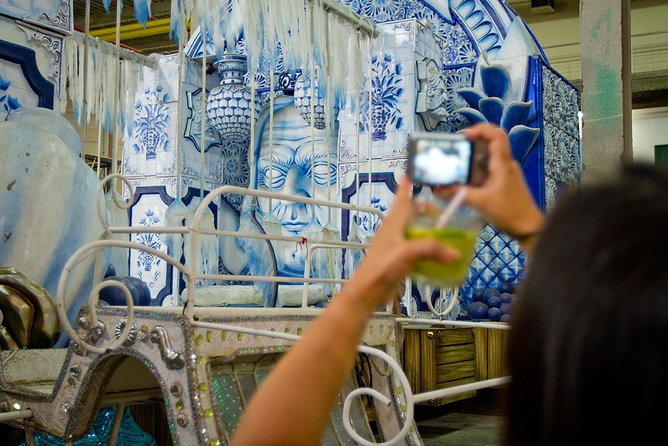
Plan on spending approximately two hours at the site. Because the activity ends back at the meeting point, you can arrange another Rio activity afterward, but leave enough time for the return transfer if you selected hotel pickup.
A few practical choices will improve the experience:
- Choose hotel transfers if you want the easiest start and finish.
- Meet at Cidade do Samba if you want the lower-cost option and can arrange your own transport.
- Confirm the drink arrangements before arrival.
- Bring a charged phone or camera if costume photos matter to you.
- Wear something comfortable for standing and light participation.
- Keep your questions for the guide, especially if you want to understand a particular float or winning Carnival year.
The activity is commonly booked about 24 days ahead. That does not mean you must reserve three weeks in advance, but it is a useful sign that you should not leave it until the last minute during a busy Rio visit.
Free cancellation is available if you cancel at least 24 hours before the local start time. Changes or cancellations made inside that window are not accepted for a refund. That policy is fairly simple, but remember that the cutoff follows Rio local time.
Who will enjoy this Carnival visit most?
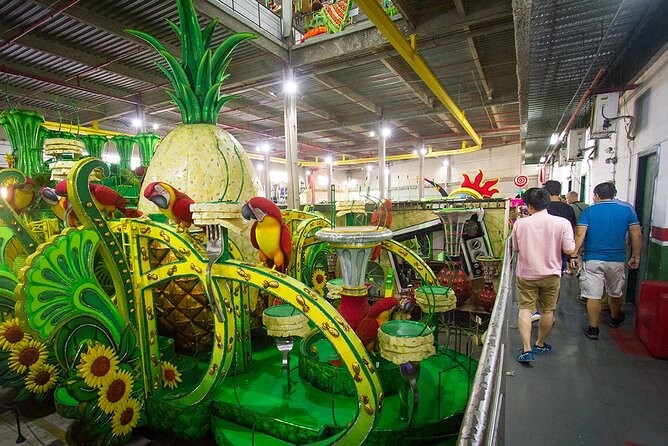
I would recommend this tour to you if Carnival interests you beyond the parade itself. It is a good choice for first-time visitors who want cultural context, families looking for an interactive activity, and anyone who enjoys seeing how a major celebration is produced.
It also suits people who prefer a short, focused outing. Two hours is long enough to give Carnival some meaning without taking over an entire day in Rio. You can combine it with other activities in the city, provided you allow time to reach Santo Cristo and continue afterward.
The tour may be less satisfying if you want a quiet museum-style experience. Trying on costumes and learning samba make it lively and participatory. It may also disappoint you if you expect unrestricted access to every workshop or a detailed account of every technical stage of float construction. The available format is a guided introduction, not an open worksite visit.
I would also think twice if you are unwilling to arrange transport to the meeting point and do not want to pay for the transfer upgrade. The meeting location is fixed, and the tour does not end at a different Rio attraction.
My verdict on the Carnival Backstage Tour
You should book this experience if you want to understand why Rio Carnival takes so much planning, labor, and competition. The strongest elements are the visit to Cidade do Samba, the explanation of samba school traditions, the look at winning Carnival work, and the chance to try costumes and a little samba.
At $31, it offers good value for a short cultural activity, especially with admission and a bilingual guide included. Just keep the limits in mind: it lasts about two hours, food and drinks are not included, and the amount of time given to each float may vary.
Choose the transfer option if convenience matters more than saving money. Choose the meeting-point option if you are comfortable arranging your own route. Either way, this is a useful way to see Carnival as a carefully built performance, not simply a spectacular parade that appears once a year.
FAQ
Where does the Carnival Backstage Tour begin?
The tour begins at Samba City, Cidade do Samba, Rua Rivadávia Corrêa, 60, Santo Cristo, Rio de Janeiro, Brazil.
Where does the tour end?
The activity ends back at the meeting point at Cidade do Samba.
How long does the tour last?
The tour lasts approximately two hours. The amount of time spent on individual floats may vary.
Is hotel pickup available?
Yes. You can select an option with round-trip transfers from your hotel. You can also choose the option that begins and ends at Cidade do Samba.
Is the tour offered in English?
Yes. The experience is offered in English and includes a bilingual guide.
What is included in the price?
The tour includes the entrance ticket and bilingual guide. Transfers are included only according to the option you select. Food and drinks are not included in the standard inclusions.
Can I cancel for a refund?
Yes. You can cancel at least 24 hours before the experience start time for a full refund. Cancellations or changes made less than 24 hours before the start time are not accepted.
Newest reviews from around Rio de Janeiro
- PRIVATE TOUR – Christ the Redeemer and Sugar Loaf★ 4.5 · 9 reviews
- Christ Statue and Sugarloaf Private Tour with a Photographer★ 5.0 · 9 reviews
- Cidade do Samba Behind-the-Scenes Carnival Tour in Rio de Janeiro★ 4.0 · 5 reviews
- Christ the Redeemer Trail x Lage Park★ 5.0 · 7 reviews
- Christ the Redeemer and City Tour★ 5.0 · 20 reviews
- Christ the Redeemer Adventure★ 5.0 · 12 reviews
- Private Tour of Christ the Redeemer in Rio de Janeiro★ 5.0 · 2 reviews
- Christ the Redeemer, Selaron Steps and Santa Teresa Half-day Tour★ 4.5 · 15 reviews
Samba & Carnival Shows, compared.

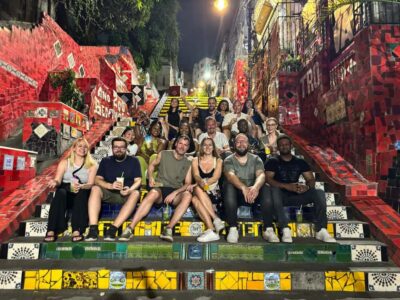
Pub Crawl in Lapa with Cachaça Tasting and Live Samba
Read our review →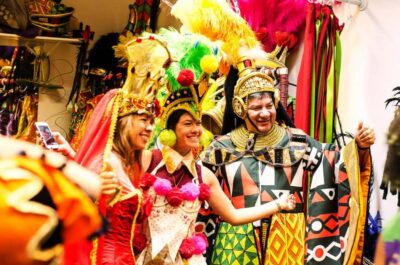
Carnival Backstage Tour at Samba City with Cocktail
Read our review →
Hop-ON Hop-OFF Sightseeing Bus in Rio de Janeiro – Rio Samba Bus
Read our review →
Santa Teresa, Lapa, and Cinelândia with Tram Ride and Selarón Steps
Read our review →
Carnaval Experience: Backstage Tour at Samba City with Cocktail
Read our review →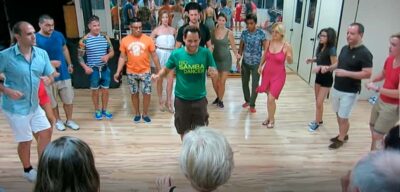

Browse the lists this tour appears in