
Reviewed · BEACH TOURS
Brazilian Cooking Class in Copacabana with Hotel Pickup
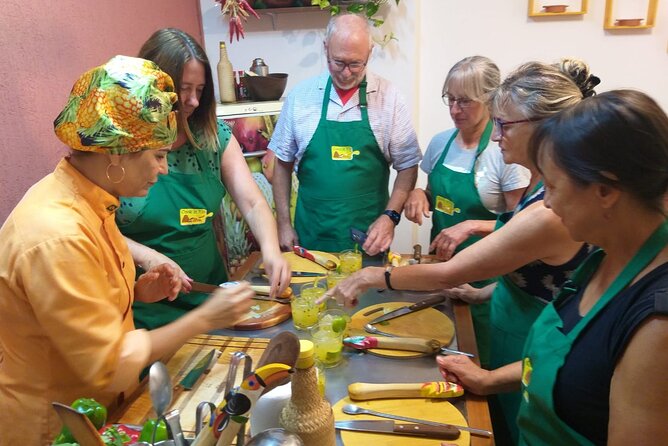
Come hungry, leave with recipes. This four-hour Brazilian cooking class gives you a hands-on way to understand Rio through food, from feijoada and seafood moqueca to pepper jam, cachaça, and brigadeiro. I like the small-group format, limited to 15 people, and the chance to work directly with local chefs such as Alex and Simone.
I also like the hotel pickup and drop-off, especially if you are staying in Leblon, Ipanema, or Copacabana. The main drawback is the transfer service: timing may not be perfectly tight, and one reported experience involved a 20-minute wait outside after class. If you prefer complete control, Uber or a taxi may be simpler.
The class begins at 3:30 p.m. at the Hotel Rio Othon Palace in Copacabana and runs for about four hours. You prepare a substantial Brazilian meal, sit down to eat it with the group, and make drinks along the way. At $140 per person, it is not a cheap dinner, but the price includes ingredients, instruction, the meal, and roundtrip transfer.
In This Review
- Key points to know before booking
- Why a cooking class works so well in Rio
- Starting at 3:30 p.m. in Copacabana
- Cheese, pepper jam, and the first taste of Brazil
- Sausage, onions, and a little cachaça
- Choosing between feijoada and seafood moqueca
- Feijoada
- Seafood moqueca
- Brigadeiro finishes the meal on a sweet note
- Caipirinha and coconut shake
- The chefs are a major part of the value
- Is $140 a fair price?
- Who will enjoy this Copacabana class most?
- Booking, cancellation, and practical details
- Should you book it?
- FAQ
- How long does the Brazilian cooking class last?
- Where does the class begin?
- Is hotel pickup available?
- What main dishes are prepared?
- Are drinks included?
- What is the cancellation policy?
Key points to know before booking
- You help prepare the main course: Choose between feijoada, a black bean and meat stew, or seafood moqueca, a Brazilian fish stew.
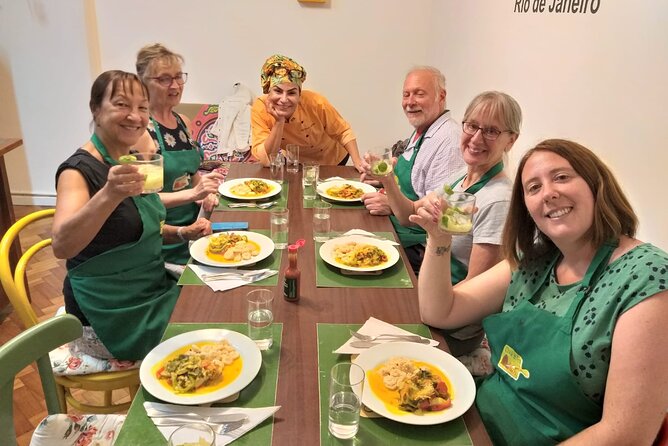
- The menu is more than one dish: You also make cheese with pepper jam, sausage and onion flambéed with cachaça, brigadeiro, and two drinks.
- Chef instruction is central: Alex and Simone are praised for clear explanations, practical cooking guidance, and connections between food and Brazilian culture.
- Pickup covers prime beach districts: Hotel service is available in Leblon, Ipanema, and Copacabana, with meeting points in Botafogo, Flamengo, Catete, and Centro.
- The class is social but not huge: A maximum of 15 people leaves room for group conversation and hands-on work.
- The return transfer needs patience: Pickup and drop-off are useful, but you should confirm the time and allow a little flexibility after dinner.
Why a cooking class works so well in Rio
Rio is easy to admire from a beach, a lookout, or a cable car. Food gives you a different route into the city. Brazilian cooking is shaped by Indigenous ingredients, Portuguese methods, African influence, regional produce, and everyday home cooking. A class lets you taste those connections instead of simply reading about them on a menu.
This experience is especially useful early in your visit. You get a short introduction to dishes you may see elsewhere in Brazil, plus a chance to ask what they are and how they are normally eaten. The local cooking guidance also gives you ideas for ordering at restaurants later.
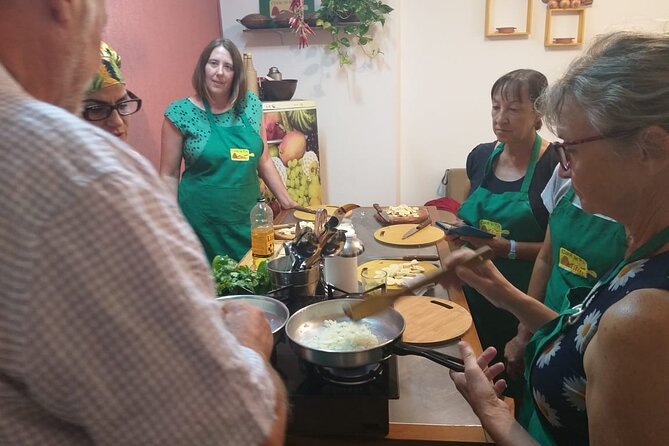
I like that this is not presented as a formal demonstration where you sit quietly and watch someone else cook. You help prepare several dishes. That matters because the best part of a cooking class is usually the small practical lesson: how ingredients are combined, when a sauce is ready, or how a familiar dish gets its Brazilian character.
The group size has a sensible limit of 15. That is large enough to create conversation, but smaller than a mass-market food event. The class is offered in English, so you can follow the explanations without needing to translate cooking instructions as you go.
More Beach Tours in Rio de Janeiro
- Rio de Janeiro: Beginner Samba Lesson in Ipanema
★ 4.9 · 1,071 reviews - Pedra do Telégrafo Hike and Beach Full-Day Tour
★ 4.5 · 417 reviews - Arraial do Cabo Day Trip from Rio de Janeiro: Boat Tour & Beach
★ 4.5 · 390 reviews
Starting at 3:30 p.m. in Copacabana
The meeting point is the Hotel Rio Othon Palace, at Avenida Atlântica, 3264, on the fifth floor. The class starts at 3:30 p.m., giving you an afternoon activity that leads naturally into dinner.
For most people, the pickup is the easiest option. Service is offered from hotels in Leblon, Ipanema, and Copacabana. Pickup or meeting points are also available in Botafogo, Flamengo, Catete, and Centro. You need to contact the operator to confirm the exact timing based on your hotel.
That confirmation matters. Rio traffic can make a short distance take longer than expected, and the published start point is specific. If you are staying outside the listed areas, do not assume a complimentary hotel pickup is available. Pickup from Barra or Recreio costs an additional $10 or BRL 40.
The class ends back at the meeting point. The return is convenient if your evening plans are nearby, but it is worth keeping your schedule open after the cooking ends. A reported problem involved a wait of about 20 minutes on the street for the driver. That may not happen to you, but it is a good reason to confirm the return arrangement before class and avoid booking a tight evening activity afterward.
Cheese, pepper jam, and the first taste of Brazil
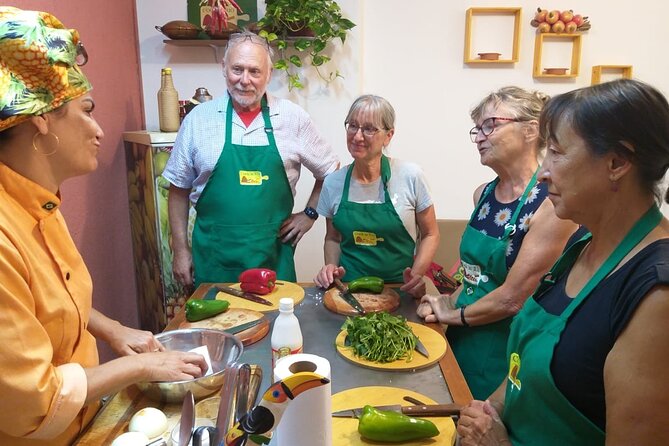
The cooking begins with queijo coalho com geleia de pimenta, or cubes of salty Brazilian cheese covered with homemade pepper jam. Queijo coalho is a firm cheese often associated with northeastern Brazil. It holds its shape well when heated, which makes it a useful ingredient for grilling or pan cooking.
The pairing is simple and smart. The cheese brings salt and a firm bite, while the pepper jam adds sweetness and heat. This starter gives you an early lesson in balance, a common feature of Brazilian food where savory ingredients meet fruit, sugar, spice, or acidity.
Because you help prepare it, you can pay attention to the texture and proportions instead of just eating the finished plate. The dish is also approachable for people who are new to Brazilian cuisine. It is less intimidating than a stew built around unfamiliar ingredients, yet it still gives you a clear local flavor.
Sausage, onions, and a little cachaça
Next comes linguiça with cebola flambada na cachaça, or sautéed sausage and onions finished with cachaça. Linguiça is a seasoned Brazilian sausage, and the onions bring sweetness as they cook. The cachaça adds a distinctly Brazilian touch and makes this more than an ordinary sausage-and-onion starter.
This is the kind of dish where a chef’s timing advice is useful. You need to know when the onions have softened, when the sausage has browned, and how to handle the cachaça during cooking. The technique is not complicated, but the sequence affects the final taste.
Cachaça is Brazil’s sugarcane spirit and the base of the caipirinha. Alcoholic beverages are listed as not included, so you should confirm exactly how the cooking alcohol and drink preparation are handled when you book. The menu includes making a caipirinha and a coconut shake, but the stated exclusions mean you should not assume every alcoholic drink is covered in the price.
More Cooking Classes in Rio de Janeiro
- Family Cooking Class in Rio Make 9 Brazilian Dishes Together
★ 5.0 · 32 reviews - 3-Hour Brazilian Cooking Class in Rio de Janeiro
★ 5.0 · 30 reviews - Hands-On Cooking Class in Rio: Iconic Street Foods & Caipirinhas
★ 5.0 · 11 reviews - Brazilian Breakfast Cooking Class in Rio: Bake and Blend
★ 5.0 · 5 reviews
Choosing between feijoada and seafood moqueca
The main event is one of two classic Brazilian dishes: feijoada or seafood moqueca. The exact choice may depend on the class schedule, so ask ahead if you have a strong preference.
Feijoada
Feijoada is a hearty black bean stew made here with sausages and sundried beef. It is one of Brazil’s best-known dishes and a filling choice for a dinner class. The beans create a thick, savory base, while the meats add salt, smoke, and depth.
Preparing feijoada gives you a useful look at slow-cooked Brazilian comfort food. It is not a delicate dish. You are working with strong ingredients and a meal designed to satisfy. If you like stews, beans, sausage, and generous portions, this is likely the better main course for you.
The tradeoff is that feijoada is heavy. After cheese, sausage, dessert, and drinks, the full meal can be substantial. If you have a sensitive appetite or want something lighter in Rio’s warm weather, moqueca may suit you better.
Seafood moqueca
Moqueca is a Brazilian fish stew and offers a different style of cooking. Compared with feijoada, it is likely to feel lighter and more seafood-focused, though the exact ingredients and preparation can vary by recipe.
One particularly positive account of the class centered on preparing moqueca with Chef Simone. The dish was considered good enough to repeat at home, which is an important point for a cooking class. A recipe is most valuable when it feels practical after you return home, not just impressive during the lesson.
Moqueca also gives you a useful introduction to a dish you may encounter in coastal parts of Brazil. If you enjoy fish and want a main course that reflects Rio’s seaside setting, ask whether moqueca will be served on your date.
Brigadeiro finishes the meal on a sweet note
Dessert is brigadeiro, a Brazilian chocolate truffle. It is a familiar national favorite and a fitting end to a class that mixes home-style food with simple techniques.
Brigadeiro is compact but rich, so one small sweet can finish the meal nicely after the stew. Making it yourself also gives you a recipe that is easy to remember and adapt later. This is a less formal dessert than a plated restaurant creation, which fits the friendly, participatory character of the class.
I appreciate the menu’s range. You are not spending four hours on one complicated dish. You move from a quick starter to sausage, a full main course, dessert, and drinks. That variety keeps the class active and gives you a better sense of how different Brazilian flavors work together.
Caipirinha and coconut shake
The drinks add another layer to the class. You make a caipirinha, Brazil’s famous cachaça-based cocktail, and a coconut shake. The contrast is useful: one drink is sharp and spirit-based, while the other is creamy and cooling.
Making the caipirinha connects directly with the cachaça used in the sausage dish. You get to see the ingredient in two roles, one savory and one alcoholic. The coconut shake provides a gentler option and helps balance the stronger flavors in the meal.
Again, check the alcohol policy before arrival. Alcoholic beverages are not included according to the stated terms, even though drink preparation is part of the activity. That wording is worth clarifying so you know if the class supplies the ingredients for tasting or if there is an extra charge.
The chefs are a major part of the value
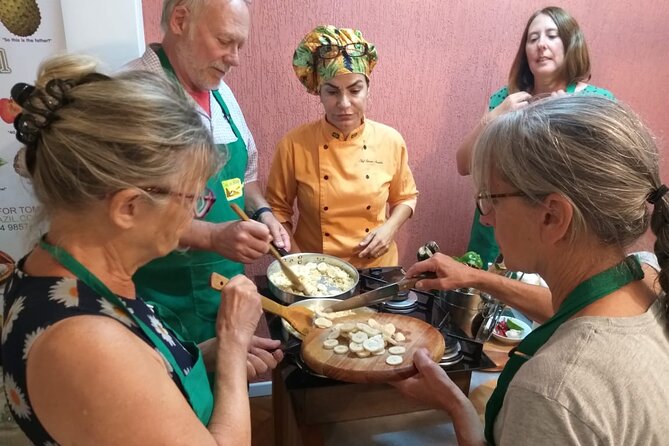
The strongest part of this class is the instruction. Alex is praised for offering insight into Brazilian dishes while keeping the work hands-on. That combination is important. You are not simply given a finished recipe, and you are not left to guess what to do next.
Chef Simone is also praised for explaining Brazilian food and culture, along with cuisines from other places. That wider perspective can make the class more interesting for people who enjoy comparing cooking traditions rather than focusing only on measurements and methods.
The social side matters, too. The class brings together people from different places, and the cooking gives everyone something easy to talk about. One especially successful session included Brazilian participants from different parts of the country, adding regional viewpoints to the chef’s explanations. You may find that the class becomes a useful source of ideas for places to see and foods to try during the rest of your Rio visit.
That cultural exchange is hard to schedule on your own. A restaurant can serve you feijoada, but it cannot give you the same chance to ask how a local cook thinks about the dish. A cooking class costs more than dinner, but it gives you instruction, conversation, and a meal in one sitting.
Is $140 a fair price?
At $140 per person, this is a premium activity. You are paying more than you would for a simple Brazilian meal, and the class may not suit a strict budget.
The value improves if you make use of every included element: hotel transfer, chef instruction, several dishes, dessert, and drinks. You also save the effort of finding a suitable restaurant after a long afternoon. For couples, families, and small groups who want a planned evening with a cultural focus, the convenience can justify the price.
The value is less convincing if you mainly want to eat. If you would rather spend four hours sightseeing and then order feijoada or moqueca at a restaurant, the cooking class is probably not the economical choice. You are paying for participation, not just calories.
Group discounts are offered, though the exact savings are not specified. Ask about them if you are booking with several people. The maximum group size of 15 keeps the experience from becoming too large, but it also means the class is not a private lesson.
Who will enjoy this Copacabana class most?
I would recommend this experience to you if you enjoy food, want contact with local cooking, and prefer an activity where you take part rather than watch. It is also a good choice for an afternoon when you want a break from Rio’s major sights.
It suits couples and friends particularly well because the meal creates a natural shared activity. Families may enjoy it too, though the four-hour length and rich menu may be a lot for very young children. The provided information does not specify a child age policy, so confirm before booking if that matters to you.
This is also a good option for a return visit to Rio. If you have already seen the major viewpoints and beaches, cooking gives you a different reason to spend an afternoon in Copacabana.
You may want to skip it if you dislike group activities, need a tightly timed evening, or have strict dietary requirements. No dietary substitutions are specified, so contact the operator before booking with allergies, vegetarian needs, or seafood restrictions.
Booking, cancellation, and practical details
Confirmation is provided at booking, and the activity is offered in English. The meeting area is near public transportation, but the included transfer is the easiest plan for eligible hotels.
The experience requires a minimum number of participants. If the operator cancels because that minimum is not reached, you will be offered another date or experience, or a full refund.
You can cancel for a full refund up to 24 hours before the local start time. Changes or cancellations made less than 24 hours before the start are not accepted for a refund. Keep the cutoff in mind if your Rio plans are still shifting.
Should you book it?
Book this class if you want a friendly, hands-on introduction to Brazilian food and like the idea of eating what you help prepare. The best reasons to go are the mix of dishes, the chance to make feijoada or moqueca, and the personable instruction associated with Alex and Simone.
I would book the cooking class, but I would confirm two points first: which main course will be prepared and how the alcoholic ingredients are handled. I would also reconfirm the pickup and return time, especially if staying outside the main beach districts.
Skip it if your priority is the lowest-cost dinner or a perfectly timed transfer. For everyone else, this is a practical way to turn an ordinary evening meal into a useful, social introduction to Brazil.
FAQ
How long does the Brazilian cooking class last?
The experience lasts approximately four hours. It begins at 3:30 p.m. and ends back at the meeting point.
Where does the class begin?
The class begins at the Hotel Rio Othon Palace, Av. Atlântica, 3264, fifth floor, in Copacabana.
Is hotel pickup available?
Pickup is available from most hotels in Leblon, Ipanema, and Copacabana. Meeting points are available in Botafogo, Flamengo, Catete, and Centro. You should contact the operator to confirm the time based on your hotel.
What main dishes are prepared?
The class prepares either feijoada, a black bean stew with sausages and sundried beef, or seafood moqueca, a Brazilian fish stew. Confirm the planned dish if you have a preference.
Are drinks included?
The activity includes making a caipirinha and a coconut shake. Alcoholic beverages are listed as not included, so confirm the details of the cachaça and any other alcoholic ingredients before the class.
What is the cancellation policy?
You can cancel up to 24 hours before the start time for a full refund. Cancellations or changes made less than 24 hours before the local start time are not accepted for a refund.
More Workshops in Rio de Janeiro
- Rio de Janeiro: Samba Class in Copacabana
★ 4.6 · 262 reviews - samba class in Ipanema
★ 5.0 · 182 reviews - Samba Class and Samba Night Club Tour in Rio
★ 5.0 · 177 reviews - Brazilian BBQ Class in Rio (3.5h): 10 Recipes & Bottomless Drinks
★ 5.0 · 118 reviews
Newest reviews from around Rio de Janeiro
- PRIVATE TOUR – Christ the Redeemer and Sugar Loaf★ 4.5 · 9 reviews
- Christ Statue and Sugarloaf Private Tour with a Photographer★ 5.0 · 9 reviews
- Cidade do Samba Behind-the-Scenes Carnival Tour in Rio de Janeiro★ 4.0 · 5 reviews
- Christ the Redeemer Trail x Lage Park★ 5.0 · 7 reviews
- Christ the Redeemer and City Tour★ 5.0 · 20 reviews
- Christ the Redeemer, Selaron Steps and Santa Teresa Half-day Tour★ 4.5 · 15 reviews
- Christ the Redeemer Adventure★ 5.0 · 12 reviews
- Private Tour of Christ the Redeemer in Rio de Janeiro★ 5.0 · 2 reviews
Beach Tours, compared.




Pedra do Telégrafo Hike and Beach Full-Day Tour
Read our review →
Arraial do Cabo Day Trip from Rio de Janeiro: Boat Tour & Beach
Read our review →
Jeep tour 18 beaches, Telegraph Stone hiking & amazing sunset + photographer
Read our review →
Paraty Bay: Islands & Beaches Boat Tour with Snorkeling
Read our review →
Browse the lists this tour appears in