
Reviewed · WALKING TOURS
Bossa Nova Walking Tour
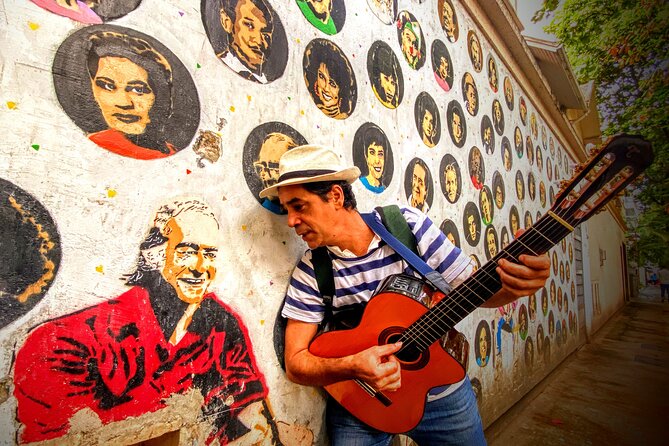
Rio sings in more than one key. This three-hour walk links Ipanema and Copacabana with the story of Bossa Nova, using live guitar, local landmarks, and songs by the musicians who made Rio famous. I like the small group size, capped at eight, and I like that your guide is also a working musician, not someone reading a script between stops. Gui Guimaraes, also called Guilherme in guest comments, plays and sings as he explains the music.
The main thing to consider is the weather. This is an outdoor walking tour with no included transport, food, drinks, or water. You should arrive ready to walk between seven stops, and you should bring your own water. The route is best for people who enjoy listening, strolling, and learning at a relaxed pace rather than racing through a long list of sights.
In This Review
- Key points to know before you book
- Why this walk works better than a standard music lecture
- Praça Nossa Senhora da Paz: begin with the bigger story
- Praça General Osório and the Hippie Fair connection
- Copacabana Beach: hear how the shore shaped the music
- Dorival Caymmi’s statue and Bahia’s influence
- Parque Garota de Ipanema and the woman behind the song
- The Tom Jobim statue and the composer’s role
- Casa de Cultura Laura Alvim: culture beyond the songs
- What you get for $48.03
- Who will enjoy this three-hour Rio experience
- Weather, pace, and practical planning
- Should you book the Bossa Nova Walking Tour?
- FAQ
- How long does the Bossa Nova Walking Tour last?
- Where does the tour begin?
- Where does the tour end?
- What is included in the price?
- Is transportation included?
- Are food, drinks, or water included?
- How many people can join the tour?
- What happens if the weather is poor?
Key points to know before you book

- Live guitar is the heart of the tour: Gui accompanies the story with songs at nearly every stop.
- The route covers famous music landmarks: You visit Ipanema, Copacabana Beach, statues of Dorival Caymmi and Tom Jobim, and Parque Garota de Ipanema.
- The group is limited to eight people: That gives the music and discussion a more personal feel.
- The tour connects music to place: You learn why beaches, cafés, neighborhoods, and local figures mattered to Bossa Nova.
- It ends near Restaurante e Bar Garota de Ipanema: The finish is at the corner of Vinícius de Moraes and Prudente de Morais.
- The price is $48.03 per person: For three hours with a guide and live musician, it offers fair value if music is a major part of your Rio visit.
Why this walk works better than a standard music lecture
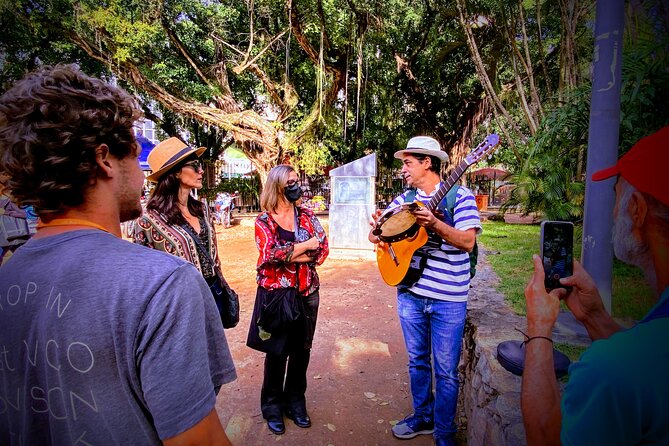
Bossa Nova can be hard to explain with dates and names alone. It is a quiet, rhythmic style, and much of its appeal comes from the way a song feels. This tour uses the guitar to make the subject easier to grasp. You hear the music while standing in the neighborhoods linked to it.
That format is the tour’s strongest feature. Instead of sitting in a room while someone describes Brazilian music, you move through Ipanema and Copacabana as Gui plays. The songs give shape to the history. You can hear how the music connects with Rio’s beaches, urban life, Bahian traditions, and the poets and composers who became central to the style.
Gui’s role matters. He is not only guiding the route. He is also performing the music, which lets him bring the subject into the moment. One particularly memorable detail is his guitar, described by one participant as a fabulous instrument made in Granada, Spain. Small touches like that help the walk feel personal rather than packaged.
The tour also welcomes people who are not serious music fans. You do not need to know every song or composer before you arrive. The guide explains the background as you go, then uses familiar melodies and live performance to keep the discussion moving.
More Walking Tours in Rio de Janeiro
- Rio de Janeiro: Rocinha Favela Walking Tour with Local Guide
★ 4.8 · 3,052 reviews - Rio De Janeiro: Half-Day Rocinha Favela Walking Tour
★ 4.7 · 2,272 reviews - 3 Hour Rocinha Favela Walking Tour with a Local Guide
★ 5.0 · 833 reviews
Praça Nossa Senhora da Paz: begin with the bigger story
The tour starts at Praça Nossa Senhora da Paz in Ipanema. This is the welcome and briefing point, so you get an introduction to Brazilian music and the basic shape of the walk before setting off.
The opening lasts about 20 minutes and includes a live guitar performance. That is useful because Bossa Nova did not appear in isolation. The first explanation sets up the wider musical story, giving you a frame for the later stops devoted to particular composers, singers, places, and traditions.
I like beginning here because it gives the group time to meet the guide and settle into the style of the tour. You are not asked to absorb a long lecture all at once. The music arrives early, and that makes the rest of the walk easier to follow.
Admission is free, as it is at every listed stop. Your payment covers the guided experience and live musician, not entrance tickets.
Praça General Osório and the Hippie Fair connection
The next stop is Praça General Osório, where the guide explains the Hippie Fair and its connection to the Bossa Nova period. This section lasts about 15 minutes and includes another guitar performance.
This stop adds a useful local angle. Bossa Nova is often presented through its best-known names, but music also grows through ordinary public spaces where people meet, sell things, perform, and exchange ideas. The Hippie Fair gives the guide a chance to connect the movement with the social life of Ipanema.
You should expect this part to be more about context than sightseeing. The square is not treated as a grand monument. Its value comes from the story attached to it and from the way the guide links the setting to the music.
If you are mainly looking for famous buildings, this may feel modest. If you like seeing how a neighborhood becomes part of a cultural story, it earns its place on the route.
Copacabana Beach: hear how the shore shaped the music
At Copacabana Beach, the guide explains the neighborhood’s importance to Bossa Nova and Brazilian music. The stop takes about 20 minutes and includes live guitar.
Copacabana gives the tour a change of setting and a chance to consider how Rio’s famous shoreline helped shape the image and sound associated with the city. The beach is not just a backdrop for photographs here. It becomes part of the explanation of where the movement took root and why Rio mattered so much to Brazilian popular music.
The live performance is especially well suited to this stop. Hearing a guitar beside one of Rio’s best-known public spaces makes the connection between place and song easy to understand. You may find that this is one of the most atmospheric moments of the walk, though the experience will depend on the weather and the conditions around the beach.
The tour requires good weather, and this is where that rule makes practical sense. Much of the enjoyment comes from being outside, moving through public spaces, and stopping to listen. Bring water and dress for a three-hour walk.
Same patch of Brazil, a completely different sort of day:
- Rio de Janeiro: 6-Stop Highlights of Rio with Lunch
★ 4.4 · 5,157 reviews - Christ the Redeemer Entry Ticket by Corcovado Train
★ 4.4 · 4,476 reviews - Rio’s City Tour – Tickets for Christ, Sugar Loaf & Lunch included
★ 5.0 · 4,389 reviews - Full Day: Christ Redeemer, Sugarloaf, City Tour & Barbecue Lunch
★ 4.5 · 3,142 reviews
Dorival Caymmi’s statue and Bahia’s influence
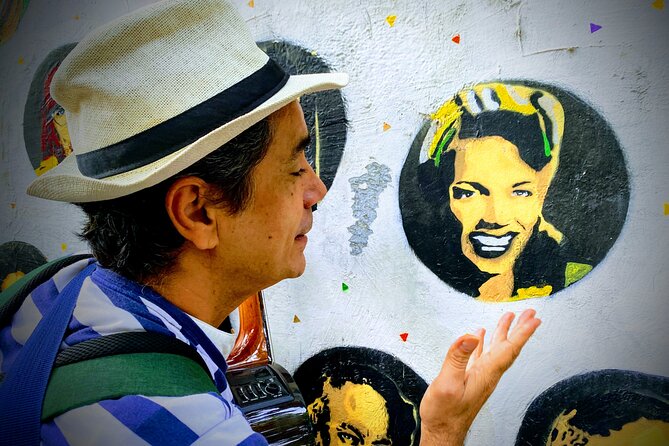
The route continues to the statue of Dorival Caymmi for roughly 20 minutes. Here, the guide discusses music from Bahia and its relationship to Bossa Nova, again with a guitar performance.
This is an important part of the tour because it widens the story beyond Rio. The music may be strongly linked with Ipanema and Copacabana, but Brazilian music has many regional voices. The Bahia section helps you see that Bossa Nova developed within a larger national culture rather than as a completely separate Rio invention.
Dorival Caymmi gives the guide a clear person through whom to tell that story. The statue turns an abstract musical connection into a physical stop. You are not simply hearing that Bahia influenced Brazilian music. You are standing beside a figure associated with that tradition while the guide explains the link.
The stop also helps keep the tour from becoming a procession of only the most famous Bossa Nova names. It gives room to consider other sounds and regions that helped shape Brazilian music.
Parque Garota de Ipanema and the woman behind the song
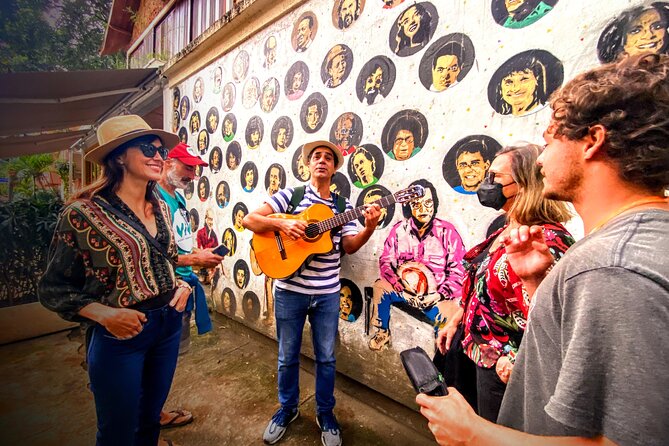
Parque Garota de Ipanema is the next major stop, with about 20 minutes devoted to explaining who the Girl from Ipanema was. Gui also performs on guitar.
This is likely to be one of the easiest sections to connect with, even if you know little about Bossa Nova. The song is internationally famous, and the park offers a direct way to connect its title and story with Ipanema.
The value here is not just hearing a familiar tune. The guide explains the person and local setting behind it, turning a well-known title into a Rio story. The live performance gives the stop its emotional lift. You hear the melody in the place tied to its identity, rather than treating it as a piece of background music.
I also like the pacing. After the broader discussion of Bahia and Brazilian music, this stop brings the focus back to a single song and its local meaning. It is an easy point for you to remember after the tour.
The Tom Jobim statue and the composer’s role
The statue of Tom Jobim receives about 20 minutes. The guide explains Antonio Carlos Jobim, one of the central composers associated with Bossa Nova, and performs more music on guitar.
Jobim is essential to understanding the movement, so this stop gives the walk a strong center. You learn about the composer while standing beside his statue, then hear the music that made his name important. That combination of biography, place, and performance is more effective than a simple list of achievements.
The stop also rewards listeners who already know a few Bossa Nova standards. You can hear the songs in a new setting and pay closer attention to the composer’s role. People who arrive with no musical background still get a clear introduction because the guide explains the person before performing the work.
Gui’s performance style is a major reason the tour earns such strong praise. His guitar playing turns the information into something participatory. You are not only being told how the music developed. You are hearing examples as the story unfolds.
Casa de Cultura Laura Alvim: culture beyond the songs
The final listed stop is Casa de Cultura Laura Alvim, where the guide spends about 15 minutes explaining Laura Alvim and her importance to Brazilian culture and music. The stop includes another guitar performance.
This adds a different kind of cultural history to the walk. The earlier stops focus mainly on musical figures, neighborhoods, and songs. Laura Alvim brings attention to the people and institutions that support Brazilian culture more broadly.
Because this is the last formal stop, it also helps round out the tour. You finish with a reminder that music does not live only in recordings or statues. It is connected to cultural spaces, public life, and the people who help keep artistic traditions visible.
The route ends at Restaurante e Bar Garota de Ipanema, at the corner of Vinícius de Moraes and Prudente de Morais. That is a practical finish in Ipanema, especially if you want to continue the evening with food or a drink, though those costs are not part of the tour.
What you get for $48.03
At $48.03 per person, this is not the cheapest way to walk through Ipanema. You are paying for more than a route between public squares and statues, though. The fee includes a guide and a live guitar musician, and in this case those are effectively the same person.
For a three-hour experience with seven stops and a group limited to eight, I consider the price fair. A large share of the value comes from the performance. If the tour were only a spoken history walk, I would judge the cost more strictly. The repeated live music changes the calculation.
You also avoid separate admission fees because every stop is free. Transport is not included, but the route begins at Praça Nossa Senhora da Paz and ends in Ipanema, so you need to arrange only your trip to the starting point and your onward plans after the finish.
The tour is booked an average of 23 days ahead, so I would not leave it until the final day of a short Rio stay. Small groups and limited departure availability can make early booking sensible.
Who will enjoy this three-hour Rio experience
I would choose this tour if you like music, local stories, and walking through real neighborhoods. It suits couples, friends, solo visitors, and small family groups who can take part in a three-hour outdoor activity.
You do not need to be a Bossa Nova expert. The explanations build from basic Brazilian music history to specific names and songs. One participant described the experience as enjoyable even for someone who was not a music lover, and that matches the design of the tour. The performance keeps it lively, while the guide supplies enough context to make each stop meaningful.
It may not suit you if you want a fast sightseeing route, a bus-based tour, or a complete survey of Brazilian music. The focus is Bossa Nova and its connections, not every style, artist, or era in Brazil.
Most people can participate, and service animals are allowed. The tour is near public transportation, but you should still plan your own transport because none is included.
Weather, pace, and practical planning
Allow about three hours from the meeting time at Praça Nossa Senhora da Paz to the finish at Restaurante e Bar Garota de Ipanema. The listed stop times total a little over two hours, leaving the rest for walking, transitions, and the flow of the performances.
Bring water because drinks are not provided. Food is also not included, so you can plan to eat before or after the tour. The final location gives you an easy place to continue your Ipanema plans, but the tour itself does not include a meal.
Good weather is required. If poor weather forces cancellation, you are offered another date or a full refund. You can also cancel for a full refund up to 24 hours before the start time. Changes or cancellations made less than 24 hours before the start time are not accepted for a refund.
The confirmation arrives when you book. Since the meeting point and end point are both clearly stated, you can organize the walk around the rest of your day, but do not treat the experience as a hop-on, hop-off outing. You stay with the walking route and the group.
Should you book the Bossa Nova Walking Tour?
I would book it if you want Rio to make more sense through music. The combination of Gui Guimaraes’s guitar, short explanations, and real Ipanema and Copacabana locations gives the tour a human scale. It is especially good for people who prefer a guide to tell stories through performance instead of delivering a formal lecture.
Skip it if you dislike outdoor walking, need included transport, or want a broad tour of Rio’s major sights. For everyone else, the $48.03 price is reasonable, the eight-person limit is appealing, and the route offers a memorable way to connect famous songs with the city that helped create them.
FAQ
How long does the Bossa Nova Walking Tour last?
The tour lasts approximately three hours.
Where does the tour begin?
It begins at Praça Nossa Senhora da Paz in Ipanema, Rio de Janeiro.
Where does the tour end?
It ends at Restaurante e Bar Garota de Ipanema, at the corner of Vinícius de Moraes and Prudente de Morais.
What is included in the price?
The price includes a tour guide and live guitar musician performance.
Is transportation included?
No. Transportation is not included.
Are food, drinks, or water included?
No. Food, drinks, and water are not included.
How many people can join the tour?
The tour has a maximum of eight participants.
What happens if the weather is poor?
The experience requires good weather. If it is canceled because of poor weather, you can choose another date or receive a full refund.
Newest reviews from around Rio de Janeiro
- PRIVATE TOUR – Christ the Redeemer and Sugar Loaf★ 4.5 · 9 reviews
- Christ Statue and Sugarloaf Private Tour with a Photographer★ 5.0 · 9 reviews
- Cidade do Samba Behind-the-Scenes Carnival Tour in Rio de Janeiro★ 4.0 · 5 reviews
- Christ the Redeemer Trail x Lage Park★ 5.0 · 7 reviews
- Christ the Redeemer and City Tour★ 5.0 · 20 reviews
- Christ the Redeemer, Selaron Steps and Santa Teresa Half-day Tour★ 4.5 · 15 reviews
- Christ the Redeemer Adventure★ 5.0 · 12 reviews
- Private Tour of Christ the Redeemer in Rio de Janeiro★ 5.0 · 2 reviews
Walking Tours, compared.



3 Hour Rocinha Favela Walking Tour with a Local Guide
Read our review →
Favela Tour Rio de Janeiro – Vidigal Walking Tour by Russo Guide
Read our review →

Private Walking and Cultural Tour Rocinha-Rio de Janeiro
Read our review →
Browse the lists this tour appears in