
Reviewed · SANTA TERESA & SELARóN STEPS TOURS
Ancient Rio and Santa Teresa Tour with Hotel pick-up and drop-off
Rio’s past is hiding in plain sight. This four-hour tour links Santa Teresa’s old tram and mansions with downtown squares, arches, theaters, and grand public buildings, giving you a useful look at the city beyond Christ the Redeemer and Sugarloaf Mountain. I especially like the mix of neighborhood streets and major civic landmarks, plus the chance to see Rio through guides such as Renato, Dario, Wagner, and Romeu, who have earned praise for their local knowledge and warm manner.
The hotel pickup and drop-off make this an easy first look at central Rio. At $55 per person, it is a fair deal if you want transportation and a guide in one package. The main caution is pace: some departures feel rushed, and the historic streets of Santa Teresa include uneven cobblestones. Also, the famous tram is viewed, not ridden.
In This Review
- Key points to know before booking
- Why Santa Teresa makes a smart starting point
- Parque das Ruínas and Laurinda Santos Lobo
- Arcos da Lapa: from water supply to tram route
- Praça XV and the story of imperial Rio
- Arco do Teles and old market streets
- Cinelândia and Rio’s grand public buildings
- The guide can make or break the morning
- Four hours, shared transport, and the pace
- Walking, weather, and the best day to go
- Is $55 a fair price?
- Who should book this Rio tour?
- FAQ
- How long does the Ancient Rio and Santa Teresa Tour last?
- What is included in the tour price?
- Where does the tour start and end?
- Does the tour include a ride on the Santa Teresa tram?
- Are museum and attraction entrance fees included?
- Is lunch included?
- How many people can join the tour?
- What should I wear?
- Can I cancel for a refund?
- Should you book it?
Key points to know before booking
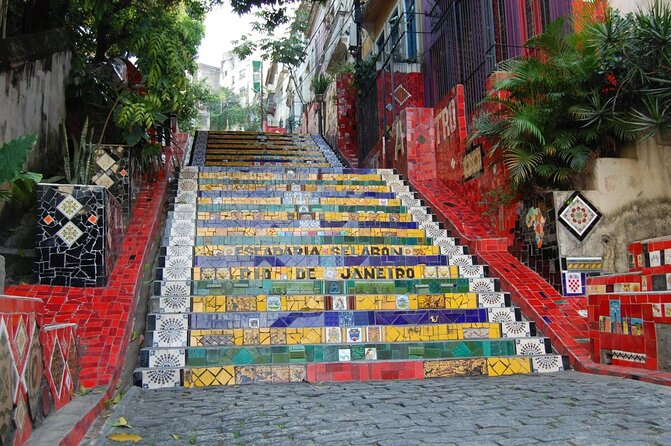
- Santa Teresa comes first: See early 20th-century mansions, colorful streets, artists’ connections, and the historic tram built in 1897.
- The tram ride is not included: The tour shows the tram and explains its importance, but you do not board it during this four-hour route.
- Downtown Rio is the real prize: Praça XV, Arco do Teles, Cinelândia, and the grand cultural buildings tell the story of Rio as Brazil’s former capital.
- Most stops are outside visits: The National Museum of Fine Arts, Municipal Theatre, and National Library are admired from the exterior.
- Guide quality matters: Strong guides such as Renato, Dario, Wagner, Romeu, and Monica have helped make this tour memorable, but a few departures have felt flat or poorly paced.
- Plan for walking: Comfortable shoes are essential, especially on Santa Teresa’s sloping, uneven streets.
Why Santa Teresa makes a smart starting point
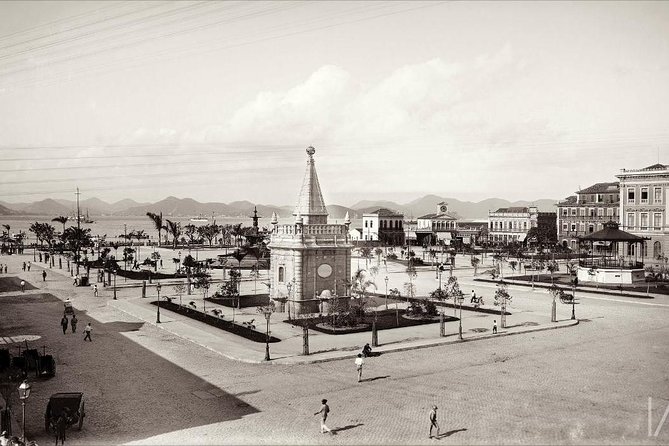
Santa Teresa feels unlike the beachfront districts most first-time visitors associate with Rio. Set on a hill above the city center, it has an older, quieter character, with handsome mansions dating from the early 1900s and a long connection to painters and other artists.
The first hour gives you time to see the neighborhood rather than simply photograph it from a vehicle. The streets, architecture, and art scene are the main attraction. You may also see graffiti and colorful details that give Santa Teresa its bohemian character.
The neighborhood’s tram is one of its most recognizable sights. Built in 1897, it remains an important part of Santa Teresa’s identity. But you should set your expectations correctly: this tour does not include a tram ride. That point has caused disappointment for some people who expected to board the old yellow streetcar.
The route is better understood as a walking and sightseeing visit to Santa Teresa. If riding the tram is a top priority, this four-hour experience may not be the right choice unless you arrange that activity separately or choose a private option with a different schedule.
Other wanders through Santa Teresa and the tiled steps:
- Rio’s Full Day: Selarón Steps, Christ & Sugarloaf – Tickets & Lunch Included
★ 5.0 · 2,724 reviews - Rio: Christ the Redeemer, Sugarloaf, Selaron & BBQ Lunch
★ 4.5 · 2,428 reviews - Rio’s Best_Corcovado, Sugar Loaf, Selaron, Cathedral and more
★ 5.0 · 864 reviews
Parque das Ruínas and Laurinda Santos Lobo
The next stop is the Centro Cultural Municipal Parque das Ruínas, a former home connected with Laurinda Santos Lobo, an important supporter of artists. The property now operates as a cultural center and continues that artistic role.
You have about 20 minutes here. That is enough for a quick look at the site and its cultural importance, but not enough for an extended program or leisurely visit. Since admission is free, the stop adds value without increasing the listed tour price.
This is one of the places where a good guide can make a real difference. A simple visit to an old house becomes more meaningful when you understand who lived there and why the site mattered to Rio’s artistic life. Guides praised for their passion, including Renato and Romeu, have been particularly effective at connecting individual places with broader Brazilian culture.
Arcos da Lapa: from water supply to tram route
The Arcos da Lapa is one of Rio’s most recognizable historic structures. It was originally built to transport water. Today, it supports the tram route serving Santa Teresa, giving the arches a second life as part of the city’s transportation network.
The scheduled stop lasts about 30 minutes. You can expect time for photographs and an explanation of the structure’s former purpose and current role. Admission is not included, although the tour information does not identify a separate entry activity at this stop.
The arches also help connect Santa Teresa with old central Rio. That connection is useful: instead of seeing isolated attractions, you begin to understand how neighborhoods, public works, transport, and city growth fit together.
Praça XV and the story of imperial Rio
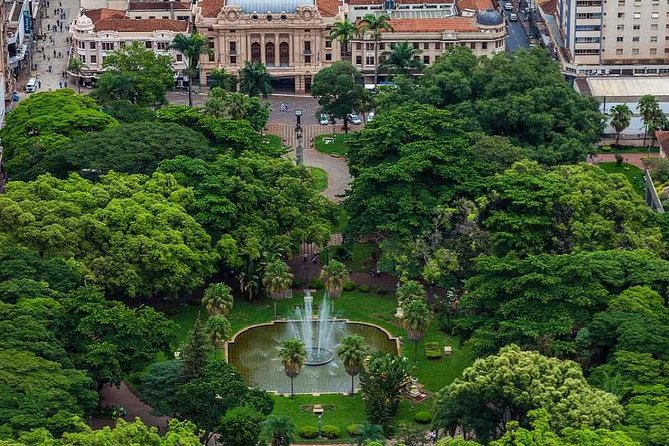
Praça Quinze de Novembro, usually called Praça XV, is one of the most important stops in the historic center. The square is surrounded by the Paço Imperial, Palácio Tiradentes, and the Legislative Assembly of Rio de Janeiro.
The Paço Imperial recalls Rio’s royal and imperial past. Palácio Tiradentes adds a political layer, while the ferry station at Praça XV links the square with destinations in Rio and Niterói. In other words, this is not merely a pretty plaza. It is a place where government, transport, and national history meet.
You have about 30 minutes here. That gives you time to look around and take photographs, though not enough for a detailed visit to every nearby building. If you enjoy public architecture and urban history, this section of the tour will likely be among your favorites.
The square can also help you understand why old downtown Rio feels different from the modern beach districts. The city’s power once centered here, and the surrounding buildings still show that earlier civic role.
A few more Rio de Janeiro days to weigh up
- Rio de Janeiro: 6-Stop Highlights of Rio with Lunch
★ 4.4 · 5,157 reviews - Christ the Redeemer Entry Ticket by Corcovado Train
★ 4.4 · 4,476 reviews - Rio’s City Tour – Tickets for Christ, Sugar Loaf & Lunch included
★ 5.0 · 4,389 reviews - Full Day: Christ Redeemer, Sugarloaf, City Tour & Barbecue Lunch
★ 4.5 · 3,142 reviews
Arco do Teles and old market streets
Arco do Teles leads into a small network of streets and alleys that once formed part of Rio’s downtown market area. Today, the area is known for bars and small restaurants.
The stop lasts about 20 minutes. That is enough for a walk through the passageways and a quick look at the atmosphere, but it is not designed as a meal break. Lunch is not included, and the overall schedule is too tight to assume you will have time for a relaxed restaurant visit.
This is also where pacing becomes important. Some guides allow time for photographs and conversation. Others move quickly from one point to the next. If you want to linger over a café, shop, or restaurant, tell your guide early, although the shared schedule may limit what is possible.
One appealing aspect of Arco do Teles is its scale. After the broad civic spaces of Praça XV, these narrow lanes offer a more intimate view of old Rio. You see how the historic center works at street level, not just through monuments.
Cinelândia and Rio’s grand public buildings
Cinelândia is the tour’s grand architectural finale. This famous square is surrounded by major historic buildings and offers several strong photo opportunities.
The tour then pauses outside three important institutions:
- The Museu Nacional de Belas Artes occupies a building designed in 1908 by Adolfo Morales de los Rios. It was built for the National School of Fine Arts, which inherited the role of the Imperial Academy of Fine Arts.
- Theatro Municipal do Rio de Janeiro opened in 1909 and is one of Brazil’s best-known theaters. It has hosted dancers, musicians, opera singers, and other performers, and maintains its own choir, symphony orchestra, and ballet company.
- Biblioteca Nacional was founded in 1810 by King João VI of Portugal. It is described as the largest library in Latin America, with almost nine million items, including rare books, manuscripts, early Brazilian newspapers, and letters written by Princess Isabel.
The important limitation is simple: you do not enter these buildings. The scheduled visits are brief, about 10 minutes each, and focus on exterior architecture.
That may sound like a small distinction, but it affects the value of the tour. If you want to see the interiors, collections, or performance spaces, you will need separate admission and additional time. The tour is meant to give you the setting, the design, and the historical context, not a full museum visit.
Still, the exterior stops work well in a short city tour. The buildings help explain the urban modernization carried out under Mayor Pereira Passos when Rio was the federal capital. You get a clear look at the ambition of that era, when the city was reshaped with monumental public architecture.
The guide can make or break the morning
The strongest feature of this experience is the guide. Several guides have received especially warm praise for their English, energy, historical explanations, and care with the group.
Renato has been praised for linking history and economics in a clear way. Dario has been described as patient, well informed, proud of Rio, and attentive to safety. Wagner and Jack Daniel have also made strong impressions, while Romeu has been appreciated for explaining Brazilian culture as well as the sights. Monica deserves special mention for helping a traveler whose husband had difficulty walking by reducing unnecessary walking where possible.
That said, guide quality is not perfectly consistent. A few people found their guide disengaged, difficult to understand, or inaccurate on some points. One departure felt more like a transfer between locations than a guided tour. This matters because the buildings are easier to appreciate when someone explains their role in Rio’s development.
The tour operator cannot guarantee which guide you will receive. You should judge the experience as a good-value shared tour with variable guiding rather than a guaranteed private lecture from a specialist.
Four hours, shared transport, and the pace
The listed duration is about four hours. An air-conditioned vehicle is included, and the group can contain up to 19 people in a minivan. Hotel pickup and drop-off are provided, with the activity ending back at the meeting point.
The stated starting point is Hotel Rio Othon Palace on Avenida Atlântica in Copacabana. Pickup time depends on your hotel location, so you need to contact the operator and watch your email or phone for the final arrangements. Do not assume that the time shown at booking is the exact moment the vehicle will arrive.
Timing has been one of the weaker points for some departures. Delays of more than 30 minutes, and in one case over an hour, have caused frustration. Carnival traffic can make the problem worse, and a full van may spend substantial time dropping off other people at the end.
This is not a private taxi. You are buying shared transportation, which keeps the price down but can add waiting and detours. A small group can be excellent, and some departures have had only four people. A full minivan gives you less room and may make it harder to see out, especially from the middle rear seats.
The pace can also vary. There are many stops packed into four hours, so the tour favors coverage over long visits. If you want to photograph every façade, sit for coffee, shop in Santa Teresa, and explore a museum interior, this route will feel too tight.
Walking, weather, and the best day to go
Bring comfortable walking shoes. Santa Teresa has uneven cobblestones and slopes, and the historic center also involves walking between buildings and squares. The tour is suitable for most people, but it is not a good fit for anyone with serious walking difficulties unless you discuss your needs in advance.
Monica’s assistance to a traveler with limited mobility shows that individual guides may be able to help. Still, you should not expect a fully accessible route. Historic streets and short scheduled stops limit what can be changed.
Day and date matter. On Mondays, shops and some attractions in Santa Teresa may be closed. New Year’s Day can also leave downtown stores and handicraft shops shut. A Sunday morning may be a good choice if you prefer a quieter downtown, but the tradeoff is that some businesses may not be open.
The tour requires good weather. If poor weather cancels it, you can receive a different date or a full refund. You can also cancel for a full refund if you do so at least 24 hours before the start time. A minimum of two people is required for the activity to operate.
Is $55 a fair price?
At $55 per person, the value is strongest for a first visit or a short stay. You receive transportation, hotel pickup and return, a four-hour route, and a guide who can explain a wide range of historic sites. Visiting Santa Teresa and central Rio separately would require planning transport between hilly streets, downtown squares, and the hotel.
The price does not include lunch or museum admissions. Since the main museums, theater, and library stops are exterior visits, you are not paying for a bundle of interior tickets. That keeps the cost reasonable, but it also means you should not book this expecting a full cultural-institution tour.
A private car option may offer better value for couples who care about flexibility. You could spend more time in Santa Teresa, add the tram ride, stop for coffee, or choose which buildings to enter. The shared tour is better for keeping costs down and seeing a broad selection in one morning.
Who should book this Rio tour?
I would choose this experience if you want a quick, guided introduction to Rio’s historic center and Santa Teresa. It suits first-time visitors, people with only a few days in the city, and anyone who wants more than the famous mountain and beach sights.
It is also a good companion to a separate visit to Christ the Redeemer and Sugarloaf Mountain. Those attractions show Rio’s natural setting. This tour helps explain the city’s political, artistic, architectural, and transportation story.
I would hesitate if your top priorities are riding the historic tram, entering museums, shopping, or spending a relaxed afternoon in Santa Teresa. The schedule is too packed for all of that. You should also think twice if long vehicle waits, uneven streets, or uncertain pickup timing would cause stress.
FAQ
How long does the Ancient Rio and Santa Teresa Tour last?
The tour lasts approximately four hours.
What is included in the tour price?
An air-conditioned vehicle and hotel pickup and drop-off are included.
Where does the tour start and end?
The listed meeting point is Hotel Rio Othon Palace at Av. Atlântica, 3264, in Copacabana. The activity ends back at the meeting point.
Does the tour include a ride on the Santa Teresa tram?
No. The tour shows the historic tram and explains its importance, but a tram ride is not included.
Are museum and attraction entrance fees included?
No. Entrance to museums is not included, and several major buildings are viewed only from outside.
Is lunch included?
No. Lunch is not included in the $55 price.
How many people can join the tour?
The activity can have up to 19 people per minivan. A minimum of two people is required for the tour to operate.
What should I wear?
Comfortable clothing and walking shoes are recommended. Uneven cobblestones in Santa Teresa make sturdy, comfortable footwear especially important.
Can I cancel for a refund?
You can cancel at least 24 hours before the start time for a full refund. Poor weather or failure to meet the minimum number of participants may also result in a different date or a full refund.
Should you book it?
Book this tour if you want broad coverage, hotel transport, and local context at a moderate price. The best guides turn Santa Teresa’s mansions, Praça XV, Arco do Teles, and Cinelândia into a connected story rather than a string of photo stops.
Go in with realistic expectations. The tram is not a ride, the grand cultural buildings are exterior visits, and the shared van can run late or feel rushed. For a compact introduction to old Rio, especially early in your stay, it is a sensible choice. For a slower, more personal day, pay extra for a private tour and build the route around your own priorities.
Newest reviews from around Rio de Janeiro
- PRIVATE TOUR – Christ the Redeemer and Sugar Loaf★ 4.5 · 9 reviews
- Christ Statue and Sugarloaf Private Tour with a Photographer★ 5.0 · 9 reviews
- Cidade do Samba Behind-the-Scenes Carnival Tour in Rio de Janeiro★ 4.0 · 5 reviews
- Christ the Redeemer Trail x Lage Park★ 5.0 · 7 reviews
- Christ the Redeemer and City Tour★ 5.0 · 20 reviews
- Christ the Redeemer, Selaron Steps and Santa Teresa Half-day Tour★ 4.5 · 15 reviews
- Christ the Redeemer Adventure★ 5.0 · 12 reviews
- Private Tour of Christ the Redeemer in Rio de Janeiro★ 5.0 · 2 reviews
Santa Teresa & Selarón Steps Tours, compared.

Rio’s Full Day: Selarón Steps, Christ & Sugarloaf – Tickets & Lunch Included
Read our review →
Christ the Redeemer, Sugarloaf, Selaron & BBQ Lunch
Read our review →
Rio’s Best_Corcovado, Sugar Loaf, Selaron, Cathedral and more
Read our review →

Full Day in Rio: Christ by Train, Sugarloaf, Selarón & Barbecue
Read our review →
Half-Day Tour: Christ the Redeemer, Selarón & Sunset at Sugarloaf
Read our review →

Santa Teresa, Lapa, and Cinelândia with Tram Ride and Selarón Steps
Read our review →Browse the lists this tour appears in