
Reviewed · JUNGLE & RAINFOREST TOURS
Amazon Survival Experience
The Amazon does not offer room service. This five-day experience leaves Manaus for remote river areas, where you camp in hammocks, fish for piranha, watch for dolphins and caimans, and spend time with a local family. It is built around direct contact with nature rather than polished facilities.
I like the hands-on survival skills, especially learning to hang a hammock, protect it with a mosquito net, gather firewood, and prepare food over charcoal. I also like the human side: Fabian and his family welcome you into their home, share meals, and show you their pineapple plantation. The main drawback is clear: comfort is very limited, with no internet, television, or standard lodging during much of the trip.
This is not a gentle Amazon sightseeing cruise. You will hike, camp, ride in small boats, fish at night, and cope with heat, insects, changing river conditions, and basic facilities. If you want a real reset from screens and schedules, this can be powerful. If you need predictable beds and easy access, choose a lodge instead.
In This Review
- Quick take: what makes this Amazon trip different
- Leaving Manaus for the Amazon River
- Day two: piranhas, charcoal, and sunset birdwatching
- Day three: dolphins by day, wildlife by night
- Day four: a night in a local home
- Day five: breakfast, the river, and return to Manaus
- What the $645.72 price gives you
- Physical demands and what to pack
- The strongest parts, and the fair warnings
- Who should book the Amazon Survival Experience?
- FAQ
- Where does the Amazon Survival Experience begin?
- How long does the experience last?
- Is transportation included?
- Which meals are included?
- Is this experience suitable for children or people with limited mobility?
- Can I cancel for a full refund?
Quick take: what makes this Amazon trip different
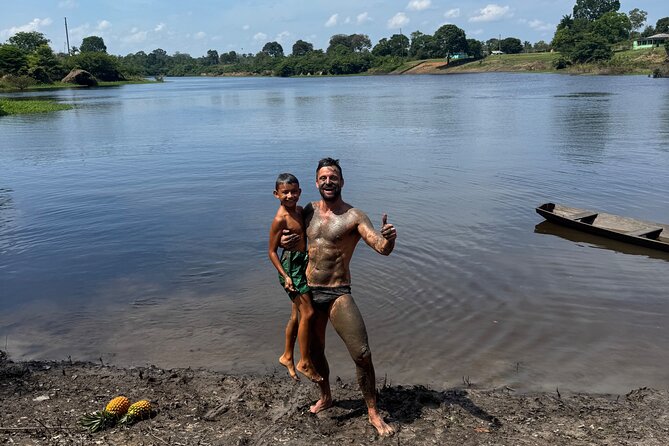
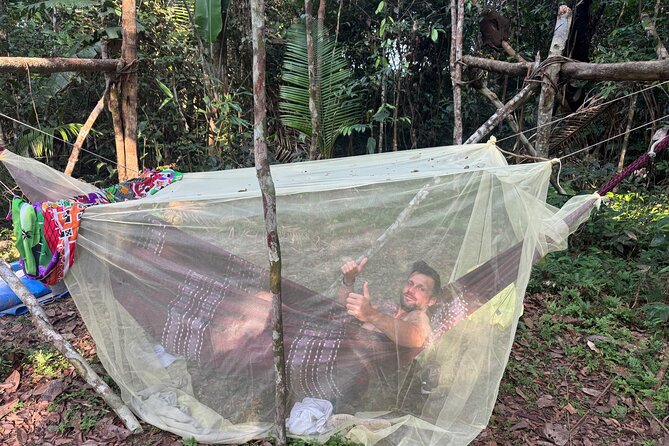
- Hammock camping with local guidance: You help build your sleeping area and learn how to secure a mosquito net in the way local residents do.
- Piranha fishing and cooking: You catch the fish, clean it with help from your guide, and eat it cooked over charcoal.
- Night wildlife encounters: Caimans, snakes, frogs, armadillos, capybaras, and tapirs may appear during nighttime outings.
- Pink and grey river dolphins: A small Indios boat takes you along the river, where your guide may call to dolphins and teach animal-sound techniques.
- A night with a local family: You share dinner, sleep in humble rooms, and visit a pineapple plantation.
- Private five-day format: Only your group participates, with private transportation and meals included.
Leaving Manaus for the Amazon River
The meeting point is Escadaria dos Remédios on Avenida Manaus Moderna in central Manaus. From there, private transportation takes you toward the river and into a more remote setting. The exact camp location can change with the tide and season, so you should expect some flexibility rather than a fixed hotel-style schedule.
That uncertainty is part of the point. River conditions shape daily life in the Amazon, and a camp that works well at one time of year may not be practical at another. You are not simply being driven to a permanent attraction. You are adapting to the river.
On the first day, a native family welcomes you. The description presents them as people who rarely visit Manaus and support themselves through their pineapple plantation. That gives the visit more meaning than a quick staged stop, though you should still approach it with respect. You are entering someone’s home and daily life, not visiting a museum.
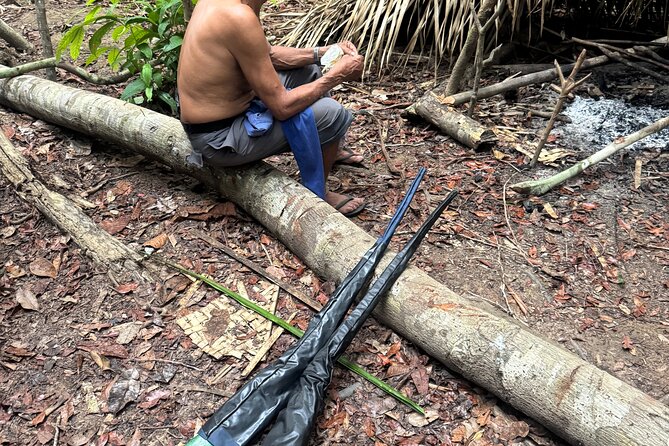
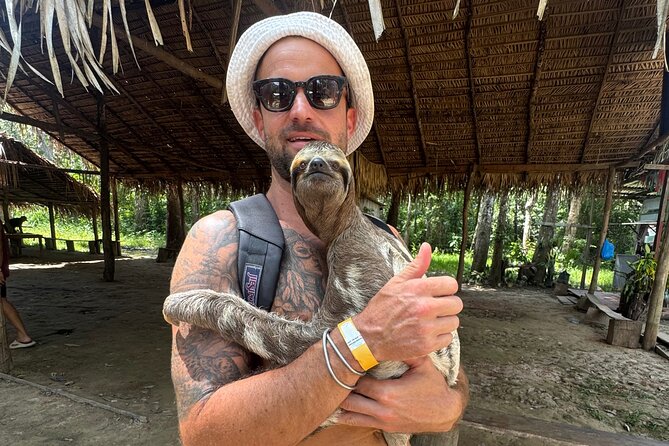
You then travel by boat to a secluded area and help set up camp. Your guide and hosts show you how to hang hammocks and fasten mosquito nets. This is a small task, but it changes your view of the forest. A hammock is not just a bed here. It must be placed correctly, kept protected from insects, and made secure enough for a night outdoors.
After camp is ready, you gather wood and help start a fire. Dinner is prepared together. The first evening sets the tone for the whole trip: you are expected to participate, not sit back while staff handle everything.
More Jungle Tours in Manaus & Amazon
- From Manaus: One-Day Amazon Jungle Experience
★ 4.8 · 408 reviews - Manaus: Full-Day Tour on the Amazon River
★ 4.2 · 362 reviews - A Whole Day in the Jungle
★ 5.0 · 155 reviews
Day two: piranhas, charcoal, and sunset birdwatching
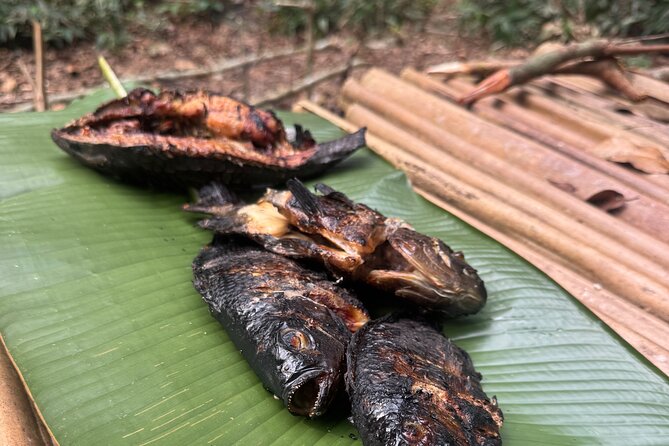
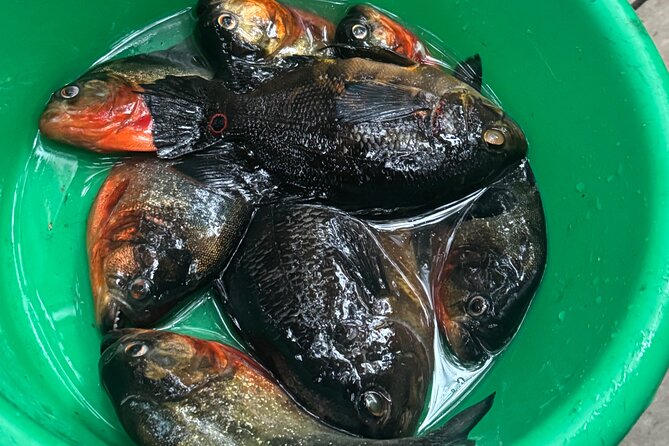
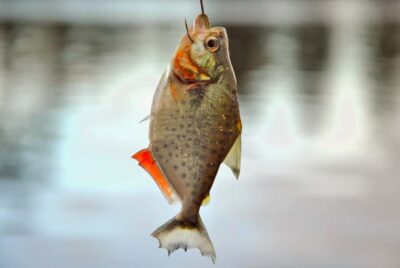
The second day centers on fishing for piranha. Your local guide teaches you how to catch them, then helps clean and prepare the fish before cooking it over a charcoal fire. This is a useful part of the experience because it connects the meal to the river. You are not handed an anonymous plate. You see how food is caught, handled, and cooked.
Piranha has a fearsome reputation, but here it is treated as food as well as wildlife. Follow your guide closely when handling the fish, and do not assume that a casual approach is safe simply because the activity is popular.
The later hours are better suited to patience. As the sun drops, the forest becomes active with bird calls and movement. Possible sightings include toucans, macaws, hummingbirds, hoatzins, parrots, kingfishers, and motmots. The Amazon Basin has more than 1,500 bird species, but that does not mean you will see every famous bird on demand. You will need quiet attention and some luck.
A Harpy Eagle is listed as a possible sighting, but treat that as a fortunate bonus rather than an expectation. The same advice applies to every wildlife encounter on this trip. The forest is not a zoo, and the best moments cannot be scheduled to the minute.
Bring patience, a water bottle, sunscreen, and snacks. Snacks, sunscreen, and water are not included, and the heat can make a long day feel longer than the timetable suggests.
Day three: dolphins by day, wildlife by night
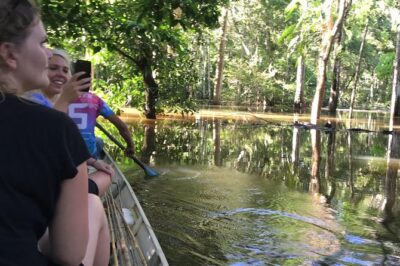
The third day offers the most intense schedule. You travel with your native guide in a small Indios boat and look for pink and grey river dolphins. Your guide may call to them and show you how to mimic animal sounds, a technique described as being used by local tribes to attract wildlife for observation and photography.
This part is about listening as much as looking. You may see pink dolphins, grey dolphins, or caimans moving through the water. Caimans can glide so quietly that you may notice only eyes or a small change in the river. The small boat should feel more personal than a large sightseeing vessel, but it also offers less room and fewer comforts.
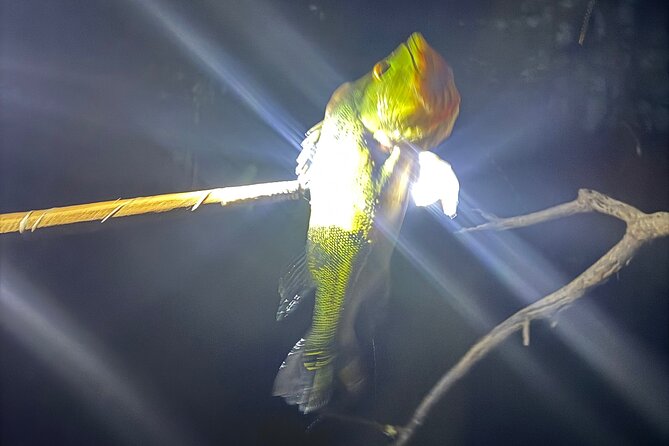
After dark, you begin night fishing near the riverbanks with a traditional spear. The activity is physical and demands care. Your balance, coordination, and willingness to work in low light matter more than speed.
Then comes a guided night hunt. Possible sightings include armadillos, capybaras, tapirs, snakes, frogs, and other nocturnal creatures. One account describes moving through the dark with a flashlight and seeing glowing eyes reflected in the water. That gives you a good idea of the mood: exciting, uncertain, and sometimes unnerving.
The itinerary says that some animals may be prepared as a traditional dinner if caught. This is an important point to consider before booking. Hunting is presented as part of local subsistence and survival knowledge, not as a staged show, but some visitors may be uncomfortable with it. Ask the operator for current details if this aspect concerns you.
You should also understand the limits of safety in a wild setting. The guides are described as keeping people safe and showing strong knowledge of the forest, but remote nature always carries risk. Stay close, follow instructions, and do not wander off to get a better photograph.
Day four: a night in a local home
The fourth day shifts from forest skills to family life. You return to the local family, share meals, and spend the night at their home. There is no internet or television. You sleep in humble rooms and hear the sounds of the Amazon around you.
I see this as the emotional center of the trip. The forest activities are memorable, but the home stay helps explain how people live with the river and forest every day. You are offered a chance to slow down, eat together, and notice how much modern travel depends on constant connection and convenience.
The afternoon visit to the pineapple plantation adds practical context. You see one of the ways the family supports itself from the land. The visit is not simply a scenic walk. It shows the work behind food and income in a place where city services are far away.
You should not expect a lodge, private bathroom, air conditioning, or hotel bedding. The information is direct about the lack of luxury. This is a good night for someone who wants to disconnect and a poor match for anyone who treats basic comfort as optional only in theory.
A few personal details from past participants help explain the appeal. People have described learning to start a fire from scratch, drinking clean water from bamboo, sharing stories around a fire, and even playing soccer with the local Indigenous community. These details make the trip feel social as well as wild. You are not only observing the Amazon. You are spending time with people who know it as home.
Same patch of Brazil, a completely different sort of day:
- Indian Village and Meeting of the Waters Tour
★ 4.5 · 241 reviews - From Manaus: Presidente Figueiredo Waterfalls Daytrip
★ 4.3 · 149 reviews - 3 Days Amazon Jungle Adventure Tour
★ 4.0 · 145 reviews - Amazing Waterfalls of the Amazon – Presidente Figueiredo
★ 4.5 · 141 reviews
Day five: breakfast, the river, and return to Manaus
The final morning begins with breakfast at the family home. You then travel back to the same pickup point, where a van takes you to Manaus.
The return day is shorter, listed at about six hours, but river travel depends on conditions. Keep your schedule flexible after the tour rather than booking a tight flight immediately afterward. The exact timing may shift because of weather, tides, and the remote setting.
The experience ends back at the original meeting point in central Manaus. Private transportation is included, which matters here. Arranging your own transfers in an unfamiliar river area would add stress and could reduce the time available for the actual experience.
What the $645.72 price gives you
At $645.72 per person, the price is not cheap, but it covers five days of guided activity, private transportation, four lunches, four dinners, and five breakfasts. That is a substantial amount of food and transport for a remote trip.
The value depends on what you want. If you measure a trip by air-conditioned rooms, private facilities, and polished service, the price will seem high. If you value a small private group, local hosting, remote boat travel, meals, and several days of guided survival activities, it becomes easier to justify.
You still need to budget for public transportation listed at A$15 per person, plus daytime snacks, sunscreen, and a water bottle. The use of A$ may reflect the booking system rather than the local Brazilian currency, so confirm the exact charge before departure.
The private format is a real advantage. Only your group participates, which should make it easier to ask questions, set a comfortable pace, and take part in family activities without being folded into a large crowd. It may also mean you need to be more cooperative. In a small group, everyone’s attitude affects the experience.
Physical demands and what to pack
You need a moderate level of physical fitness. The trip includes hiking, camping, small-boat travel, fire preparation, fishing, and nighttime activity in remote areas. Limited mobility, advanced age, and young children are specifically poor fits for this experience, and accessibility is very limited.
Pack light, but pack intelligently:
- A refillable water bottle
- Sunscreen
- Snacks for the day
- Lightweight clothing
- A hat
- Comfortable shoes suitable for walking
- Insect protection
- A small flashlight if the operator allows or recommends one
- Dry bags or waterproof protection for phones and other electronics
The supplied information does not give a detailed packing list, so confirm clothing and equipment requirements before departure. Do not assume that every camping item is provided simply because meals and transport are included.
Expect heat, humidity, insects, mud, and changing conditions. The phrase survival experience should be taken seriously, even though this is a guided activity. You are learning ways to manage in the forest, not checking into a resort with a jungle theme.
The strongest parts, and the fair warnings
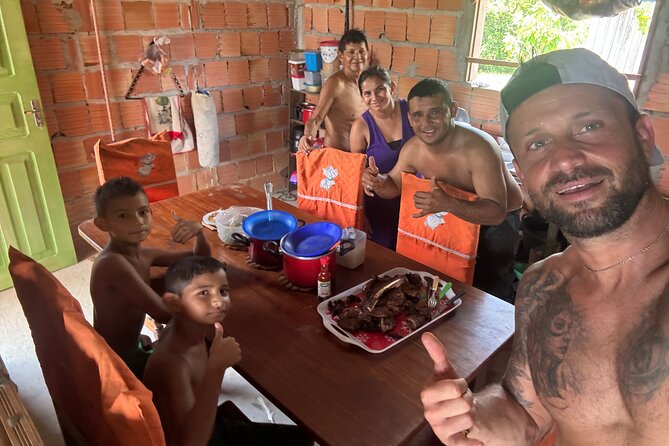
The most praised elements are the warm welcome from Fabian and his family, the guide’s care during difficult activities, the feeling of living without phones and clocks, and the range of wildlife encounters. Pink dolphins, piranha fishing, caimans, snakes, monkeys, birds, and night sounds all receive special attention.
The family connection is especially important. Without it, this could be a series of outdoor tasks. With it, the trip becomes a look at food, work, hospitality, and daily life along the river.
The warnings are just as important. You may be hot, tired, wet, startled, or uncomfortable. Wildlife sightings are never guaranteed. The night hunt may challenge your personal ethics. Sleeping in a hammock or humble room is not the same as sleeping in a hotel.
Weather can also affect the trip. If poor weather causes cancellation, you are offered another date or a full refund. The activity also requires a minimum number of participants, despite being private for your group, so confirm how that condition applies to your booking.
Who should book the Amazon Survival Experience?
Book it if you want a direct, demanding encounter with Amazon life and are willing to give up internet, predictable comfort, and a fixed schedule. It suits active adults, nature lovers, birdwatchers, photographers, and people who enjoy learning by doing.
It is also a strong choice if you want time with a local family rather than only a lodge-based nature program. The home stay, plantation visit, shared dinners, and camp work give the trip a human center.
Skip it if you need reliable hotel comfort, easy accessibility, a guaranteed wildlife checklist, or a relaxed sightseeing pace. A five-day commitment is a long time to discover that hammocks, insects, darkness, and basic facilities are not your idea of fun.
For the right person, the price buys something unusual: time away from screens, practical skills, close contact with the river, and a chance to see the Amazon through local knowledge rather than from behind a resort railing. Go with patience, respect, and a willingness to get uncomfortable. That is where this experience earns its value.
FAQ
Where does the Amazon Survival Experience begin?
It begins at Escadaria dos Remédios, Avenida Manaus Moderna, Centro, Manaus, Amazonas, Brazil.
How long does the experience last?
The experience lasts approximately five days. The first four days are listed at about 12 hours each, and the return to Manaus on day five is listed at about six hours.
Is transportation included?
Private transportation is included. Public transportation is listed separately at A$15 per person.
Which meals are included?
The experience includes four dinners, four lunches, and five breakfasts. Snacks during the day are not included.
Is this experience suitable for children or people with limited mobility?
No. The activity involves hiking, camping, remote river travel, and limited facilities. It is not suitable for children, elderly people, or individuals with limited mobility.
Can I cancel for a full refund?
Yes. You can cancel at least 24 hours before the experience begins for a full refund. Cancellations or changes made within 24 hours are not refunded or accepted. If poor weather or insufficient participation causes cancellation, you are offered another date or a full refund.
Newest reviews from around Manaus
- Walking Tours in Manaus★ 3.5 · 16 reviews
- 4-day Amazon River Boat Tour From Manaus★ 5.0 · 10 reviews
- Amazon Safari Tour in Manaus (Shared)★ 5.0 · 3 reviews
- Tree Climbing in the Amazon★ 4.5 · 6 reviews
- Tucandeira Ants Indigenous Ritual★ 4.5 · 4 reviews
- Transfers from the airport to any place in Manaus City★ 4.0 · 27 reviews
- 24-hour Hotel Transfer to Manaus Airport★ 5.0 · 24 reviews
- Private Tour Waterfalls Iracema & Asframa President Figueiredo★ 5.0 · 3 reviews
Jungle & Rainforest Tours, compared.
Rio de Janeiro Tijuca Rainforest Hike with Waterfalls and Caves
Read our review →
Jungle Waterfalls and Cachaça Distillery Jeep Tour
Read our review →

Browse the lists this tour appears in