
Reviewed · RIO DE JANEIRO TOURS
Visit Indigenous Native Guarani Village in Marica
Meet Rio’s Guarani community beyond the beaches. This six-hour outing takes you from Rio’s hotel districts to Aldeia da Mata Verde Bonita, where Chief Darcy Tupa introduces you to Guarani life, local artifacts, and traditional stories. I like the small group limit of 14 and the chance to spend about three hours in the village rather than rushing through a short photo stop. I also like that English support is provided, with translator Claudia praised for her friendly and capable help.
The main drawback is the road time. The trip to the village covers about 64 kilometers and takes roughly 1 hour and 30 minutes, followed by the return drive and several hotel-area pickups and drop-offs. At $333.25 per person, this is not a cheap half-day excursion, so it makes the most sense if meeting the Guarani community is a major reason you want to book it.
In This Review
- Key points at a glance
- Why this Guarani visit offers a different side of Rio
- The Rio pickup route takes time
- The journey from Rio to Maricá
- Arriving at Aldeia da Mata Verde Bonita
- Stories, artifacts, and the value of translation
- Music, a peaceful river, and community life
- Returning through Copacabana, Ipanema, Leblon, and Barra
- Is $333.25 a fair price?
- Who should book this experience?
- Practical advice before you reserve
- Should you book the Guarani village visit?
- FAQ
- Where does the experience begin?
- What time does the tour start?
- Is pickup available?
- How long does the experience last?
- How long is the visit to the Guarani village?
- Who welcomes the group at the village?
- Is the experience offered in English?
- What is the cancellation policy?
Key points at a glance
- Meet Chief Darcy Tupa: The village visit includes an introduction to Guarani life from the community’s cacique, or chief.
- Spend three hours at Mata Verde Bonita: This is more than a quick stop, with time for stories, artifacts, photographs, and conversation.
- English assistance is available: Claudia has been praised for translating clearly and helping explain the cultural details.
- Pickup runs through Rio’s beach districts: The route includes Barra da Tijuca, São Conrado, Leblon, Ipanema, and Copacabana.
- Music and community life may be part of the visit: One account describes a party with musicians and composers, though this should not be treated as a guaranteed feature.
- The group is capped at 14 people: That limit should make the visit easier to follow and less crowded than a large coach outing.
Why this Guarani visit offers a different side of Rio
Rio is easy to reduce to beaches, viewpoints, samba, and grand city scenery. Those are worthwhile, but they show only one piece of Brazil. This outing takes you away from the familiar coastal circuit and gives you a chance to learn directly about one Indigenous community.
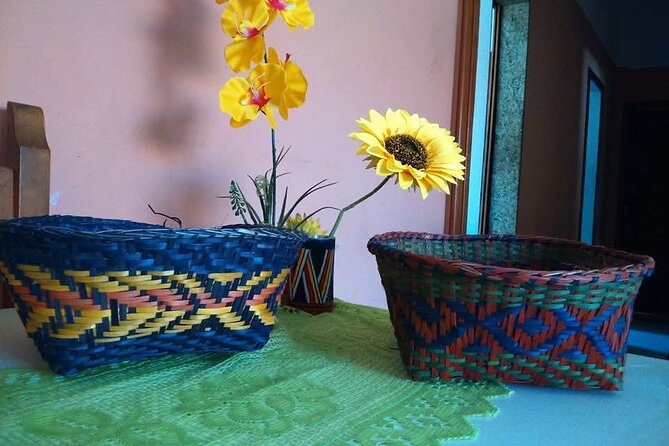
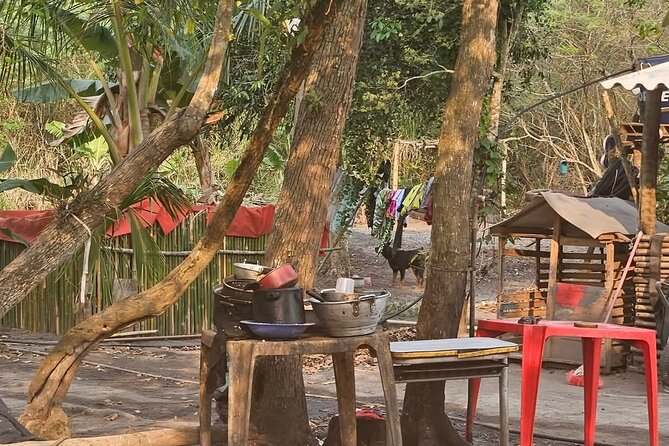
The destination is Aldeia da Mata Verde Bonita, a Tupi Guarani village in the Maricá area. The visit centers on people and stories rather than a formal museum display. Chief Darcy Tupa welcomes the group, explains aspects of Guarani life, and shows artifacts made by the community.
That personal setting matters. You are not simply reading a caption beside an object. You are hearing how the community presents its own traditions and daily life. The experience can give you a more grounded understanding of Brazil’s Indigenous cultures, including the fact that the country has more than 300 Indigenous groups with their own traditions and languages.
I would approach the visit with respect and patience. This is not a theatrical attraction built around nonstop entertainment. The strongest part is the chance to listen, ask questions when appropriate, and pay attention to the explanations.
A few more Rio de Janeiro days to weigh up
- Rio de Janeiro: 6-Stop Highlights of Rio with Lunch
★ 4.4 · 5,157 reviews - Christ the Redeemer Entry Ticket by Corcovado Train
★ 4.4 · 4,476 reviews - Rio’s City Tour – Tickets for Christ, Sugar Loaf & Lunch included
★ 5.0 · 4,389 reviews
The Rio pickup route takes time
The day begins at noon, with pickup at the Copacabana Palace on Avenida Atlântica. Pickup is also arranged through the main beach districts, including Barra da Tijuca, São Conrado, Leblon, Ipanema, and Copacabana.
The route description indicates that the vehicle begins in Barra da Tijuca, passes São Conrado, stops in Leblon, continues to Ipanema, and then reaches Copacabana for additional pickups. The exact order and timing can be affected by Rio traffic, so allow a little flexibility rather than planning a tight appointment afterward.
This arrangement is useful if you are staying in one of the listed areas. You do not have to make your own way across the city before the excursion begins. It also lets you see several parts of Rio during the road journey, though these are transport stops, not guided sightseeing visits.
The pickup process is one reason the six-hour estimate should be treated as approximate. Collecting people across several districts can take longer than a direct departure from one central point. If you value a relaxed schedule, keep the evening open.
The journey from Rio to Maricá
After the pickup circuit, the vehicle heads toward Maricá. The drive to Aldeia da Mata Verde Bonita is described as about 64 kilometers and approximately 1 hour and 30 minutes.
That is a significant part of the outing, but it also marks a clear change from the city. Instead of spending the whole afternoon moving between well-known Rio sights, you are going to a specific community with a cultural purpose.
I recommend using the drive to settle into the slower pace of the day. The trip is not designed as a quick city attraction. You are giving up part of an afternoon for a visit that depends on time, conversation, and attention.
Because the journey is long enough to matter, this excursion will suit you best if you are willing to trade another beach or city stop for an experience focused on Indigenous culture. If your Rio schedule is already packed, the road time may feel costly.
Arriving at Aldeia da Mata Verde Bonita

The village visit lasts about three hours, which is the heart of the experience. Chief Darcy Tupa welcomes the group and introduces the community. You can expect to see local artifacts made by the Guarani, hear stories about their way of life, and have time for photographs.
Three hours gives the visit room to breathe. You are not expected to arrive, snap a picture, and leave within twenty minutes. The schedule allows time to look carefully at the objects, follow the explanations, and notice the setting around the village.
The welcome has been described as warm and inspiring. One account especially praised the chance to see the village and hear its history from Cacique Tupa. That direct welcome is likely to be the most memorable part of the day.
The word history needs some care here. This is not a conventional lecture with a fixed script and a long list of dates. The experience is about cultural knowledge shared through stories, objects, and personal explanation. You should expect a human introduction to Guarani life, not a complete survey of every Indigenous group in Brazil.
Same patch of Brazil, a completely different sort of day:
- Full Day: Christ Redeemer, Sugarloaf, City Tour & Barbecue Lunch
★ 4.5 · 3,142 reviews - Rio de Janeiro: Rocinha Favela Walking Tour with Local Guide
★ 4.8 · 3,052 reviews - Rio de Janeiro: Sugarloaf Cable Car Official Ticket
★ 4.6 · 2,873 reviews - Rio’s Full Day: Selarón Steps, Christ & Sugarloaf – Tickets & Lunch Included
★ 5.0 · 2,724 reviews
Stories, artifacts, and the value of translation
English is the language offered for the experience, and translator Claudia has received particular praise. Her role is important because the quality of a cultural visit often depends on how well the meaning travels between languages.
A good translator does more than repeat words. Claudia was described as friendly, capable, and clear in explaining the community’s way of life. That can help you understand why an artifact matters, how a tradition is described, or what a story means in context.
The available information does not promise a specific list of artifacts or a printed educational program. Instead, you should expect the chief to show examples of objects made by the community and explain them during the visit.
I like this less rigid format. It leaves room for a real exchange rather than forcing the community into a standard tourist presentation. At the same time, it means the exact sequence of activities may vary. Go with an open mind, and do not expect every visit to unfold like a museum tour.
Music, a peaceful river, and community life
One account describes joining a party and enjoying music performed by different musicians and composers. The same description mentions a peaceful river near the community and says that contact with the people and local setting made the journey worthwhile.
Music may add a lively dimension to the visit, but I would not book this excursion solely on the promise of a performance. The published details focus on meeting the chief, viewing artifacts, and hearing stories. A party or music session appears to depend on what is happening in the community on the day of your visit.
That uncertainty is not necessarily a weakness. A real community does not need to perform the same event every afternoon. If music is taking place, it may feel more natural than a staged show. If it is not, the visit still has a clear purpose through the welcome, explanations, and time spent in the village.
The river is another appealing detail. The setting offers more than a meeting room, and the peaceful surroundings may give you a chance to slow down after the drive. Still, this is not advertised as a river activity, so do not expect swimming, boating, or a separate nature program.
Returning through Copacabana, Ipanema, Leblon, and Barra
After approximately three hours at the village, the vehicle returns to Rio. Drop-offs take place through the same general coastal areas, including Copacabana, Ipanema, Leblon, and Barra da Tijuca.
The return can be practical if you are staying in one of those districts. You finish near your accommodation rather than at a distant terminal. The downside is familiar: city traffic can stretch the final leg, especially when the vehicle is making several stops.
The tour description gives about 35 minutes for the beach-area pickup and drop-off portions, but traffic can affect the actual timing. I would avoid booking a restaurant reservation, show, or airport transfer immediately after the scheduled return.
Is $333.25 a fair price?
At $333.25 per person, this is a premium excursion. The price is not simply paying for a short ride to a nearby attraction. It covers a private-style cultural outing with pickup, transportation to Maricá, English support, a small group limit, and roughly three hours at the Guarani village.
The value depends on what you want from Rio. If you are mainly looking for beaches and famous viewpoints, the cost may feel too high for a six-hour trip. You can find many less expensive ways to fill an afternoon in the city.
If you specifically want an Indigenous cultural experience and prefer arranged transport, the price becomes easier to understand. The long drive would be harder to manage independently, and the translator can help you gain more from the visit than you would from simply arriving without context.
The small maximum of 14 people also matters. This is not an enormous coach group where you are likely to stand at the back and miss the explanation. A smaller group can make it easier to hear Chief Darcy Tupa and to ask sensible questions.
I would judge the price by the quality of the cultural contact, not by the number of attractions checked off a list. You are paying for access, interpretation, transport, and time with the community.
Who should book this experience?
I would recommend it to you if you want to learn about Brazil beyond its famous coastal image. It suits people who value local contact, patient explanations, and a visit led by members of the community.
It also works well if you are staying in Barra da Tijuca, São Conrado, Leblon, Ipanema, or Copacabana, since pickup is offered in those areas. The mobile ticket and English presentation make the practical side simple.
Families and most participants can take part, according to the available booking details. Service animals are allowed, and the meeting area is near public transportation. These points help, but the experience still involves a long road journey and several hours away from Rio, so consider your group’s comfort with that pace.
I would hesitate to recommend it if your time in Rio is very short or if you want a tightly timed sightseeing day. The pickup circuit, 64-kilometer journey, and traffic-sensitive return can use most of an afternoon.
Practical advice before you reserve
The starting time is 12:00 p.m. at the Copacabana Palace, A Belmond Hotel, on Avenida Atlântica. If you are picked up elsewhere, allow for a small delay because of traffic.
The experience is offered in English and confirmation is provided when you book. The group maximum is 14 people, which is a useful detail if you prefer a quieter, more personal outing.
Only book if you are comfortable with weather-related changes. The activity requires good weather, and poor conditions can lead to a different date or a full refund. It also requires a minimum number of participants, so an insufficient group can result in another date, another experience, or a full refund.
Free cancellation is available until 24 hours before the start time. Inside that 24-hour window, cancellations and changes are not accepted for a refund. The cutoff follows local time.
Should you book the Guarani village visit?
Book this experience if you want a thoughtful, people-focused afternoon and are happy to spend about three hours at Aldeia da Mata Verde Bonita after a long drive from Rio. The welcome from Chief Darcy Tupa, the Guarani artifacts, Claudia’s translation, and the chance to hear stories directly from the community give the visit real purpose.
Skip it if your priority is famous Rio scenery, a low-cost outing, or a strict schedule. At $333.25, the tour asks for a serious budget and a full half-day commitment.
For the right person, this is one of the more meaningful ways to use an afternoon in Rio. You leave the beach districts behind and make time for a culture that many short city itineraries never acknowledge.
FAQ
Where does the experience begin?
The stated meeting point is the Copacabana Palace, A Belmond Hotel, at Av. Atlântica, 1702, Copacabana, Rio de Janeiro.
What time does the tour start?
The scheduled start time is 12:00 p.m.
Is pickup available?
Yes. Pickup is offered, with stops listed in Barra da Tijuca, São Conrado, Leblon, Ipanema, and Copacabana. Traffic may cause a small delay.
How long does the experience last?
The tour lasts approximately six hours.
How long is the visit to the Guarani village?
The visit at Aldeia da Mata Verde Bonita lasts about three hours.
Who welcomes the group at the village?
The group is welcomed by Chief Darcy Tupa, also referred to as Cacique Tupa in the available descriptions.
Is the experience offered in English?
Yes. English is offered, and translator Claudia has been praised for her help during the visit.
What is the cancellation policy?
You can cancel up to 24 hours before the start time for a full refund. Cancellations or changes made less than 24 hours before the experience are not refunded. Poor weather or failure to meet the minimum number of participants may result in another date or a full refund.
Newest reviews from around Rio de Janeiro
- Hang gliding flight in Rio de Janeiro★ 5.0 · 6 reviews
- Rio de Janeiro: Zip Lining and Canopy Tree Tour★ 3.3 · 6 reviews
- Vidigal Favela Tour★ 4.4 · 26 reviews
- Rio de Janeiro: Attend a Vasco da Gama game with local guide★ 4.8 · 9 reviews
- Unforgettable Boat Party★ 5.0 · 3 reviews
- Parapente Rio de Janeiro★ 5.0 · 4 reviews
- Rio de Janeiro Private Tour with Cruise Terminal Pick-up★ 5.0 · 2 reviews
- Wild Waters: Rio Whitewater Rafting Adventure Tour★ 5.0 · 13 reviews
Rio de Janeiro Tours, compared.


Christ the Redeemer Entry Ticket by Corcovado Train
Read our review →
Rio’s City Tour – Tickets for Christ, Sugar Loaf & Lunch included
Read our review →
Full Day: Christ Redeemer, Sugarloaf, City Tour & Barbecue Lunch
Read our review →


Rio’s Full Day: Selarón Steps, Christ & Sugarloaf – Tickets & Lunch Included
Read our review →