
Reviewed · SURF LESSONS
Rio Surf Experience
Catch waves, then see Rio differently. This four-hour outing pairs a coached surf session with a drive along Rio de Janeiro’s less-touristy western coast, so you get more than time on a crowded beach. I like the way the instructor chooses the beach according to the day’s waves and your ability, and I like the small group size, limited to six people. The main consideration is that the total time can change, since the team may drive farther to find suitable conditions.
The teaching is a real strength. Gabriel, Emiliano, and the rest of the team are praised for patience, clear instruction, and friendly energy, with lessons available in Portuguese, Spanish, or English. You should also know that you must be able to swim, and beginners should message before booking because suitable waves are not available every day.
In This Review
- Key points at a glance
- Why this surf trip feels different from a beach lesson
- Meeting at Barra da Tijuca
- Choosing the right beach for your ability
- From sand practice to the first wave
- Ninety minutes in the water
- Equipment and what to bring
- The coastal stop after surfing
- The instructors make the difference
- Is $100 a fair price?
- Who should book this experience?
- Practical booking advice
- Should you book Rio Surf Experience?
- FAQ
- Where does the Rio Surf Experience meet?
- How long does the experience last?
- How long is the surf session?
- Is transport to the beach included?
- What languages does the instructor speak?
- How many people are in the group?
- Is the experience suitable for complete beginners?
- Do I need to know how to swim?
- What should I bring?
- Are photos and videos included?
Key points at a glance

- A beach chosen for the day: You are driven from Barra da Tijuca to the spot with the best conditions for your level, instead of being tied to one fixed beach.
- A generous 90-minute surf lesson: The water session lasts 1 hour and 30 minutes, which gives beginners more time to practice than a standard one-hour class.
- Patient, multilingual coaching: The instructor speaks Portuguese, Spanish, and English, with Gabriel and Emiliano receiving especially strong praise for calm, personal teaching.
- A small-group feel: The group is limited to six participants, allowing more attention than a large beach lesson.
- A second Rio experience afterward: Once the surf session ends, you visit a place of unusual beauty with a coastal view that many visitors miss.
- Useful equipment included: A surfboard, wetsuit or rash guard, and transport to the selected beach are part of the price.
Why this surf trip feels different from a beach lesson
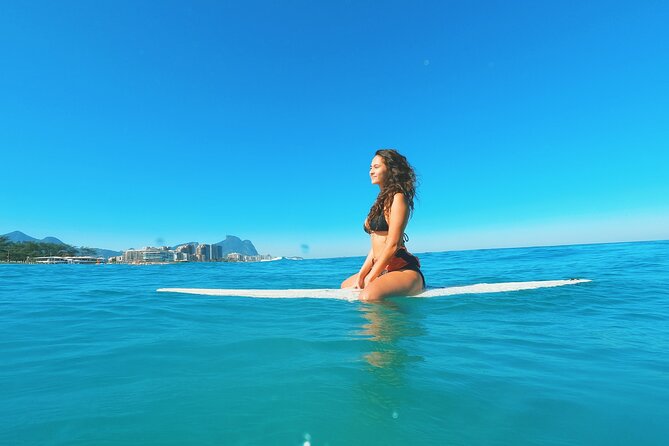
Many surf classes begin and end at one beach. That is not the plan here. You meet at a BR gas station in Barra da Tijuca, then travel along Rio’s western shoreline in search of waves that fit your experience.
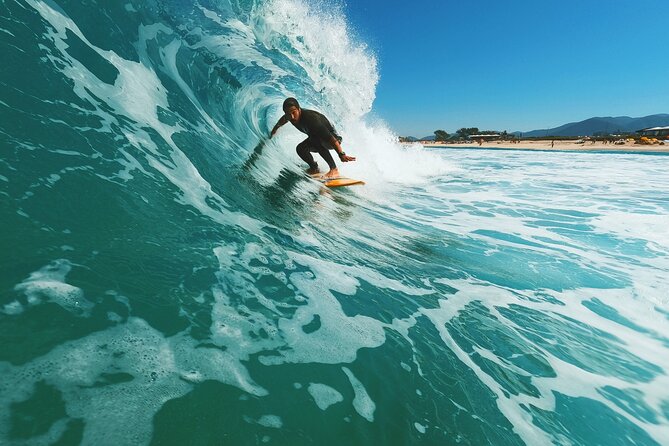
That approach matters because surf conditions can vary sharply from one beach to the next. A spot that works for an experienced surfer may be frustrating for someone standing on a board for the first time. By checking conditions and changing location when needed, the team can give you a better chance of learning something useful rather than simply waiting for a wave.
You also get to see a side of Rio that is less tied to the city’s best-known sights. Barra da Tijuca is the starting point, but the outing may take you toward beaches on the west side that are not part of the usual first-time itinerary. The drive is not wasted time. It is part of the point.
Still, you should keep your schedule flexible. The four-hour duration is an average, not a strict door-to-door promise. If the best waves are farther away, the drive takes longer. If conditions near Barra are already good, the group will not need to travel far.
More Surf Lessons in Rio de Janeiro
- Rio Surf Experience!
★ 5.0 · 85 reviews - Surf lessons: in Arpoador in Ipanema.
★ 4.7 · 35 reviews - Surf lessons with local instructors in Copacabana/ipanema!
★ 3.6 · 31 reviews
Meeting at Barra da Tijuca
The meeting point is a BR gas station. That may sound basic, but it is practical: there is a café and an açaí store where you can meet the instructor and pick up a quick snack or drink.
You will want to arrive ready for an active morning. Bring sunscreen, a towel, water, and a change of clothes. Surf gear is supplied, but you should not assume that every personal comfort item is covered.
The team recommends sending a message before booking. This is especially useful for complete beginners because wave conditions are not suitable for first-time surfers every day. The experience is built around matching the beach to the conditions and your level, so a quick check can prevent a disappointing day.
Choosing the right beach for your ability

After meeting, the instructor checks the coastline and decides where to go. You may surf close to the meeting point if conditions are suitable, or you may drive farther along Rio’s west side.
For a beginner, this is one of the most valuable parts of the experience. Small changes in wave size, breaking pattern, and water conditions can make the difference between catching a few waves and spending the session struggling to get into position. The team’s job is not simply to put you in the ocean. It is to find a reasonable place for you to learn.
For an advanced surfer, the same system offers a different benefit. You are not limited to a basic lesson in a beginner area. The instructor can look for conditions that make sense for your level, although the supplied information does not promise a particular wave size or break.
The tradeoff is uncertainty. You will not know the exact beach in advance, and the drive may take more or less time. If you prefer a fixed itinerary with a guaranteed beach and finish time, this flexible format may feel loose. If you care more about finding workable waves, it is a sensible exchange.
From sand practice to the first wave
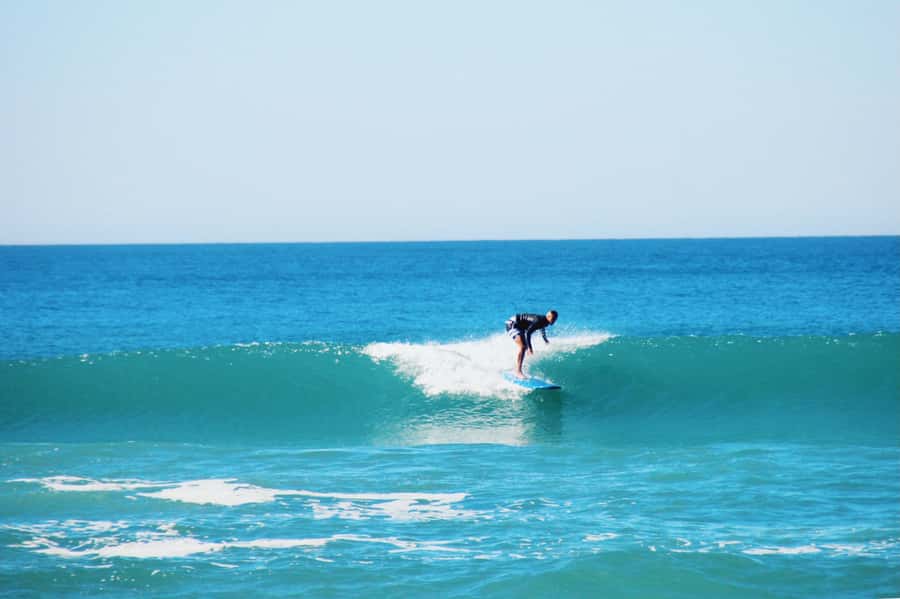
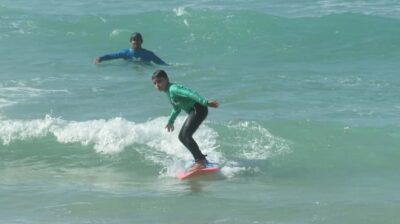
Once you reach the beach, the lesson begins on land. The instructor explains basic sea safety, leads a warm-up, and practices the pop-up movement with you on the board in the sand.
That sequence is important. The pop-up is the movement that takes you from lying on the board to standing, and it can feel awkward when you first try it. Practicing before entering the water gives you a chance to work on foot placement and balance without waves pushing the board around.
The safety briefing also helps set expectations. You are not simply handed a board and sent toward the breakers. The instructor explains what you need to know before entering the sea, then watches your technique as you begin to catch waves.
The teaching style appears particularly well suited to beginners. One participant began unable to stand on the board and finished catching waves, while another first-time surfer praised Emiliano’s patience and approachable manner. That does not mean every beginner will stand up quickly. Ocean conditions, balance, timing, and fitness all play a part. It does mean the lesson gives you a sound start and personal correction.
Same patch of Brazil, a completely different sort of day:
- Rio de Janeiro: 6-Stop Highlights of Rio with Lunch
★ 4.4 · 5,157 reviews - Christ the Redeemer Entry Ticket by Corcovado Train
★ 4.4 · 4,476 reviews - Rio’s City Tour – Tickets for Christ, Sugar Loaf & Lunch included
★ 5.0 · 4,389 reviews - Full Day: Christ Redeemer, Sugarloaf, City Tour & Barbecue Lunch
★ 4.5 · 3,142 reviews
Ninety minutes in the water
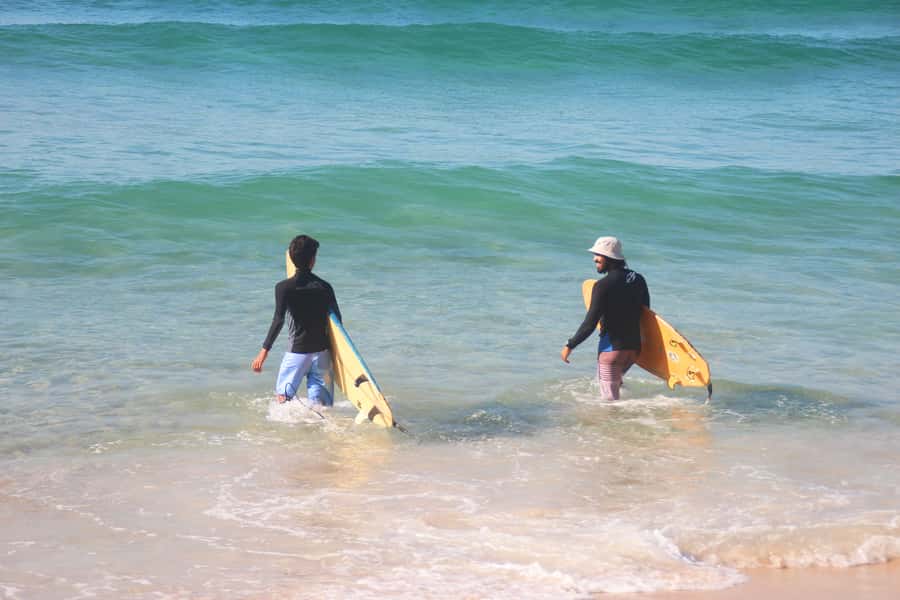
The surf session lasts 1 hour and 30 minutes. That is 30 minutes longer than the standard session described for this type of activity, and the extra time matters.
Beginners often need several attempts before the instructions begin to make sense. You may spend the first part getting comfortable with the board, learning when to paddle, and trying to stand. A shorter lesson can end just as your timing begins to improve. Ninety minutes gives you a better chance to repeat the movement and make progress.
The group limit is six participants. Actual group sizes can vary, and one reported session had three people with an instructor who still made time for each person. Another session had seven participants with two instructors, so the staffing pattern may change with group size. The important point is that the experience is designed to stay relatively small rather than operate like a mass beach class.
Expect active coaching rather than a private lesson. You will share the water and the instructor’s attention, but the team should have enough room to give useful advice on your technique. Gabriel has been praised for pointing out specific improvements, while Emiliano is noted for patient encouragement with first-time surfers.
The ocean may not always feel warm. One participant found the water quite cold and noted that the waves were breaking close to shore on that day. Wetsuits are included, which helps, but ocean conditions remain outside the instructor’s control. You should approach the session as a chance to learn in the conditions available, not as a promise of perfect waves.
Equipment and what to bring
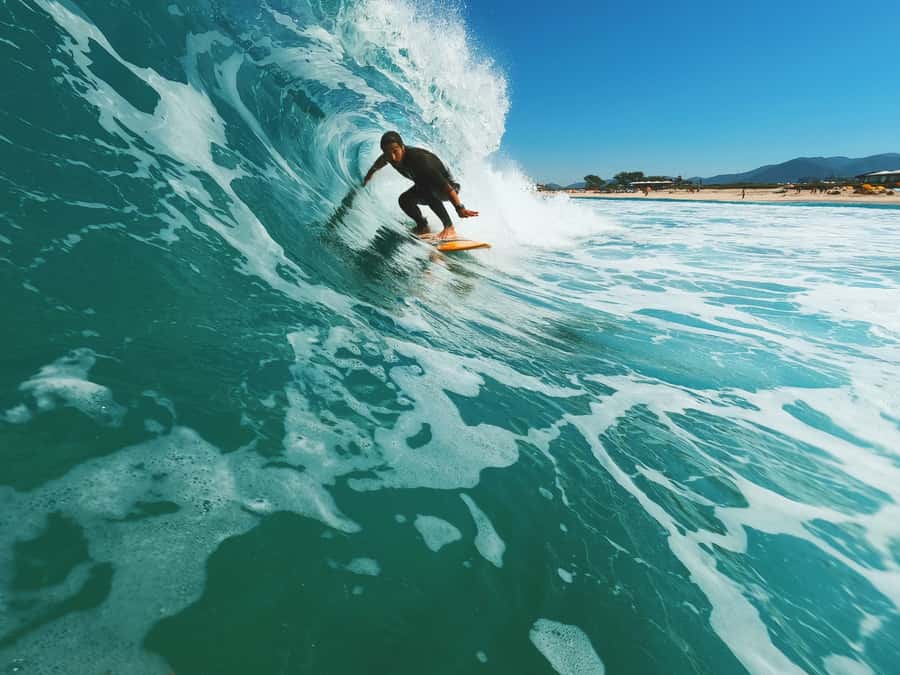
The price includes a surfboard and a wetsuit or rash guard. Transport to the selected beach is also included, as is the 90-minute surf session and the post-surf visit.
You still need to bring a few basics:
- Sunscreen
- Towel
- Water
- Change of clothes
Professional camera photos and GoPro photos are not included. A surf photo package may be available for an extra charge, and you can ask about it before or during the experience. This can be worthwhile if you want proof of your first successful stand-up, but it is an add-on rather than part of the advertised price.
Having the board and protective clothing supplied makes the outing easier for visitors who are not carrying beach equipment around Rio. You do not need to arrange a separate lesson, rent a board, or work out how to reach the beach chosen for the day.
The coastal stop after surfing
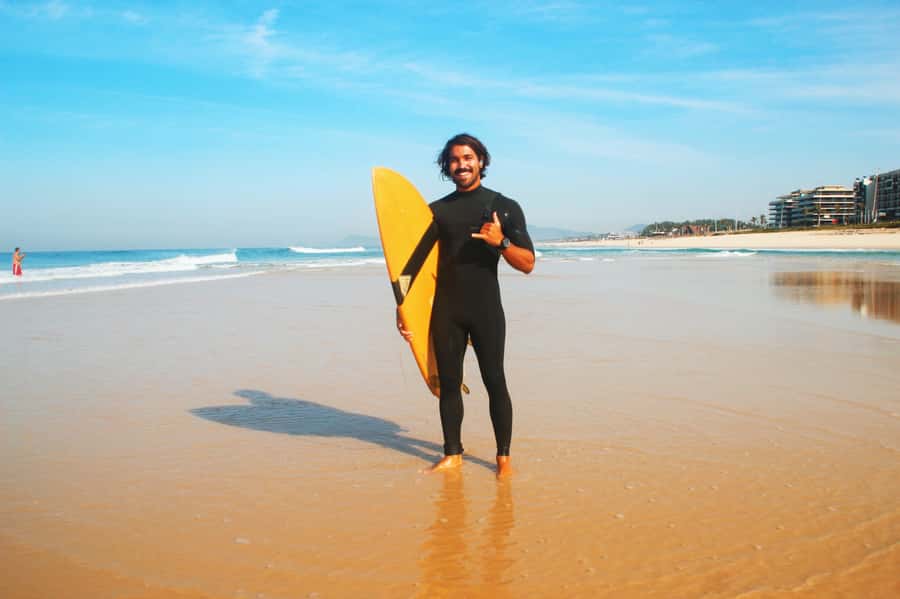
The outing does not end when you leave the water. The instructor takes you to a place of unusual beauty for a view over the coast.
The exact location is not specified, so you should not book this expecting a named attraction or a particular viewpoint. What is clear is that the stop is intended to show you a less familiar side of Rio after the surf session. It gives the morning a second purpose: you get time to look around and enjoy the setting rather than rushing straight back after the lesson.
This final stop is also a good reason to see the experience as a local-style outing rather than only a sports class. You spend time with an instructor who knows the city’s western coastline and can point you toward a place that many standard sightseeing programs skip.
The drawback is timing. A participant recorded roughly three hours of surfing and sightseeing rather than the full four hours described, while the total duration can also run longer if the team must drive for better waves. In practical terms, you should avoid booking a tight appointment immediately afterward.
The instructors make the difference
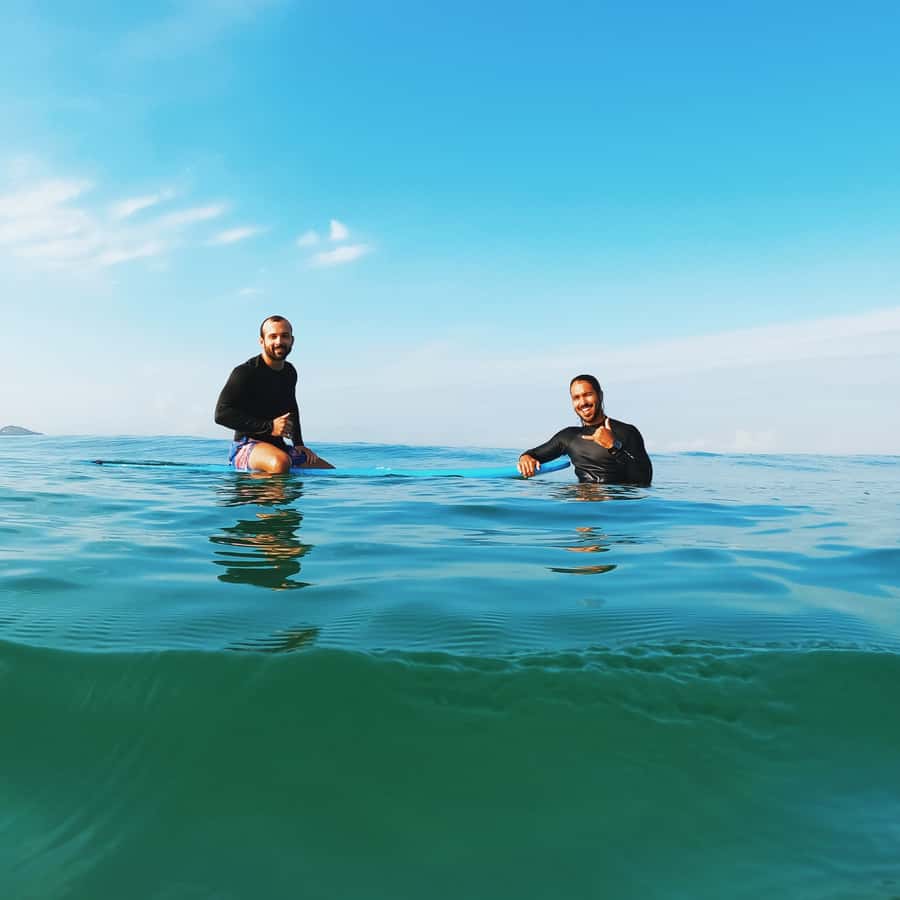
The strongest part of this experience is the teaching. Gabriel receives repeated praise for patience, positive energy, and attention to individual technique. Emiliano is also singled out for clear instruction and a calm manner with complete beginners.
That personal quality matters more than impressive surfing credentials when you are learning. You need someone who can explain the movement in plain language, watch what you are doing, and correct one small problem at a time. The team’s trilingual ability is useful for international participants, particularly when safety instructions and water awareness are involved.
The instructor also shapes the wider outing. The experience includes a drive along the coast and a final scenic stop, so you are spending several hours with the team. Friendly energy helps, especially when your first few attempts end with you sliding off the board.
The activity is not presented as a private class, so you should not expect uninterrupted one-to-one coaching. But a maximum of six participants gives it a more personal feel than a large group lesson.
Is $100 a fair price?
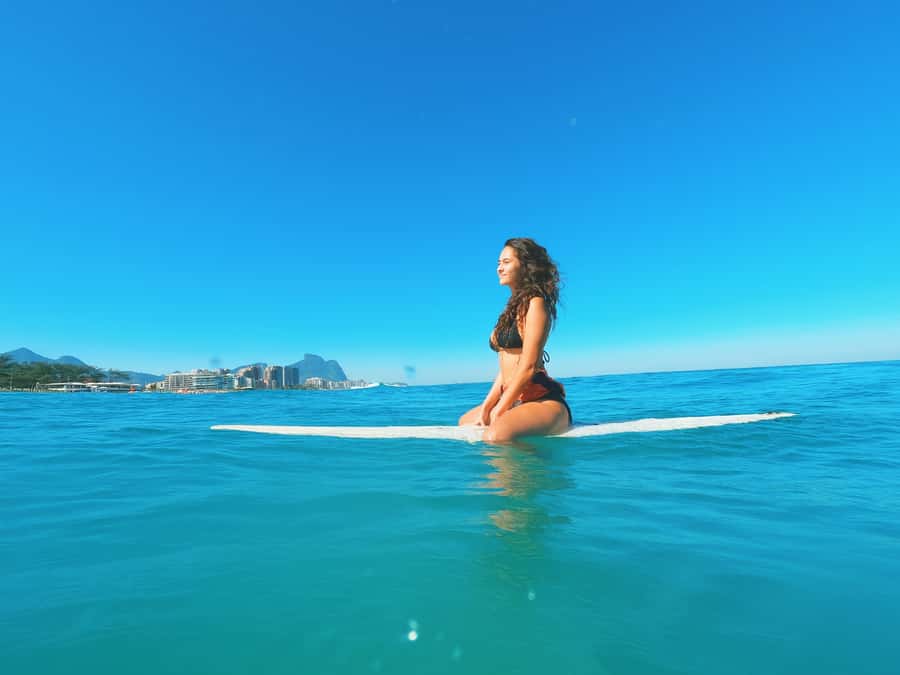
At $100 per person, this is not the cheapest way to try surfing in Rio. The value comes from what is bundled into the session.
You are paying for transport to the beach selected for the day, a board, a wetsuit or rash guard, a 90-minute water session, a multilingual instructor, a small group, and a visit to a scenic place afterward. If you had to arrange transport and equipment separately, the convenience would quickly add up.
The beach selection is the key value point. A fixed-location lesson could be cheaper, but it might place you at a beach with poor conditions for your level. Here, the team takes responsibility for checking the coast and making a practical choice.
I would consider the price reasonable for a visitor who wants more than a quick introductory lesson and does not have local knowledge. It is less compelling if you already have a board, know the beaches, and only want a short session in the water.
Photography costs extra, so include that in your budget if you want professional images or GoPro footage. The lesson itself does not depend on buying photos.
Who should book this experience?
I would recommend it most strongly to:
- First-time surfers who can swim
- Visitors who want coaching in English, Spanish, or Portuguese
- Surfers who value a beach chosen for current conditions
- People interested in Rio’s west-side coast
- Anyone who prefers a small group over a large beach class
- Visitors with a flexible half-day schedule
You should not book it if you cannot swim. You may also want to wait if you need a guaranteed beach, a precise finish time, or a fully private instructor.
For beginners, contact the team before booking to ask about conditions on your preferred date. That simple step is especially useful because suitable beginner waves are not guaranteed every day.
Practical booking advice
The experience allows free cancellation up to 24 hours before departure for a full refund. You can also reserve now and pay later, which helps if your Rio plans are still shifting.
Check available starting times before you book. The four-hour duration is an average, and the actual timing depends on how far the group must drive to find suitable waves.
Wear something practical for changing afterward, pack water and sunscreen, and leave space in your schedule for the coastal stop. If you are considering photos, ask about the package before the session so you know the extra cost and what is available.
The overall rating is 4.9 from 37 reviews, with strong praise for the instruction, group atmosphere, and choice of surf location. The most useful pattern is not simply that people enjoyed themselves. It is that beginners repeatedly found the teaching patient and encouraging, while more experienced participants valued the effort to find better conditions.
Should you book Rio Surf Experience?
Yes, if you want a well-supported first surf lesson with a local coastal outing attached. The strongest reasons are the flexible beach choice, the 90-minute session, the small group, and instructors such as Gabriel and Emiliano who focus on patience and practical corrections.
Book with realistic expectations. The ocean may be cold, waves may break close to shore, and the four-hour schedule can shift. Message before booking if you are a beginner, and do not choose this activity if you cannot swim.
For the right person, $100 buys more than a board and a lesson. You get help finding workable waves, transport along a beautiful part of Rio, and a final view that adds local character to the morning.
FAQ
Where does the Rio Surf Experience meet?
You meet at a BR gas station in Barra da Tijuca. The meeting point has a café and an açaí store.
How long does the experience last?
The total duration is listed as four hours on average. It can change depending on how far the group needs to drive to find suitable waves.
How long is the surf session?
The water session lasts 1 hour and 30 minutes.
Is transport to the beach included?
Yes. Transport to the beach with the best conditions for your level is included. If conditions near the meeting point are good, the group will not need to drive in search of waves.
What languages does the instructor speak?
Instruction is available in Portuguese, Spanish, and English.
How many people are in the group?
The group is limited to six participants.
Is the experience suitable for complete beginners?
Yes, complete beginners can take part, but you should message before booking because suitable waves for beginners are not available every day.
Do I need to know how to swim?
Yes. The experience is not suitable for non-swimmers.
What should I bring?
Bring sunscreen, a towel, water, and a change of clothes. A surfboard and wetsuit or rash guard are included.
Are photos and videos included?
No. Professional camera photos and GoPro photos are not included. A surf photo package may be available for an extra charge.
Newest reviews from around Rio De Janeiro
- PRIVATE TOUR – Christ the Redeemer and Sugar Loaf★ 4.5 · 9 reviews
- Christ Statue and Sugarloaf Private Tour with a Photographer★ 5.0 · 9 reviews
- Cidade do Samba Behind-the-Scenes Carnival Tour in Rio de Janeiro★ 4.0 · 5 reviews
- Christ the Redeemer Trail x Lage Park★ 5.0 · 7 reviews
- Christ the Redeemer and City Tour★ 5.0 · 20 reviews
- Christ the Redeemer, Selaron Steps and Santa Teresa Half-day Tour★ 4.5 · 15 reviews
- Christ the Redeemer Adventure★ 5.0 · 12 reviews
- Private Tour of Christ the Redeemer in Rio de Janeiro★ 5.0 · 2 reviews
Surf Lessons, compared.

Surf lessons with local instructors in Copacabana/ipanema!
Read our review →
Surf Lesson with Qualified Instructor in Florianópolis
Read our review →
Browse the lists this tour appears in