
Reviewed · STREET ART
Rio Street Art Tour
Rio tells its story on walls. This three-hour tour links major murals with Selarón Steps, old Centro, Little Africa, and the port district, giving you a lively introduction to Rio beyond the postcard beaches. I especially like the way the route uses the subway and VLT, and I like how guide Wellington connects each artwork to politics, Carnival, architecture, and Afro-Brazilian culture. The main drawback is the amount of walking, and some artwork may feel dated if you prefer only the newest street art.
You meet at Rio’s Municipal Theater in Cinelândia and finish in the Porto Maravilha area, near the Museum of Tomorrow and the city’s large port murals. At $68.61 per person, the price is fair for a private experience, particularly if you are traveling alone or with a small group and want a local introduction rather than a quick photo stop.
In This Review
- Key points to know before booking
- Starting at Cinelândia and the Municipal Theater
- Selarón Steps, color with a crowded side
- From old Centro to the Olympic Boulevard
- Porto Maravilha and the Etnias mural
- Little Africa and the stories behind the paint
- What the guide adds
- How much walking and transit should you expect?
- Is $68.61 a fair price?
- Strengths and limits at a glance
- Who should book the Rio Street Art Tour?
- FAQ
- How long does the Rio Street Art Tour last?
- Where does the tour begin?
- Where does the tour end?
- Is this a private tour?
- Does the tour include public transportation?
- Is admission to the stops included?
- What happens if the weather is poor?
Key points to know before booking
- The tour begins at the Municipal Theater: You start in Cinelândia, one of central Rio’s key civic and cultural areas.
- Public transit is part of the experience: You use the subway and VLT, or light rail, as well as walking between sights.
- Selarón Steps are included: The colorful staircase is one of Rio’s best-known sights, but this tour places it within a wider story about the city.
- The art comes with context: Wellington explains social and political messages, local history, Carnival, samba schools, architecture, and Afro-Brazilian culture.
- The finale is a major mural: Porto Maravilha is home to the Etnias panel, described as the largest graffiti mural in the world.
- It is private and weather dependent: Only your group participates, and poor weather may lead to a new date or full refund.
Starting at Cinelândia and the Municipal Theater
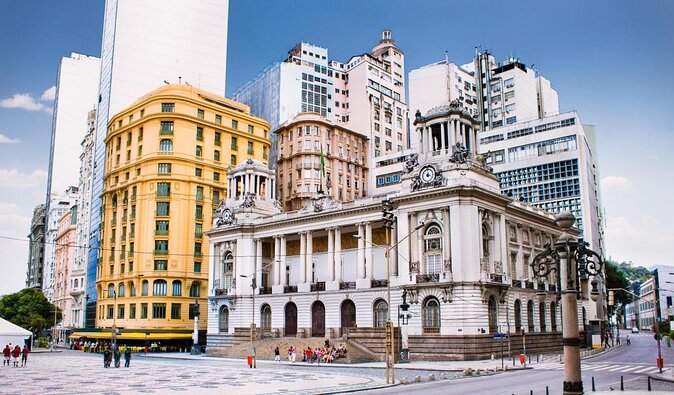
The meeting point is the Municipal Theater of Rio de Janeiro, at Praça Floriano in Centro. This is a useful place to begin because Cinelândia gives you an immediate look at Rio’s formal public face: grand civic buildings, cultural institutions, and architecture shaped by European influence.
The tour does not treat the city as a backdrop for graffiti alone. You get a short lesson in how Rio was built, how its central districts changed, and how public art now occupies walls, stairways, and transport corridors.
That wider setting matters. Street art makes more sense when you see the buildings, neighborhoods, and public spaces around it. A mural is not just a large picture. It may respond to a political debate, a social problem, a historical memory, or the people who live nearby.
The timing here is brief, about 30 minutes in the Cinelândia portion of the route. That means you should expect a focused introduction rather than a full architectural tour of every building in the square.
A few more Rio de Janeiro days to weigh up
- Rio Street Art Tour
★ 5.0 · 76 reviews - São Paulo: Bar and Street Art Crawl with Local Guide
★ 4.9 · 102 reviews - Street Art and Park Bike Tour
★ 5.0 · 56 reviews
Selarón Steps, color with a crowded side
The Escadaria Selarón, or Selarón Steps, is one of Rio’s most photographed sights. The staircase is covered with colorful tiles collected and arranged by Chilean artist Jorge Selarón, and it has become a popular meeting point for visitors taking pictures.
This tour gives you about 20 minutes at the stairs. That is enough to see the work, hear its place in the city, and take photographs, but it is not a long, quiet visit. The staircase can be crowded, so keep your expectations practical. You are seeing an important public artwork in an active part of the city, not entering a private gallery.
I like the way the steps fit into this route. On their own, they can become a quick photo stop. Combined with Cinelândia, the old central streets, and the murals later in the day, they become part of a larger look at how Rio expresses identity in public places.
You will want comfortable shoes here. The full tour includes extended walking, and the stairs add another physical element. Bring water, especially on a hot day.
From old Centro to the Olympic Boulevard
After the central sights, the route uses the VLT to reach the Olympic Boulevard and Porto Maravilha. The light rail is not simply a way to save your feet. It gives you a local view of Rio’s public transport and lets you see how the older center connects with the redeveloped port district.
Using public transportation also makes the tour feel less packaged than a coach excursion. You are moving through the city as residents do, with short transfers built into the experience. One useful practical detail is that the guide has helped with transit tickets, which can be reassuring if you are unfamiliar with Rio’s system.
The route includes the first legalized graffiti in Rio, according to the tour description. That detail is important because it shows how public attitudes toward graffiti have changed. Art once treated as vandalism can later gain official approval, public attention, and a place in the city’s cultural story.
The tour also passes near the Museum of Tomorrow and the Museu de Arte do Rio. You may not have time to visit either museum inside, since the activity is centered on outdoor art and lasts about three hours. Still, their presence helps frame the contrast between historic Centro, the port’s recent redevelopment, and Rio’s interest in art as part of public life.
Porto Maravilha and the Etnias mural
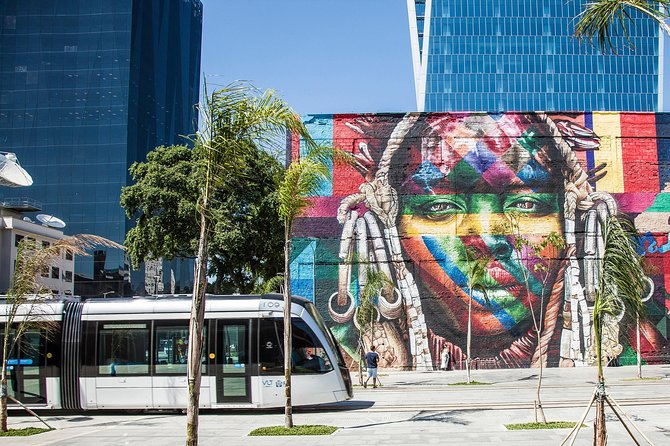
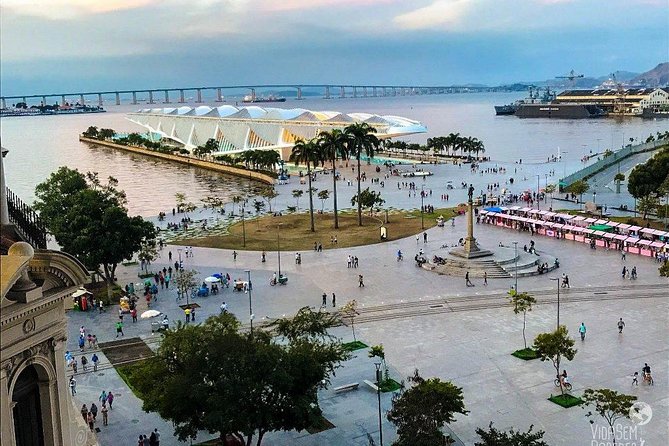
The main finale comes in Porto Maravilha, the port district. This is where you see the Etnias panel, described as the largest graffiti mural in the world.
The mural is credited to Brazilian artist Eduardo Kobra and uses large faces to represent Indigenous peoples from different parts of the world. The scale is the point. You do not simply look at a wall from a few feet away. You take in a huge public artwork that changes as you move along it.
The tour allows about an hour in Porto Maravilha. That is the longest stop, and rightly so. Wellington explains the mural’s messages rather than reducing it to a backdrop for photographs. You get time to look closely, step back, and understand how the artwork relates to the port area.
This part of Rio also carries a difficult history. The port is connected with the arrival and enslavement of Africans in Brazil, and the nearby area known as Little Africa is important for understanding Afro-Brazilian culture. The tour brings slavery, race, Carnival, samba schools, and present-day cultural life into the conversation.
That is one of the strongest reasons to choose this tour. You are not only collecting murals. You are learning how art can point toward stories that official sightseeing can easily skip.
Same patch of Brazil, a completely different sort of day:
- Rio de Janeiro: 6-Stop Highlights of Rio with Lunch
★ 4.4 · 5,157 reviews - Christ the Redeemer Entry Ticket by Corcovado Train
★ 4.4 · 4,476 reviews - Rio’s City Tour – Tickets for Christ, Sugar Loaf & Lunch included
★ 5.0 · 4,389 reviews - Full Day: Christ Redeemer, Sugarloaf, City Tour & Barbecue Lunch
★ 4.5 · 3,142 reviews
Little Africa and the stories behind the paint
Little Africa received especially strong praise from people who wanted more than surface-level sightseeing. The area helps connect Rio’s art and culture with the history of Africans brought to Brazil and the traditions that grew from that painful past.
The route may include discussion of the port’s connection to enslaved Africans, and the guide can place the murals within that setting. This gives the artwork more weight. A painted face, symbol, or public figure can carry a different meaning once you know who has been represented, who has been left out, and what local struggles shaped the piece.
The tour also brings in Carnival and samba schools. One especially interesting possibility is seeing Carnival floats or learning about the spaces where floats are staged and stored, if access is available. This is not presented as a guaranteed separate attraction, so you should treat it as an added possibility rather than the main reason to book.
I would choose this tour if you want Rio’s cultural story told through several connected subjects. It suits curious visitors who enjoy asking why a work was made, what it says about the city, and how art relates to everyday life.
What the guide adds
The guide is central to the experience. Most of the detailed feedback names Wellington, who is described as friendly, animated, and well informed about Rio’s art, culture, architecture, politics, and history. One account also names Gabriel, so the assigned guide may not always be Wellington.
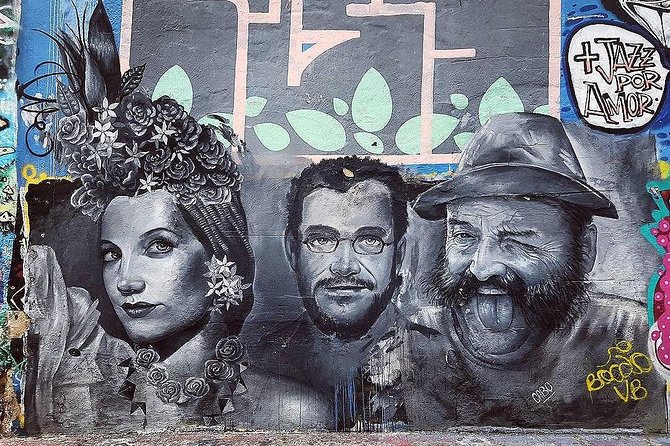
Wellington’s strongest contribution is interpretation. He explains the figures and messages in the murals, then links them to larger events and local experience. This makes the tour useful even if you do not normally consider yourself an art enthusiast.
His English is described as excellent, and one English teacher appreciated the chance to practice Portuguese during the walk. That suggests the tour can work well for English-speaking visitors who want clear explanations without losing the local character of the experience.
The personal side matters, too. Several comments describe the tour as relaxed and friendly, more like seeing the city with an informed local than listening to a list of dates. That style will appeal to you if you enjoy conversation and questions. It may be less suitable if you want a tightly scripted tour with no changes in pace.
Because this is a private activity, the guide can respond to your interests. You might ask more about street-art technique, Afro-Brazilian culture, politics, architecture, or food. One group ended near Selarón Steps and received suggestions for places to eat, eventually having lunch among locals. Food recommendations are not a formal promise, but they show the kind of practical help a private guide may offer.
How much walking and transit should you expect?
The tour lasts about three hours and combines walking with subway and VLT rides. One person described it simply as a lot of walking, while also calling the route easy overall. Those two points fit together: the terrain may not be especially demanding, but you are on your feet for much of the activity.
Wear walking shoes with a good grip. Bring water, sunscreen, and a hat if the weather is warm. The tour requires good weather, and there is little reason to force an outdoor art tour through heavy rain.
The public transit portions add local flavor but also mean the experience is not as controlled as a private car tour. You may deal with station entrances, short waits, and the normal movement of city transport. For me, that is part of the value, but visitors seeking maximum comfort should know what they are choosing.
Most people can participate, and the tour is near public transportation. The supplied information does not provide details about wheelchair access, child equipment, or a maximum walking distance, so ask the provider directly if you have specific mobility needs.
Is $68.61 a fair price?
At $68.61 per person, this is not the cheapest way to see central Rio. It is also not a simple three-hour walk past a few painted walls.
The price includes a private guide, interpretation of the art, local history, and a route linking several districts. It also gives you a person who can help you understand subway and VLT travel instead of leaving you to work out the system alone.
For a solo visitor, the value is particularly strong because the activity still runs as a private experience rather than requiring you to join a large group. For a couple or family, the cost is easier to justify if everyone enjoys walking, public art, and cultural discussion.
You should not book it mainly for admission to museums. The listed stops have no admission charge, and the activity focuses on outdoor places. You are paying for the guide’s time, the route, and the explanations.
The tour is typically booked about 30 days ahead. That is useful to know if your dates are fixed, especially if you want a specific guide or need to fit the tour around other Rio plans.
Strengths and limits at a glance
The tour’s biggest strength is its range. In three hours, you move from Cinelândia’s civic buildings to Selarón Steps, then by public transport toward the port, museums, Little Africa, and a giant mural.
Its second strength is the guide’s local perspective. You get more than artist names and photo angles. The conversation can include social issues, politics, slavery, Carnival, samba, and the changing role of graffiti in Rio.
The main limitation is that the route covers a lot of ground quickly. If you want to stop at every mural for a long time, three hours may feel short. You may also find that some works are older than expected. One visitor specifically wished for more new or younger graffiti.
Another consideration is that the experience ends in a different area from where it begins. That is convenient if you want to continue around Porto Maravilha, but you should allow time to reach your next destination.
Cancellation is free up to 24 hours before the start time. Changes made less than 24 hours ahead are not accepted, and poor weather may lead to a different date or a full refund.
Who should book the Rio Street Art Tour?
I would recommend this tour to you if you want an introduction to Rio’s central districts that mixes art with history and daily life. It is especially good for solo visitors, couples, families with older children, and anyone who prefers a small private outing to a large group tour.
It is also a strong choice if Little Africa, Afro-Brazilian culture, Carnival, and the port’s history interest you. The art provides an accessible way into those subjects, while the guide supplies the background that a self-guided walk would likely miss.
I would hesitate if you dislike walking, public transit, outdoor heat, or discussion of political and social issues. I would also look elsewhere if your main goal is a tour of the newest street art. The route is more about meaning, place, and city history than chasing every fresh wall.
For most visitors, the best plan is to book this early in your Rio stay. It can help you understand Centro and Porto Maravilha, and the guide may point you toward food and cultural stops for the rest of your visit.
FAQ
How long does the Rio Street Art Tour last?
The tour lasts approximately three hours.
Where does the tour begin?
It begins at the Municipal Theater of Rio de Janeiro, at Praça Floriano in Centro, Rio de Janeiro.
Where does the tour end?
The activity ends in a different location from the meeting point, in the Porto Maravilha area near the Olympic Boulevard and major museums.
Is this a private tour?
Yes. Only your group participates in the activity.
Does the tour include public transportation?
Yes. The route uses the subway and the VLT, or light rail, along with walking.
Is admission to the stops included?
The listed stops have no admission charge. The tour focuses on outdoor public art and city areas, including Selarón Steps, Olympic Boulevard, and Porto Maravilha.
What happens if the weather is poor?
The experience requires good weather. If it is canceled because of poor weather, you will be offered another date or a full refund. You can also cancel for a full refund up to 24 hours before the start time.
Newest reviews from around Rio de Janeiro
- Hang gliding flight in Rio de Janeiro★ 5.0 · 6 reviews
- Rio de Janeiro: Zip Lining and Canopy Tree Tour★ 3.3 · 6 reviews
- Vidigal Favela Tour★ 4.4 · 26 reviews
- Rio de Janeiro: Attend a Vasco da Gama game with local guide★ 4.8 · 9 reviews
- Unforgettable Boat Party★ 5.0 · 3 reviews
- Parapente Rio de Janeiro★ 5.0 · 4 reviews
- Rio de Janeiro Private Tour with Cruise Terminal Pick-up★ 5.0 · 2 reviews
- Wild Waters: Rio Whitewater Rafting Adventure Tour★ 5.0 · 13 reviews
Street Art, compared.

Private Street Art Tour of São Paulo with Batman´s Alley Visit
Read our review →
5-hour Private Street Art Tour Of São Paulo – The Coolest Urban Art Scenes
Read our review →
Browse the lists this tour appears in