
Reviewed · GRAMADO & SERRA GAúCHA TOURS
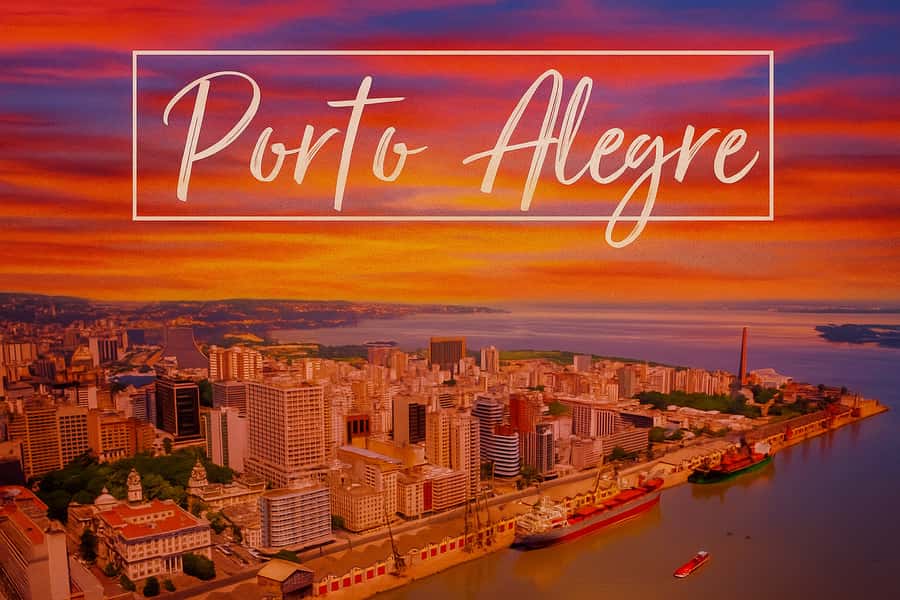
Porto Alegre: Private Citytour na Capital dos Gaúchos
Porto Alegre rewards a city tour. I like the way this five-hour outing combines major sights with local context, and I like the chance to shape the day around your interests. The main drawback is pace: the route covers a long list of places, so some stops may feel more like quick orientation points than full visits.
The local guide is the heart of the experience. Guides such as Carlos, Bruno, and Valdecir have led tours in Portuguese, English, and Spanish, with Bruno receiving praise for speaking clearly and adjusting the outing to changing road conditions. You are not simply driven past a collection of buildings. The aim is to understand how Porto Alegre’s civic, cultural, and sporting life fits together.
Pickup is included from accommodation in Porto Alegre, and the tour is wheelchair accessible. One detail needs checking before you pay: the experience is presented as private for a group of up to four at $180, but the activity information also gives a small-group limit of 15 participants. Ask the operator to confirm the exact format for your booking.
In This Review
- Key Points At A Glance
- Why Five Hours Works Well In Porto Alegre
- Moinhos de Vento And Gonçalo de Carvalho Street
- Public Market And The Civic Center
- Two Stadiums And Porto Alegre’s Football Divide
- Churches, Palaces, And The Story Of Power
- The Gasometer Plant And The Guaíba Waterfront
- Harmony Park, The Stone Bridge, And The Azorean Monument
- Redemption And The Shape Of The City
- Guides, Languages, And The Human Side
- Price, Group Size, And Practical Value
- Who Should Book This Porto Alegre Tour?
- Should You Book It?
- FAQ
- How long does the Porto Alegre city tour last?
- How much does the experience cost?
- Which languages are available?
- Is hotel pickup included?
- Where should I wait for pickup?
- How long will the driver wait after the scheduled pickup time?
- Is the tour wheelchair accessible?
- Can I cancel for a full refund?
Key Points At A Glance
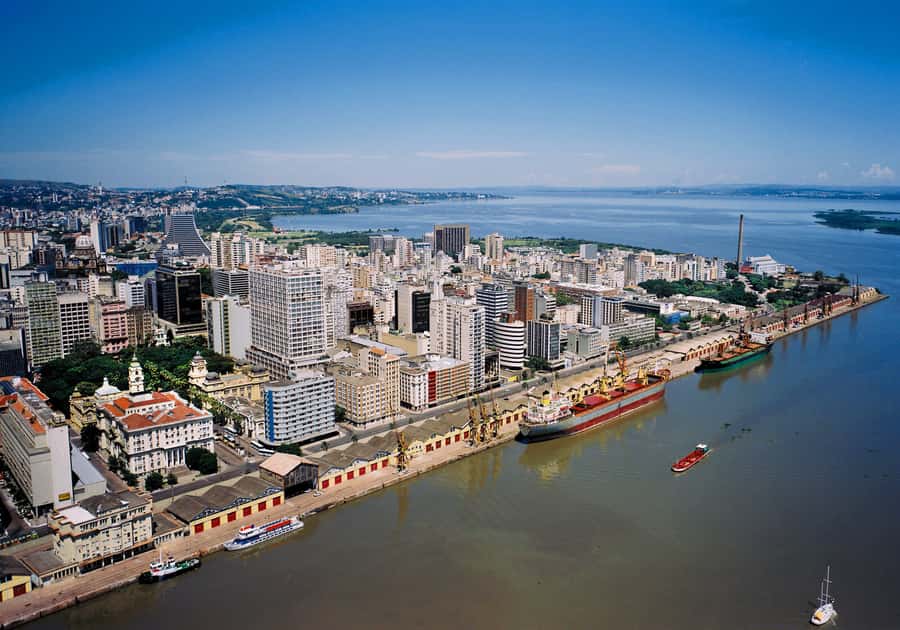
- A five-hour introduction to Porto Alegre: The route links central squares, palaces, churches, stadiums, parks, and the Guaíba waterfront in one morning or afternoon.
- The guide can shape the experience: Carlos tailored one outing toward an engineer’s interests, while Valdecir provided an English-language introduction to the city.
- A broad city route: You see both classic civic landmarks and local places such as Gonçalo de Carvalho Street, the Beira-Rio Stadium, Grêmio Arena, and the Gasometer Plant.
- Good for first-time orientation: The tour covers enough ground to help you decide where to return for a longer visit.
- Languages and access are practical strengths: Portuguese, English, and Spanish service is available, with hotel pickup and wheelchair access included.
- Value depends on group size: At $180 for up to four people, the price works best when shared. Confirm whether your booking is fully private or part of a group.
Why Five Hours Works Well In Porto Alegre
Porto Alegre is not a city you should understand from a single square or one waterfront stop. Its identity is spread across neighborhoods, government buildings, football grounds, historic churches, public spaces, and the long edge of the Guaíba.
That makes a vehicle-based city tour useful. You can cover areas that would take much longer to connect on foot, then decide which places deserve more of your own time. The route is ambitious, with around 20 named stops, so its real purpose is broad orientation rather than long museum visits or extended time inside every building.
I would treat this as a first look at the city. You get the basic story, see where the main districts sit, and hear why particular sites matter. You should not expect a slow architectural tour at every stop.
The guide adds the value. A good guide can explain why Porto Alegre is associated with writers, artists, intellectuals, politicians, and the gaucho culture of southern Brazil. The experience is described as multicultural, and the route reflects that mix. Civic history sits beside football, religious architecture, public markets, parks, and waterfront views.
A few more Gramado & Serra Gaúcha days to weigh up
- Canela Cable Car Park Ticket
★ 4.0 · 1,030 reviews - Adventure “The Theft of the Diamond”
★ 5.0 · 710 reviews - Combo: Platform Entrance, Abusado Adventure, Ferro Passar Museum
★ 3.5 · 314 reviews
Moinhos de Vento And Gonçalo de Carvalho Street
The tour begins its city story in places that show Porto Alegre beyond the central government district. Moinhos de Vento is one of the city’s best-known neighborhoods, and the Calçada da Fama adds a local cultural touch.
Gonçalo de Carvalho Street is a highlight for many people because of its tree-lined appearance. It is promoted as one of the most beautiful streets in the world, which gives you a memorable visual stop early in the route. You can expect a photo opportunity and a quick sense of how ordinary residential streets can become part of a city’s public image.
This part of the route is useful because it breaks up the formal monuments that come later. You see a neighborhood setting, not just official buildings. The limitation is that a short stop cannot explain every part of Moinhos de Vento, so take note of the area if you want to return independently.
Public Market And The Civic Center
The Public Market gives the tour a more everyday side. Markets are valuable city stops because they show how people shop, eat, and meet, rather than presenting only polished monuments. The exact amount of free time matters here, so ask the guide whether you will have time to enter and browse or mainly view the building from outside.
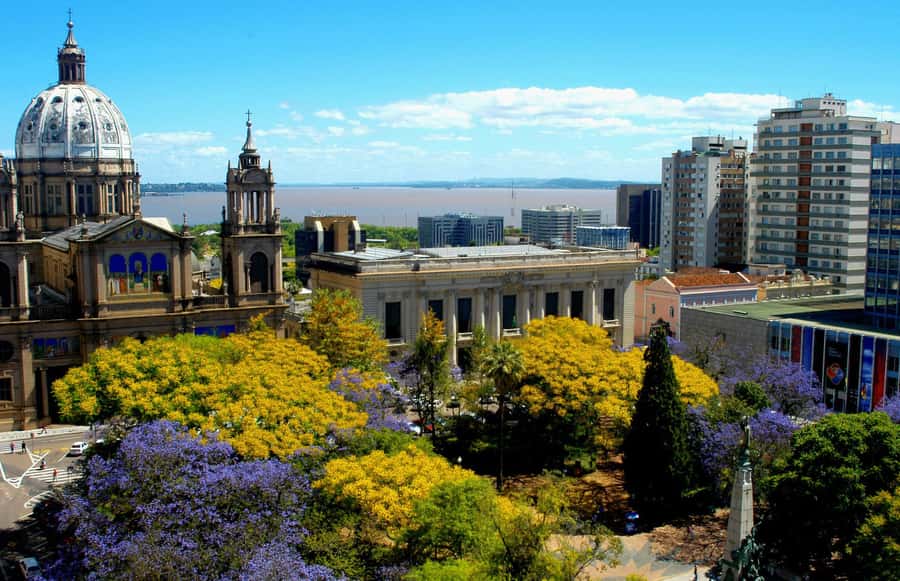
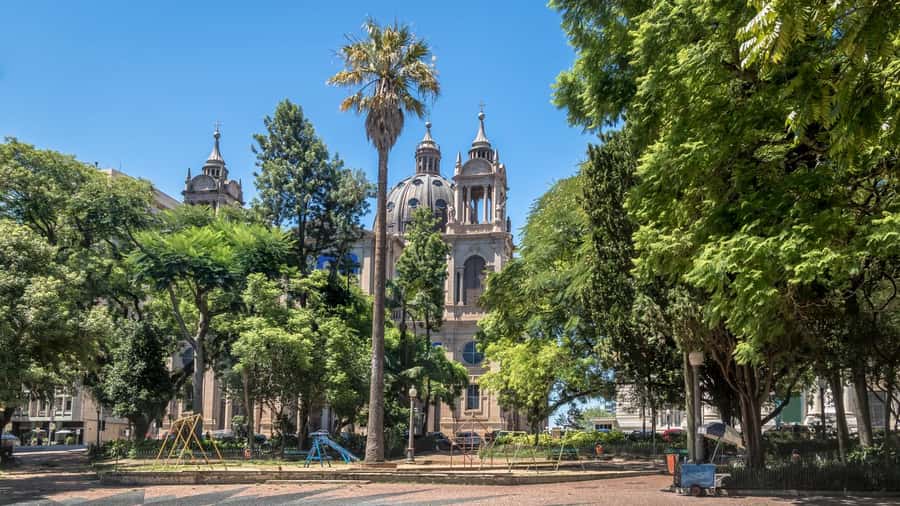
The route then moves toward Porto Alegre’s civic landmarks. City Hall, Matriz Square, the Metropolitan Cathedral, São Pedro Theater, Farroupilha Palace, and Piratini Palace form the strongest history and government section of the day.
Matriz Square is an important anchor for the central district. From there, the Metropolitan Cathedral gives the route a major religious landmark, while São Pedro Theater represents the city’s performing arts tradition. Farroupilha Palace and Piratini Palace add political history and help explain Porto Alegre’s role as the capital of Rio Grande do Sul.
I like this mix because it gives the city more than one identity. Porto Alegre is not presented only as a southern Brazilian capital or only as a football city. Churches, theater, government, and public life all receive a place.
You may not enter every building. The information promises a tour through the main points and historical context, not guaranteed interior visits. If a palace or theater matters especially to you, ask the guide what the stop includes on your date.
Two Stadiums And Porto Alegre’s Football Divide
Football is an important part of the route, with stops at Beira-Rio Stadium and Grêmio Arena. Seeing both is a smart choice. It gives you a quick introduction to the city’s famous sporting rivalry rather than showing only one side.
Beira-Rio is associated with Internacional, while Grêmio Arena represents Grêmio. The tour does not promise match tickets, stadium entry, or a stadium museum visit, so think of these stops as exterior orientation unless the guide tells you otherwise.
For a football fan, this can be one of the most meaningful parts of the day. Even if you do not follow Brazilian football, the two stadiums make clear that local identity is not limited to old churches and government buildings. The guide can also connect the sporting sites to the broader character of the city.
The practical issue is time. Stadiums are not in the same compact cluster as the central monuments, and traffic can affect the order or length of stops. One outing faced road closures caused by a marathon and a demonstration, yet the driver found alternate routes and kept the tour enjoyable. That is a useful sign of flexibility, but it also shows why the schedule should not be treated as exact to the minute.
Same patch of Brazil, a completely different sort of day:
- Adventure Infection in Gramado
★ 5.0 · 257 reviews - Guided Tour with Wine Tasting at Casa Seganfredo – Gramado
★ 5.0 · 254 reviews - Maria Fumaça – Wines and History
★ 4.0 · 242 reviews - Harmonized Lunch – Cristofoli Family Wines
★ 5.0 · 239 reviews
Churches, Palaces, And The Story Of Power
Nossa Senhora das Dores Church adds another religious landmark to the route. Together with the Metropolitan Cathedral, it gives you a chance to compare two important sacred spaces, at least from the outside if interiors are not available.
The palaces bring a different kind of story. Farroupilha Palace and Piratini Palace connect Porto Alegre with the politics of Rio Grande do Sul and Brazil. A guide is especially useful here because architectural details alone will not tell you why these buildings matter.
This is where the tour’s historical content can make a real difference. Without explanation, you might see a formal façade, take a picture, and move on. With context, you can place each building within the state’s political development and the city’s role as an administrative center.
Still, the route does not promise a specialist history lecture. If you want an exhaustive account of regional politics, this is not the right format. The strength is concise explanation while moving between important sites.
The Gasometer Plant And The Guaíba Waterfront
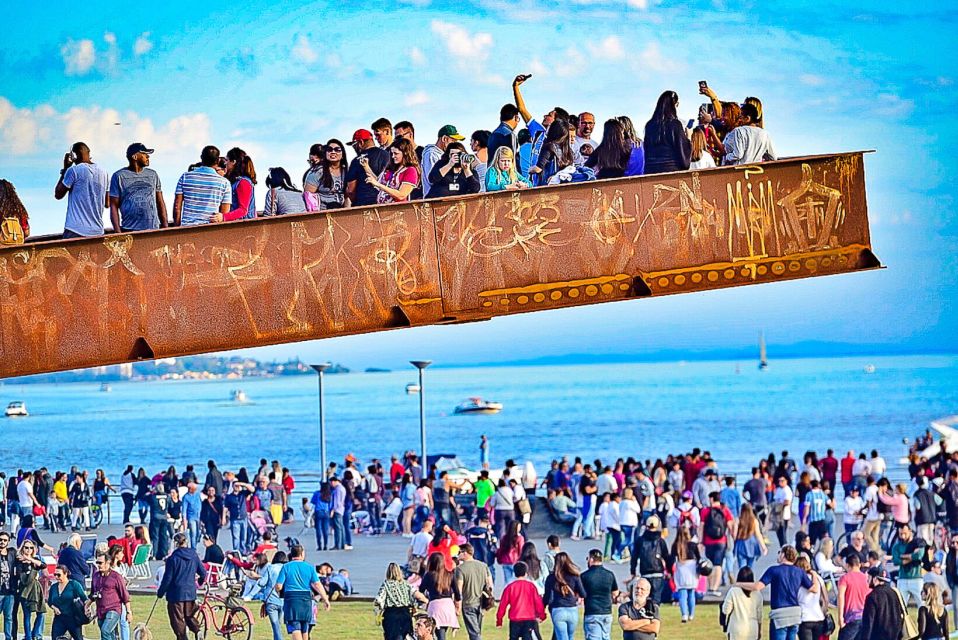
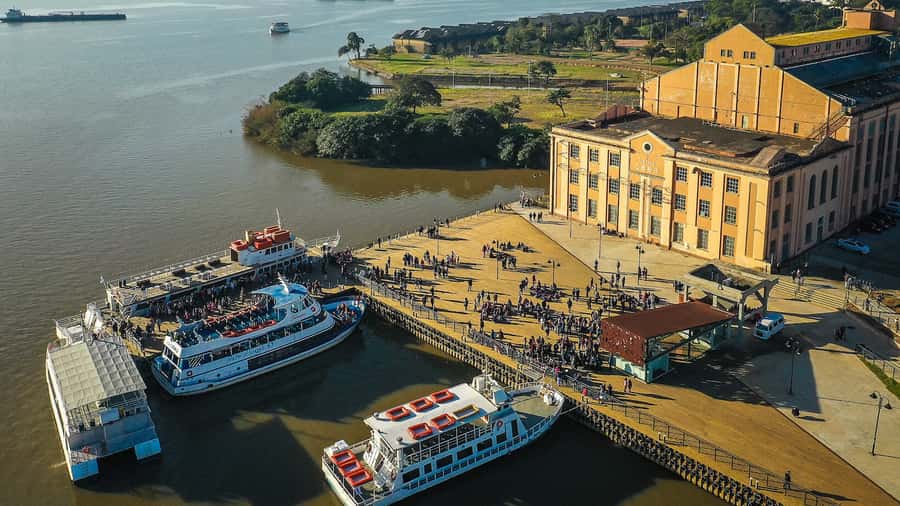
The Gasometer Plant marks a shift from central history to the waterfront. Its industrial character adds another layer to the city, showing that Porto Alegre’s story includes work, infrastructure, and the riverfront as well as palaces and churches.
From there, the tour follows the Guaíba Orla, including Pier Embarcadero and the Orla Mirante. These stops give you open views and a chance to see the city from a less formal angle.
The waterfront is likely to be one of the most enjoyable parts of the tour because it creates breathing room after the central districts. You can expect views, photographs, and a sense of the city’s relationship with the Guaíba. The exact mood will depend on weather and traffic, so do not assume every stop will become a long sunset viewing session.
Pier Embarcadero and the Orla Mirante also help you see how public spaces are being used along the water. The route gives you a quick introduction, but you may want to return later if you prefer a slower walk or more time beside the Guaíba.
Harmony Park, The Stone Bridge, And The Azorean Monument
Harmony Park adds a specifically local cultural note. The name points to the gaucho traditions that shape regional identity, and it gives the guide another place to explain southern Brazilian customs and public life.
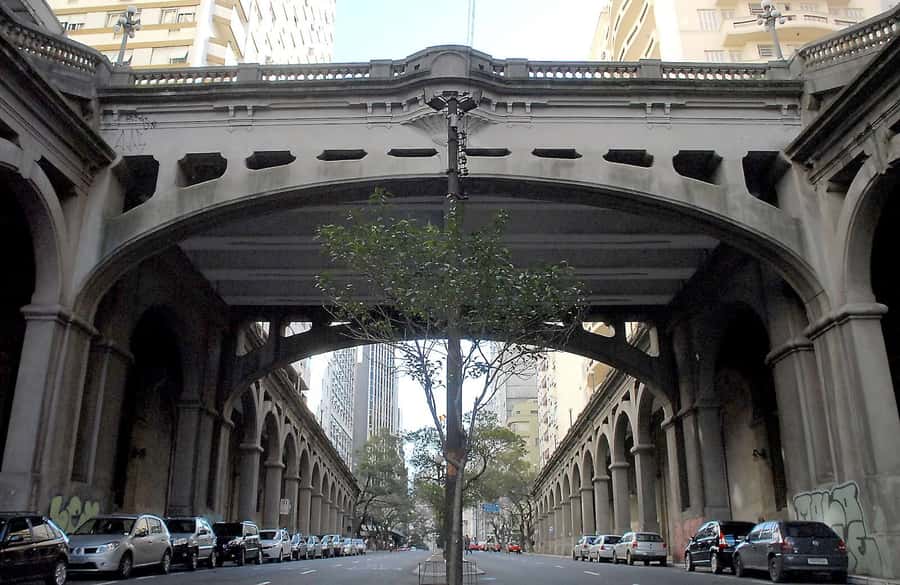
The Stone Bridge and Azorean Monument provide further points of historical connection. The Azorean reference is especially useful for understanding that Porto Alegre’s culture has been shaped by more than one group. The tour’s focus on writers, artists, politicians, and the city’s multicultural character fits naturally with this part of the route.
These stops may be brief, but they help prevent the day from becoming a simple checklist of famous buildings. You see traces of migration, regional customs, civic memory, and public art alongside the central sights.
If you prefer long visits at fewer places, the number of stops may feel excessive. I would use this section to listen closely to the guide, note names that interest you, and return later to the places you want to explore in detail.
Redemption And The Shape Of The City
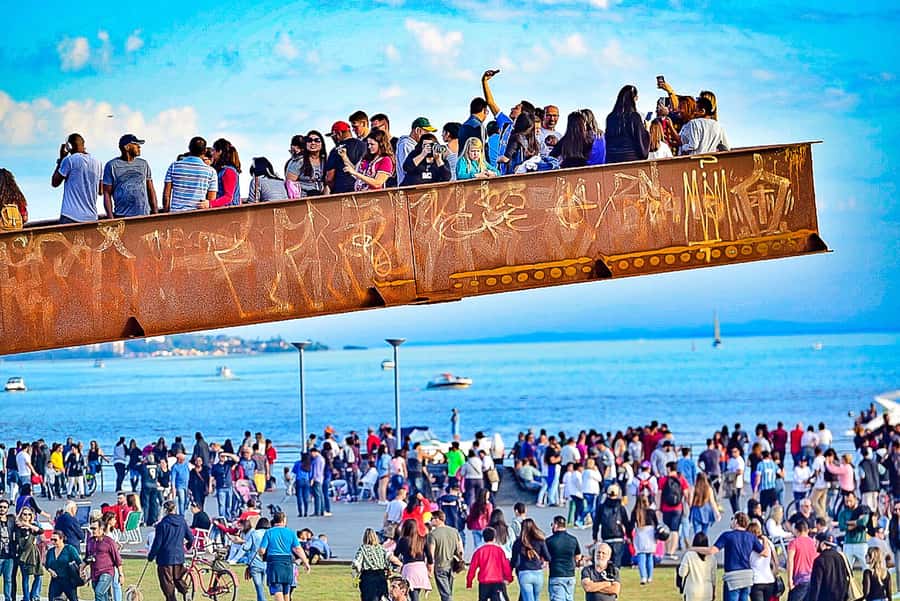
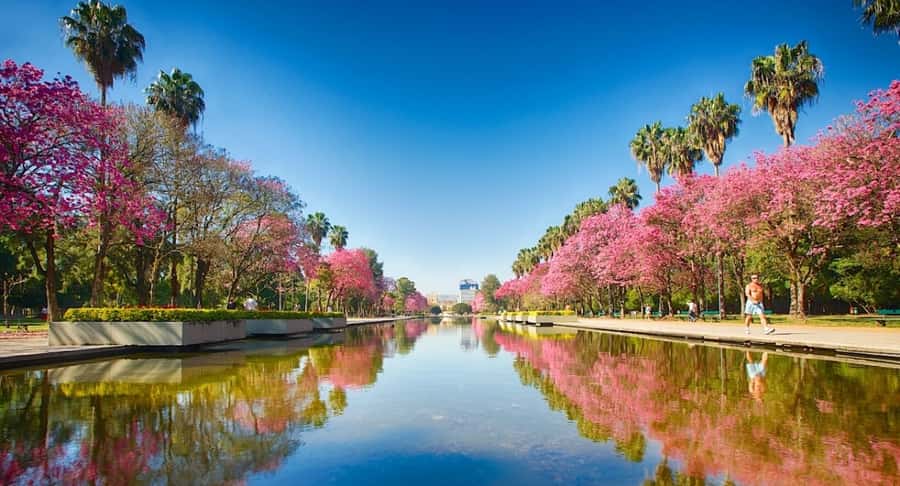
Redemption, also known as Farroupilha Park, completes the long list of central public spaces. It gives you a final look at Porto Alegre as a city of parks and civic gathering places, not just streets and buildings.
By this point, you should have a useful mental map. You will have seen the historic center, the main government area, important religious buildings, both major football stadiums, a residential district, and the waterfront. That range is the tour’s biggest strength.
The guide’s role again matters here. Carlos adjusted one tour toward the interests of an engineer rather than following only standard sightseeing points. That suggests you should speak up early about architecture, politics, football, public spaces, or local culture. A private format is most valuable when the guide knows what you care about.
Guides, Languages, And The Human Side
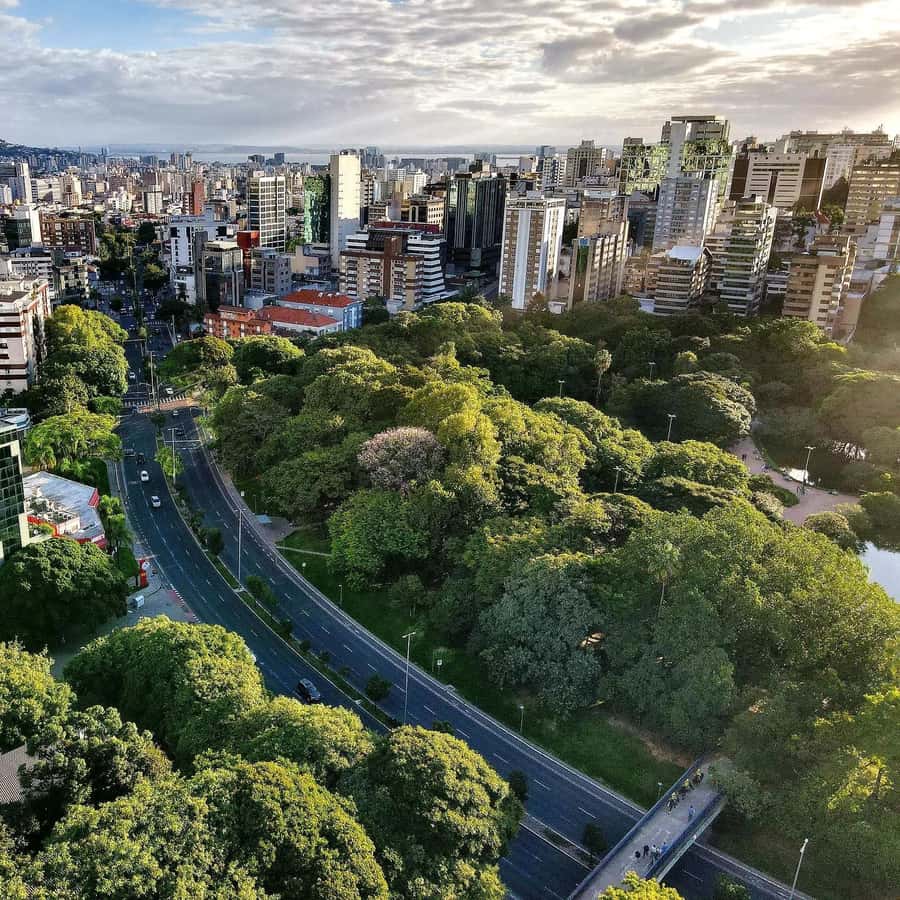
The activity offers service in Portuguese, English, and Spanish. That makes it accessible to a wide range of visitors, and the feedback gives useful clues about the guiding style.
Valdecir led one English-language outing at a comfortable pace, giving enough time at each place to look around and enjoy the stop. Bruno was praised for speaking clearly and not too quickly, even while covering a large amount of information. Carlos adapted the route to a visitor’s professional interests.
Those details matter more than a generic promise of a local guide. A five-hour city tour can become tiring if the explanation comes too fast or if the guide ignores your interests. Here, you have good reason to request the language and subject focus that suit you best.
Guide assignments can change, so you should not assume a particular person will lead your booking. Still, the named examples show the kind of flexibility to look for.
Price, Group Size, And Practical Value
The advertised price is $180 per group of up to four people. Shared among four, that works out to $45 per person for five hours, which is a fair price for hotel pickup, transportation around a large city, a guide, and a tailored route.
For one person, the price is much harder to justify unless you place a high value on private attention. For a couple or small family, the calculation improves quickly. The guide can spend more time on your questions, and you avoid building your own route between far-flung areas.
The group information needs clarification. The experience is titled as private, and the price is stated for up to four, but the activity also gives a maximum of 15 participants. That could reflect different booking options, so confirm before reserving if privacy is important to you.
Pickup is included from accommodation in Porto Alegre. You should wait in the hotel lobby 10 minutes before the scheduled time. The driver waits no longer than five minutes after pickup, so punctuality matters.
Cancellation is free up to 24 hours before the scheduled start for a full refund, and you can reserve while paying later. Wheelchair access is listed as available, though you should still discuss your specific mobility needs when booking.
Who Should Book This Porto Alegre Tour?
I would recommend it to first-time visitors who want a clear introduction to Porto Alegre without spending days arranging transport between districts. It also suits people with limited time, since the route reaches the center, stadiums, parks, and Guaíba waterfront in five hours.
It is a good choice for small groups that want to share the cost. Families and friends can use the guide’s time to focus on their own questions, especially if they request a particular interest in advance.
Football fans should pay attention to the two stadium stops. Architecture and civic history fans will appreciate the cathedral, churches, theater, palaces, City Hall, and central squares. People interested in local identity will find the Harmony Park, Azorean Monument, market, and waterfront useful additions.
I would be more cautious if you want long interior visits, extensive museum time, or a relaxed walking tour. The route covers many places, and the value comes from range, explanation, and transportation rather than deep time at one monument.
Should You Book It?
Book this tour if you want to get your bearings quickly and understand the main threads of Porto Alegre: gaucho culture, civic power, religion, football, public parks, and the Guaíba waterfront.
Before booking, confirm three points: the exact group format, which language you want, and how much time the guide expects to spend inside or outside each stop. If the answer fits your plans, $180 is reasonable for a group of up to four, especially when the guide adapts the route to your interests.
Skip it if you already know the city well or prefer to explore a few places slowly. For everyone else, this is a practical first chapter, with enough local context to help you choose what deserves a second look.
FAQ
How long does the Porto Alegre city tour last?
The tour lasts five hours.
How much does the experience cost?
The listed price is $180 per group of up to four people.
Which languages are available?
The live guide service is available in Portuguese, English, and Spanish.
Is hotel pickup included?
Yes. Pickup is included from accommodation in Porto Alegre.
Where should I wait for pickup?
You should wait in your hotel lobby 10 minutes before the scheduled pickup time.
How long will the driver wait after the scheduled pickup time?
The driver will wait for no longer than five minutes after the scheduled pickup time.
Is the tour wheelchair accessible?
Yes, wheelchair accessibility is listed for the activity.
Can I cancel for a full refund?
Yes. You can cancel up to 24 hours in advance for a full refund.
Newest reviews from around Gramado & Serra Gaúcha
- Transfer back and forth to Gramado/Canela de Porto Alegre/Caxias★ 5.0 · 49 reviews
- Private Premium Transfer from Porto Alegre to Gramado or Canela★ 5.0 · 17 reviews
- Transfer back and forth Poa Gramado or Canela Poa Regular★ 4.0 · 37 reviews
- Porto Alegre: Private City Tour for Groups 1 – 4 Pax★ 4.5 · 3 reviews
- Executive Private Airport Transfer to Hotels in Porto Alegre / RS★ 5.0 · 3 reviews
- Private Tour in Porto Alegre-RS★ 4.5 · 5 reviews
- Private Transport – LAWN | CINNAMON★ 5.0 · 54 reviews
- Private City Tour Gramado and Canela – Departing from POA – By Mercosul Transporte★ 5.0 · 9 reviews
Gramado & Serra Gaúcha Tours, compared.

Combo: Platform Entrance, Abusado Adventure, Ferro Passar Museum
Read our review →

Guided Tour with Wine Tasting at Casa Seganfredo – Gramado
Read our review →
Browse the lists this tour appears in