Reviewed · RIO DE JANEIRO TOURS
Path DA Resistance: Discover the Black Culture of Rio
Rio’s past comes alive in Little Africa. This private walking experience connects museums, public squares, samba landmarks, an archaeological site, and powerful street art while explaining the African roots of Rio de Janeiro. At about two to three hours, it offers a focused introduction to a part of the city that is easy to miss if you stick to beaches and famous viewpoints.
I especially like the private format, since your group can ask questions and set a comfortable pace. I also like the clear focus on Afro-Brazilian culture, with stops at Pedra do Sal and Cais do Valongo rather than a quick look at generic city sights. The main consideration is that this is an outdoor, history-centered tour, so rain can cancel it and the experience may feel serious rather than lighthearted.
The guide makes a big difference here. Lucas Reves is praised for being friendly, easy to talk with, and proud to share his own background. He also stresses that Black history in Rio continues to be uncovered and shaped by the community, an important idea that gives the tour more depth than a simple sightseeing walk.
In This Review
- Key points to know before booking
- Starting at the Rio Museum of Art
- The flag staircase and a visual link to Brazil
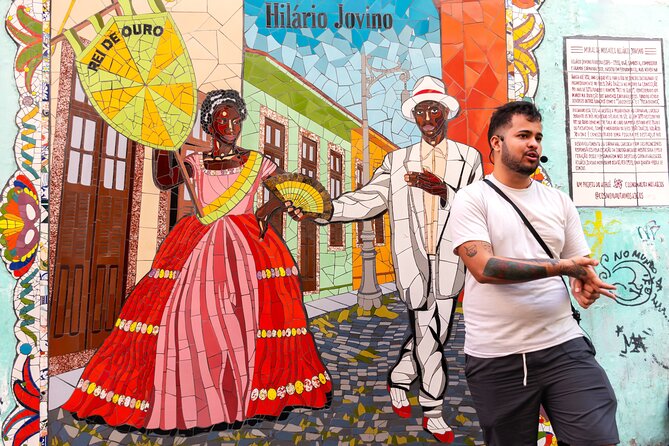
- Hilário Jovino and the roots of carnival
- Largo São Francisco da Prainha and community expression
- Pedra do Sal, samba, and Afro-Brazilian memory
- Cais do Valongo and the hardest stop on the route
- Kobra’s Etnias mural and the final image
- What $62.34 really buys you
- Timing, pace, and comfort
- Who will get the most from this experience
- My practical booking advice
- Should you book Path DA Resistance?
- FAQ
- How long does the Path DA Resistance tour last?
- What language is the tour offered in?
- Is this a private tour?
- Where does the tour start?
- Where does the tour finish?
- What happens if the weather is poor?
Key points to know before booking
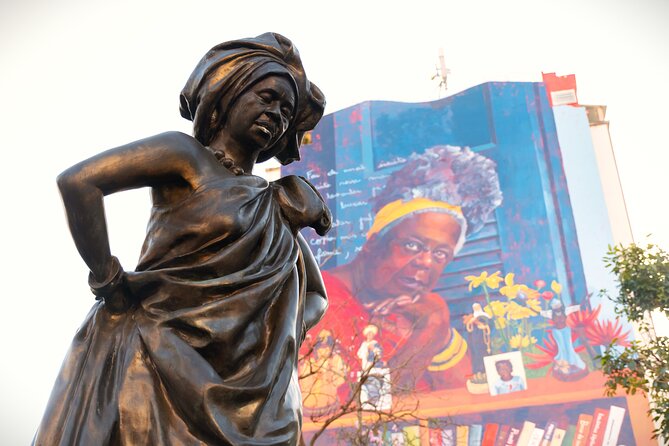
- Little Africa is the central theme: The route connects places tied to Black culture, resistance, samba, slavery, and public memory in Rio.
- Pedra do Sal links music and heritage: This former meeting place for samba musicians is now an important Afro-Brazilian cultural monument.
- Cais do Valongo brings difficult history into view: The archaeological remains mark the landing place of about one million enslaved people.
- You visit seven distinct stops: The route includes the Rio Museum of Art, a Brazilian flag staircase, a carnival mosaic, Largo São Francisco da Prainha, Pedra do Sal, Cais do Valongo, and the Kobra mural.
- It is private and English-speaking: Only your group participates, and a specialized guide leads the experience in English.
- The $62.34 price buys interpretation, not admissions: Every listed stop is free to enter, so the value rests in the guide’s explanation, route planning, and personal attention.
Starting at the Rio Museum of Art
The tour begins at the Rio Museum of Art, or MAR, at Praça Mauá in the Saúde area. You spend about 20 minutes here getting oriented to Little Africa and learning why this part of Rio matters.
The museum itself is not listed as an included visit, and the stop is described as a meeting and context point rather than a museum tour. That distinction matters. You are not paying for a long gallery visit. Instead, the guide uses the area to set the stage for the places ahead.
I like this opening because it gives the rest of the route a clear frame. Without context, a staircase, mosaic, or square can look like another photo stop. With a guide explaining the connection to Black life in Rio, these public spaces become part of a larger story.
The meeting point is near public transportation, which is useful in a city where getting across neighborhoods can take time. Check the exact starting instructions when booking, since Praça Mauá and the Saúde area can include several nearby landmarks.
A few more Rio de Janeiro days to weigh up
- Rio de Janeiro: 6-Stop Highlights of Rio with Lunch
★ 4.4 · 5,157 reviews - Christ the Redeemer Entry Ticket by Corcovado Train
★ 4.4 · 4,476 reviews - Rio’s City Tour – Tickets for Christ, Sugar Loaf & Lunch included
★ 5.0 · 4,389 reviews
The flag staircase and a visual link to Brazil
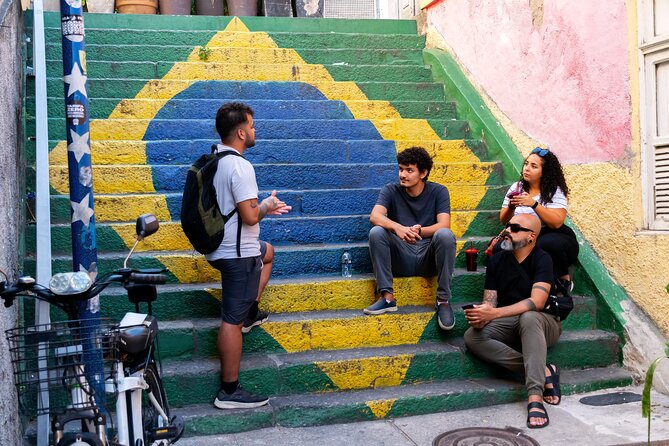
Next comes Escada da Bandeira do Brasil, a Brazilian flag staircase where you have about 15 minutes for photographs. This is a short stop, but it gives the tour a change of pace after the opening explanation.
The staircase is built for a quick visual moment. You will likely spend most of the time looking, taking pictures, and hearing how the setting fits into the story of Little Africa and Brazilian identity. It is not a major historical site on its own, so the guide’s interpretation is what makes the stop worthwhile.
I appreciate that the route does not treat photographs as a distraction from the subject. Public art and everyday city spaces can help you see how national symbols sit alongside the memory of Afro-Brazilian communities. The visit is brief, which keeps the tour moving.
If you want elaborate portraits or a long photo session, 15 minutes may feel short. If you prefer a quick stop with a clear purpose, the timing should work well.
Hilário Jovino and the roots of carnival
The Mosaico Hilário Jovino is another 15-minute stop. Here, the guide explains the creation of carnival and its relationship to Little Africa while giving you time to photograph the mosaic.
This is one of the more useful parts of the route for anyone who thinks of Rio’s carnival only as a dazzling annual parade. The stop connects carnival to community, culture, and Black creative influence. You get a chance to look at the artwork while hearing why Hilário Jovino matters to the development of carnival.
The short timing keeps the explanation focused. You will not receive an entire seminar on carnival, but you should come away with a clearer sense that the celebration has social and cultural roots, not just costumes and music.
The mosaic is also a practical visual aid. Ideas about cultural creation can feel abstract when you hear them in a lecture. Here, you have a public artwork in front of you and a guide who can connect it to the surrounding area.
Largo São Francisco da Prainha and community expression
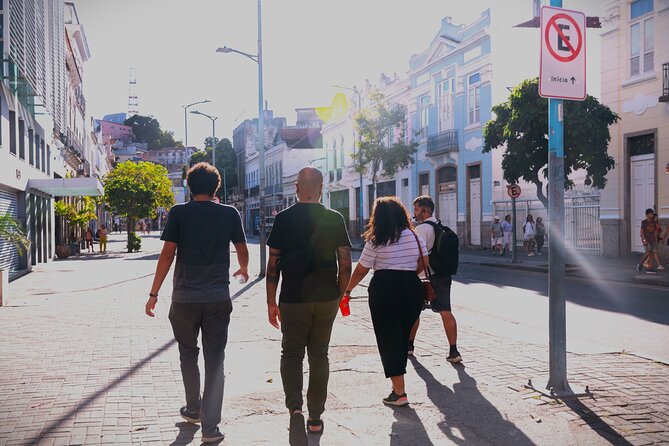
At Largo São Francisco da Prainha, the tour pauses for about 25 minutes. This square is presented as an important place for Black cultural expression and resistance in Rio.
The longer stop makes sense. A square can appear simple at first glance, but the guide helps you consider how public space can hold memory and support community life. This is less about checking off a monument and more about understanding how culture is expressed in ordinary urban places.
This is also a good moment to ask questions. The tour is private, so you do not have to wait for a large group to finish taking pictures or move on. Lucas Reves is praised for making sure people understand the material and feel comfortable asking for clarification. That personal approach matters most at a stop like this, where the meaning may not be obvious from the architecture alone.
Keep your expectations realistic. The value lies in the explanation and setting, not in a formal performance or scheduled event. The experience shows you a place of cultural importance, but it does not promise live music or a festival during your visit.
Same patch of Brazil, a completely different sort of day:
- Full Day: Christ Redeemer, Sugarloaf, City Tour & Barbecue Lunch
★ 4.5 · 3,142 reviews - Rio de Janeiro: Rocinha Favela Walking Tour with Local Guide
★ 4.8 · 3,052 reviews - Rio de Janeiro: Sugarloaf Cable Car Official Ticket
★ 4.6 · 2,873 reviews - Rio’s Full Day: Selarón Steps, Christ & Sugarloaf – Tickets & Lunch Included
★ 5.0 · 2,724 reviews
Pedra do Sal, samba, and Afro-Brazilian memory
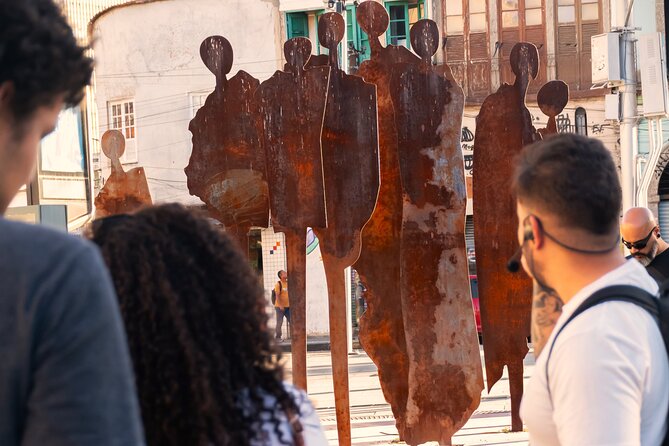
Pedra do Sal receives about 20 minutes and is one of the route’s strongest stops. It is known here as a meeting point for samba musicians and as a monument to Afro-Brazilian culture.
The stop brings together music, community, and place. Samba is often sold to visitors as entertainment, but Pedra do Sal helps show its connection to Black communities and the city’s past. Your guide explains that relationship while you look around the site.
I like this part because it gives the tour an audible and social dimension, even if no performance is taking place. The story is not limited to slavery and loss. It also includes music, creativity, gathering, and cultural survival.
At the same time, do not book this expecting a full samba show. The supplied details promise a visit and explanation, not a concert. The short stop is best treated as an introduction to the importance of Pedra do Sal, with the possibility that you will want to return on your own later.
Cais do Valongo and the hardest stop on the route
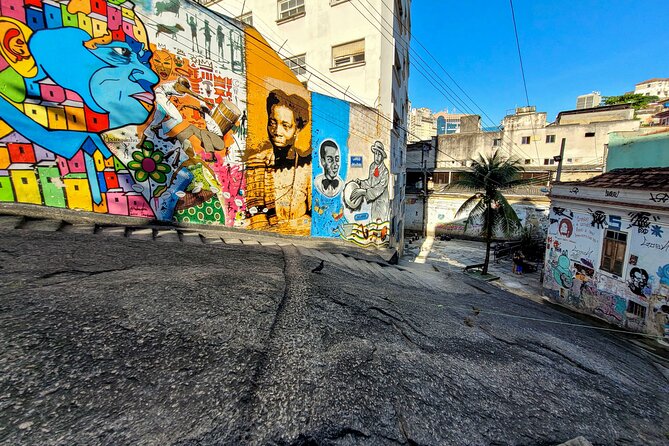
Cais do Valongo is the most sobering stop. You spend around 20 minutes at the archaeological remains of the slavery period, where about one million enslaved people were brought ashore.
This site gives physical weight to a history that can otherwise feel distant. The stones and ruins are not just background for photographs. They mark a place connected to the forced arrival of an enormous number of African people in Brazil.
The guide’s role is especially important here. Lucas Reves explains the history of Black resistance and culture while also making clear that the story is still being studied and shaped by the community. That approach avoids presenting the past as sealed away. It shows how historical memory continues to affect Rio today.
You should be ready for a serious conversation. This is not a cheerful sightseeing stop, and some people may find the subject emotionally difficult. Still, it is one of the reasons this route has real value. You are not simply admiring Rio. You are being asked to understand part of the human cost behind its development.
Kobra’s Etnias mural and the final image
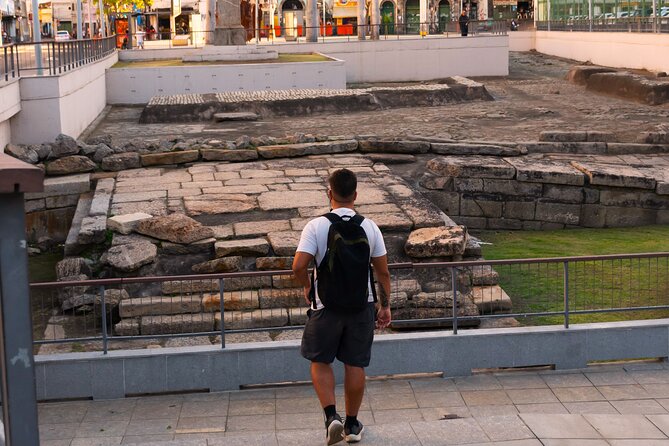
The tour ends at the Kobra Etnias mural on Orla Prefeito Luiz Paulo Conde. You spend about 15 minutes here, with time to see and photograph the work.
Brazilian artist Kobra created the mural to depict Indigenous peoples from all continents. Its bright, large-scale design gives the route a striking final image after the more difficult discussion at Cais do Valongo.
The mural does not replace the Black history covered earlier, but it broadens the conversation toward Indigenous identity and the many peoples represented in Brazil’s public art. It also gives you a more relaxed ending, with a well-known artwork and an easy place to take pictures.
The final point is close to public transportation, which makes it practical for continuing your day. You can head onward from the waterfront without needing a private transfer arranged by the tour.
What $62.34 really buys you
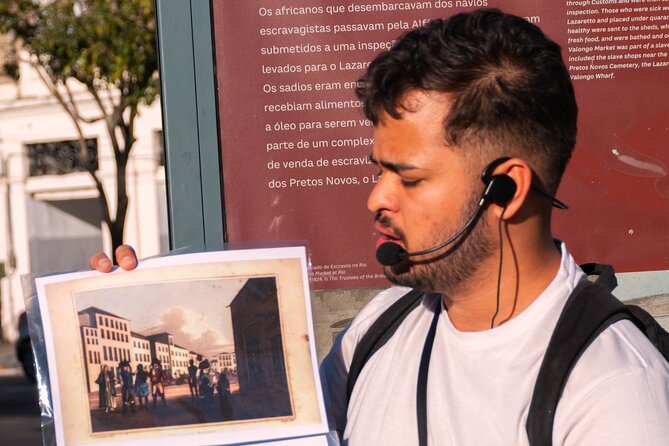
At $62.34 per person, this is not an admission-based excursion. All seven listed stops have no admission charge. You are paying for the specialized English-speaking guide, a private route, historical interpretation, and the convenience of having the places connected for you.
That can be good value if you want to understand Little Africa rather than simply locate its landmarks. A guide can explain why Pedra do Sal matters, connect carnival to the neighborhood, and put Cais do Valongo into a wider story. Those connections are difficult to get from a quick self-guided walk.
The price is less attractive if you only want photographs or already know Rio’s Afro-Brazilian history well. Since there are no paid museum entries, the tour’s success depends heavily on the quality of the guide.
The praise for Lucas Reves is therefore important. He is described as personable, friendly, and passionate, with a strong ability to answer questions and make the subject clear. That kind of guide is what turns a free public route into a worthwhile paid experience.
Timing, pace, and comfort
The tour lasts roughly two to three hours. The listed stop times add up to about two hours, leaving the rest for movement between locations, explanations, and photo pauses.
That is a useful length for Rio. You get enough time to cover the main sites without giving up an entire day. The pace should suit most people who can participate in a standard walking sightseeing activity, though you should expect to be outdoors and moving between several stops.
The tour requires good weather. If rain or other poor conditions cause cancellation, you are offered another date or a full refund. This is worth considering when planning around Rio’s weather, especially if you have a tight schedule.
Food and drinks are not included. Bring what you need for the outing, since the route is designed around history and public sites rather than a meal. Wear practical clothing for a short city walk and allow room in your schedule after the tour in case you want to continue exploring the waterfront.
Who will get the most from this experience
I would choose this tour if you want a focused introduction to Black culture in Rio and prefer a guide-led experience over reading plaques or following a map. It is especially suitable for people interested in history, music, carnival, public art, and the way communities preserve memory.
The private setup also works well for families, couples, or small groups with different levels of background knowledge. You can ask direct questions, request clarification, and avoid being lost in a large crowd.
It may not suit you if your ideal Rio tour is mainly scenic, relaxed, or entertainment-based. The route includes difficult material about enslavement and resistance, and several stops depend on explanation rather than spectacular architecture.
The experience is offered in English, and service animals are allowed. Most people can participate, and the meeting and final points are near public transportation. Confirmation is provided at booking, which helps with planning.
My practical booking advice
Book at least a day ahead if possible. The activity is often reserved about 14 days before the date, and a private English-speaking guide may have limited availability.
You can cancel for a full refund up to 24 hours before the start time. Changes or cancellations inside that 24-hour window are not accepted for a refund. Also remember that poor weather or failure to reach the minimum number of participants can lead to a rescheduled tour or refund.
Before booking, ask yourself what you want from Rio. If you want a richer understanding of the city’s African roots, this route covers important ground in a compact period. If you want a broad overview of Rio’s beaches, colonial buildings, and viewpoints, this is too specialized.
Should you book Path DA Resistance?
Yes, if you want to understand Rio beyond its postcard image. The best reasons to book are the private format, the clear focus on Little Africa, and the chance to visit Cais do Valongo and Pedra do Sal with a guide who treats the subject with care.
I would give it extra credit for linking painful history with living culture. You hear about slavery, but also about samba, carnival, public expression, and the continuing work of Black communities to preserve and shape their own story.
Skip it if you want a casual photo walk or a tour with food and entertainment. For everyone else, $62.34 is a fair price for two to three hours of focused interpretation, especially with Lucas Reves leading the conversation. Go on a dry day, bring questions, and allow the places to speak as loudly as the guide.
FAQ
How long does the Path DA Resistance tour last?
The experience lasts approximately two to three hours.
What language is the tour offered in?
The tour is offered in English.
Is this a private tour?
Yes. Only your group participates in the activity.
Where does the tour start?
It starts at the Rio Museum of Art, Praça Mauá, 5, in Saúde, Rio de Janeiro.
Where does the tour finish?
It finishes at the Kobra Etnias mural on Orla Prefeito Luiz Paulo Conde. The final point is close to public transportation.
What happens if the weather is poor?
The experience requires good weather. If it is canceled because of poor weather, you are offered a different date or a full refund.
Newest reviews from around Rio de Janeiro
- Hang gliding flight in Rio de Janeiro★ 5.0 · 6 reviews
- Rio de Janeiro: Zip Lining and Canopy Tree Tour★ 3.3 · 6 reviews
- Vidigal Favela Tour★ 4.4 · 26 reviews
- Rio de Janeiro: Attend a Vasco da Gama game with local guide★ 4.8 · 9 reviews
- Unforgettable Boat Party★ 5.0 · 3 reviews
- Parapente Rio de Janeiro★ 5.0 · 4 reviews
- Rio de Janeiro Private Tour with Cruise Terminal Pick-up★ 5.0 · 2 reviews
- Wild Waters: Rio Whitewater Rafting Adventure Tour★ 5.0 · 13 reviews
Rio de Janeiro Tours, compared.

Christ the Redeemer Entry Ticket by Corcovado Train
Read our review →
Rio’s City Tour – Tickets for Christ, Sugar Loaf & Lunch included
Read our review →
Full Day: Christ Redeemer, Sugarloaf, City Tour & Barbecue Lunch
Read our review →

Rio’s Full Day: Selarón Steps, Christ & Sugarloaf – Tickets & Lunch Included
Read our review →