
Reviewed · IGUAZU FALLS TOURS
Iguassu Falls in a Nutshell
The falls are only the beginning. This four-day package brings you to both sides of Iguassu Falls, the immense Itaipu Dam, and several of Foz do Iguaçu’s cultural sights, with airport transfers and guided transport included. I especially like the chance to compare the Brazilian and Argentine sides instead of rushing through one viewpoint, and I like the practical airport pickup and drop-off.
The main drawback is that the $212 price does not include hotel rooms, meals, park entrance fees, or the Itaipu admission ticket. You also need the right documents and, in some cases, visas for the Brazil-Argentina border crossing, so this is not a completely all-inclusive package.
In This Review
- Key Points to Know Before Booking
- What the $212 Package Really Covers
- Day One: From the Airport to Itaipu Dam
- Day Two: The Argentine Side and Garganta do Diabo
- Day Three: Brazil’s Broad View of Iguassu Falls
- Day Four: Foz do Iguaçu’s Many Cultures
- Guides, Communication, and Group Size
- Timing, Tickets, and What to Pack
- Who Will Get the Most from This Tour?
- Should You Book Iguassu Falls in a Nutshell?
- FAQ
- Is hotel accommodation included?
- Are the Iguassu Falls park entrance fees included?
- Is the Itaipu Dam admission ticket included?
- What documents are needed to cross into Argentina?
- Can children under 18 enter Argentina on this tour?
- Does the tour include airport transfers?
- Can the Brazilian and Argentine falls visits happen on the same day?
Key Points to Know Before Booking

- Both sides of the falls: See the broad Brazilian views and the closer Argentine walkways over separate days.
- Itaipu Panoramic Tour: Visit South America’s largest dam, but pay the admission fee locally.
- Border planning matters: Bring your passport or accepted identification, and check visa rules before departure.
- Airport transfers included: Shared transport connects Foz do Iguaçu International Airport with many downtown hotels.
- Maximum group of 25: The shared format keeps costs down, while guide attention can still be quite personal.
- Four days with a fixed rhythm: Arrive by 11:59 a.m. on the first day and schedule a return flight at 5 p.m. or later on the final day if you want the full program.
What the $212 Package Really Covers
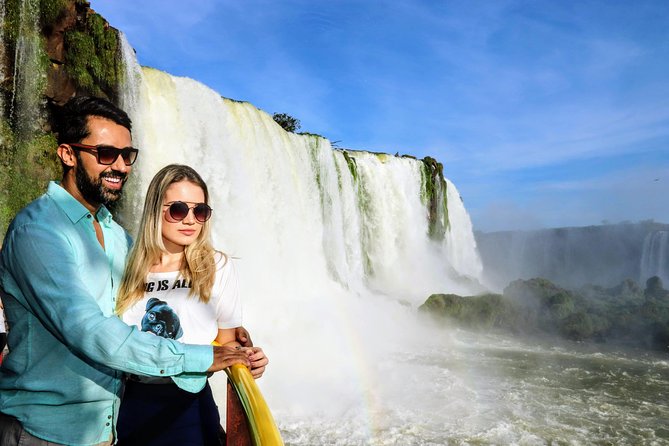
At $212 per person, this is best understood as a guided transport package, not a prepaid vacation. You receive roundtrip shared airport transfers, transport between the attractions and many hotels in Foz do Iguaçu or Puerto Iguazu, and a professional guide.
The package also includes tours of the Brazilian and Argentine sides of Iguassu Falls, the Foz do Iguaçu city tour, and a visit to Itaipu Dam. Those are the costly pieces of a short stay in this area, especially when border transport and airport service are involved.
You still pay for hotel accommodation, food, drinks, the Brazilian and Argentine national park entrance fees, the Panoramic Tour at Itaipu, and the eco-tourism tax charged when crossing into Puerto Iguazu. Prices for these local charges can change, so keep some room in your budget.
I see good value here if you want a structured visit and do not want to arrange four separate outings. The value is weaker if you already have a car, a hotel with easy transport, or a strong preference for setting your own pace.
The maximum group size is 25 people. That is not an intimate private tour, but it is small enough to allow useful guide assistance, particularly during customs stops and the border crossing. Shared transport also means you may wait for pickups and follow the group’s timetable.
Other ways to stand in front of the falls:
- Iguazu Falls: Full-Day Tour of Brazil & Argentina Sides
★ 4.9 · 1,542 reviews - Full Day Iguassu Falls Both Sides – Brazil and Argentina
★ 5.0 · 494 reviews - Guided Expedition with Canoeing and Waterfalls in Iguaçu
★ 5.0 · 393 reviews
Day One: From the Airport to Itaipu Dam
The first day begins with a greeting after you clear airport customs. A representative takes you to your hotel, and the package also provides a return airport transfer at the end of the stay.
That airport welcome is a real help after an international flight. You do not need to bargain with a taxi driver or work out which hotel transfer is correct while carrying luggage. Be sure to provide your airline, flight number, arrival and departure cities, arrival time, hotel name, hotel address, and planned return pickup time when booking.
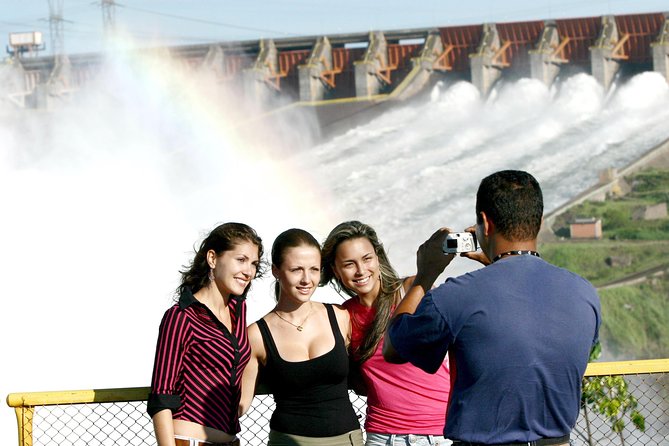
The Itaipu visit follows your arrival if you land at Foz do Iguaçu International Airport by 11:59 a.m. The site is one of the great engineering works of South America, and the tour gives you a useful contrast to the waterfalls. One is raw water power, the other is carefully controlled water power.
The included visit is the Panoramic Tour. You watch a documentary about the power plant, then see the dam and spillway from the central observation deck. You do not enter the operating facility, and the more technical Itaipu Special Tour is not available on this program.
The admission ticket is not included. You purchase it on site, so do not assume that the $212 covers the full first-day outing.
Allow about three hours for the dam visit. One practical detail from the on-site transport is that the experience may work like a bus tour, with short stops for photographs before you reboard. If the day is windy, bring a scarf and long sleeves, since the bus can feel cool and its thick plastic window coverings do not fully block the air.
Itaipu also connects its power production with environmental work, including the Bela Vista Biological Refuge, reforestation programs, fish production, and projects that support wild animal reproduction. The Panoramic Tour does not turn into a wildlife outing, but it gives you some context for the company’s conservation efforts.
Day Two: The Argentine Side and Garganta do Diabo
The Argentine side usually takes the longest walking day. Your guide collects you from your hotel, then helps organize the Argentine currency needed for the park entrance and handles the sequence of Brazilian and Argentine customs.
That border routine is important. Foreign nationals must pass through Brazilian immigration, and everyone must go through Argentine customs. Keep your passport or accepted documents handy rather than buried in your luggage.
For Brazilians, the accepted documents listed for this crossing are an original identity document or a national driver’s license. Other nationalities need a passport, including children of any age. Children under 18 entering Argentina must be accompanied by both biological or adoptive parents, unless the absent parent has provided a notarized authorization.
You are responsible for checking visa and other entry requirements before the tour. The operator does not take responsibility for missing documents or border permissions.
Inside the Argentine park, a train leaves about every 30 minutes for the upper section. The first major route leads toward the Garganta do Diabo, or Devil’s Throat, the largest waterfall in the park.
The footbridge to Garganta do Diabo runs for about 2,080 meters. It takes you out over the water and into one of the most dramatic parts of the entire falls system. Spray is likely, so comfortable shoes and clothing that can handle some moisture are sensible.
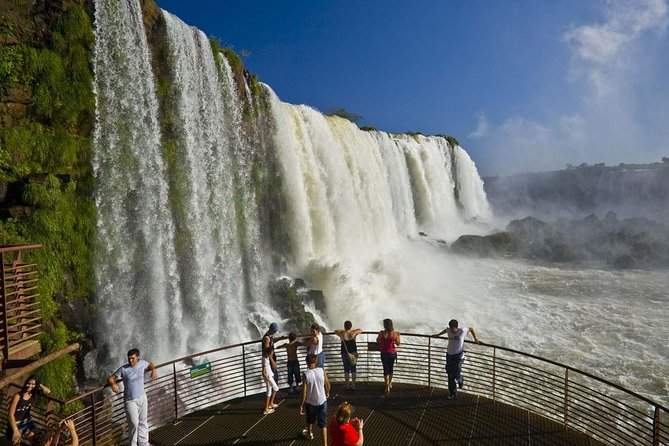
The Argentine side gives you a close, active experience. You are not simply looking at a wall of falling water from one platform. You walk through forest, cross elevated walkways, and pause at several points to watch the river gather force and break over the edge.
The second part is the Circuito Superior. Six observatories and resting areas give you views from above and across the upper falls. On a sunny day, rainbows can appear in the mist.
Plan on about six hours for this day, not counting the details of border traffic. You will walk a lot, so comfortable footwear matters more than stylish footwear. This is also the day when a guide can save time by explaining where to go next and how the train system works.
The Argentine admission fee is not included. You also need to pay the eco-tourism tax in Puerto Iguazu when crossing the border. Keep the receipt, since you may otherwise be charged again.
Day Three: Brazil’s Broad View of Iguassu Falls
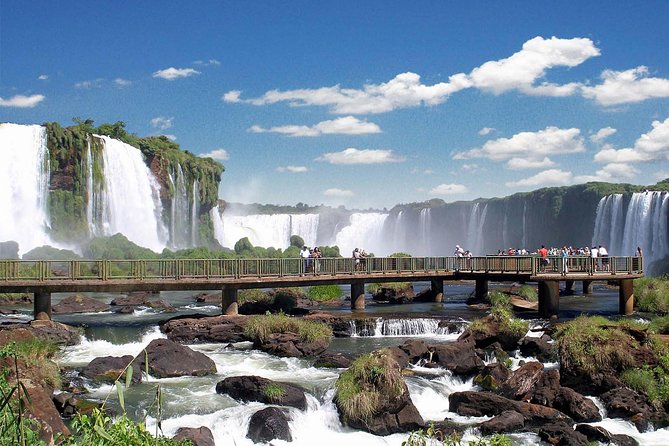
The Brazilian side offers a different reward. The Argentine side takes you close to individual sections of the falls, while the Brazilian route gives you a wide view of the whole series of cascades.
After hotel pickup, you enter Iguacu National Park and follow a roughly one-kilometer foot route. Lookouts, footbridges, and viewing areas make this a fairly direct visit, though the spray and crowds can slow your progress.
The final sections offer broad views across the falls and toward the water rushing through the forest. This is the side to choose for photographs that show the scale of the entire system rather than one single drop.
The route also brings you close to subtropical forest life. Coatis, called quatis locally, may appear near the paths, and birds and butterflies add movement to the walk. Keep your food secure and do not treat wildlife as tame simply because a coati looks friendly.
The Brazilian national park entrance fee is separate from the tour price. You should also budget for food and drinks, since neither is included.
The tour lasts about four hours, making this day less demanding than the Argentine side. Even so, bring shoes with a good grip and clothing you do not mind getting wet. Optional boat and helicopter rides are not part of the listed package, but one guide-assisted visit can leave enough room for you to arrange extra activities if the schedule allows.
A boat ride would put you directly into the spray, while a helicopter would change the view from ground level to an aerial one. These extras cost more and require their own timing, so ask before assuming they can be added.
A few more Foz do Iguacu days to weigh up
- Full Day Iguassu Falls Both Sides -Argentina and Brazil
★ 5.0 · 358 reviews - From Foz do Iguazu: Brazil Iguazu Falls & Macuco Safari Boat
★ 4.7 · 358 reviews - Iguassu Waterfalls: 1 Day Tour Brazil and Argentina’s sides
★ 4.9 · 353 reviews - Hike through Secret Waterfalls in Foz do Iguaçu (Part-time – Morning)
★ 5.0 · 345 reviews
Day Four: Foz do Iguaçu’s Many Cultures
The final day turns away from waterfalls and focuses on Foz do Iguaçu itself. The city tour passes the old airport, mother church, first college, central shopping areas, and a gastronomic avenue.
This is a useful change of pace after two full park visits. You get a sense of the city that serves as the base for the natural attraction, rather than treating Foz do Iguaçu as a simple hotel district.
The itinerary then moves through three distinct cultural sites: the Omar Ibn Al-Khattab Mosque, the Buddhist Temple, and the Itaipu Ecomuseum. The city tour itself has no separate admission charge listed, though food, drinks, and personal purchases remain your responsibility.
The Omar Ibn Al-Khattab Mosque was built in 1983. Foz do Iguaçu has one of Brazil’s largest Islamic communities in proportion to its population, making the mosque a meaningful part of the city’s identity rather than a random sightseeing stop.
The mosque is closed on Saturday afternoons and Sundays. Check the timing carefully if your fourth day falls near the weekend, since the order of the city stops may need to change.
The Buddhist Temple provides an introduction to Buddhist teachings and history. Its elevated position also offers distant views toward Ciudad del Este and Foz do Iguaçu. After the constant sound of rushing water, the temple can feel like a quieter and more reflective stop.
The Ecomuseum of Itaipu adds another layer to the dam visit. The supplied details do not specify the museum’s exact exhibits or visit length, so treat it as a supporting city-tour stop rather than the main event of the day.
At the end, shared transport takes you to Foz do Iguaçu International Airport. If you want the complete four-day schedule, your return flight should leave at 5 p.m. or later. That timing gives the final city tour and airport transfer enough room.
Guides, Communication, and Group Size
The strongest part of a guided package like this is often the human help. A guide can make border procedures less confusing, point out the best route through the parks, and keep airport transfers from becoming a guessing game.
Nilsa received especially strong praise for handling the Argentine side, Brazilian side, and city tour. Her help reportedly extended beyond the basic schedule, including assistance with practical errands such as sending postcards and arranging extra activities. You should not assume she will be assigned to your group, but the example shows the level of personal service the operator can provide.
The communication before arrival may be less polished. Questions about airport pickup were not always answered clearly, so confirm the meeting arrangements before you fly. A representative should meet you after customs at the airport and later in your hotel lobby, but your booking details need to be complete.
A maximum of 25 people keeps the tour shared and affordable. If you prefer to stop for as long as you wish at every overlook, a private guide or independent visit may suit you better. If you want a guide nearby while crossing borders and moving between parks, the group format is practical.
Timing, Tickets, and What to Pack
This experience requires at least three nights in the area. The order of the activities can change, particularly when park hours, border timing, and flight schedules require a different arrangement.
If you have limited time, the Brazilian and Argentine sides may be combined into one long day. I would choose separate days if possible. The Argentine route involves more walking, while the Brazilian side rewards you with broad views, and each deserves enough time.
Pack these essentials:
- Passport or the required identity document for the Argentina crossing
- Any visa or entry authorization required for Brazil or Argentina
- Comfortable walking shoes
- A rain jacket or clothes that can get wet
- A scarf and long sleeves for the Itaipu bus
- Money for park admissions, the Itaipu ticket, the eco-tourism tax, meals, and drinks
The itinerary begins at about 7 a.m. for the attraction days. Early starts are useful here because the parks are large and the border crossing adds time. They also mean you should not plan late nights before the falls visits.
Free cancellation is available if you cancel at least 24 hours before the experience start time. Changes or cancellations made inside that window are not accepted for a refund.
Who Will Get the Most from This Tour?
I would recommend this package to you if you have three nights, want both sides of Iguassu Falls, and prefer not to handle park transport and border logistics alone. It also suits solo visitors who value a guide and families who want airport pickup already arranged.
It is a good fit for an efficient first visit. You see the major natural sights, an enormous dam, and several important Foz do Iguaçu landmarks without spending time piecing together separate transfers.
I would think twice if you want long, unhurried walks, specialist birding, a technical Itaipu visit, or a private schedule. The Panoramic Tour is the only dam option here, admission fees are extra, and a shared group can never move quite as freely as a private vehicle.
Should You Book Iguassu Falls in a Nutshell?
Book it if your priority is seeing the major sights with transport and guide support already in place. The combination of the Argentine walkways, the Brazilian panoramic route, Itaipu Dam, and Foz do Iguaçu’s cultural stops gives you a strong four-day introduction for a reasonable base price.
Before paying, confirm your hotel is on the shared transfer list, check every border document, and add the separate entrance fees and meals to your budget. If possible, keep the two falls visits on different days. That small choice makes the experience less tiring and lets you appreciate how different the two sides really are.
FAQ
Is hotel accommodation included?
No. The package does not include hotel accommodation. You must arrange and pay for your own stay.
Are the Iguassu Falls park entrance fees included?
No. The Brazilian and Argentine national park entrance fees are paid separately. Tickets can be purchased locally or online.
Is the Itaipu Dam admission ticket included?
No. The Panoramic Tour admission fee is paid on site. This package includes the visit, but not the ticket.
What documents are needed to cross into Argentina?
Brazilians may use an original identity document or national driver’s license. Other nationalities need a passport, including children of any age. You must also check visa requirements before crossing.
Can children under 18 enter Argentina on this tour?
Children under 18 must be accompanied by both biological or adoptive parents. If one parent is absent, a notarized authorization signed by both parents is required.
Does the tour include airport transfers?
Yes. Shared roundtrip transfers are provided between Foz do Iguaçu/Cataratas International Airport and many downtown hotels in Foz do Iguaçu or Puerto Iguazu.
Can the Brazilian and Argentine falls visits happen on the same day?
Yes. If your schedule requires it, the two sides may be combined into one day. When combined, the Argentine side is visited first.
Newest reviews from around Foz do Iguacu
- Yoga & Mindfulness★ 5.0 · 14 reviews
- Dreams Park Show – Combo of all attractions! Amazing!★ 4.0 · 17 reviews
- Visit to the historical Landmark of the Three Frontiers with beautiful sunset★ 4.5 · 7 reviews
- Iguazu Falls: Private Half-Day Tour Brasilian side★ 5.0 · 29 reviews
- Iguazu Falls TwoDaytour(Brazil+Argentina(Private Solo/Group Solo)★ 5.0 · 8 reviews
- Iguazú Falls Private Tour in 2 days, Both Brazil/Argentina★ 5.0 · 44 reviews
- Iguaçu Bird and Waterfall Park★ 4.5 · 20 reviews
- Private transport with guide to the Falls on the Argentinean side.★ 5.0 · 35 reviews
Iguazu Falls Tours, compared.

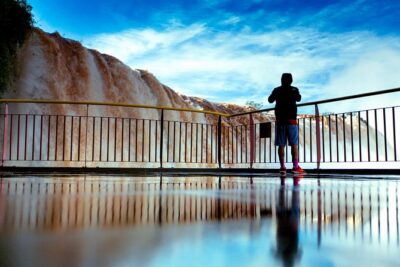
Full Day Iguassu Falls Both Sides – Brazil and Argentina
Read our review →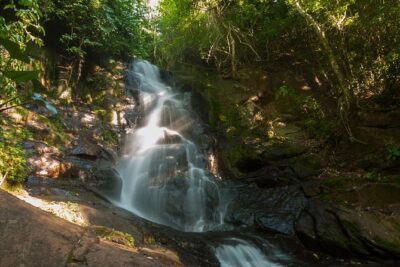
Guided Expedition with Canoeing and Waterfalls in Iguaçu
Read our review →
From Foz do Iguazu: Brazil Iguazu Falls & Macuco Safari Boat
Read our review →
Full Day Iguassu Falls Both Sides -Argentina and Brazil
Read our review →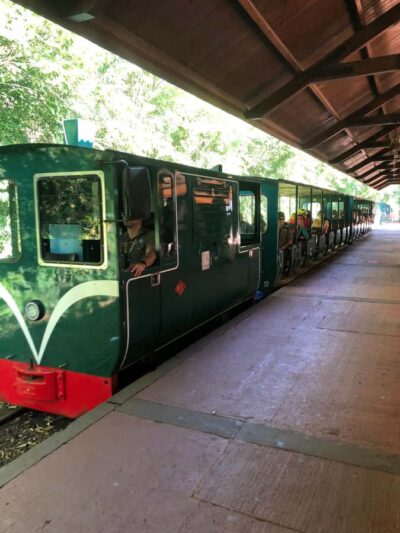
Iguassu Waterfalls: 1 Day Tour Brazil and Argentina’s sides
Read our review →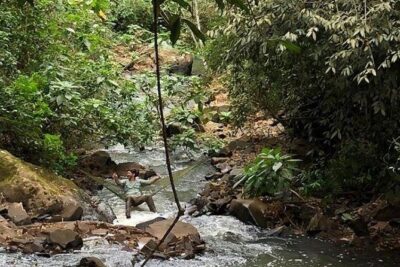
Hike through Secret Waterfalls in Foz do Iguaçu (Part-time – Morning)
Read our review →
Best Private Tour Iguassu Falls Brazil, Argentina in 1 day
Read our review →Browse the lists this tour appears in