
Reviewed · FULL-DAY
Full-Day Custom Private Tour of Rio
Rio rewards a good game plan. This eight-hour private tour lets you shape the day around your interests, from Christ the Redeemer and Sugarloaf Mountain to local markets, old churches, beaches, and forest trails. I like the small maximum of four people and the chance to ride in an air-conditioned car driven by your guide, rather than follow a fixed group schedule.
I also like the flexibility. Guide Luis has adjusted routes for personal interests, avoided duplicate sights, helped visitors with later travel plans, and even adapted a day for someone with a recent knee replacement. The main catch is that admission tickets are extra, and a custom tour can feel less satisfying if you do not discuss your interests and desired level of historical detail before setting out.
In This Review
- Six things that make this Rio tour different
- How the custom format works in eight hours
- Sugarloaf, Urca, and the first big Rio view
- Christ the Redeemer and Corcovado
- Tijuca Forest and Rio’s unexpected wildlife
- Beaches from Copacabana to the western coast
- Santa Teresa, Lapa, and Rio’s creative side
- Churches, palaces, and the historic center
- Little Africa, Porto Maravilha, and the city’s harder history
- Football, Carnival, and everyday Rio
- What the $192 price really buys you
- Guide style and the importance of speaking up
- Who should book this private Rio day?
- Should you book it?
- FAQ
- How long is the private Rio tour?
- How many people can join the tour?
- Is transportation included?
- Are attraction tickets included?
- Which major attractions require extra admission?
- Are meals and drinks included?
- Can the itinerary be customized?
- Is the tour suitable for children?
- Can dietary needs be accommodated?
- What is the cancellation policy?
Six things that make this Rio tour different

- You choose the day’s focus: Build a sightseeing plan around art, beaches, nature, football, architecture, food, or the classic landmarks.
- Only up to four people join: A small group makes it easier to change plans and spend more time at places you care about.
- Your guide drives: The private air-conditioned vehicle is useful in Rio’s heat and cuts down on complicated transfers across a spread-out city.
- The stop menu is unusually broad: Choices include Tijuca Forest, São Cristóvão Fair, Burle Marx’s former estate, Maracanã, and secluded beaches as well as famous sights.
- Tickets are not bundled: You pay directly for attractions such as Sugarloaf, Christ the Redeemer, the Botanical Garden, and AquaRio.
- The guide can shape your first day in Rio: Several bookings describe the benefit of gaining a practical mental map of the city before exploring alone.
How the custom format works in eight hours

This is not a standard hop-on, hop-off tour with every stop packed into one day. The long list of possible places is best treated as a menu. In eight hours, you will need to choose carefully.
I would begin by telling the guide what matters most. If this is your first visit, you might choose Christ the Redeemer, Sugarloaf, the historic center, one beach area, and either Santa Teresa or Tijuca Forest. If you have already seen the major monuments, use the day for Burle Marx’s estate, the São Cristóvão Fair, the CBF football museum, local markets, or quieter coastal areas.
The private format matters because Rio is spread between mountains, beaches, forests, and several historic districts. Traffic can eat up time. A guide who understands your priorities can drop a less important stop when the day runs long, or add a nearby place when conditions allow.
The start window is listed as 7:00 to 10:00 in one operating period and 12:30 AM to 4:30 AM in another. That second time range appears unusual, so I would confirm the exact pickup time before booking. Confirmation is provided at booking, and the provider asks you to share dietary needs in advance.
A few more Rio de Janeiro days to weigh up
- Full Day: Christ Redeemer, Sugarloaf, City Tour & Barbecue Lunch
★ 4.5 · 3,142 reviews - Rio’s Full Day: Selarón Steps, Christ & Sugarloaf – Tickets & Lunch Included
★ 5.0 · 2,724 reviews - Rio de Janeiro: Angra dos Reis and Ilha Grande Full-Day Tour
★ 4.6 · 1,673 reviews
Sugarloaf, Urca, and the first big Rio view
Sugarloaf Mountain is one of Rio’s defining sights, a granite peak rising more than 1,200 feet above Guanabara Bay. You reach it from Urca by two cable cars, first to Morro da Urca and then to Sugarloaf itself.
The cable car tickets are not included. That is important because Sugarloaf can take a sizable part of an eight-hour day once you allow time for transport, queues, and the views. Still, it is one of the strongest uses of your time if you want a quick sense of Rio’s setting.
From above, you can see the bay, beaches, mountains, and the city folded between them. The lower Morro da Urca station also has its own views, so even a shorter visit can work if you have other priorities.
For a quieter option near the same area, ask about the Claudio Coutinho Trail. This flat walk runs at the base of Sugarloaf, with Red Beach and the mountain behind you. Marmoset monkeys may appear in the trees, though wildlife is never guaranteed. The trail that begins there also gives access to Urca Mountain.
Urca itself is a small, attractive neighborhood at the foot of the mountain. It gives you a calmer look at Rio than the big beach districts, while Praia Vermelha offers a compact beach framed by mountains.
Christ the Redeemer and Corcovado

Christ the Redeemer is Rio’s essential first-visit sight. The Art Deco statue opened in 1931 and sits above the city on Corcovado Mountain, with broad views over Rio when the weather is clear.
Admission is extra. The Centro de Visitantes Paineiras is part of the access route and includes an environmental education center. Your guide can help fit the monument into the day, but the timing will depend on traffic and the attraction’s access arrangements.
This is a place where your priorities matter. If the statue is your top goal, make it one of the first stops and do not fill the morning with distant neighborhoods. If you care more about local life than famous views, you might choose a shorter Corcovado visit and spend more time in Santa Teresa or the historic center.
Cosme Velho, the neighborhood below Corcovado, is also worth seeing from the car. It was once home to many embassies when Rio served as Brazil’s capital. The route through Tijuca Forest can add a nature break, but you should not expect to cover every forest road and monument in the same day.
Tijuca Forest and Rio’s unexpected wildlife
Tijuca National Park occupies about 10 percent of the city and is one of the world’s largest reforested urban forests. The tour can show you a very different side of Rio, with thick vegetation, waterfalls, viewpoints, and the possibility of seeing marmosets, birds, and lizards.
The forest is especially useful for anyone who wants a break from monuments and traffic. It also works well for families and repeat visitors who have already visited Christ the Redeemer and Sugarloaf.
Several possible stops add more nature. Parque Lage, near the Botanical Garden, combines a park with a historic former sugar-mill estate and romantic-style gardens designed by John Tyndale. The Botanical Garden itself dates to 1808 and includes imperial palm trees, orchid and bromeliad greenhouses, and city wildlife.
Botanical Garden admission is extra. Parque Lage is listed as free. Since both are in the same general part of Rio, they make sense together, but you may need to choose one if you also want the historic center and a beach.
Same patch of Brazil, a completely different sort of day:
- Rio de Janeiro: 6-Stop Highlights of Rio with Lunch
★ 4.4 · 5,157 reviews - Christ the Redeemer Entry Ticket by Corcovado Train
★ 4.4 · 4,476 reviews - Rio’s City Tour – Tickets for Christ, Sugar Loaf & Lunch included
★ 5.0 · 4,389 reviews - Rio de Janeiro: Rocinha Favela Walking Tour with Local Guide
★ 4.8 · 3,052 reviews
Beaches from Copacabana to the western coast
Copacabana is Rio’s famous postcard beach and the area with many hotels. Avenida Atlântica follows the shoreline, while Leme sits at the quieter northern end. Leme is particularly useful for a wide view back toward Copacabana.
Ipanema offers a different mood, with the beach, Dois Irmãos Hill in the distance, and the statue of songwriter Tom Jobim. Arpoador, the rock at the end of Ipanema, is a favored summer sunset point. The Rodrigo de Freitas Lagoon, connected to the sea and ringed by a bike lane, gives you another pleasant pause near the southern beaches.
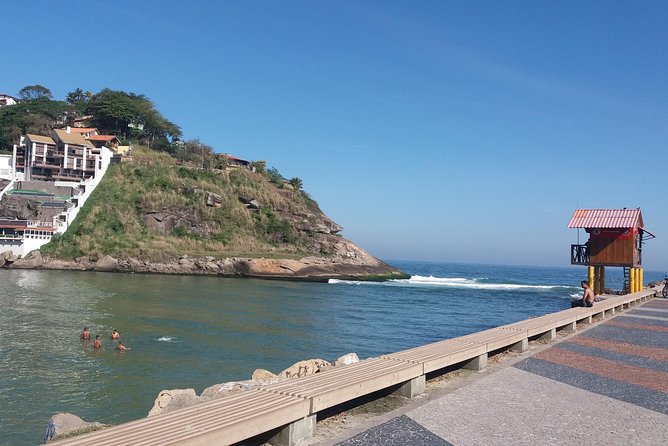
The beach choices continue far beyond the usual city center. Praia da Macumba, Recreio, Prainha, and Pontal de Sernambetiba show Rio’s western coast. Perigoso Beach and several nearby coves are reached only by boat or hiking trail, so they are not quick photo stops. Ask clearly how much walking or travel time your chosen beach requires.
The data also lists a nude beach, isolated restinga-covered beaches, and quiet coves reached by trail. These options are valuable for repeat visitors, but they are a poor fit if your main goal is to see Rio’s headline sights in one day.
Santa Teresa, Lapa, and Rio’s creative side
Santa Teresa is one of the best choices for a custom tour. Its cobbled streets, painted walls, colonial-style houses, cafés, bars, restaurants, and local craft shops give you a more personal look at Rio than a short monument stop.
The area is also a practical lunch choice. One day described by the guide included an authentic Brazilian meal in Santa Teresa, with local specialties such as açai and cheese bread available in the neighborhood. Food and drinks are not included, so you pay directly.
Nearby, the Selarón Steps connect Santa Teresa and Lapa. The 250 steps carry more than 2,000 tiles from over 60 countries, assembled by Chilean-born artist Jorge Selarón. They are colorful, photogenic, and free, but you should watch your footing and expect the area to be a stop for pictures rather than a long museum visit.
Lapa’s Arcos are the old aqueduct that once carried water from the Tijuca area into the city. Today, the arches carry the tram between downtown and Santa Teresa. Arco do Teles, a small colonial passage named after a Portuguese judge, offers another quick architectural stop.
Churches, palaces, and the historic center
Rio’s center rewards a guide who can explain what you are seeing. Paço Imperial began as an 18th-century residence for colonial governors and later served as a royal home for King John VI of Portugal. Praça Quinze de Novembro surrounds it and also includes the Legislative Assembly and a ferry terminal serving Rio and Niterói.
The Centro Cultural Banco do Brasil occupies a neoclassical building with former financial and business connections. Its free admission makes it a useful flexible stop, though exhibitions and opening arrangements can change.
Theatro Municipal, opened in 1909, is one of Brazil’s major theaters. This tour views the exterior rather than entering, so it is best for architecture, not a performance or interior visit. The building has long supported its own choir, symphony orchestra, and ballet company.
São Bento Monastery offers the opposite experience: a plain exterior concealing a lavish Baroque interior with gilded plant motifs and Rococo details. The itinerary lists it as free, but confirm access if a service or special closure affects the visit.
Other historic choices include the Church of Saint Francis of Penance, built between 1657 and 1733, the first cathedral in Rio, the Gustavo Capanema Palace, and Confeitaria Colombo. Colombo, opened in 1824, is known for Belgian crystal mirrors, carved frames, lamps, and a stained-glass ceiling. Food there is extra, but it offers a memorable setting for a Brazilian snack.
Little Africa, Porto Maravilha, and the city’s harder history
Rio’s port area adds important context. The Museum at the former landing point of enslaved Africans explains the African heritage of Brazil and marks a site where nearly one million captive Africans arrived between 1811 and 1831.
Pedra do Sal, part of Little Africa, is linked to the origins of samba. The Porto Maravilha area also includes museums, cultural centers, graffiti, and the Etnias mural by Eduardo Kobra, inspired by the five Olympic rings and the peoples of the world.
This is one reason a private guide can be more useful than a driver alone. The sites are not just attractive backdrops. They connect Rio’s colonial wealth, African heritage, music, art, and modern redevelopment. If you want cultural background, say so before the day begins.
The São Francisco da Prainha church, built in 1704, is another Baroque landmark in the port area. AquaRio, where about 3,000 sea animals live in 28 tanks, is a separate paid attraction and a good choice for families or aquarium fans.
Football, Carnival, and everyday Rio
Football fans can add Maracanã, opened in 1950 with a former capacity of 200,000 people. Admission is extra. The Brazilian Soccer Confederation museum in Barra da Tijuca is another paid choice, with uniforms, trophies, photographs, and interactive displays across 19 facilities.
Carnival fans should ask about the Sambadrome, the parade venue on Avenida Marquês de Sapucaí. It is free to view from outside, but the tour does not promise a parade or event entry.
For daily life, ask to visit one of Rio’s farmers markets. The market moves to a different street each morning, and locals shop for fruit, vegetables, and street food. This is a fine place to try Brazilian produce, and it may be more memorable than another quick overlook.
The São Cristóvão Fair offers Northeastern Brazilian food, crafts, forró music, dancing, singers, and folk literature. About 700 permanent stalls fill the venue. It is a strong pick if you want food and culture, but it can consume a large block of time.
What the $192 price really buys you
The advertised price is $192 per person, with the booking information also describing pricing as group pricing. Confirm the final total for your party before payment, especially because the maximum is four people.
The value is not simply the car ride. You are paying for a local guide, private transportation, fuel, tolls, parking, and facility or landing fees. That can make sense for a small group that wants to cover several distant parts of Rio without arranging taxis or public transport at every turn.
The extra costs are the main budget issue. Sugarloaf, Christ the Redeemer, the Botanical Garden, Maracanã, AquaRio, the CBF museum, and the Copacabana Fort museum all list admission charges. Meals and drinks are also separate.
I would compare the total cost with your chosen sights, not just the headline price. For four people splitting the private service, the arrangement may offer solid value. For one person who wants only free viewpoints and beaches, the price is harder to justify.
Guide style and the importance of speaking up
Luis Darin receives especially strong praise for planning, flexibility, local knowledge, and personal attention. He has helped people avoid repeating sights from other tours, adjusted plans around mobility needs, offered food and neighborhood suggestions, and provided advice for continuing through Brazil.
That praise comes with a useful warning. One booking with guide Julio felt too light on explanation, with the visitor feeling that a taxi might have offered nearly the same sightseeing. The lesson is simple: tell your guide if you want history, architecture, food, wildlife, photography, or local stories.
Do not assume a custom tour automatically means a deeply explained tour. Ask for the kind of guiding you want. The best day will come from a clear conversation before pickup, not from trying to squeeze all 39 listed places into eight hours.
Who should book this private Rio day?
I would recommend it most for:
- First-time visitors who want a broad orientation to Rio
- Small families or couples who value a private car
- Repeat visitors seeking markets, forests, football, art, or quieter beaches
- People with mobility concerns who need a flexible pace
- Solo visitors who want a personal route and local assistance
- Anyone with only one full day in Rio
I would be more cautious if you prefer a fixed historical tour with guaranteed interior visits, or if you want every ticket included in the upfront price. The guide does not enter the Theatro Municipal on this route, and several major attractions cost extra.
Free cancellation is available up to 24 hours before the start time. Children must be with an adult, vegetarian meals can be arranged if requested, and most people can participate. The tour is private, so only your group takes part.
Should you book it?
Book this tour if you want Rio built around you, not around a preset checklist. Its best qualities are the small group, private vehicle, broad choice of sights, and Luis Darin’s record of thoughtful adjustments.
Before booking, write down your top three priorities and ask how much time each will require. If Christ the Redeemer and Sugarloaf are essential, make them the anchors. Then add one neighborhood, one nature stop, or one food market. That plan will give you a full day without turning Rio into a race.
FAQ
How long is the private Rio tour?
The tour lasts approximately eight hours.
How many people can join the tour?
A maximum of four people can participate in one booking.
Is transportation included?
Yes. Transportation is provided in a private, air-conditioned car driven by your guide.
Are attraction tickets included?
No. You pay admission directly at attractions that charge an entrance fee.
Which major attractions require extra admission?
The listed paid attractions include Sugarloaf Mountain, Sítio Roberto Burle Marx, the Botanical Garden, Maracanã, Christ the Redeemer, AquaRio, the Copacabana Fort museum, and the Brazilian Soccer Confederation museum.
Are meals and drinks included?
No. Meals and drinks are not included.
Can the itinerary be customized?
Yes. The tour is designed for experienced visitors who want to choose their sights and adjust the route around personal interests.
Is the tour suitable for children?
Children may participate, but they must be accompanied by an adult.
Can dietary needs be accommodated?
You should advise the provider of specific dietary requirements when booking. A vegetarian option is available if requested in advance.
What is the cancellation policy?
You can cancel at least 24 hours before the experience start time for a full refund. Cancellations or changes made less than 24 hours in advance are not accepted for a refund.
Newest reviews from around Rio de Janeiro
- PRIVATE TOUR – Christ the Redeemer and Sugar Loaf★ 4.5 · 9 reviews
- Christ Statue and Sugarloaf Private Tour with a Photographer★ 5.0 · 9 reviews
- Cidade do Samba Behind-the-Scenes Carnival Tour in Rio de Janeiro★ 4.0 · 5 reviews
- Christ the Redeemer Trail x Lage Park★ 5.0 · 7 reviews
- Christ the Redeemer and City Tour★ 5.0 · 20 reviews
- Christ the Redeemer, Selaron Steps and Santa Teresa Half-day Tour★ 4.5 · 15 reviews
- Christ the Redeemer Adventure★ 5.0 · 12 reviews
- Private Tour of Christ the Redeemer in Rio de Janeiro★ 5.0 · 2 reviews
Full-Day, compared.

Full Day: Christ Redeemer, Sugarloaf, City Tour & Barbecue Lunch
Read our review →
Rio’s Full Day: Selarón Steps, Christ & Sugarloaf – Tickets & Lunch Included
Read our review →
São Paulo’s Full Day City Tour: Main City Sights in 7 Hours – (Shared Group)
Read our review →


Full Day Excursion to Petrópolis from Rio de Janeiro
Read our review →
Full Day in Rio: Christ by Train, Sugarloaf, Selarón & Barbecue
Read our review →