Reviewed · RIO DE JANEIRO TOURS
Explore the Women Behind the Monuments
Rio’s monuments have women’s stories to tell. This two-hour to two-and-a-half-hour walk through Centro gives the city a fresh focus, moving from writers and artists to political figures, Black women, fighters, and women whose lives were marked by tragedy. I like the way the tour connects public buildings with personal stories, and I like that guide Jessica brings warmth, humor, and strong knowledge of Rio to the walk. The main consideration is that the tour is an external visit only, so you will look at the buildings from outside rather than tour their interiors.
The $29.57 price feels fair if you want more than a standard sightseeing stroll. You get a compact route through six central locations and stories that are easy to miss when you are focused only on grand architecture and famous men. The group can reach 20 people, so ask questions early if you prefer a more personal exchange.
In This Review
- Key points to know before you book
- Why this Rio walking tour feels different
- Start at the Brazilian Academy of Letters
- Three women at the Floriano Peixoto Monument
- A tragic story at the City Council
- Artistic women at the Municipal Theater
- The women connected to Largo da Carioca
- Finishing at Praça Quinze de Novembro
- What the guide adds to the experience
- Timing, group size, and physical comfort
- What $29.57 buys you
- Who should book this walk
- Practical booking advice
- Should you book Women Behind the Monuments?
- FAQ
- Where does the tour start?
- What time does the tour begin?
- Where does the tour finish?
- How long does the tour last?
- How many places does the tour visit?
- Is entry to the attractions included?
- What is the maximum group size?
- Is the tour near public transportation?
- Are service animals allowed?
- Can most people participate?
- What is the cancellation policy?
Key points to know before you book

- A women-centered route through Rio Centro: The walk links women to literature, politics, architecture, art, water, and Brazil’s changing governments.
- Six stops in about two hours: You move from the Brazilian Academy of Letters to Praça Quinze de Novembro, with roughly 15 to 20 minutes at each place.
- Jessica gives the tour its spark: Her friendly, energetic style helps turn serious subjects into an engaging conversation.
- A useful counterpoint to standard sightseeing: The focus includes women from different social backgrounds, including Black women, artists, fighters, and controversial figures.
- Outdoor sightseeing only: You will see the exteriors of the buildings and monuments, not their interiors.
- Simple central-city logistics: Start at 10:00 a.m. on Avenida Rio Branco and finish at Praça Quinze de Novembro, close to public transportation.
Why this Rio walking tour feels different
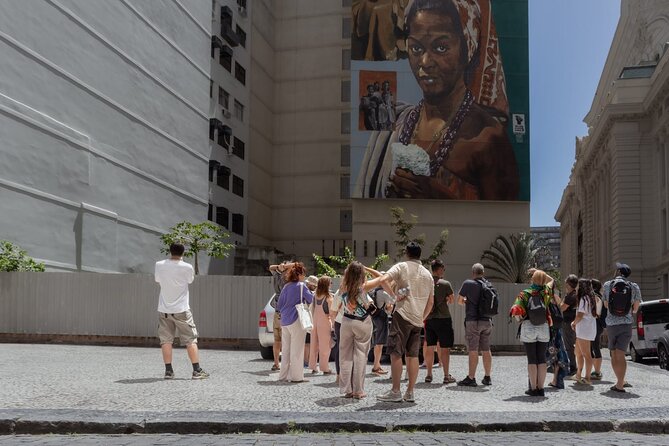
Many first walks through Rio’s Centro focus on grand facades, colonial landmarks, churches, and political power. This experience uses those same streets but asks a sharper question: who is remembered, who is left out, and what did women have to do to shape public life?
That approach gives the tour a clear purpose without turning it into a lecture. The stops are close enough to form a manageable route, while the stories change tone from place to place. One moment concerns literature, the next political struggle, then theater, water, or a painful personal story.
I especially like the range of women included. The tour is not limited to celebrated cultural figures or official heroines. It also addresses women who fought against social limits, women facing a double burden because of race and gender, artists, and even a serial killer. That variety makes the walk less predictable and gives you a more honest picture of how women have appeared in Brazilian public memory.
The tone seems to be one of the experience’s greatest strengths. Jessica is described as prepared, funny, sincere, and highly energetic. She is also said to answer questions and adjust explanations to the interests of the group. That matters on a subject that could easily become heavy. You get serious material, but the walk remains personal and relaxed.
A few more Rio de Janeiro days to weigh up
- Rio de Janeiro: 6-Stop Highlights of Rio with Lunch
★ 4.4 · 5,157 reviews - Christ the Redeemer Entry Ticket by Corcovado Train
★ 4.4 · 4,476 reviews - Rio’s City Tour – Tickets for Christ, Sugar Loaf & Lunch included
★ 5.0 · 4,389 reviews
Start at the Brazilian Academy of Letters
The walk begins at the Academia Brasileira de Letras, the headquarters of Brazil’s Academy of Letters. You spend about 15 minutes here, looking at the exterior and hearing the story of the first woman connected to the tour.
This is a smart opening stop. The building provides a natural way to discuss who gets recognized in literature and who has had to work harder to enter cultural institutions. Rather than beginning with a list of dates, the guide uses one woman’s experience to set the tone for the rest of the morning.
The stop is brief, so expect a focused introduction rather than a full architectural visit. Admission is listed as free, but that does not mean you enter the building. The experience is an external visit, so you should be comfortable listening from the public area and observing the facade from outside.
If you enjoy literature, cultural history, and questions about recognition, this opening should appeal to you. If you want a long interior tour of the academy, you will need a separate plan.
Three women at the Floriano Peixoto Monument
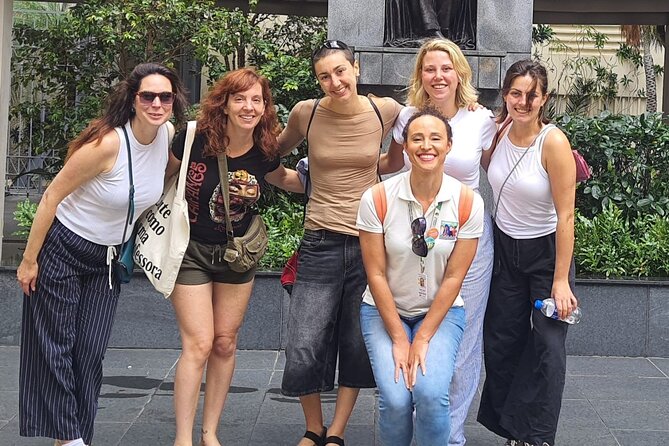
The second stop is the Monumento a Floriano Peixoto, dedicated to Brazil’s second president. You spend around 20 minutes here, with the monument providing the setting for three separate women’s stories.
This is where the tour expands beyond a single biography. A political monument usually tells you what a nation wants to honor. By placing women’s experiences beside it, the guide can show how national memory is built and how much can disappear when public history centers only on male leaders.
The three women create a broader discussion than one political figure could provide alone. Their stories help connect personal lives to government, social pressure, and the power structures represented by the monument. You are not simply looking at sculpture. You are learning how public symbols can be read from another angle.
The 20-minute timing should give Jessica room to explain the setting without slowing the whole walk. I would expect some standing, so comfortable shoes and light clothing make sense, especially in Rio’s heat. Since this is an outside stop, weather can shape the experience. One particularly rainy outing still continued with enthusiasm, but you may prefer to bring rain protection during wet weather.
A tragic story at the City Council
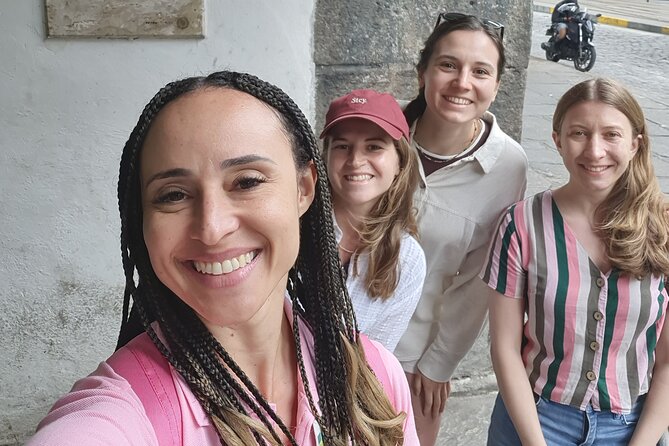
The route continues to Palacio Pedro Ernesto, home of Rio’s City Council or Municipal Chamber. The stop lasts about 15 minutes and centers on a tragic story involving one woman.
This change in mood is important. The tour does not present women only as successful artists, political winners, or inspiring public figures. It also looks at pain, injustice, and the ways women’s lives can be shaped by forces beyond their control.
The building itself gives the story a political setting. From the outside, you see the formal face of civic authority. The story adds a more human and difficult layer to that official image. This is one reason the tour feels more thoughtful than a simple monument walk.
You may find this stop emotionally heavier than the others. The guide’s warm approach appears to keep the tone accessible, but anyone looking only for light sightseeing should know that the walk includes serious material. That balance is part of its value, though it is also a reason to pay attention to your own interests before booking.
Same patch of Brazil, a completely different sort of day:
- Full Day: Christ Redeemer, Sugarloaf, City Tour & Barbecue Lunch
★ 4.5 · 3,142 reviews - Rio de Janeiro: Rocinha Favela Walking Tour with Local Guide
★ 4.8 · 3,052 reviews - Rio de Janeiro: Sugarloaf Cable Car Official Ticket
★ 4.6 · 2,873 reviews - Rio’s Full Day: Selarón Steps, Christ & Sugarloaf – Tickets & Lunch Included
★ 5.0 · 2,724 reviews
Artistic women at the Municipal Theater
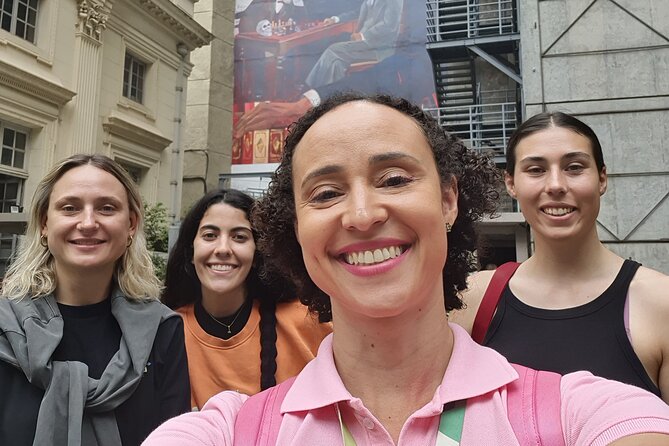
Theatro Municipal do Rio de Janeiro is one of the visual highlights of the route. The opera house is known for its French eclectic style, and the tour spends about 20 minutes here discussing three artistic women.
This stop brings architecture and performance together. Even from outside, the theater offers a strong visual setting for stories about women in the arts. The guide’s focus helps you look beyond the building’s decorative appearance and consider who created, performed, and contributed to Rio’s cultural life.
The three women add useful contrast. Instead of treating female artists as a single group, the stop allows for different careers, personalities, and obstacles. The subject can include the work itself, the barriers women faced, and the way artistic achievement is remembered.
This is a good place to slow down and look carefully. You will not enter the theater as part of the tour, but the exterior visit still works because the building is central to the discussion. If you want to see the inside, you will need to arrange that separately.
The theater stop also helps keep the morning varied. After political monuments and a tragic story, art gives the route a lift. The change of pace is one reason the two-hour format works well.
The women connected to Largo da Carioca
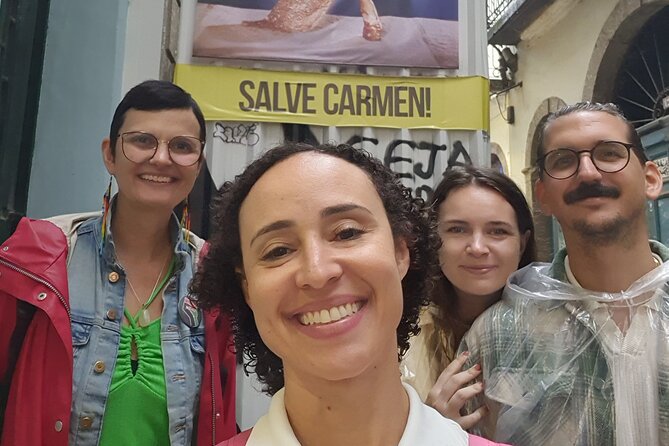
At Largo da Carioca, you spend roughly 15 minutes hearing the story of a group of women. The square is associated with Rio’s first water fountain, giving the guide a practical subject through which to discuss women’s daily lives and collective roles.
This may be one of the most revealing stops because water is not just an architectural detail. A fountain points to basic urban needs, public space, labor, and access. A group story can show how women functioned together rather than presenting history only through one famous individual.
The setting also gives the walk a more open, public feel. You move away from formal government buildings and into a place tied to ordinary city life. That helps connect the women’s stories to the broader social fabric of Rio.
The 15-minute stop keeps the idea concise. You should not expect a long technical account of the fountain or a full survey of the square. Instead, the point is to use this recognizable location as a doorway into a less visible part of women’s history.
Finishing at Praça Quinze de Novembro
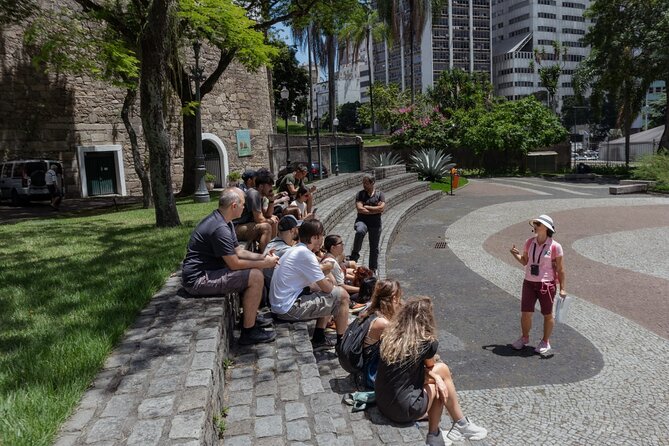
The final stop is Praça Quinze de Novembro, where the tour ends after about 20 minutes. This square represents Brazil’s colonial, imperial, and republican periods, making it a fitting place to bring the discussion together.
Three final women are connected to the stop. Their stories allow the guide to move across different eras and show that women’s struggles and achievements did not belong to just one period of Brazilian history. The square becomes a kind of timeline, with several layers of national change sharing one public space.
Ending here also makes practical sense. Praça Quinze de Novembro is the final meeting point listed for the tour, and the walk does not return to Avenida Rio Branco. If you have evening plans, this central finish can make the morning easy to combine with other sightseeing. You should still allow extra time if the group pauses for questions or if weather affects the pace.
The conclusion is likely strongest for anyone who enjoys connecting individual stories to major historical periods. Rather than finishing with one famous statue, the tour ends with several women and a broad view of how Brazil changed.
What the guide adds to the experience
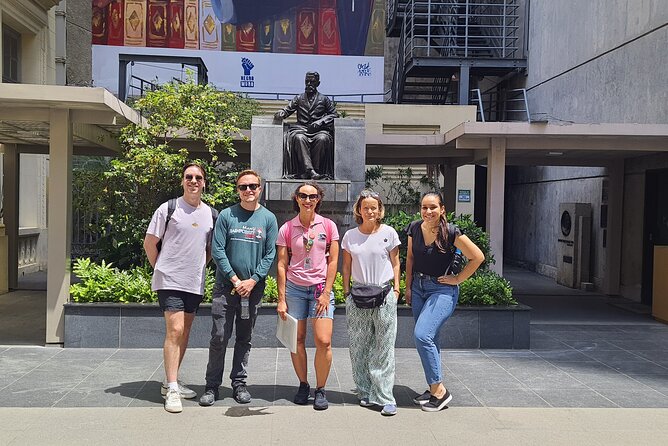
Jessica is a major reason this walk has received such strong praise. Her style is repeatedly described as energetic, friendly, sincere, funny, and passionate about Rio. Those qualities matter because the subject depends on storytelling, not just location names.
A good guide can make an exterior building feel meaningful. Jessica appears to do this by explaining the women behind the places, answering questions, and keeping the mood relaxed. The personal tone is especially useful when the stories involve oppression, grief, or the limits placed on women by a patriarchal society.
The tour also seems to encourage reflection without losing its sense of fun. One description highlights how the experience brings together women, art, history, architecture, and modern life. That combination gives you more to think about after the walk ends.
Still, the guide’s energy may shape your enjoyment. If you prefer a quiet audio-guide style with little conversation, this is probably not the best match. The walk appears designed for engagement and discussion.
Timing, group size, and physical comfort
The tour starts at 10:00 a.m. and lasts about two to two-and-a-half hours. The listed stops total around 105 minutes, leaving the remaining time for walking between sites, introductions, questions, and the natural pace of a group.
That schedule is long enough to develop the subject but short enough to fit into a day of sightseeing. You will be on your feet for most of the experience, with time spent outdoors at each stop. The route is in central Rio and near public transportation, which makes it practical for a morning plan.
The maximum group size is 20 people. That is not an intimate private walk, but it is small enough to keep the guide’s explanations clear and allow some questions. If you want the best chance of hearing everything, stay near Jessica and speak up when you need clarification.
Most people can take part, and service animals are allowed. The provided information does not give details about step-free access, restrooms, shade, or seating, so contact the provider if any of those points are important to you.
What $29.57 buys you
At $29.57 per person, the value comes from the interpretation rather than paid entry. All six stops list free admission, and the experience is an external visit, so you are paying for the guide, the route, and the connections between places.
That is a sensible price if you want context you would be unlikely to get by walking the same streets alone. The tour gives you at least 15 minutes at each main stop, introduces a large range of women, and turns familiar civic sites into places with more personal meaning.
The value is less clear if you want interior access, long architectural explanations, or a relaxed photo walk. You are not buying tickets to the Academy of Letters, the City Council, or the Municipal Theater. You are buying a guided interpretation of their public faces.
I would compare the cost with the price of a basic city tour, then ask what kind of information you want. If you are curious about overlooked women and social history, this offers a focused subject at a moderate cost. If your priority is seeing Rio’s most famous sights quickly, a general city tour may serve you better.
Who should book this walk
I would recommend it to first-time visitors who want a different way to understand Centro. It is also a strong choice for anyone interested in women’s history, Brazilian culture, public art, literature, politics, or the connection between architecture and power.
The walk suits solo visitors and small groups who enjoy asking questions. Jessica’s approachable manner should help people who want a friendly introduction rather than a formal academic presentation.
It may also work well for repeat visitors to Rio. If you have already seen the major buildings, this route gives you a reason to look at them again. The focus on women from different backgrounds, including Black women and women connected to struggle, art, and crime, adds material beyond the usual sightseeing script.
I would think twice if you need indoor shelter, dislike serious subjects, or want guaranteed access inside the buildings. Weather is another factor because the tour takes place outdoors. Rain did not stop Jessica from keeping the walk lively, but wet weather can still affect your comfort.
Practical booking advice
Confirmation is provided at booking, and free cancellation is available if you cancel at least 24 hours before the 10:00 a.m. start time. Changes or cancellations made less than 24 hours ahead are not accepted for a refund, using Rio local time.
The experience requires a minimum number of participants. If that minimum is not met and the tour is canceled, you are offered another date or experience, or a full refund.
Begin at Women in Rio Walking Tour on Avenida Rio Branco in Centro, Rio de Janeiro, postal code 20040-090. Finish at Praça Quinze de Novembro, Centro, postal code 20010. Because the start and finish are different, plan your onward route from the square rather than expecting to return to the meeting point.
Should you book Women Behind the Monuments?
Book this tour if you want Rio’s center explained through the women who shaped it, not just through presidents, buildings, and official symbols. The route is compact, the cost is reasonable, and Jessica’s warm energy appears to be the key ingredient.
Skip it if you mainly want interior visits or a broad introduction to every major sight in Rio. For a focused, thoughtful walk that brings literature, politics, art, race, gender, and public memory into the same morning, this is an excellent choice.
FAQ
Where does the tour start?
It starts at Women in Rio Walking Tour on Avenida Rio Branco in Centro, Rio de Janeiro, postal code 20040-090.
What time does the tour begin?
The tour starts at 10:00 a.m.
Where does the tour finish?
It finishes at Praça Quinze de Novembro in Centro, Rio de Janeiro, postal code 20010.
How long does the tour last?
The expected duration is approximately two hours to two hours and 30 minutes.
How many places does the tour visit?
The route has six main stops: the Brazilian Academy of Letters, the Floriano Peixoto Monument, Palacio Pedro Ernesto, Theatro Municipal, Largo da Carioca, and Praça Quinze de Novembro.
Is entry to the attractions included?
The stops list free admission, but the experience includes external visits only. Internal visits are not included.
What is the maximum group size?
The tour can have a maximum of 20 participants.
Is the tour near public transportation?
Yes. The meeting information states that the experience is near public transportation.
Are service animals allowed?
Yes. Service animals are allowed.
Can most people participate?
Yes. The additional information states that most people can participate.
What is the cancellation policy?
You can cancel up to 24 hours before the start time for a full refund. Cancellations or changes made less than 24 hours before the tour are not refunded or accepted.
Newest reviews from around Rio de Janeiro
- Hang gliding flight in Rio de Janeiro★ 5.0 · 6 reviews
- Rio de Janeiro: Zip Lining and Canopy Tree Tour★ 3.3 · 6 reviews
- Vidigal Favela Tour★ 4.4 · 26 reviews
- Rio de Janeiro: Attend a Vasco da Gama game with local guide★ 4.8 · 9 reviews
- Unforgettable Boat Party★ 5.0 · 3 reviews
- Parapente Rio de Janeiro★ 5.0 · 4 reviews
- Rio de Janeiro Private Tour with Cruise Terminal Pick-up★ 5.0 · 2 reviews
- Yoga By the Barra da Tijuca Beach★ 5.0 · 3 reviews
Rio de Janeiro Tours, compared.

Christ the Redeemer Entry Ticket by Corcovado Train
Read our review →
Rio’s City Tour – Tickets for Christ, Sugar Loaf & Lunch included
Read our review →
Full Day: Christ Redeemer, Sugarloaf, City Tour & Barbecue Lunch
Read our review →

Rio’s Full Day: Selarón Steps, Christ & Sugarloaf – Tickets & Lunch Included
Read our review →