Reviewed · RIO DE JANEIRO TOURS
Discovering the Culinary Soul of Old Rio
Rio tastes better on foot. This six-hour walk connects old city streets, local food, and stories that reach from Portuguese rule to Little Africa. I like the small group of no more than seven, which should make conversation with guides such as Marco and Juliana easy. I also like that lunch, snacks, coffee, and tea are included, so the $135 price covers more than a simple sightseeing walk.
The main consideration is the schedule. You start at 10 a.m. and finish at Praça Mauá, with no private transportation included. The tour is best for you if you are happy walking between stops and want food tied to Rio’s social and political past, rather than a tour focused on beaches, Sugarloaf Mountain, or Christ the Redeemer.
In This Review
- Key things to know before booking
- Why Old Rio makes a good food tour
- Starting beneath the Carioca Clock
- Avenida Rio Branco and the pulse of central Rio
- The Real Gabinete Português de Leitura
- Saara, Arab food, and a changing city
- Avenida Presidente Vargas and Brazil’s political story
- Pedra do Sal and Little Africa
- Finishing at Praça Mauá
- What the food experience is really worth
- Guides, pace, and group size
- Timing, weather, and possible changes
- Who should book this Old Rio food walk?
- Should you book Discovering the Culinary Soul of Old Rio?
- FAQ
- How long is the Old Rio culinary tour?
- What time does the tour start?
- Where does the tour begin?
- Where does the tour end?
- How many people can join the tour?
- Is transportation included?
- What food and drinks are included?
- Can I cancel for a full refund?
Key things to know before booking
- A six-hour food walk through central Rio: The route links Carioca Clock, Avenida Rio Branco, Saara, Pedra do Sal, and Praça Mauá.
- A tiny group of up to seven people: This is a good size for questions, personal recommendations, and a less mechanical pace.
- Food from several cultural traditions: Expect a mix of Brazilian dishes, Arab-influenced food, pastries, drinks, and newer cooking from young chefs.
- Moqueca may be the grand finale: One particularly praised meal featured white fish, onions, garlic, bell peppers, tomatoes, cilantro, and coconut milk.
- Guides add real local context: Marco and Juliana received especially warm praise for connecting food with Rio’s history, religion, music, and daily life.
- A useful first-day activity: The route can help you decide where to eat, hear live music, and explore during the rest of your stay.
Why Old Rio makes a good food tour
Rio is often sold through its famous views. Those views are worth your time, but central Rio explains a different part of the city. Here, old streets, churches, commercial avenues, immigrant communities, music, and Black Brazilian history meet within a compact part of town.
This tour uses food as the thread. You are not simply walking from one restaurant to another. You are moving through places shaped by Portuguese settlers, the Arab diaspora, Afro-Brazilian culture, political power, and newer cooks trying fresh ideas.
I like that approach because food gives you something concrete to remember. A name, a recipe, or a pastry can make a complicated historical story easier to grasp. The tour also gives you a clearer sense of Cariocans, the people of Rio, and how different communities helped shape the city.
The group limit matters here. With no more than seven participants, the guide can explain a dish, answer questions, and adjust the conversation. Marco is praised for making the experience feel more like spending time with a well-informed local friend than following a rigid group. Juliana is praised for bringing history and food culture together with energy and care.
A few more Rio de Janeiro days to weigh up
- Rio de Janeiro: 6-Stop Highlights of Rio with Lunch
★ 4.4 · 5,157 reviews - Christ the Redeemer Entry Ticket by Corcovado Train
★ 4.4 · 4,476 reviews - Rio’s City Tour – Tickets for Christ, Sugar Loaf & Lunch included
★ 5.0 · 4,389 reviews
Starting beneath the Carioca Clock
The meeting point is the Carioca Clock at Avenida Nilo Peçanha, 350 to 374, in Centro. The start time is 10 a.m., so arrive with enough time to find the square and settle in before the walk begins.
This first stop introduces one of Rio’s oldest urban settings. The square lies near one of the city’s four oldest hills, where the Franciscan Order built the Saint Anthony Monastery. The story reaches back to the Portuguese arrival in present-day Brazil in 1500.
You will spend about 30 minutes here, and admission is included. That time should give you a useful first look at how religion, colonial power, and the city’s early development connect. It is not just a photo stop. The setting helps explain why central Rio feels different from the newer waterfront and beach districts.
The tour starts in a part of town with layers close together. You may notice modern traffic and office buildings alongside older religious and civic landmarks. That contrast is part of the point. Old Rio is not a preserved museum district. It is a working part of the city.
Avenida Rio Branco and the pulse of central Rio
From the Carioca Clock, the route continues to Avenida Rio Branco. This is a busy, historic avenue, and it provides a sharp change from the quieter focus of the monastery.
The 30-minute stop is free, but its value comes from the guide’s explanation rather than an admission ticket. Marco, in particular, is praised for explaining Rio’s social and political development, while also pointing out places that fit into the city’s present-day life.
You should expect traffic, movement, and an urban setting here. This is not the peaceful section of the day. Still, it helps you see how the old center works. A good food tour needs this sort of context. You understand the restaurants and markets better when you see the streets used by local people, workers, and shoppers.
If you prefer a tour made up only of calm courtyards and grand interiors, this stop may feel ordinary. If you want to understand central Rio as a living district, it earns its place.
The Real Gabinete Português de Leitura

The Real Gabinete Português de Leitura is one of the tour’s most striking cultural stops. It holds the largest archive of Portuguese literature outside Portugal and is regularly placed among the world’s most beautiful libraries.
Admission is included, and the visit lasts about 30 minutes. Even if you are not a library enthusiast, this is the kind of interior that can change the feel of a walking day. After streets, traffic, and food stalls, the library offers a quieter look at the Portuguese intellectual influence on Brazil.
The stop also gives the tour a wider frame. Rio’s food culture did not appear in isolation. It developed through migration, trade, language, religion, and the exchange of ideas. The Portuguese connection is one piece of that story.
You will not spend hours reading or studying the collection. That is a good thing for this route. Thirty minutes is enough to appreciate the room and understand why it matters without turning the food walk into a library tour.
Same patch of Brazil, a completely different sort of day:
- Full Day: Christ Redeemer, Sugarloaf, City Tour & Barbecue Lunch
★ 4.5 · 3,142 reviews - Rio de Janeiro: Rocinha Favela Walking Tour with Local Guide
★ 4.8 · 3,052 reviews - Rio de Janeiro: Sugarloaf Cable Car Official Ticket
★ 4.6 · 2,873 reviews - Rio’s Full Day: Selarón Steps, Christ & Sugarloaf – Tickets & Lunch Included
★ 5.0 · 2,724 reviews
Saara, Arab food, and a changing city
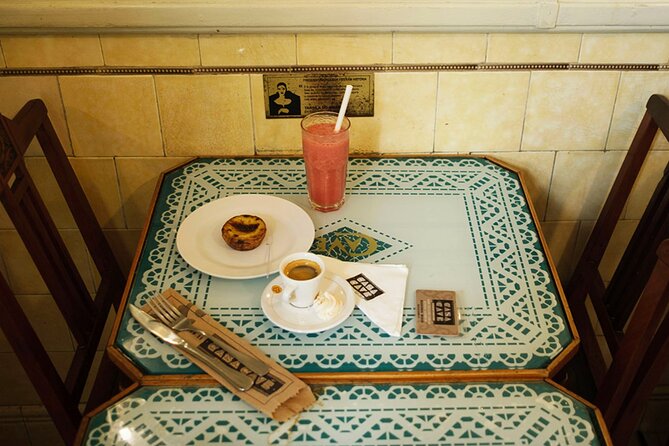
Saara is one of the most useful stops for understanding Rio’s cultural mix. The area includes many restaurants connected to the Arab diaspora, and the food here adds a clear immigrant thread to the day.
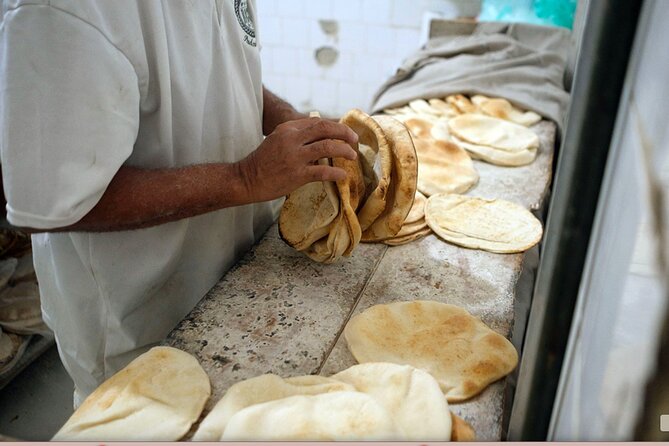
One of the strongest food memories from the tour is Lebanese pastries. That detail matters because the stop is not treated as a generic market visit. You get to connect a particular food tradition with the people and communities who made it part of Rio.
You may also encounter a mix of older classics and newer places run by young chefs trying different ideas. That combination keeps the tour from feeling stuck in the past. Old Rio is presented as a place with a long memory and a changing appetite.
The 30-minute stop is relatively short, so do not expect a full market exploration. Think of it as a focused taste and a cultural explanation. Pace yourself with earlier samples because the day continues through lunch.
Avenida Presidente Vargas and Brazil’s political story
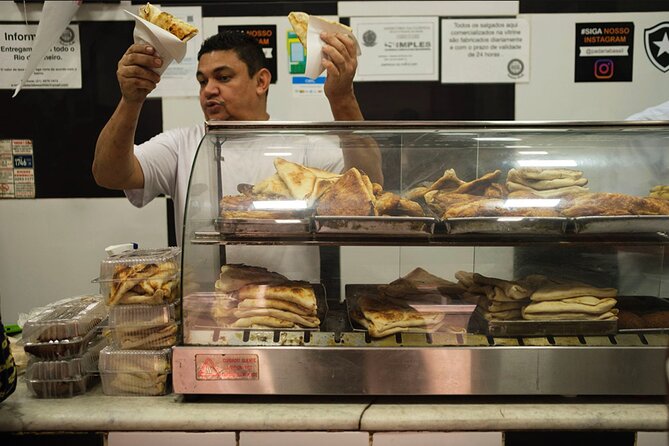
Avenida Presidente Vargas adds a political layer to the route. It is named for Getúlio Vargas, the longest-serving president in Brazil’s history.
The avenue is another free, open-air stop lasting about 30 minutes. As with Avenida Rio Branco, the main experience comes from the guide’s storytelling and the connection between the street and national history.
This is where Marco’s background and local perspective can make a real difference. He is praised for offering a social, political, and historical view of Rio instead of treating food as a string of unrelated tastings. That is valuable because Brazilian cuisine is tied to power, migration, class, and identity.
You should keep your expectations realistic. This section is not built around a single famous attraction or included entry ticket. It is a context stop, and its success depends heavily on the guide and your interest in the story.
Pedra do Sal and Little Africa
Pedra do Sal is one of the most meaningful places on the route. It tells the story of Little Africa, a cultural center shaped by Afro-Brazilian life, music, religion, and community.
The stop lasts 30 minutes, with admission included. This is a key moment in the tour because it moves the focus beyond colonial and immigrant influences to the Black history of Rio.
The stop can also connect with music. A guide may point you toward samba-related places, and one tour led to a glimpse of a samba school. Recommendations for live music were also part of the useful practical advice offered during the day.
I especially value this section because it gives the food stops a stronger meaning. Dishes and eating habits are not just flavors. They reflect who had access to power, who built neighborhoods, and how traditions survived.
The timing is brief, so you will not receive every detail about Little Africa in half an hour. Still, it is enough to mark Pedra do Sal as a place worth returning to if you have more time in Rio.
Finishing at Praça Mauá
The route ends at Praça Mauá, a historic square and a useful final point in central Rio. After around six hours, finishing here gives you a clear break from the tour rather than sending you back to the starting point.
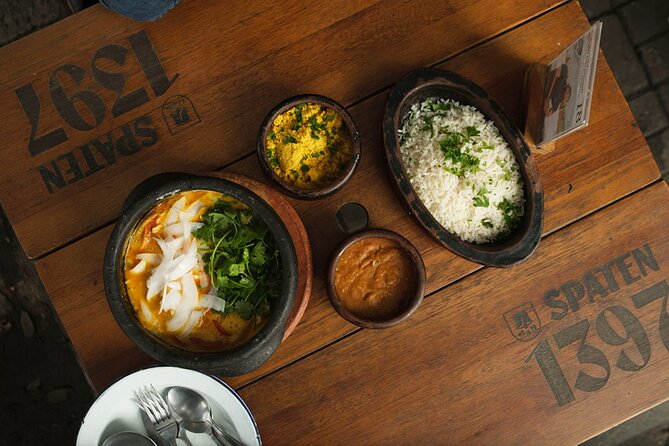
Your last food experience may be the day’s most memorable. One especially praised meal was moqueca, a Brazilian fish stew made with white fish, onions, garlic, bell peppers, tomatoes, cilantro, and coconut milk.
That dish is a fitting finish because it brings several parts of Brazilian cooking together in one bowl. It is substantial, fragrant, and more like a proper meal than a passing sample. Lunch is included, along with snacks and coffee or tea, so you are not paying $135 simply for small bites.
Praça Mauá is also a practical place to continue your day, though the supplied details do not specify onward transport or extra attractions. You will need to make your own plans after the tour ends.
What the food experience is really worth
At $135 per person, this is not a budget food crawl. The value depends on how much you want the history, guiding, and route design alongside the meals.
You receive approximately six hours with a maximum of seven participants. Snacks, lunch, coffee, and tea are included. You also visit cultural sites, with admission included at the Carioca Clock, Real Gabinete Português de Leitura, Saara, Pedra do Sal, and Praça Mauá. Avenida Rio Branco and Avenida Presidente Vargas are free public stops.
The price makes more sense if you see the tour as a combined walking tour, cultural introduction, and meal plan. You are paying for someone to connect the places and flavors, not just to point out restaurants.
I would not choose it if your only goal is to eat as cheaply as possible. You might spend less by visiting individual restaurants on your own. But you would miss the guided links between Portuguese influence, Arab food, Black Brazilian history, politics, and modern cooking.
The food also seems broad rather than repetitive. You may try local foods and drinks, Arab pastries, older classics, and dishes from newer cooks. The exact selection can change, especially when holidays affect opening hours, so avoid booking this day around tight, fixed plans.
Guides, pace, and group size
The most praised part of this experience is the guiding. Marco is described as a Rio native with excellent English, strong local insight, and a relaxed manner. Juliana is praised for explaining food, history, culture, and the particular habits of Brazilian life.
That range matters. A guide who only names dishes would leave you with a pleasant lunch and a few photographs. A guide who can explain why a neighborhood matters gives you a better understanding of Rio after the tour ends.
The walking pace appears comfortable rather than hurried. One participant who walked more slowly still felt there was enough time and did not feel pushed from one place to the next. That is encouraging, though the published information does not give the total walking distance or describe the exact terrain.
The small group also makes it easier to ask for practical advice. Marco’s recommendations helped shape choices about restaurants, places to visit, and live music. I would treat those suggestions as a useful bonus, not a guaranteed part of the formal route.
Timing, weather, and possible changes
The published start time is 10 a.m., and the experience lasts about six hours. The schedule includes roughly 30 minutes at each of seven listed stops, with the rest of the time used for walking, food, conversation, and lunch.
Rain does not necessarily ruin the day. A participant enjoyed the tour despite intermittent rain, especially because the food and storytelling kept the experience moving. Still, bring suitable rain protection if the forecast looks unsettled, since this is a walking tour through open city streets.
Holiday scheduling deserves attention. A national holiday once forced a change in the meeting point, start time, and restaurant plan because some places did not open until noon. Such changes can interfere with other arrangements, especially flights, timed museum visits, or evening plans.
For that reason, I would avoid placing an important reservation immediately after the six-hour estimate. The tour provider offers confirmation at booking, but the route can require adjustments when local closures affect the food stops.
Who should book this Old Rio food walk?
I would recommend it most strongly for:
- You visiting Rio for the first time and wanting an introduction beyond the famous viewpoints.
- You who enjoy food with historical and cultural context.
- You interested in Portuguese, Arab, Afro-Brazilian, and modern Brazilian influences.
- You who want restaurant and live-music suggestions for the rest of your stay.
- You comfortable walking through central Rio for about six hours.
- You who prefer a small group and direct conversation with a guide.
I would be more cautious if you have limited mobility, strict dietary needs, or only a short time in the city. The information says most people can participate, but it does not give a detailed accessibility statement or a full list of ingredients for every tasting.
It is also not the right choice if your main goal is a landmark checklist. You will see important places, but the heart of the day is the connection between neighborhoods, food, and history.
Should you book Discovering the Culinary Soul of Old Rio?
Yes, if you want food to explain the city. The combination of a small group, strong guides such as Marco and Juliana, included lunch, and stops such as Saara, Pedra do Sal, and the Real Gabinete Português de Leitura gives this tour more substance than a basic tasting walk.
I would book it near the start of your Rio stay. The guide’s restaurant and music suggestions can help shape the days that follow, and the tour gives you a useful map of central Rio’s cultural layers.
Skip it if $135 feels high for a six-hour activity, if you dislike walking, or if your schedule cannot tolerate changes around holidays. For everyone else, this is a thoughtful way to meet Old Rio through its food, people, and stories.
FAQ
How long is the Old Rio culinary tour?
The tour lasts approximately six hours.
What time does the tour start?
The scheduled start time is 10 a.m.
Where does the tour begin?
It begins at Carioca Clock, at Avenida Nilo Peçanha, 350 to 374, Centro, Rio de Janeiro.
Where does the tour end?
The tour ends at Praça Mauá in Rio de Janeiro.
How many people can join the tour?
The group has a maximum of seven participants.
Is transportation included?
Private transportation is not included. The tour takes place on foot between stops and is near public transportation.
What food and drinks are included?
The price includes snacks, lunch, coffee, and tea. A featured meal may include moqueca, a Brazilian fish stew made with white fish, onions, garlic, bell peppers, tomatoes, cilantro, and coconut milk.
Can I cancel for a full refund?
Yes. You can cancel at least 24 hours before the local start time for a full refund. Cancellations or changes made less than 24 hours before the start are not accepted for a refund.
Newest reviews from around Rio de Janeiro
- Hang gliding flight in Rio de Janeiro★ 5.0 · 6 reviews
- Rio de Janeiro: Zip Lining and Canopy Tree Tour★ 3.3 · 6 reviews
- Vidigal Favela Tour★ 4.4 · 26 reviews
- Rio de Janeiro: Attend a Vasco da Gama game with local guide★ 4.8 · 9 reviews
- Unforgettable Boat Party★ 5.0 · 3 reviews
- Parapente Rio de Janeiro★ 5.0 · 4 reviews
- Rio de Janeiro Private Tour with Cruise Terminal Pick-up★ 5.0 · 2 reviews
- Wild Waters: Rio Whitewater Rafting Adventure Tour★ 5.0 · 13 reviews
Rio de Janeiro Tours, compared.

Christ the Redeemer Entry Ticket by Corcovado Train
Read our review →
Rio’s City Tour – Tickets for Christ, Sugar Loaf & Lunch included
Read our review →
Full Day: Christ Redeemer, Sugarloaf, City Tour & Barbecue Lunch
Read our review →


Rio’s Full Day: Selarón Steps, Christ & Sugarloaf – Tickets & Lunch Included
Read our review →